Man Ray美国, 1890–1976
Untitled

关于作品
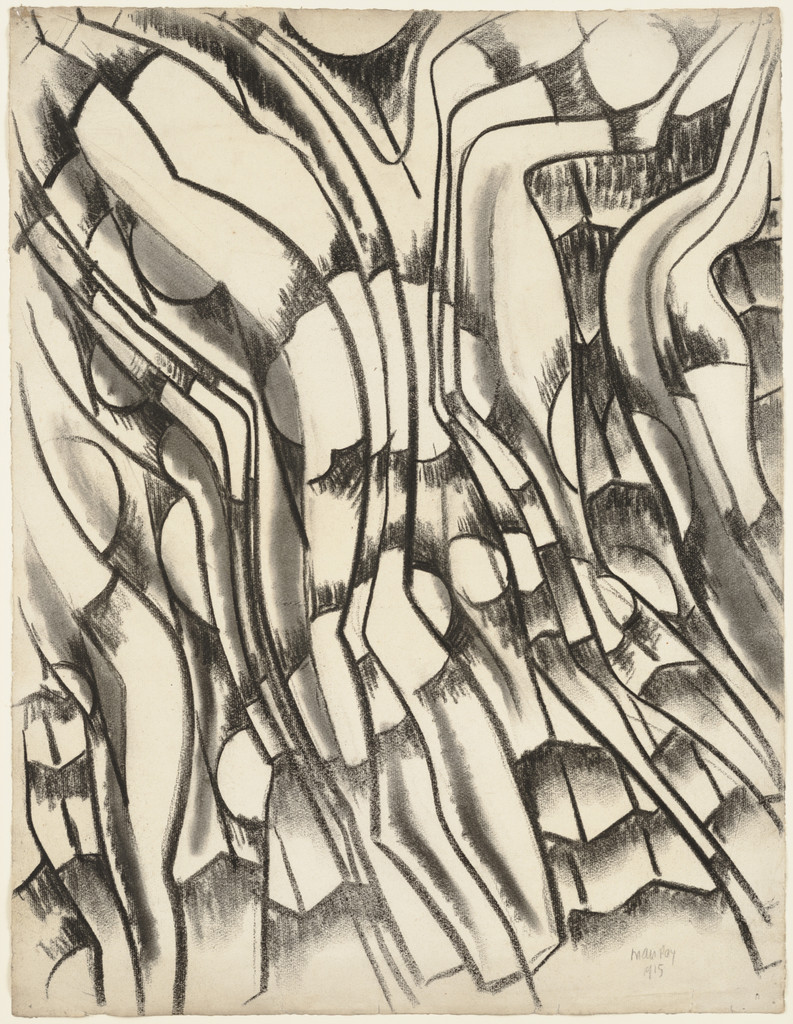
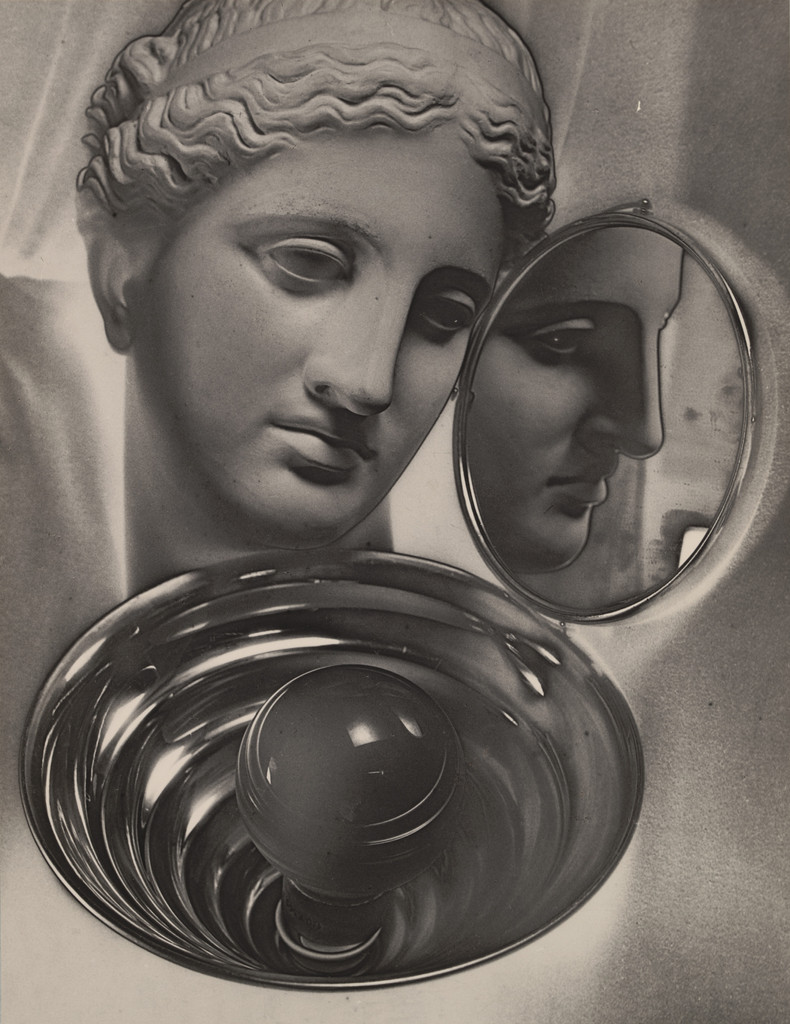
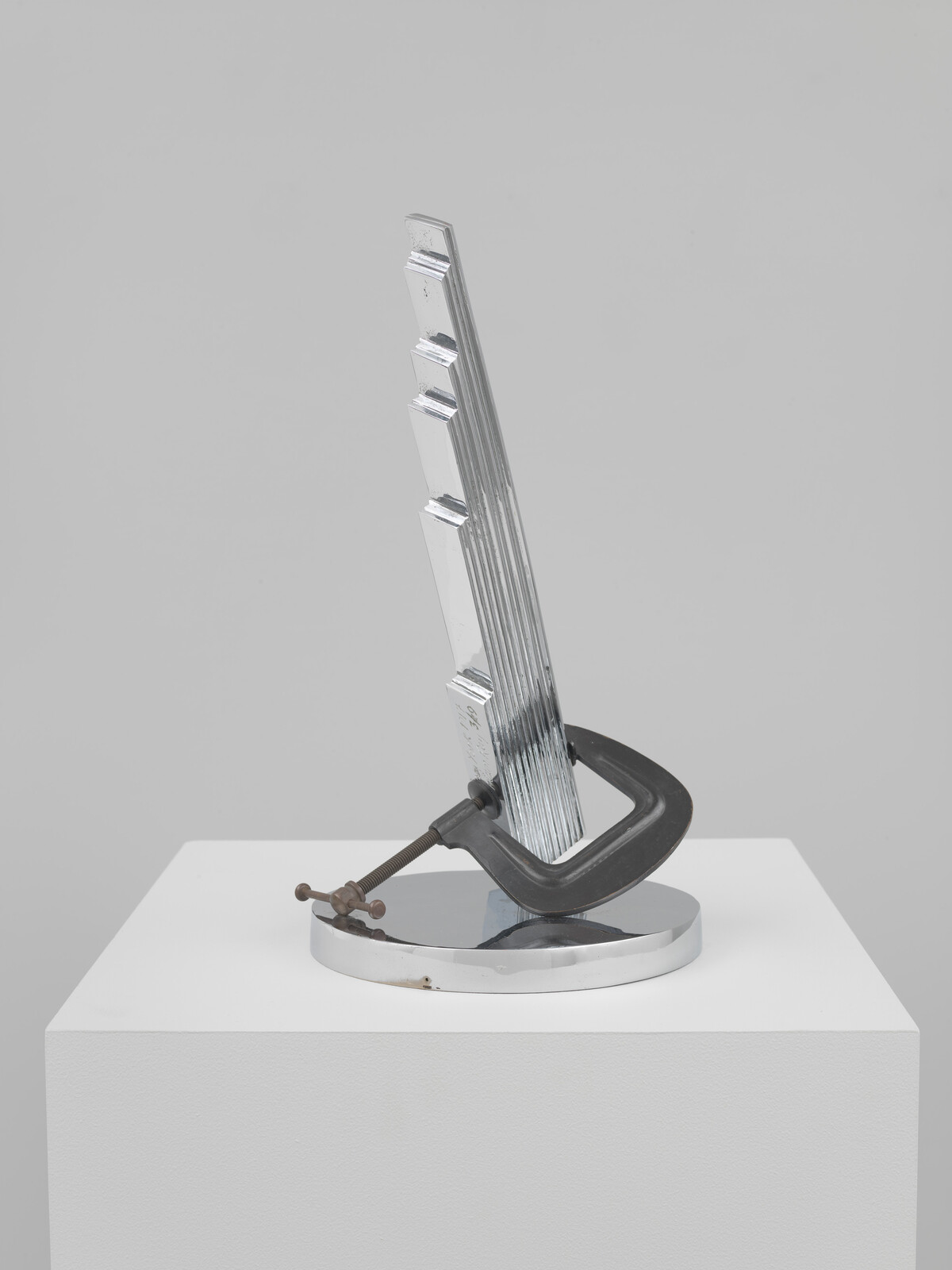
In 1921 Man Ray left New York for Paris, where he found a welcoming group of French and expatriate artists and writers. Although he considered himself a painter, Man Ray had been making and showing photographs since the later 1910s, and within a year of his relocation he devoted himself to photography as an experimental art form and a means of earning his living.
Read on
Tristan Tzara, Man Ray’s close friend and a leader of the “anti-art” Dada movement, intro¬duced the artist in January 1922 to cameraless photographic images made by the German artist Christian Schad. Tzara had dubbed the works Schadographs, and Man Ray, already inclined toward subversive uses of objects and camera images, adopted both the procedure and the self-referential title: Rayographs were the result. A form of abstraction fashioned from industrial consumer goods (photo¬graphic paper and the sundry items placed on them), with the direct intervention of the human hand, Rayographs articulated a key Dada interest in homemade reworkings of the materials of industrial and consumer society.
Man Ray turned, however, from Schad’s emphasis on grubby detritus and cheap photographic papers to more sumptuous gelatin silver sheets, and his Rayographs transformed objects and parts of the human body into fantastic signs of the real. In this he followed the lead of Pablo Picasso, particularly his Cubist collages of 1912–14, which juxtaposed real and depicted things and played with spatial relations to such an extent that art became not a window onto reality but a language of form.
In summer 1922 Man Ray produced, in an edition of 40 copies, a portfolio of 12 photographs made from original Rayographs. The title, Delicious Fields (Champs délicieux) was a pun on the Elysian Fields, the resting place of the heroic and good in ancient Greek mythology. Tzara wrote the book’s preface, a declarative text titled “Photography Upside-Down,” which brilliantly sends up conventional art photography and art in general. Man Ray showed his Rayographs to Picasso, and he later recalled their impact: “I saw Picasso here on his knees before a photogram. He allowed that in many years he had not experienced as great a sensation of art as from it. Painting is dead, finished.”
芝加哥藝術博物館CC BY 4.0
作品信息
- 馆藏编号
- 1979.101
What it shows
已收入目录
出处
- 芝加哥藝術博物館: the museum's own open data · 5天前获取
- 图片: 芝加哥藝術博物館 — © the artist or rights holder
与此同时,在Man Ray的生活中
完整生平1920
Founding the Société Anonyme
Man Ray, Katherine Dreier and Marcel Duchamp found the Société Anonyme, an itinerant collection that becomes the first museum of modern art in the United States; in 1941 its collection is donated to the Yale University Art Gallery.
1920s
A photography studio: portraits of Paris bohemia
Convinced that he cannot make a living from his art alone, Ray buys a camera and opens a studio; he creates a series of famous photographic portraits of Erik Satie, James Joyce, Gertrude Stein and Jean Cocteau.
c. 1921
Rayographs: photograms without a camera
His accidental rediscovery of the cameraless photogram, which he calls 'rayographs', produces images hailed by Tristan Tzara as 'pure Dada creations'.
1921
His first Paris exhibition at the Galerie Six
Ray's first solo exhibition in Paris is held at the Galerie Six, organised by Philippe Soupault; for it he creates his first Dadaist work in France, The Gift (Le Cadeau).
c. 1921
Meeting Kiki de Montparnasse
Shortly after arriving in Paris Ray meets and falls in love with Alice Prin, known as Kiki de Montparnasse, an artists' model and celebrated figure of Paris bohemian circles. She remains his companion for most of the 1920s, the subject of some of his most famous photographs, and stars in his films Le Retour à la raison and L'Étoile de mer.
July 1921
Moving to Paris, Montparnasse
In July 1921 Ray goes to live and work in Paris, settling in the Montparnasse quarter favoured by many artists.