Théodore Géricault法国, 1791–1824
Three Lovers
能看到吗?
是,正在展出
《Three Lovers》现在在哪里? J·保羅·蓋蒂博物館, Museum West Pavilion, Gallery W201, 洛杉矶. 是,正在展出. 核实 2026年10月5日.
闭馆· 明天 10:00 开馆
正对公众展出。
- 核实
- 此状态始于
- 出处
- 博物馆
关于这幅画
Théodore Géricault painted Three Lovers around 1817–1820; the small oil sketch belongs to the J. Paul Getty Museum in Los Angeles. An embracing couple occupies the centre while a reclining companion watches from the left. Her pose and the Venus statue above recall classical images of rest after love. Géricault's energetic handling gives the intimate subject a directness unlike the idealising conventions of his time. Although sketch-like, the picture was conceived as an independent work for close private viewing. It is displayed in West Pavilion room W201.
博物馆的介绍
Théodore Géricault's only known erotic painting, this small oil sketch depicts two lovers locked in a passionate embrace while their languid companion calmly watches from the left. The woman's nudity and relaxed pose evoke the classical tradition of representing repose after lovemaking, a tradition that is also evoked by the way her voluptuous figure complements the statue of Venus above. Encoiled in her lover's arms and with her legs provocatively exposed, the woman in white is an active participant in the amorous act rather than a passive object. With a modern directness, Géricault captured the intensity and energy of human sexuality in a manner very different from the idealizing conventions of his age. Géricault 's expressive handling of line and paint accords with the passionate energy of the subject matter. Despite the small size and sketchy nature of this painting, Géricault made it as an independent work of art, intended for close private viewing.
J·保羅·蓋蒂博物館
作品信息
- 馆藏编号
- 95.PA.72
已收入目录
出处
- J·保羅·蓋蒂博物館
- 图片: J·保羅·蓋蒂博物館 — Open Content
Théodore Géricault当时的生活
完整生平1815
百日王朝:护送路易十八并逃往诺曼底
百日王朝期间,热里科在逃亡的路易十八的护卫队中,然后乔装成农民前往诺曼底,大概在那里待到1815年夏中。
autumn 1817
关于美杜莎号沉船的书传到热里科手里
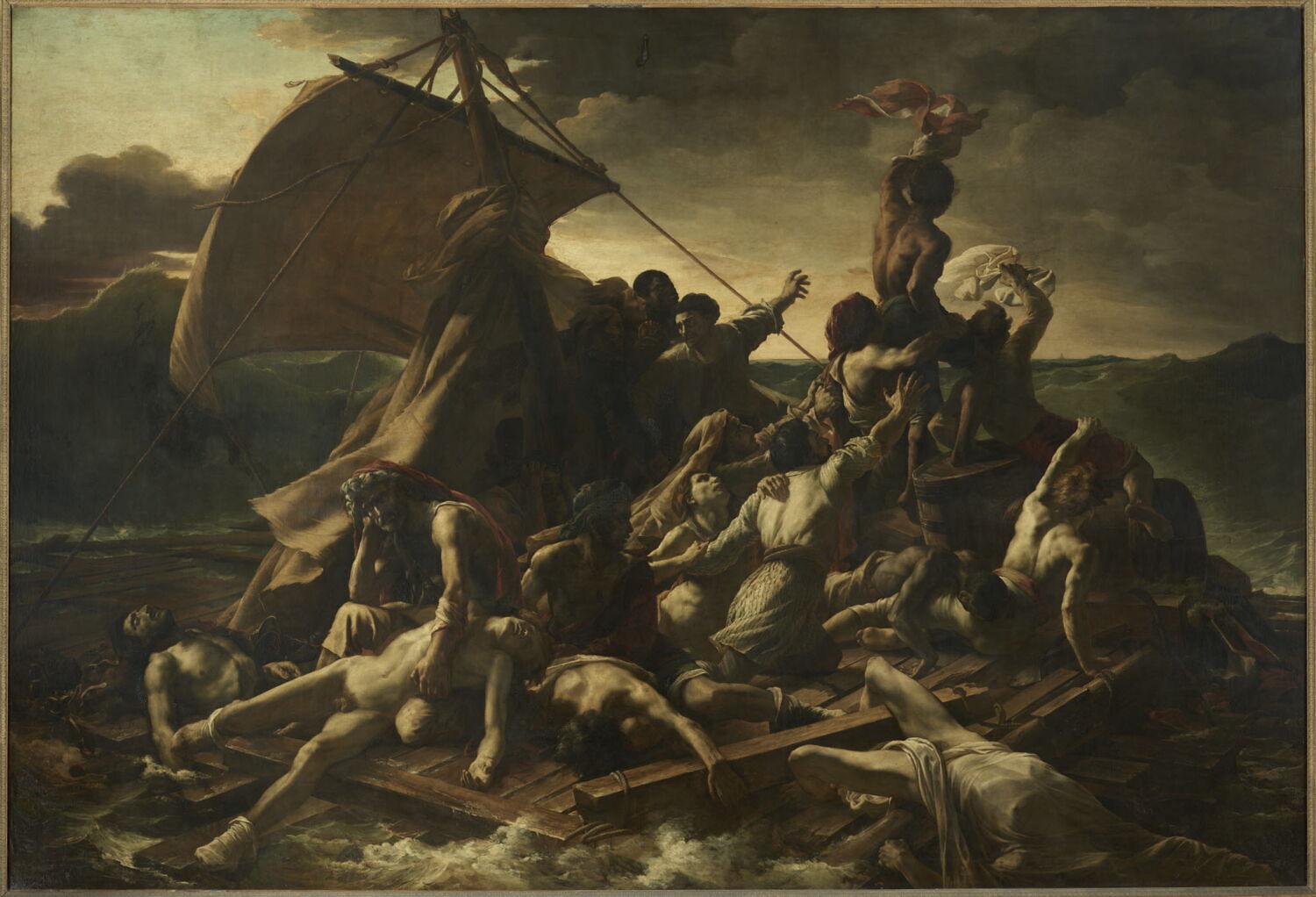
1817年秋,《美杜莎号护卫舰的沉没》一书出版,目击者、地理学家兼工程师亚历山大·科雷阿尔和医生亨利·萨维尼在书中描述了船在毛里塔尼亚海岸搁浅后木筏漂流十三天的经过。这本书传到热里科手里,他在其中看到了他梦寐以求的大画的题材。
1817–1818
调查灾难:幸存者、木筏模型、停尸房
热里科通过研究现有材料和会见目击者再现了这一事件:他结识了科雷阿尔和萨维尼,美杜莎号的一位木匠为他做了木筏的比例模型,艺术家自己塑造蜡人。他去医院停尸房,画死人的头、消瘦的身体和断肢,准备工作以前往勒阿弗尔结束,在那里他画了海和天空的习作。
1819
《美杜莎之筏》在沙龙引发政治争议
1819年巴黎沙龙首次展出时,《美杜莎之筏》引发了政治争议:它控诉了一个腐败的体制,船长任船员和乘客等死,同时也戏剧化地表现了人与自然永恒的斗争。
12 June – 30 December 1820
伦敦:5万观众与2万法郎
企业家布洛克于1820年6月12日至12月30日在伦敦展出《美杜莎之筏》;约5万人看到了它,评论家称它为杰作,作者被比作米开朗基罗和卡拉瓦乔。热里科有权获得门票收入的三分之一,收到了2万法郎。
1821–1824
从英国回来后的疾病与坠马
从英国回到巴黎后,热里科常常生病,几次骑马摔倒使他的状况更加恶化。