 Théodore Géricault法国, 1791–1824
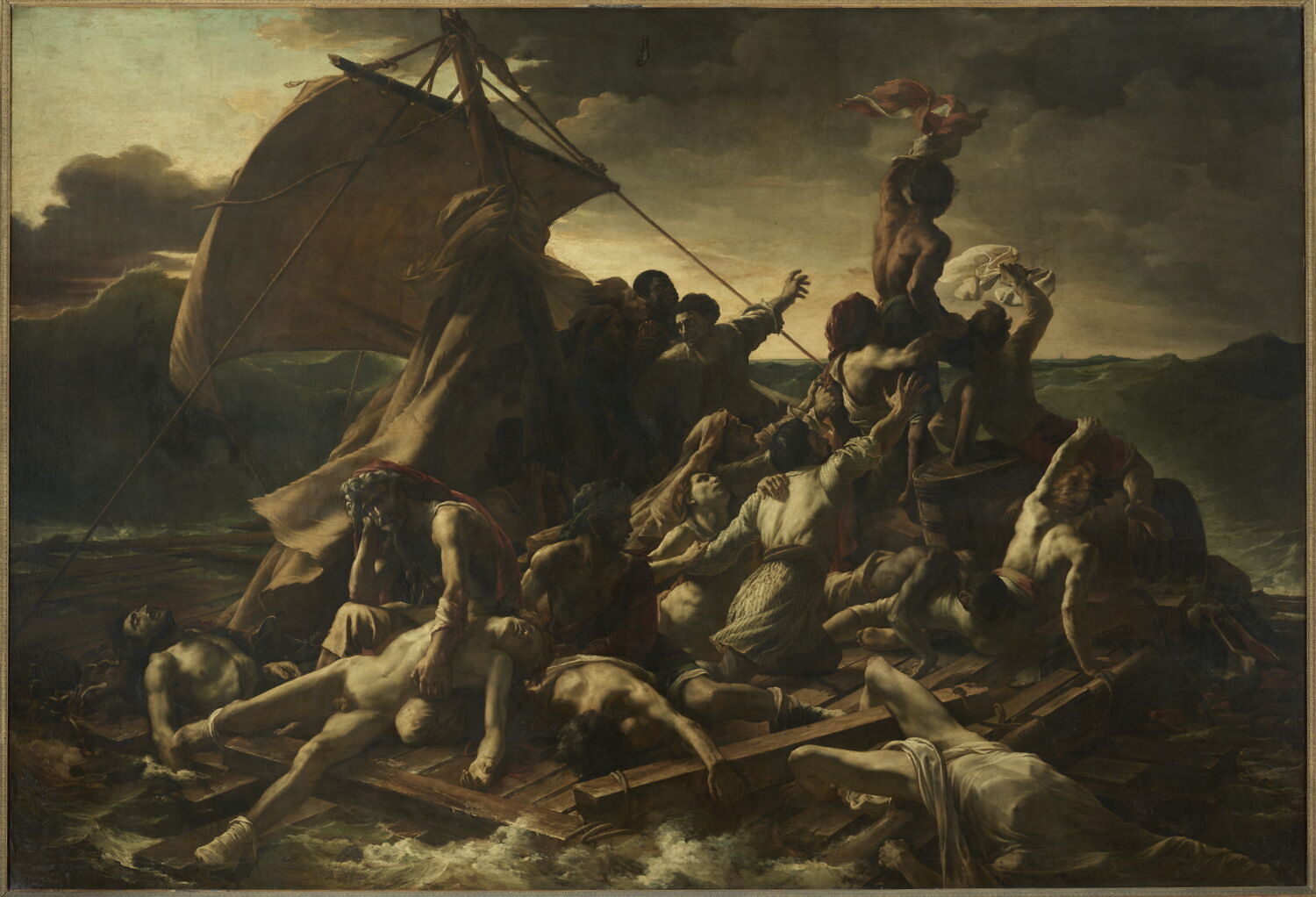
梅杜萨之筏
Le radeau de la Méduse
能看到吗?
是,正在展出
《梅杜萨之筏》现在在哪里? 卢浮宫博物馆, Salle 700, Aile Denon, Niveau 1, 巴黎. 是,正在展出. 核实 2026年9月26日.

即将闭馆· 18:00 闭馆
正对公众展出。
- 核实
- 此状态始于
- 出处
- 博物馆
关于这幅画
《美杜莎之筏》(法語:Le Radeau de La Méduse;英語:The Raft of the Medusa)是法國浪漫主義畫家西奥多·杰利柯(1791─1824)在1818年─1819年間畫的油畫。这幅畫是在他27歲時畫的,之後成为法國浪漫主義的標誌。这幅畫的尺寸是491厘米×716厘米。这幅畫描绘了法國海軍的巡防艦美杜莎号沉没之后生還者的求生場面。这場海難發生于1816年7月2日毛里塔尼亞附近的海域,海難當時至少有147人生還,起先是在一隻自製的木筏上面漂流,但是13日后被救起时仅有15人倖存,期間他们缺少食物和饮水,甚至有人吃尸体来维持生命。導致这場海難的原因很大程度上是由于美杜莎号的船長失職無能,而这位船長是法國復辟王朝任命的,因此这一事件後來變成國際醜聞。不過實際上,任命貴族做船長是法國海軍內部的慣例,當時的路易十八無權任命船長,也並無直接參與入这一事件。
在選題上,畫家之所以选择这個發生了没有几年的著名悲劇,是想引发大眾輿論關注,來發展他的绘画事業。在正式成画前,他做了大量對这次海難的調查,同時在绘畫前亦畫了多次草稿。他採訪了其中兩個倖存者,复制了木筏的精細模型,前往醫院、太平間,去觀察死屍的色澤、紋理和人死時的樣子。正如畫家所料,这幅畫在1819年在巴黎展覽第一次展出時,就引起了很大關注,褒贬不一。尽管如此,这幅畫仍搏得國際名聲,今日被认为是法國绘画史上早期浪漫主義的開路先鋒。
雖然《美杜莎之筏》有傳統歷史畫的元素,不過其選題引人關注、畫風戲劇,这都打破了當時新古典主義的教條約束。这幅畫在第一次亮相後幾乎立即爲畫家贏得廣泛注意,之後这幅畫在倫敦展出。其影響可以在之後的欧仁·德拉克罗瓦、约瑟夫·玛罗德·威廉·特纳、居斯塔夫·库尔贝、爱德华·马奈等的畫作中明顯見到。在畫家32歲死后,这幅画成为卢浮宫的收藏品。
作品信息
- 馆藏编号
- INV 4884
已收入目录
出处
- 卢浮宫博物馆
- 图片: 卢浮宫博物馆 — © 2015 GrandPalaisRmn (musée du Louvre) / Michel Urtado
Théodore Géricault当时的生活
完整生平1816–1817
Naples and Rome: the shock of Michelangelo
Géricault visited Naples, drawing the landscapes and people, but spent most of his time in Rome. The frescoes of the Sistine Chapel shook him: Michelangelo's monumentality of form inspired his pen drawings, such as “Man Felling a Bull”, among the most interesting made in Rome.
autumn 1817
The book on the wreck of the Méduse reaches Géricault
In the autumn of 1817 the book “The Wreck of the Frigate Medusa” appeared, in which the eyewitnesses, the geographer-engineer Alexandre Corréard and the physician Henri Savigny, described the thirteen-day drift of the raft after the ship ran aground off the coast of Mauritania. The book reached Géricault, who saw in it the subject for the large painting he had long dreamed of.
1817–1818
Investigating the disaster: survivors, a model raft, morgues
Géricault re-created the event by studying the available materials and meeting witnesses: he got to know Corréard and Savigny, a carpenter from the Méduse made a scale model of the raft for him, and the artist modelled wax figures himself. He visited hospital morgues, drawing dead heads, emaciated bodies and severed limbs, and the preparation ended with a trip to Le Havre, where he painted studies of sea and sky.
1819
“The Raft of the Medusa” sparks a political controversy at the Salon
When first exhibited at the Paris Salon of 1819, “The Raft of the Medusa” ignited political controversy: it indicted a corrupt establishment, in which the captain had left the crew and passengers to die, but also dramatized the eternal struggle of man against nature.
12 June – 30 December 1820
London: 50,000 visitors and 20,000 francs
The entrepreneur Bullock exhibited “The Raft of the Medusa” in London from 12 June to 30 December 1820; about 50,000 people saw it, critics called it a masterpiece, and its author was compared to Michelangelo and Caravaggio. Géricault was entitled to a third of the ticket receipts and received 20,000 francs.
1821–1824
Illness and falls from horses after his return from England
After returning to Paris from England Géricault was often ill, and his condition was made worse by several falls during horseback rides.