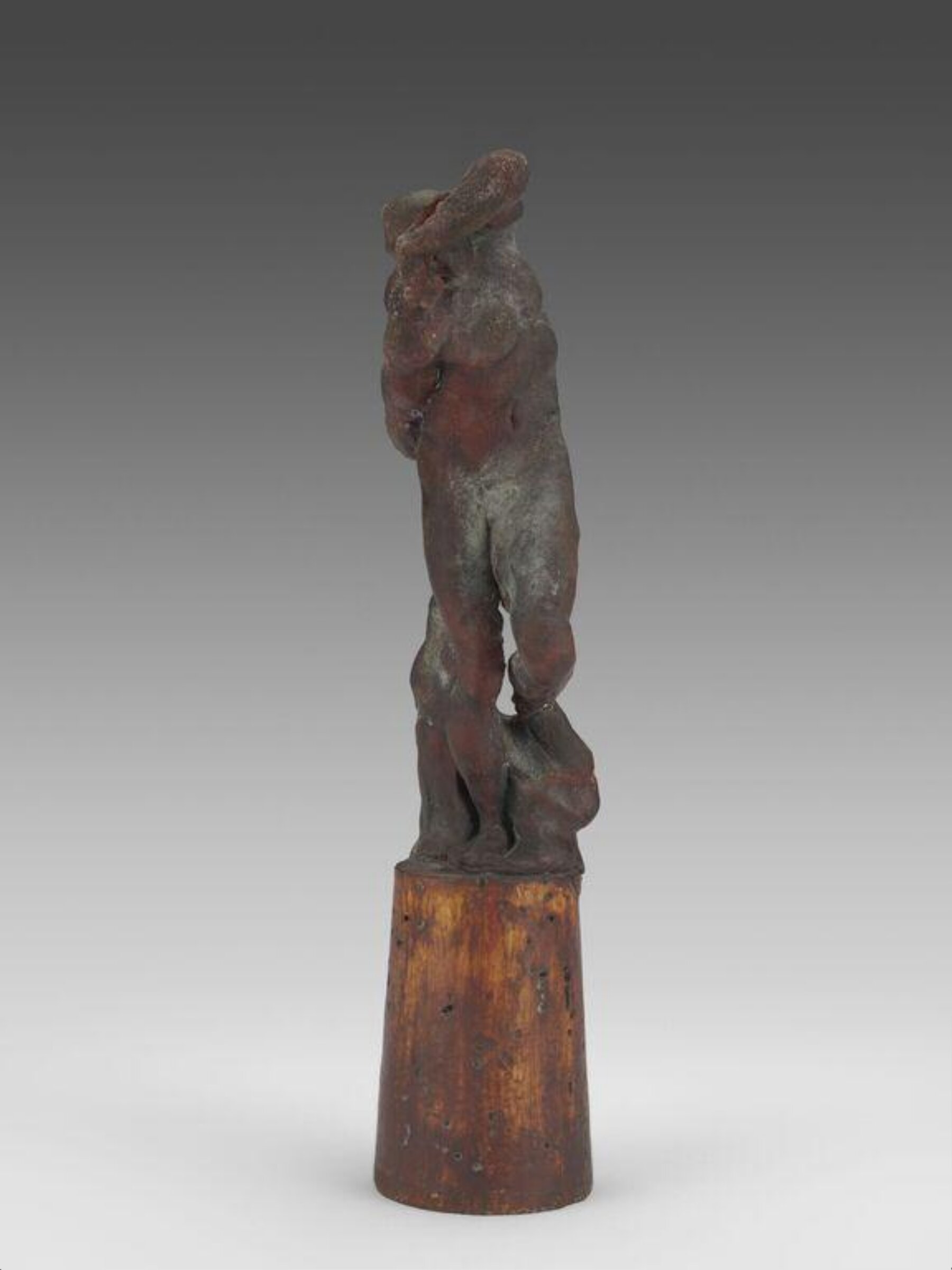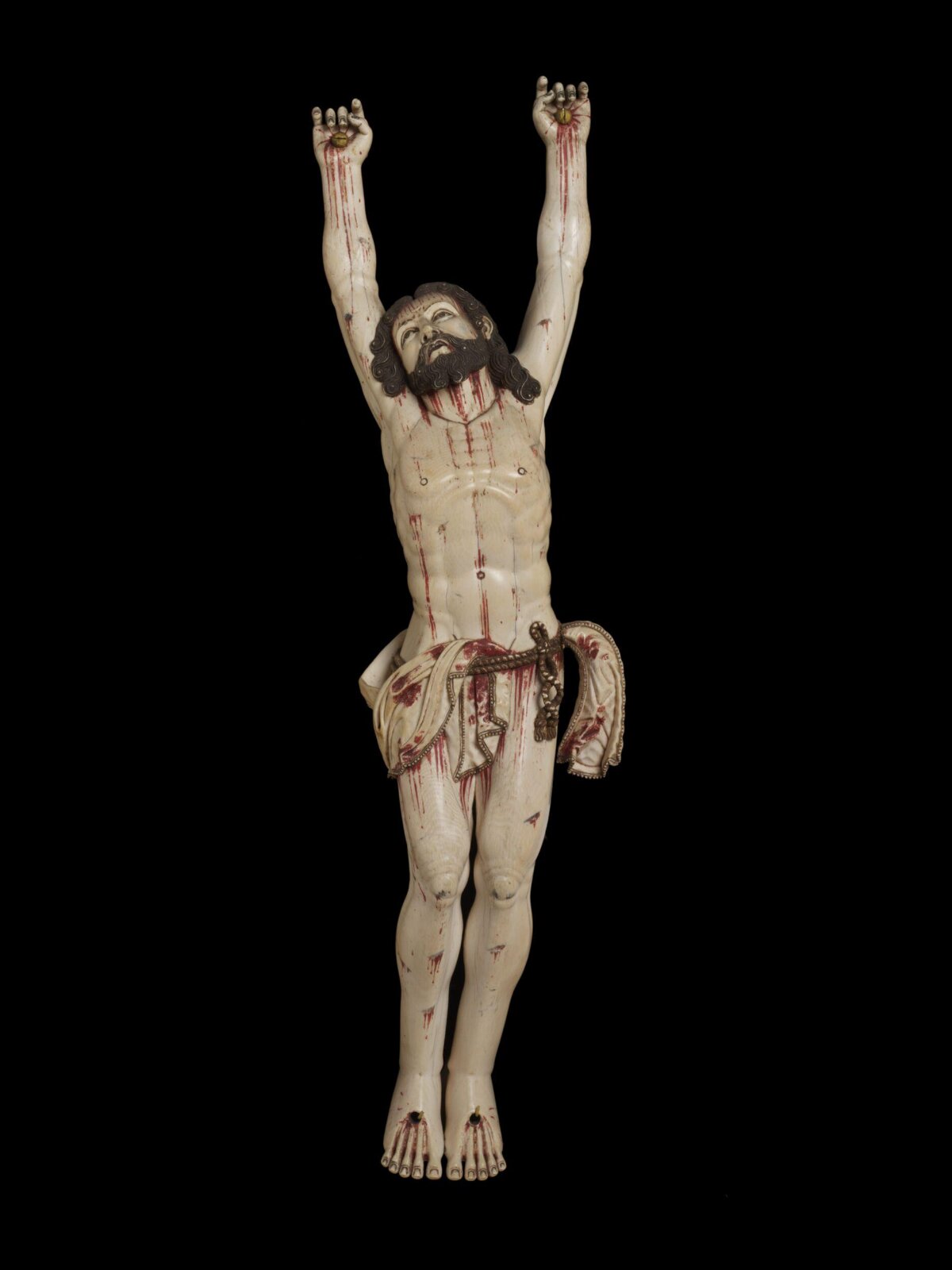
The Crucifixion
可否一睹真容?
眼下不见客

维多利亚和阿尔伯特博物馆
倫敦, 英国
仍属馆藏,只是目前没有展出。
- 核实
- 此状态始于
- 出处
- 博物馆自己的馆藏数据
About the sculpture
This statuette represents Christ hanging as if suspended from the cross (now missing). Because of the pose of the arms, raised almost vertically, the sculptor has been able to fashion the figure from one piece of ivory, following in broad terms the shape of the tusk. Part of the loincltoth, the drapery proturding from Christ's left hip, has however been carved separately and added.
Read on
The large ivory figure is typical of the Christian ivories produced in Goa on the West coast of India, when it was under Portuguese rule. Local artists specialising in ivory carving made such pieces, usually under the direction of Portuguese missionaries. Most of these ivories were made as luxury items for export to Europe, although some were used to try to convert the local people to Catholicism. Goa was the second base in India to be established by the Portuguese, having been conquered by Alfonso de Albuquerque (about 1453-1515) during the reign of Manuel I of Portugal initially in 1510, and then reconquered in 1512. Portugal was interested first and foremost in trade, and the discovery of India was motivated by a desire to dominate trade-routes.
维多利亚和阿尔伯特博物馆
作品信息
- 馆藏编号
- A.65-1927
What it shows
已收入目录
出处
- 维多利亚和阿尔伯特博物馆: the museum's own open data · 10天前获取
- 图片: 维多利亚和阿尔伯特博物馆 — © Victoria and Albert Museum, London