 Beatrix Potter1866–1943
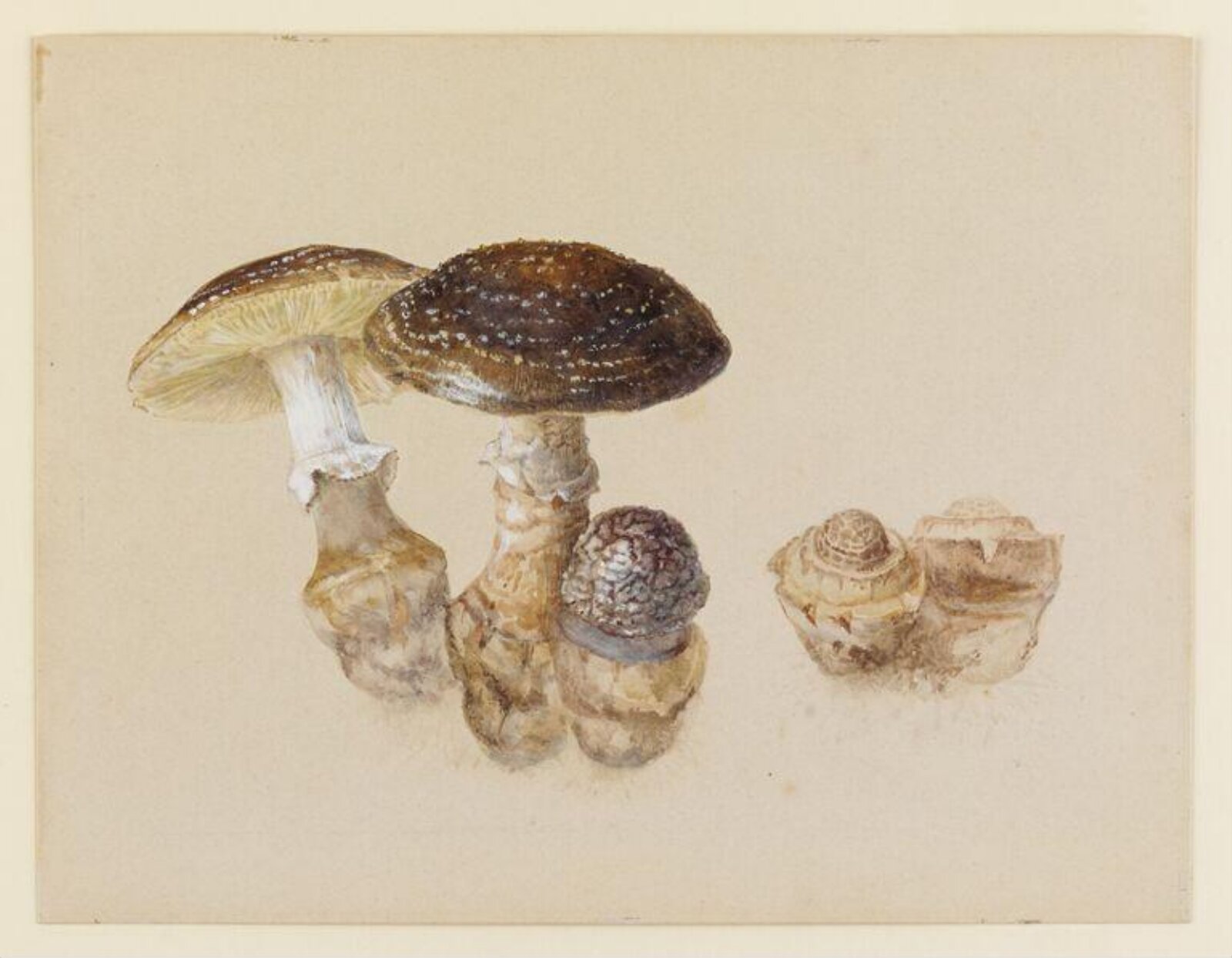
Study of mushrooms
能看到吗?
目前未展出
《Study of mushrooms》现在在哪里? 收藏方: 维多利亚和阿尔伯特博物馆, 倫敦. 目前未展出. 核实 2026年9月25日.

倫敦, 英国
仍属馆藏,只是目前没有展出。
- 核实
- 此状态始于
- 出处
- 博物馆
关于作品
Beatrix Potter (1866-1943) is one of the world's best-loved children's authors and illustrators. She wrote the majority of the twenty-three Original Peter Rabbit Books between 1901 and 1913. The Tale of Peter Rabbit (Frederick Warne, 1902) is her most famous and best-loved tale.
继续阅读
Beatrix Potter was deeply interested in natural history and as a young woman became especially concerned with mycology (the study of fungi). She made hundreds of mycological drawings, many of which she bequeathed to the Armitt Museum and Library in Ambleside, the Lake District, after her death. This undated example of a fungi study from the Linder Bequest in the Victoria and Albert Museum probably dates from the period 1887-1901, when she is known to have been producing mycological drawings. In this drawing Beatrix Potter has used an opaque white for the highlights and speckles seen on the mushrooms shown here, identified as Amanita asper, otherwise rendered in watercolour.
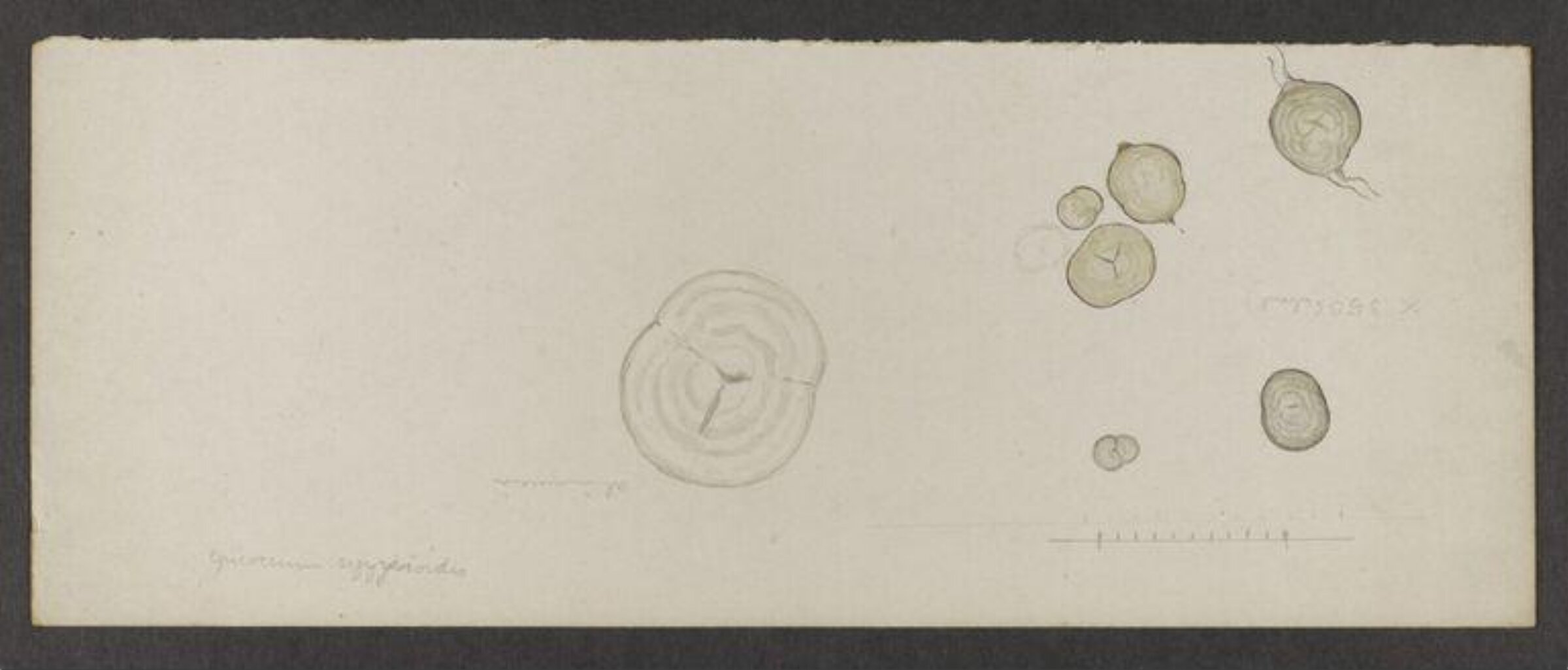
Beatrix Potter not only made careful drawings of fungi, but actively studied it. Her scientific paper, On the Germination of the spores of the Agaricineae was read at the Linnean Society in London, but was never published.
维多利亚和阿尔伯特博物馆
作品信息
- 馆藏编号
- BP.355
画面内容
已收入目录
出处
- 维多利亚和阿尔伯特博物馆
- 图片: 维多利亚和阿尔伯特博物馆 — © Victoria and Albert Museum, London
Beatrix Potter当时的生活
完整生平summer 1892
Charles McIntosh and the fungi
In the summer of 1892, at Dunkeld in Perthshire, Beatrix met Charles McIntosh, a revered naturalist and amateur mycologist: he helped make her illustrations more accurate, taught her taxonomy and supplied her with live specimens to paint in winter. By the 1890s her scientific interests had centred on mycology; she was first drawn to fungi by their colours and their evanescence.
1893
A letter to Noel Moore about four rabbits
In September 1893, on holiday at Eastwood near Dunkeld, Beatrix ran out of things to write to Noel, the often-ill eldest son of her former governess Annie Carter Moore, and told him a story about “four little rabbits whose names were Flopsy, Mopsy, Cottontail, and Peter”. It became one of the most famous children’s letters ever written and the basis of her future career; it was Annie who later suggested that such letters might make good children’s books.
1895–1897
A theory of spore germination, and Kew Gardens
In 1895, curious about how fungi reproduce, Beatrix began microscopic drawings of agaric spores and developed a theory of their germination. Through her uncle, the chemist Sir Henry Roscoe, she consulted botanists at Kew and convinced George Massee of her ability to germinate spores, but William Thiselton-Dyer, the director of Kew, rebuffed her because of her sex and amateur status.
1897
A paper for the Linnean Society
In 1897 Beatrix submitted a paper, “On the Germination of the Spores of the Agaricineae”, to the Linnean Society, but as a woman she could neither attend the meeting nor read it herself — George Massee introduced it. She later withdrew it on realising that some of her samples were contaminated, yet she continued her microscopic studies for several more years.
2 October 1902
“The Tale of Peter Rabbit” is published
Several publishers had turned the manuscript down, Frederick Warne & Co among them, but the firm, eager to enter the booming market for small-format children’s books, reconsidered on the advice of the artist L. Leslie Brooke; it declined Rawnsley’s verse version in favour of Beatrix’s own prose, and she agreed to colour her illustrations, choosing the new Hentschel three-colour process. “The Tale of Peter Rabbit” appeared on 2 October 1902 and was an immediate success.
1903
A patented Peter Rabbit toy: the birth of character merchandising
In 1903 Beatrix made and patented a Peter Rabbit doll — he became the first fictional character made into a patented soft toy, and so the oldest licensed character. Painting books, board games, wallpaper, figurines, baby blankets and china tea-sets followed under licence from her publisher Warne, earning her an independent income, and Harrods catalogues list Peter merchandise from at least 1910.