
 André Kertész美国, 1894–1985
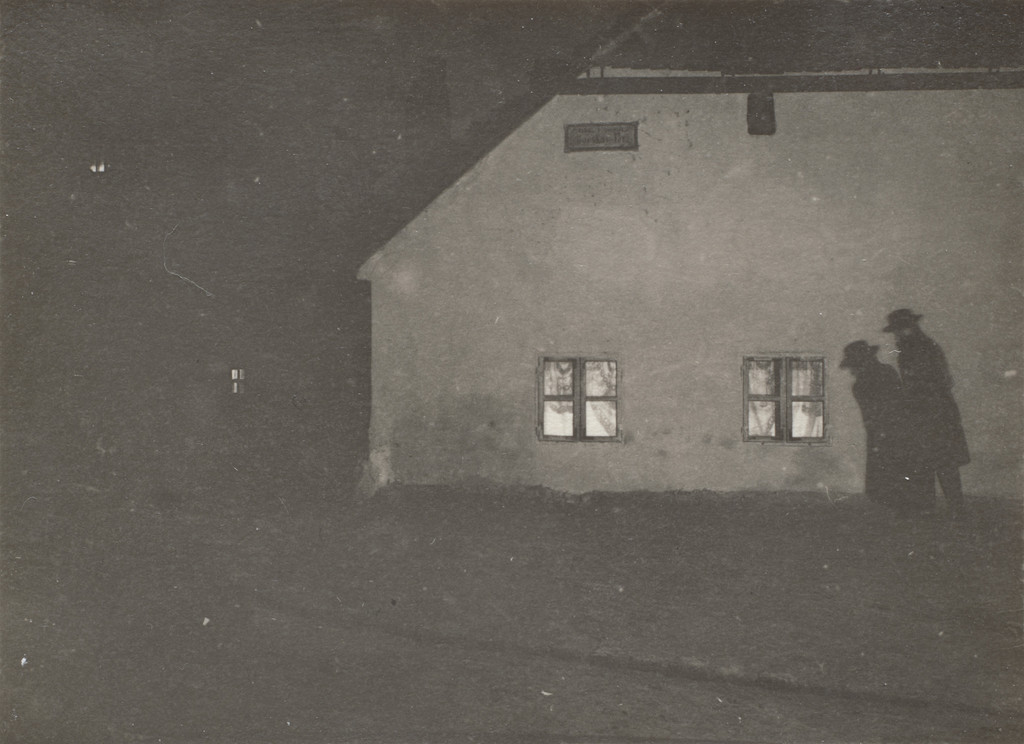
Self-Portrait as Woman
能看到吗?
目前未展出
《Self-Portrait as Woman》现在在哪里? 收藏方: 国家美术馆, 華盛頓哥倫比亞特區. 目前未展出. 核实 2026年10月12日.

華盛頓哥倫比亞特區, 美國
仍属馆藏,只是目前没有展出。
- 核实
- 此状态始于
- 出处
- 博物馆
作品信息
- 馆藏编号
- 1999.122.17
画面内容
已收入目录
出处
- 国家美术馆
- 图片: 国家美术馆 — © the artist or rights holder
André Kertész当时的生活
完整生平1918
Meets Erzsebet Salomon
With peace in 1918 he returns to the stock exchange, where he meets his future wife Erzsebet Salomon (later Elizabeth Saly), who also works there, and begins to pursue her romantically; throughout his whole career he uses Elizabeth as a model for his photographs.
1923
Turns down a silver medal over the bromoil process
The Hungarian Amateur Photographer’s Association selects one of his photographs for its silver award on condition that he print it by the bromoil process; Kertész dislikes this, turns down the medal and is given a diploma from the association instead.
1925
Moves to Paris against his family’s wishes
He leaves for Paris, then the artistic capital of the world, against his family’s wishes, leaving behind his mother, his unofficial fiancée Elizabeth, both brothers and his uncle Hoffmann, who dies shortly afterward; Jenő later emigrates to Argentina. Soon after arriving he changes his first name from Andor to André, which he keeps for the rest of his life; at first he takes commissions from several European magazines, in Germany, France, Italy and Great Britain, and then works for VU, France’s first illustrated magazine.
1927
His first solo exhibition at the Au Sacre du Printemps gallery
Jan Slivinsky presents 30 of his photographs at the “Sacre du Printemps Gallery”, and Kertész becomes the first photographer to have a one-man exhibition. At the show Paul Dermée dubs him “Brother Seer” and “Brother Seeing Eye”, alluding to a medieval monastery where all the monks were blind but one; Kertész has become connected with members of the growing Dada movement.
1928
Switches to a Leica
He switches from plate-glass cameras to a Leica; this period is one of his most productive, with daily photographing divided between magazine commissions through the late 1920s and his personal pieces.
1931
Elizabeth joins him in Paris
He had gone back to Hungary in 1930 to visit his family, and after his return to Paris Elizabeth follows him in 1931, despite opposition from her family; she had stayed behind until her future husband was well enough established in Paris for them to marry. Elizabeth and André remain together for the rest of their lives.


![Ginevra de' Benci [obverse], Leonardo da Vinci, c. 1474/1478](https://api.nga.gov/iiif/8f29e3c9-a289-4d53-abf0-31a66e9e98fa/full/!2400,2400/0/default.jpg)
![Wreath of Laurel, Palm, and Juniper with a Scroll inscribed Virtutem Forma Decorat [reverse], Leonardo da Vinci, c. 1474/1478](https://api.nga.gov/iiif/ff62e8d0-45c4-498f-ad36-6358de827e04/full/!2400,2400/0/default.jpg)


