Sculpture
可否一睹真容?
眼下不见客

维多利亚和阿尔伯特博物馆
倫敦, 英国
仍属馆藏,只是目前没有展出。
- 核实
- 8天前
- 此状态始于
- 2026年9月25日
- 出处
- 博物馆自己的馆藏数据
About the sculpture
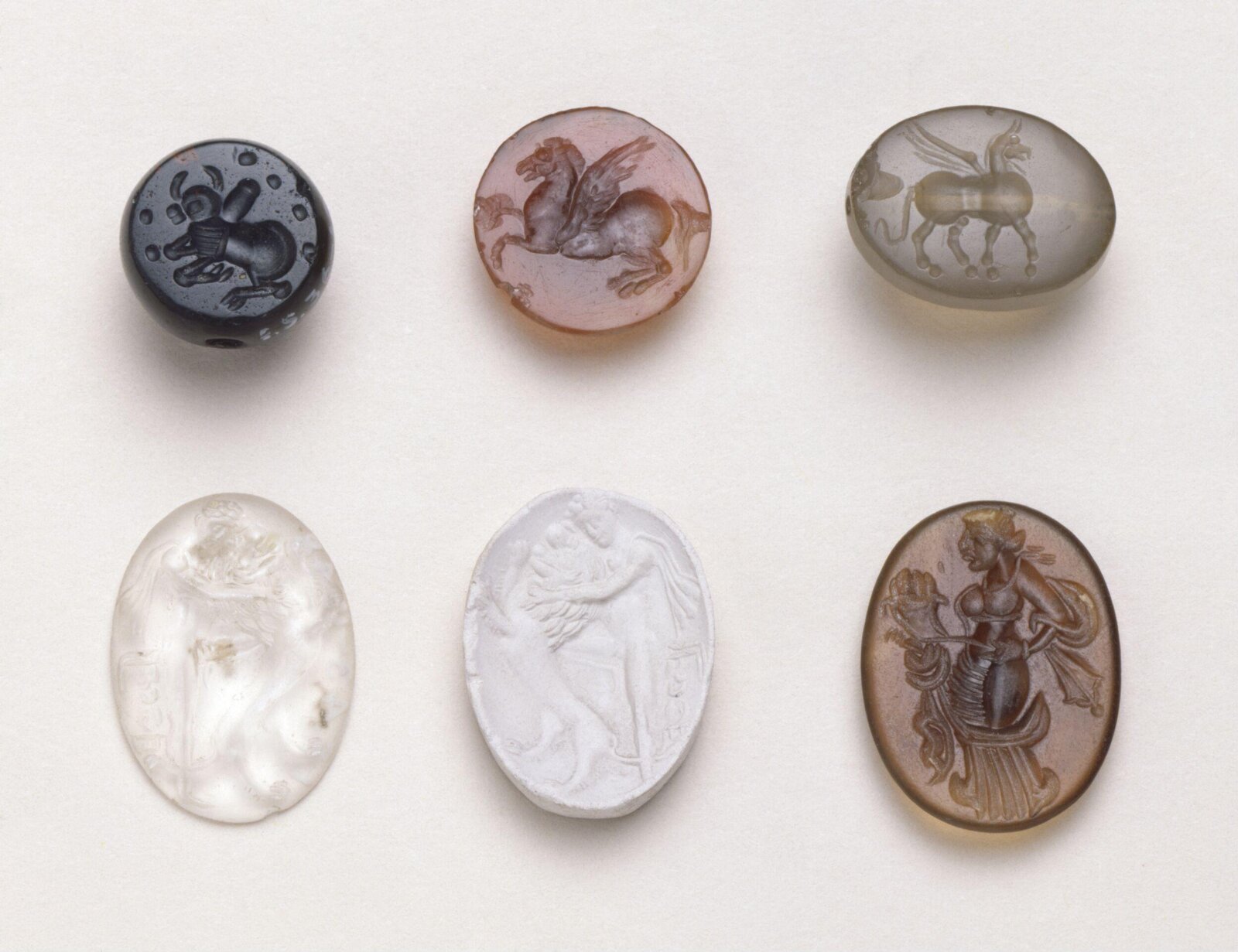
This seal is accompanied by an impression made from it in modern times to show what the positive image would look like. The female figure it depicts probably represents the Buddhist goddess Hariti wearing Indian dress and holding a cornucopia or horn of plenty. Hariti was a child-eating ogress but after her conversion to Buddhism she became a protector of children and was worshipped as a mother goddess. In the last centuries BC and early centuries AD the region of Gandhara in northern Pakistan and Afghanistan had close cultural, political and trade connections with the Greek and Roman worlds. The region became a Buddhist stronghold from around the late first or mid second century AD. This seal is probably an example of adaptation of Greek or Roman concepts to Indian iconography. It has been pointed out by the late J.C. Harle that the cornucopia shows differs from its Greek and Roman models, while the sword she holds is not an attribute of Hariti. It is thought to have been engraved by an artisan trained in the Indo-Iranian tradition.
维多利亚和阿尔伯特博物馆
作品信息
- 馆藏编号
- IS.46-1948
What it shows
已收入目录
出处
- 维多利亚和阿尔伯特博物馆: the museum's own open data · 8天前获取
- 图片: 维多利亚和阿尔伯特博物馆 — © Victoria and Albert Museum, London