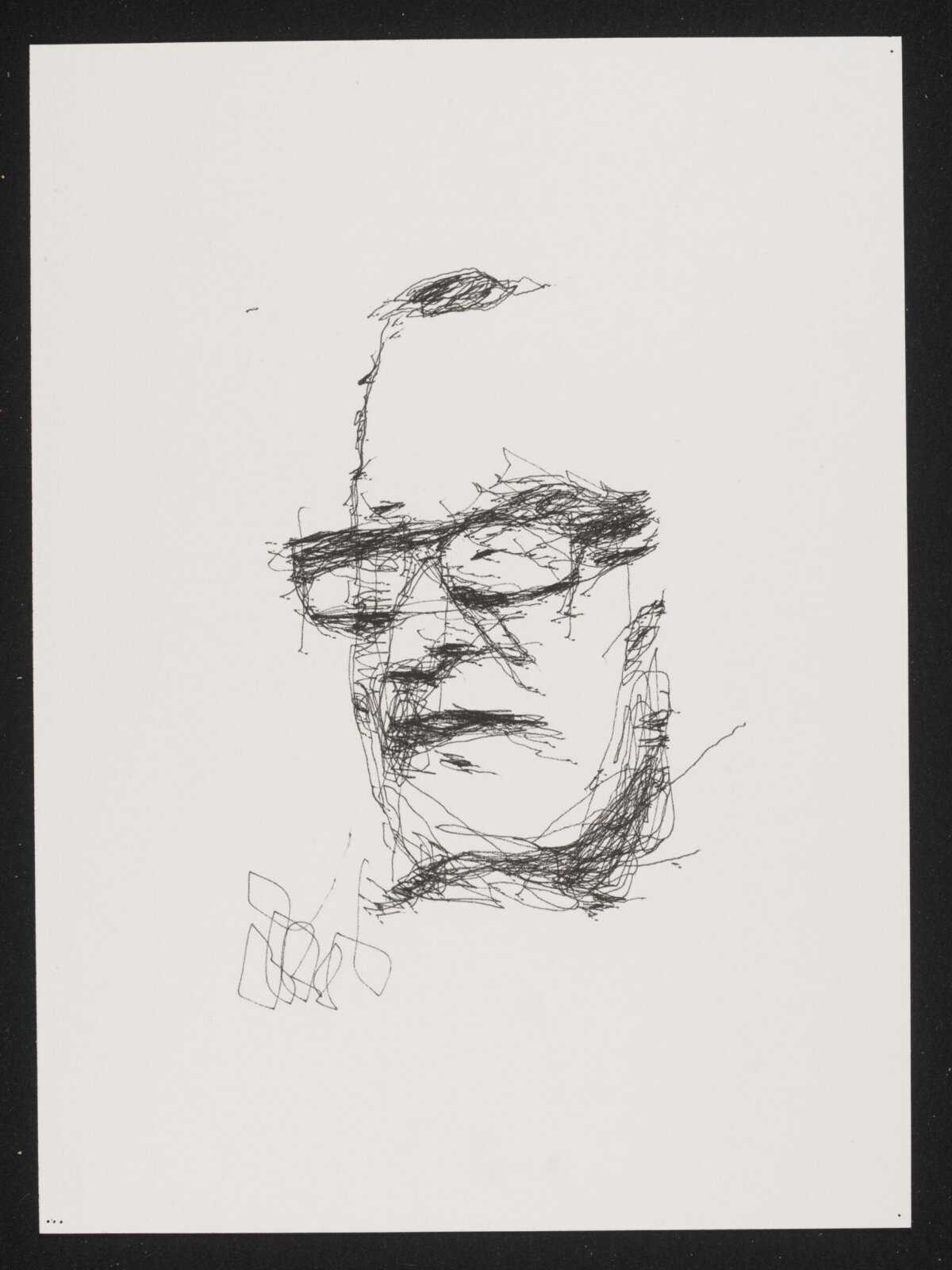
Patrick Tresset
Portrait 2011
可否一睹真容?
眼下不见客

维多利亚和阿尔伯特博物馆
倫敦, 英国
仍属馆藏,只是目前没有展出。
- 核实
- 9天前
- 此状态始于
- 2026年9月25日
- 出处
- 博物馆自己的馆藏数据
关于作品
This machine portrait was drawn by "Paul", a robotic installation developed by the French-born artist Patrick Tresset. In order to create artworks such as this one, a sheet of paper would be pinned onto to a wooden table that had a robotic arm and artist's pen attached to it. A small camera would look at the sitter, then the robotic hand would begin to sketch the portrait. The pen would pause from time to time and the robotic eye would move as if it was re-examining the sitter, then the robotic artist would continue with the drawing. Although the finished portrait might look similar to thousands of naive works created by human artists, the installation and the robotic production process are essential aspects of the performance and the artwork.
Read on
Patrick Tresset studied computer science in France, then moved to London to become a painter. He registered for an Msc then a PhD at Goldsmiths college and initiated and co-directed the Aikon project with Frederic Fol Leymarie. The main objective of the Aikon II investigation (2009-2012) was "to implement a computational system capable of simulating the various important processes involved in face sketching."
Tresset's computer drawings also refer to the work of a number of earlier artists whose works are in the V&A's collection. Harold Cohen, for example, developed the AARON program in order to explore the use of artificial intelligence in art-making, whilst Roman Verostko made extensive use of computer algorithms to create his unique pen plotter drawings.
维多利亚和阿尔伯特博物馆
作品信息
- 馆藏编号
- E.1458-2011
已收入目录
出处
- 维多利亚和阿尔伯特博物馆: the museum's own open data · 9天前获取
- 图片: 维多利亚和阿尔伯特博物馆 — © Victoria and Albert Museum, London