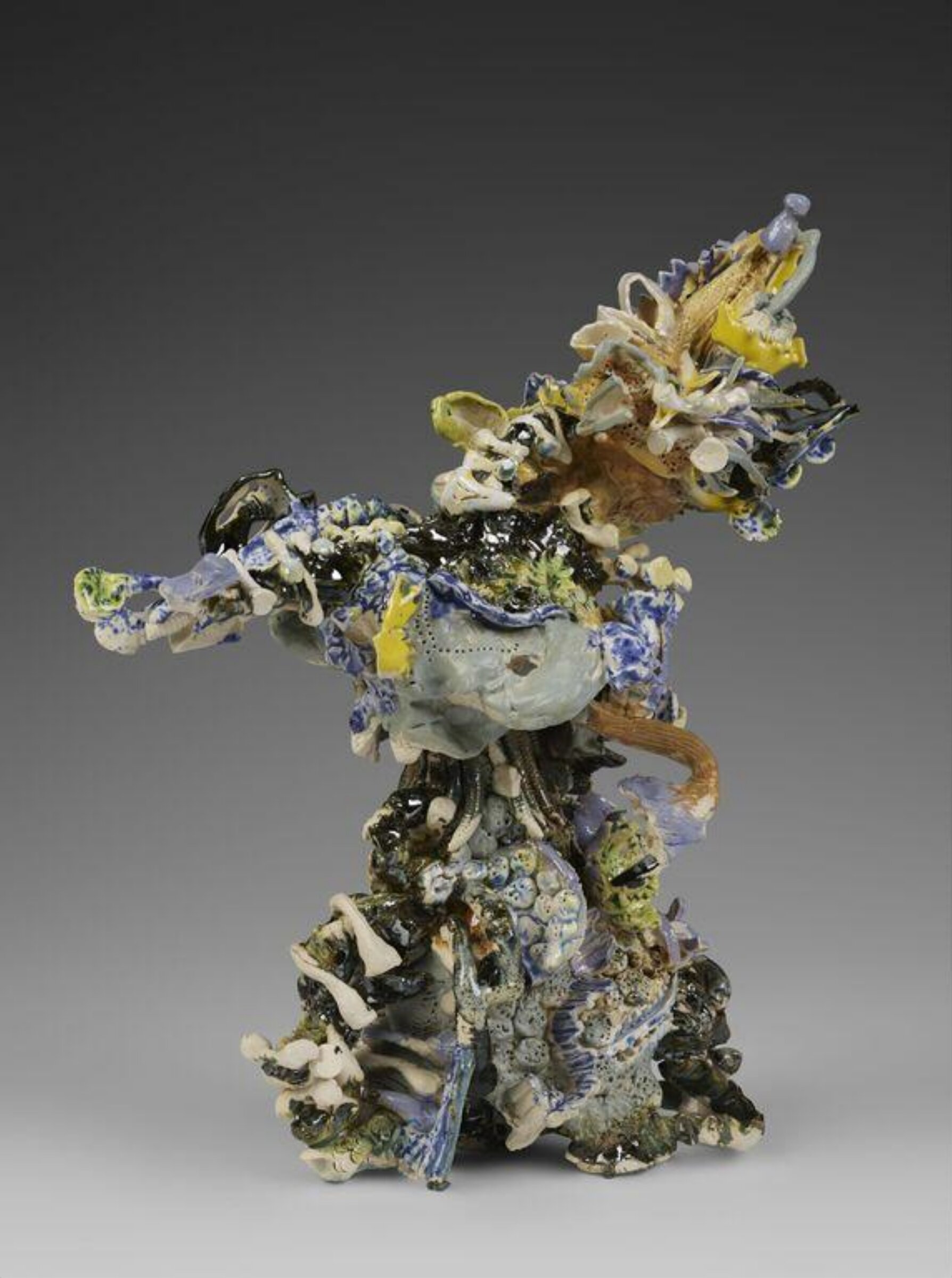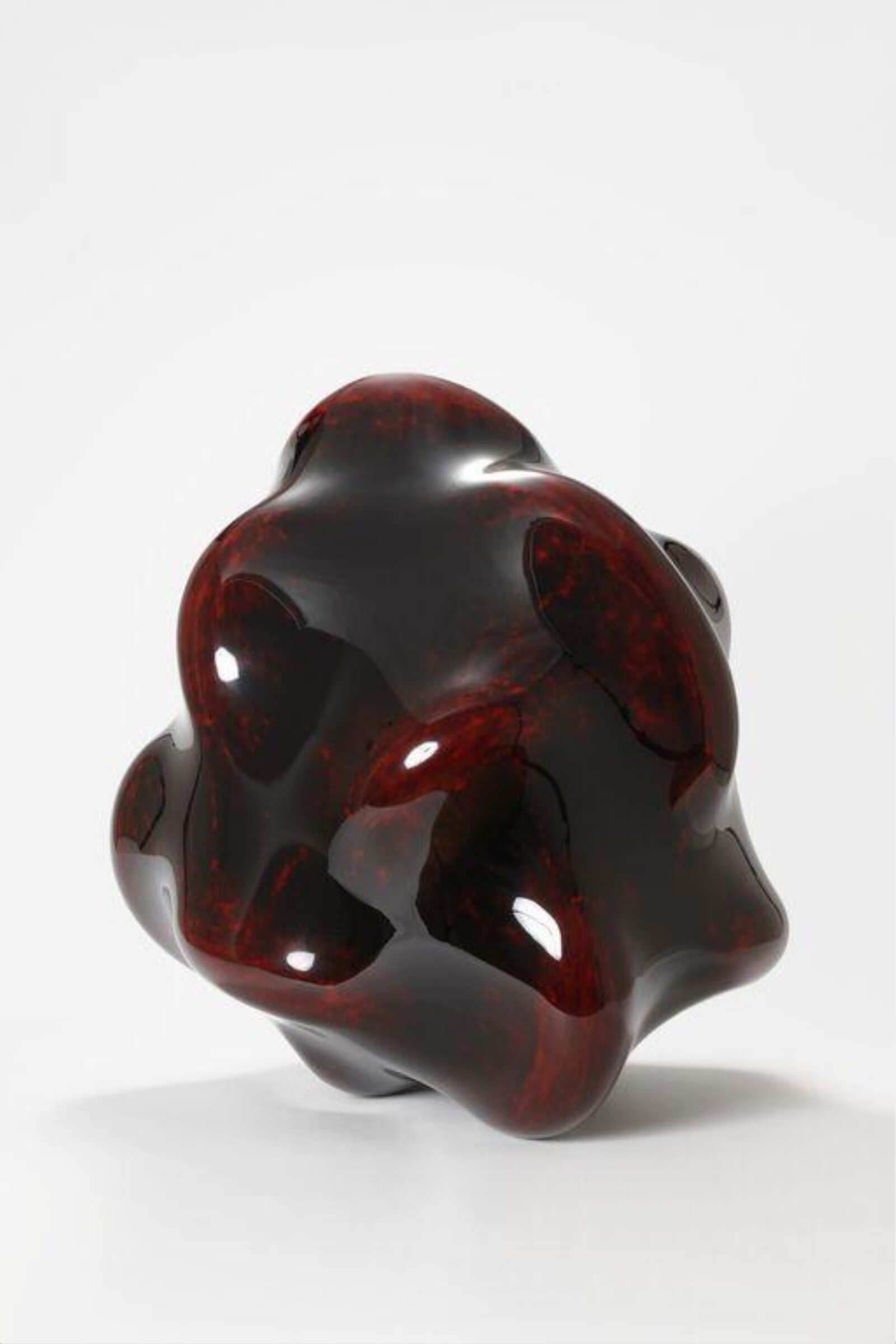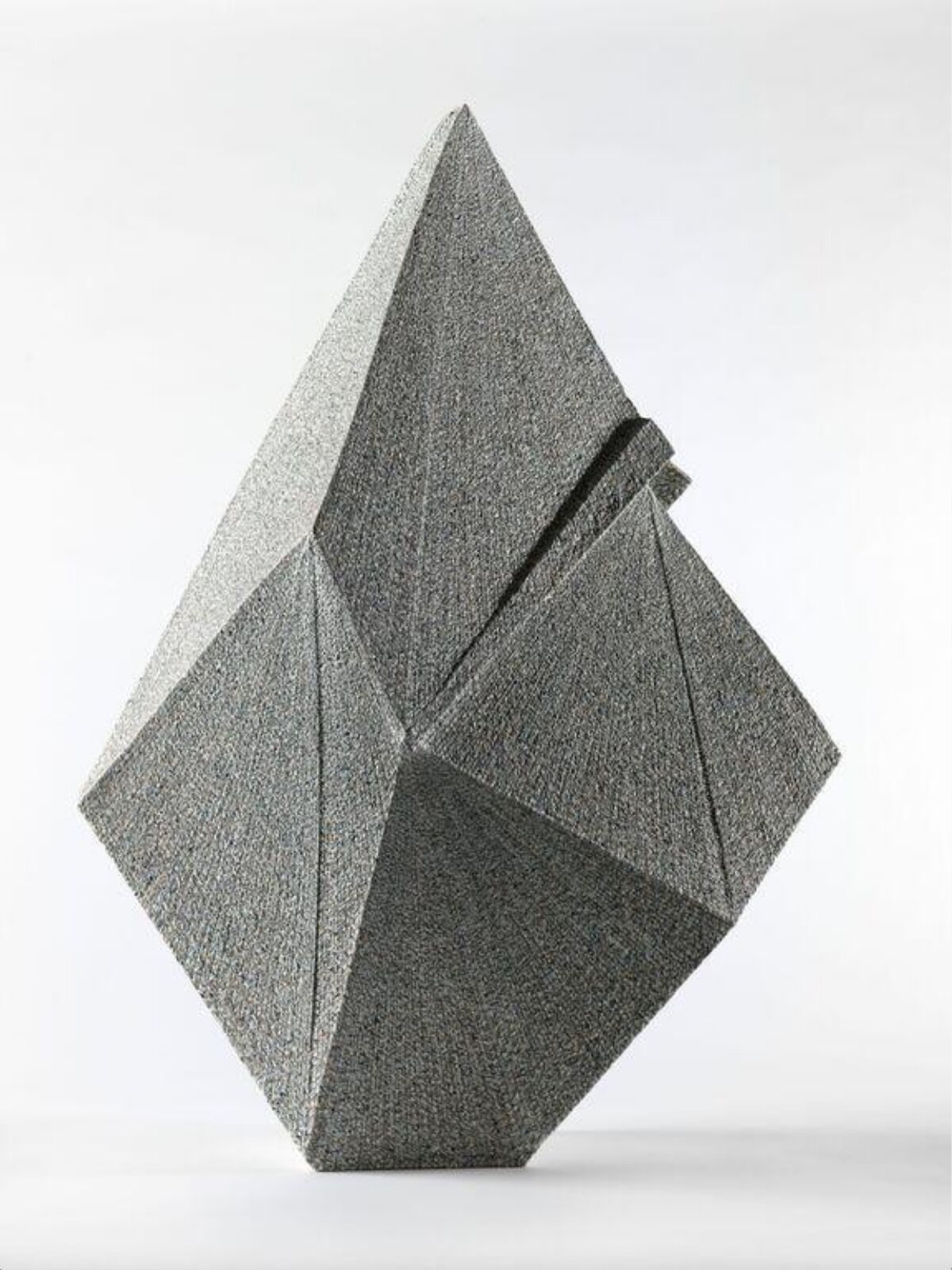
Noh Dance, 2010
能看到吗?
不明
《Noh Dance, 2010》现在在哪里? 收藏方: 维多利亚和阿尔伯特博物馆, 倫敦. 不明.

倫敦, 英国
所有者已知,目前是否展出尚不清楚。
- 此状态始于
- 出处
- 博物馆
关于这件雕塑
Kishi Eiko is one of the most highly respected woman ceramicists working in Japan today. Her monumental but quietly poetic works - this example belonging to a series inspired by the formalised gestures of the Noh theatre (a 'sublime balance of graceful elegance and dynamic restraint'), which originated in her native Kyoto during the fourteenth century - are created with a unique and painstaking technique she has developed over a period of 30 years, her particular sensitivity to surface texture owing much to the fact that she studied textiles before becoming a ceramicist. The stoneware clay she uses comes from Shigaraki. She begins by mixing batches of clay with one of up to ten different pigments. She cuts these into tile-like slabs and fires them. She then breaks up the fired slabs and mixes the pieces together before stamping and crushing them into small fragments (chamotte).
继续阅读
She sieves the fragments to obtain a multi-coloured mixture of even particle size, which she then mixes at a ratio of about 1:1 with Shigaraki clay. From this she makes the slabs from which she builds up her shapes. Once the shape has been formed and sculpted, she scrapes its leather-hard surfaces so that the chamotte embedded in the clay is revealed. This is followed by the use of a needle to create fine striations covering all the surfaces of the form. She then uses a fine brush to apply evenly spaced dabs of slip to the striated surfaces. Once the form has fully dried, it is bisque-fired. Since the clay in which the chamotte is embedded shrinks more than the chamotte, this has the effect of bringing the chamotte to the surface. Final adjustments are followed by the overall application of a thin coating of glaze and a high temperature firing.
From start to finish this process can take up to three months. Rather than being a disadvantage - Kishi works on several pieces in parallel - this gives her the time to think and reflect on what she is doing and to make changes and adjustments as the work progresses. In this way there is a continuous dialogue between the maker and her forms, each finished work being the product not of a preconceived idea but of an evolutionary process whose direction she cannot and does not try to anticipate.
维多利亚和阿尔伯特博物馆
作品信息
- 馆藏编号
- FE.109-2012
已收入目录
出处
- 维多利亚和阿尔伯特博物馆
- 图片: 维多利亚和阿尔伯特博物馆 — © Victoria and Albert Museum, London