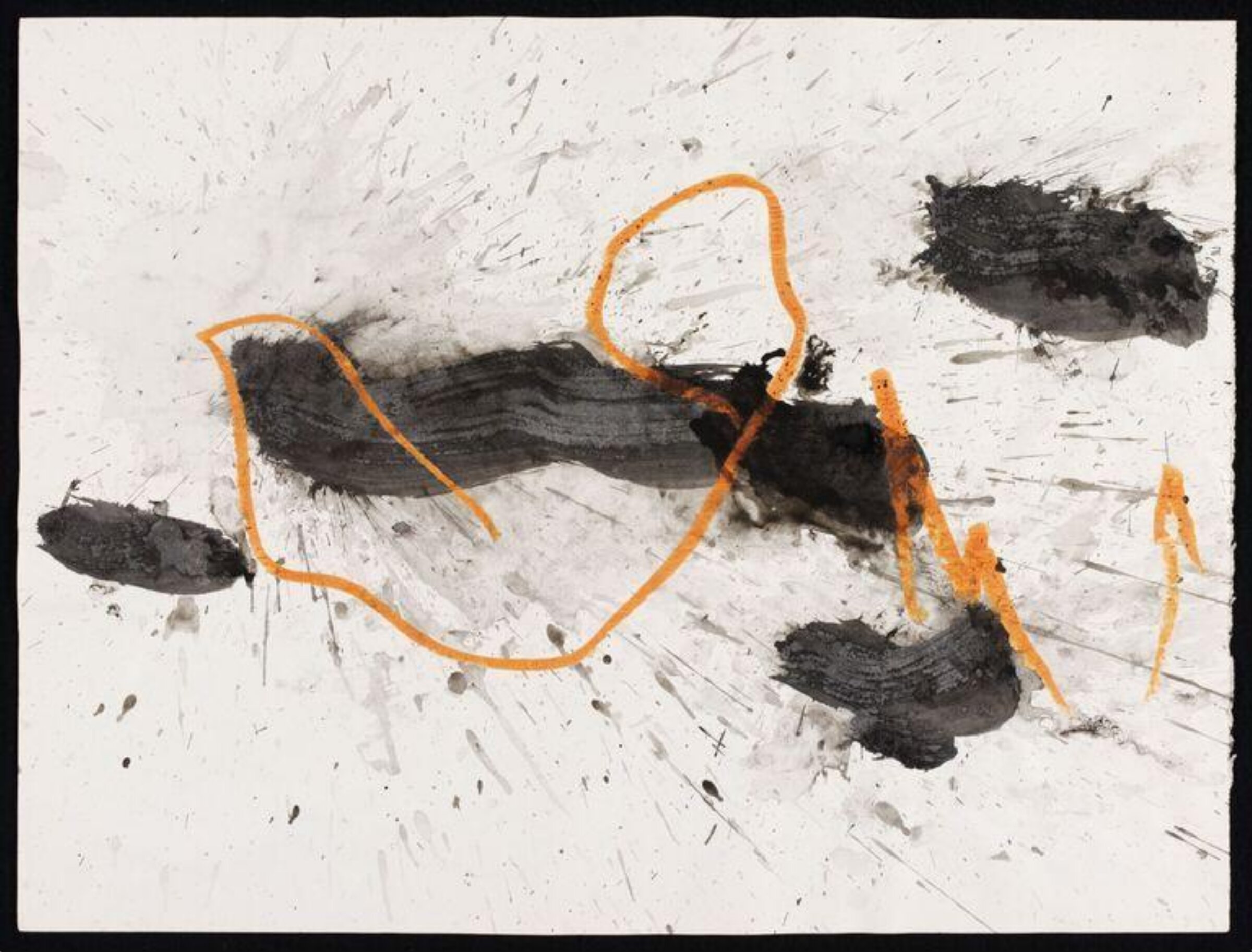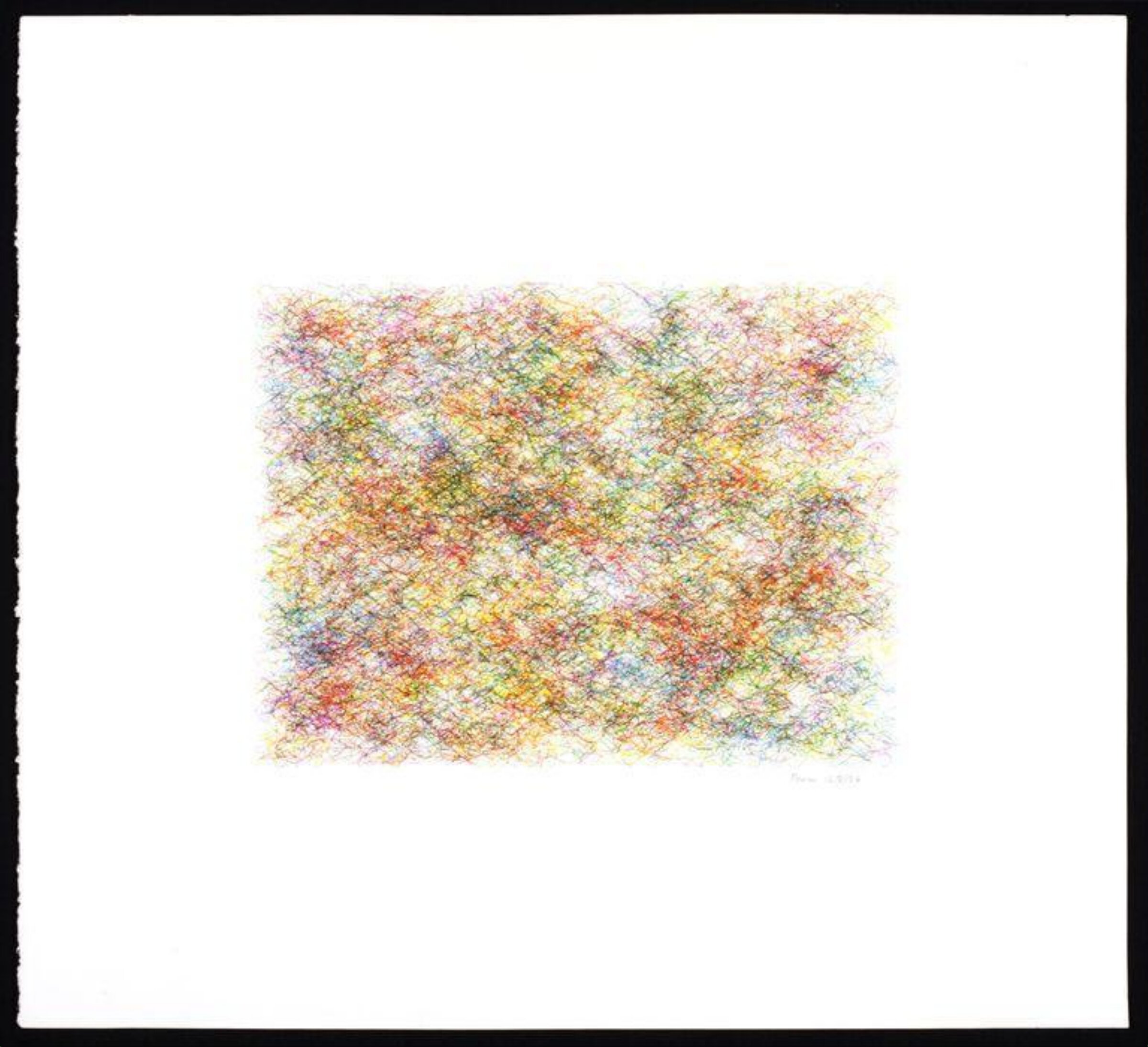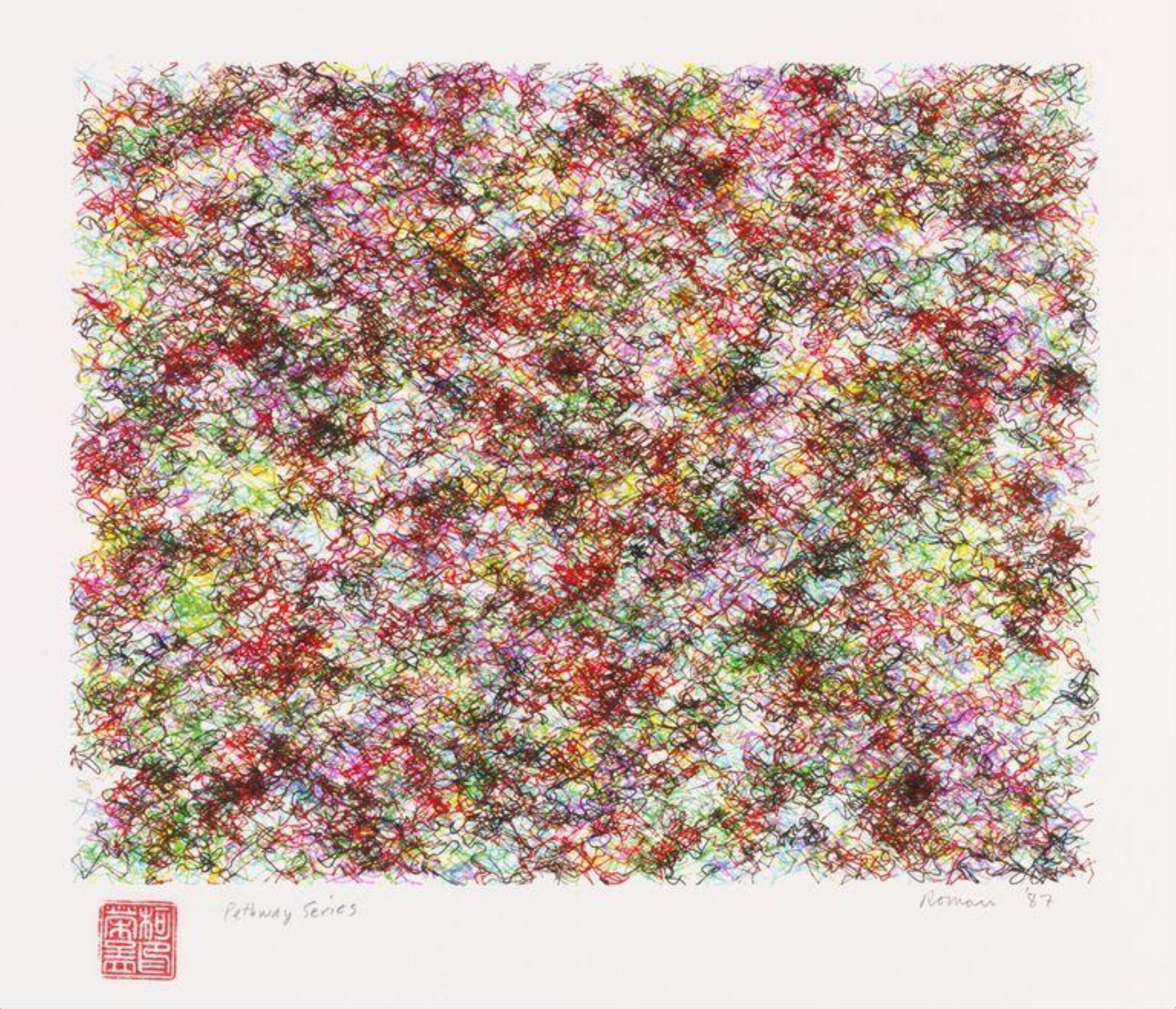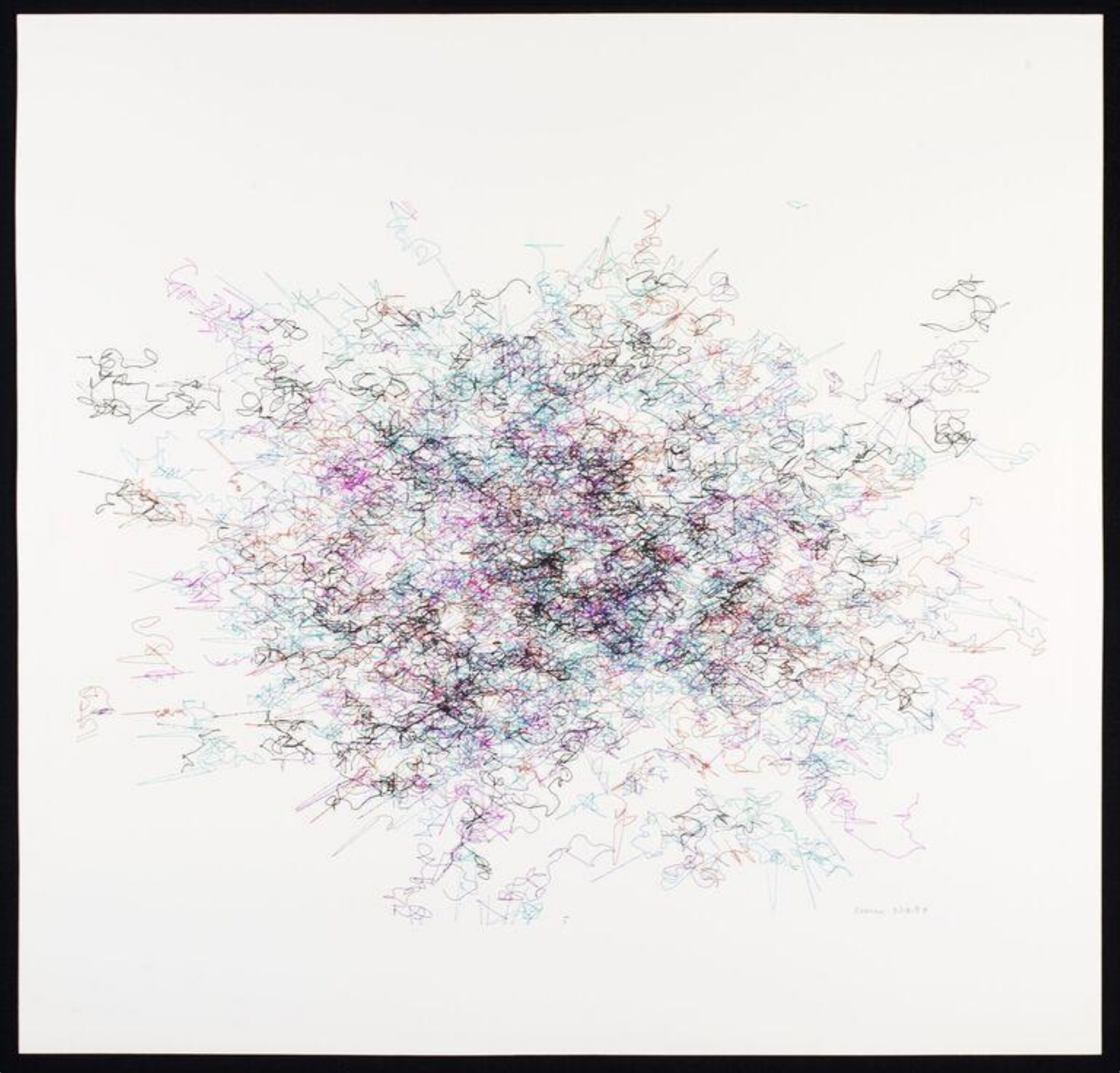
Meditation
可否一睹真容?
眼下不见客

倫敦, 英国
仍属馆藏,只是目前没有展出。
- 核实
- 此状态始于
- 出处
- 博物馆
关于作品
Roman Verostko, born in Western Pennsylvania in 1929, maintains an experimental studio in Minneapolis where he has developed original algorithmic procedures for creating his art. Having been active as an exhibiting artist since 1963, his earliest use of electronics consisted of synchronized audio-visual programs dating from 1967-68. Aware of the awesome power of algorithmic procedure he began experimenting with code and exhibited his first coded art programs in the early 1980's. In 1987 he modified his software with interactive routines to drive paint brushes mounted on a pen plotter’s drawing arm, (see references).
继续阅读
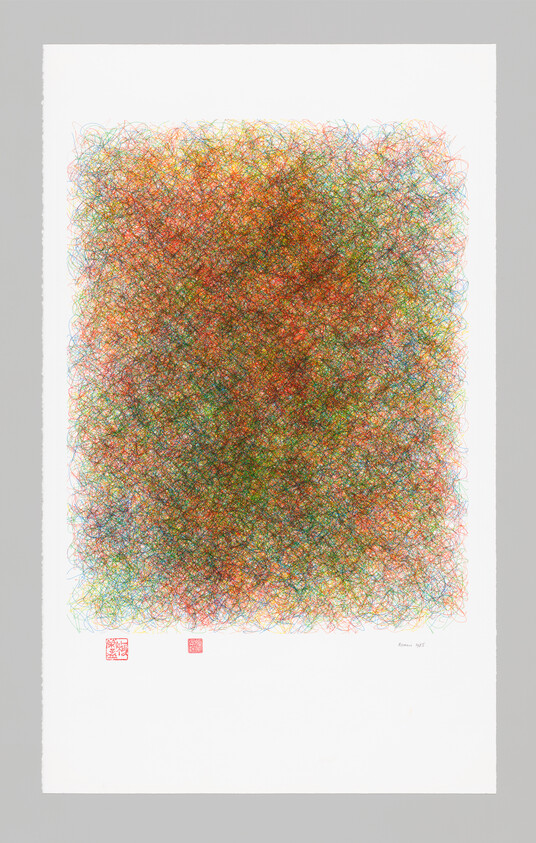
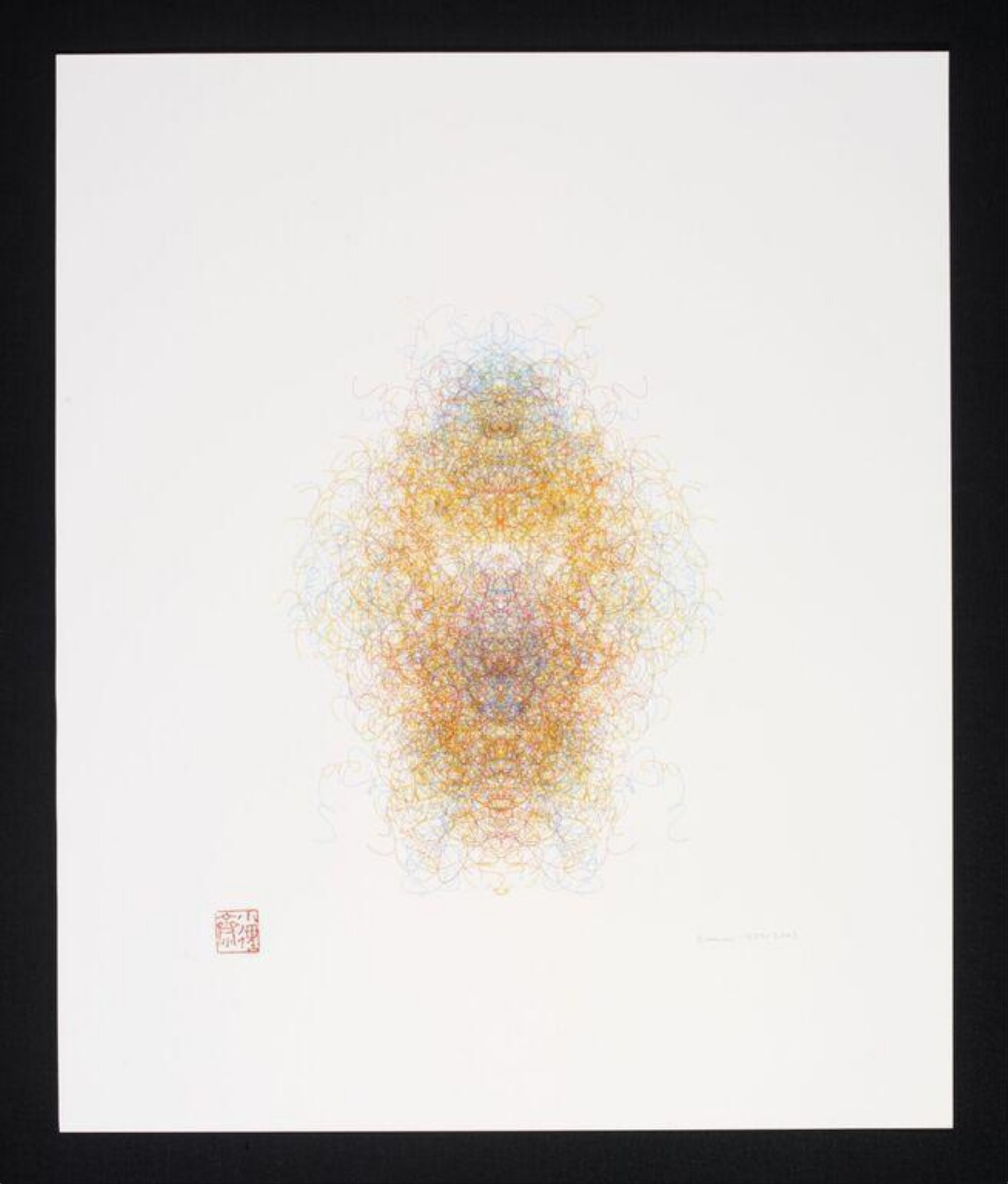
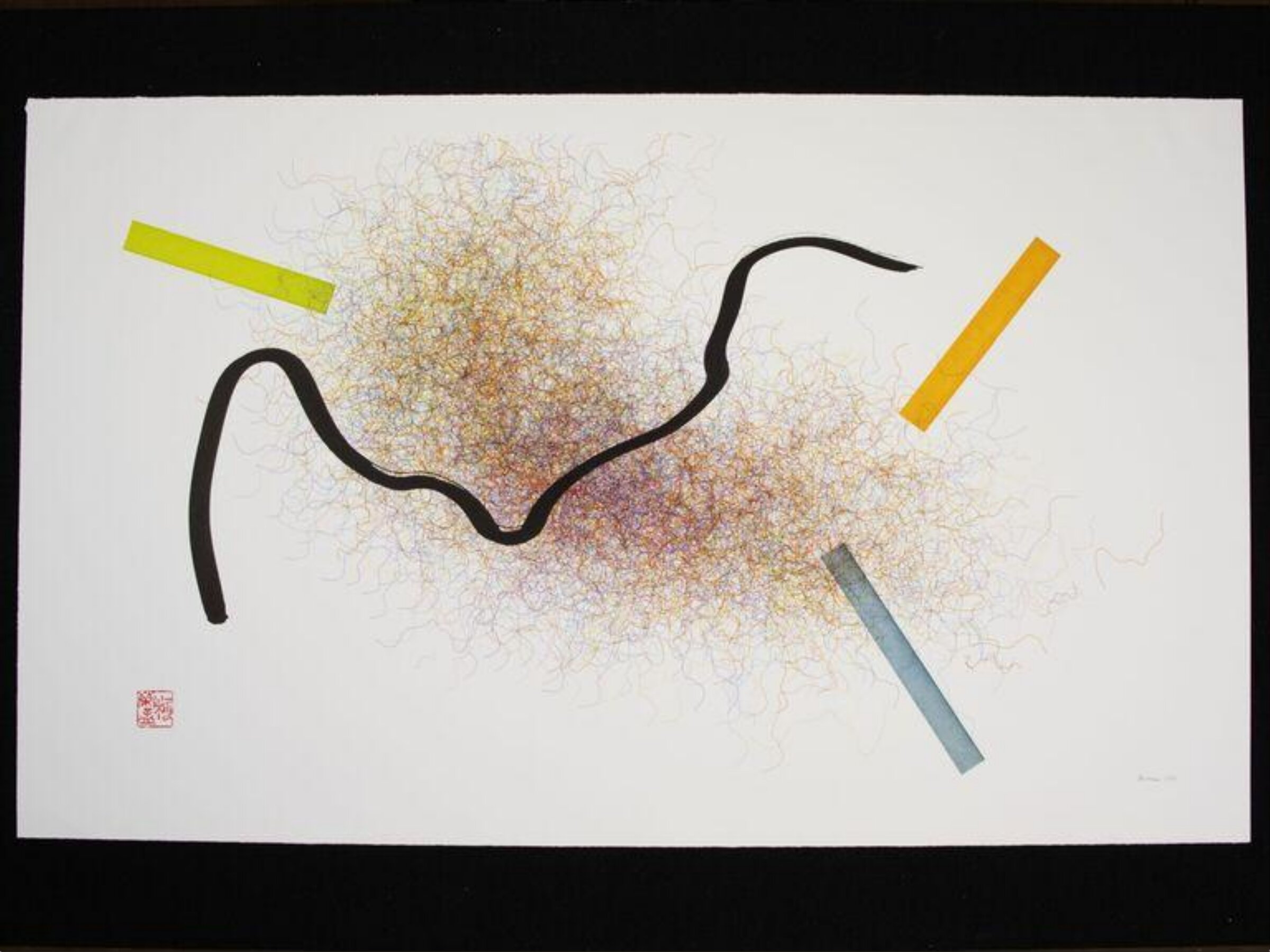
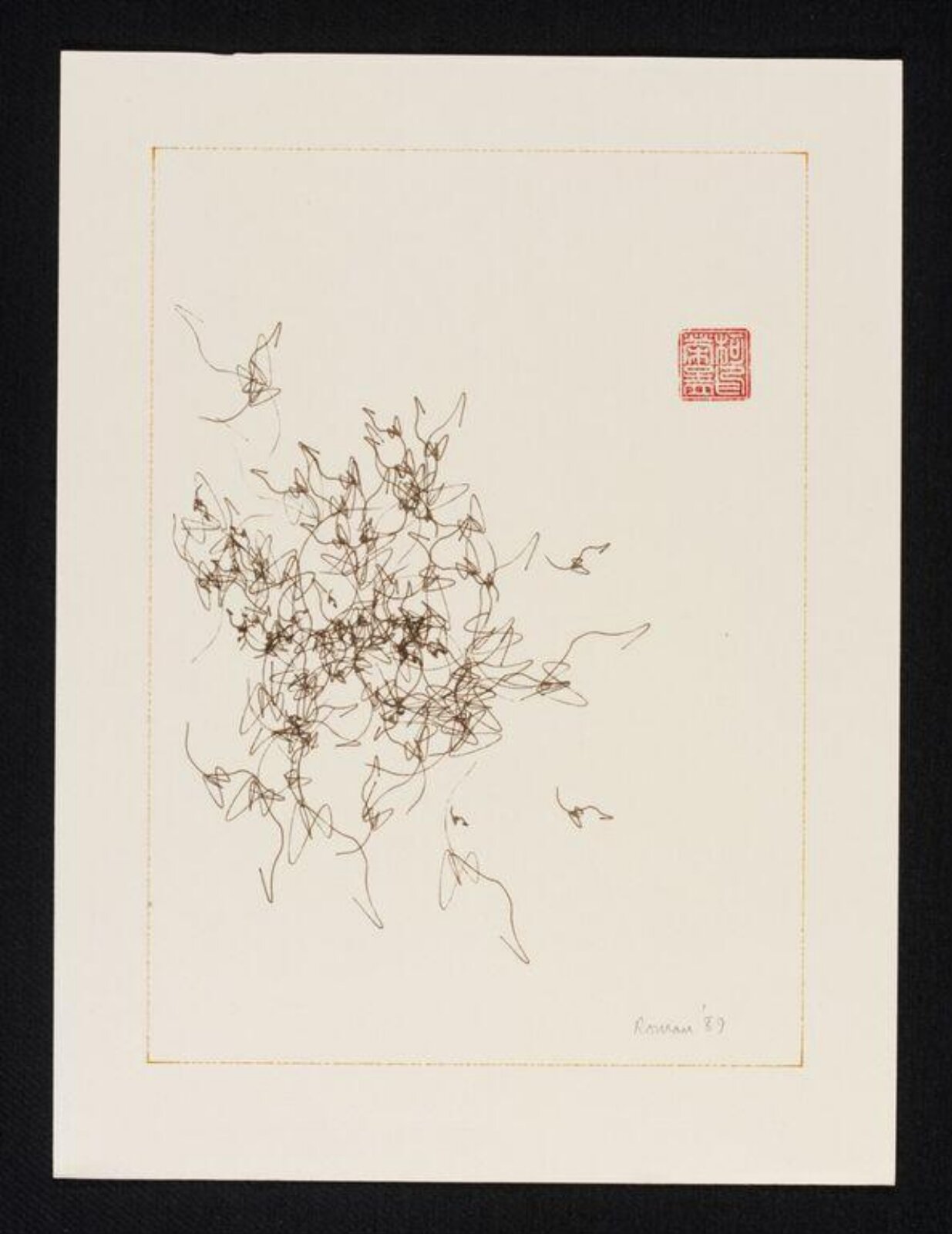
This work is an original drawing which is "one-of-kind". Each line was drawn on a plotter following the instructions given by Roman's program, Hodos. For this special edition, marking the opening of 'Pathways' at Honeywell, Roman prepared a data file to control the parameters. Following a number of experimental runs with program refinements, he made a final setting. The plotter worked around the clock for several days yielding a remarkably rich and varied series of drawings.
The red seal imprint was hand stamped with one of several seals that were made for the artist when he taught in China. The Chinese name, Ke Rong-Meng, was given to the artist by his Chinese teacher. Many of the drawings in this series show a strong structural use of the void in relation to a cluster of drawing activity. This and other features of this series, have an oriental flavour which the artist has consciously used in designing the piece. For the artist this series has been a 'meditation'.
This kind of edition, with each drawing having a unique form, demonstrates how "software art" uses the computer as an information enriched medium. It also clearly demonstrates how "software art" works in a way analogous to "genotype". Roman's software, Hodos, is a code carrying the information necessary to generate a form. While the works realised with this code bear a strong family resemblance, each one has unique, individual qualities. This is why this kind of computer assisted work is called "epigenetic" - its processes are analogous to biological epigenesis. This should not surprise us since biological analogues commonly crop up in relation to software as in the recent spread of software "virus".
(cit.: artist's own statement accompanying the work, Jan 13, 1989, Minneapolis)
维多利亚和阿尔伯特博物馆
作品信息
- 馆藏编号
- E.1089-2008
已收入目录
出处
- 维多利亚和阿尔伯特博物馆
- 图片: 维多利亚和阿尔伯特博物馆 — © Victoria and Albert Museum, London