 William Morris英国, 1834–1896
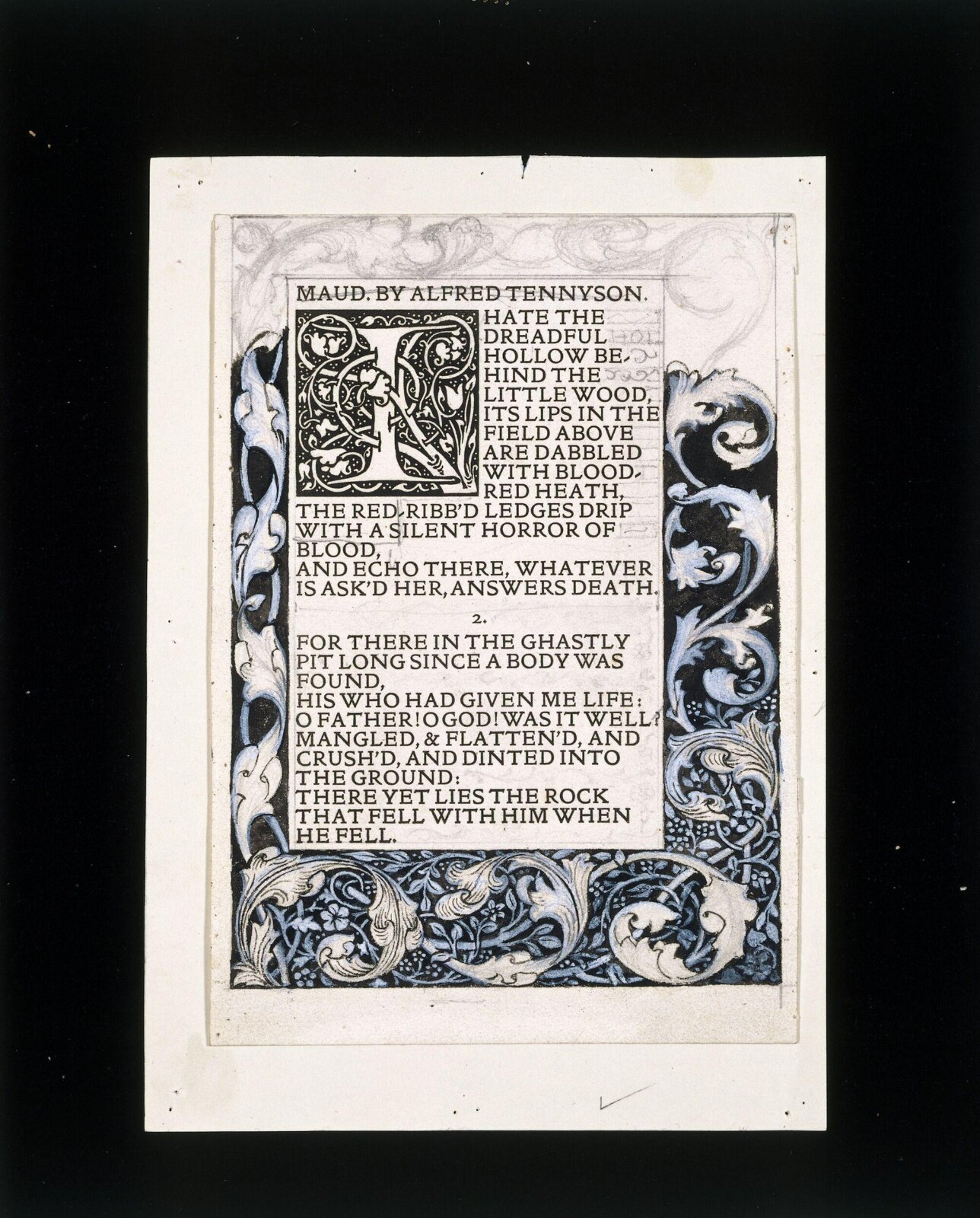
Maud
可否一睹真容?
眼下不见客

维多利亚和阿尔伯特博物馆
倫敦, 英国
仍属馆藏,只是目前没有展出。
- 核实
- 8天前
- 此状态始于
- 2026年9月25日
- 出处
- 博物馆自己的馆藏数据
关于作品
Object Type
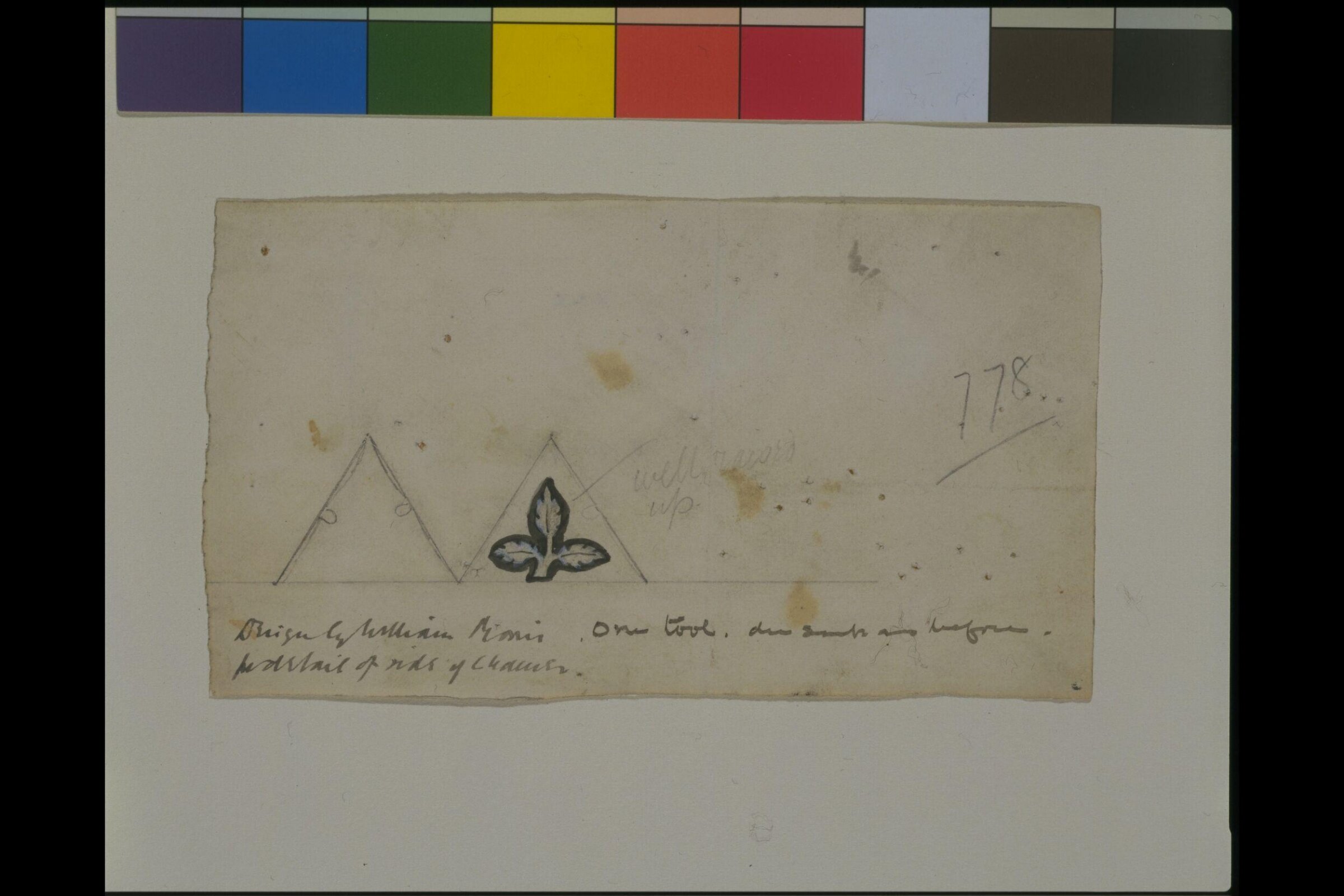
This is an unfinished and unused design for a page layout for the poem Maud by Alfred Lord Tennyson. William Morris added a hand-painted border design to a proof page of type and wood-engraved initial. The border has a narrow left margin to sit next to a title page decorated with a similar border with narrow right margin.
The painted border design would be reproduced as a woodcut in the finished book. During the 19th century it was usual for the artist to make the drawing and a professional engraver to cut the design into the block of boxwood. Morris' designs for borders and initials were wood-engraved by W.H. Hooper, C.E. Keates and W. Spielmeyer.
Design & Designing
Read on
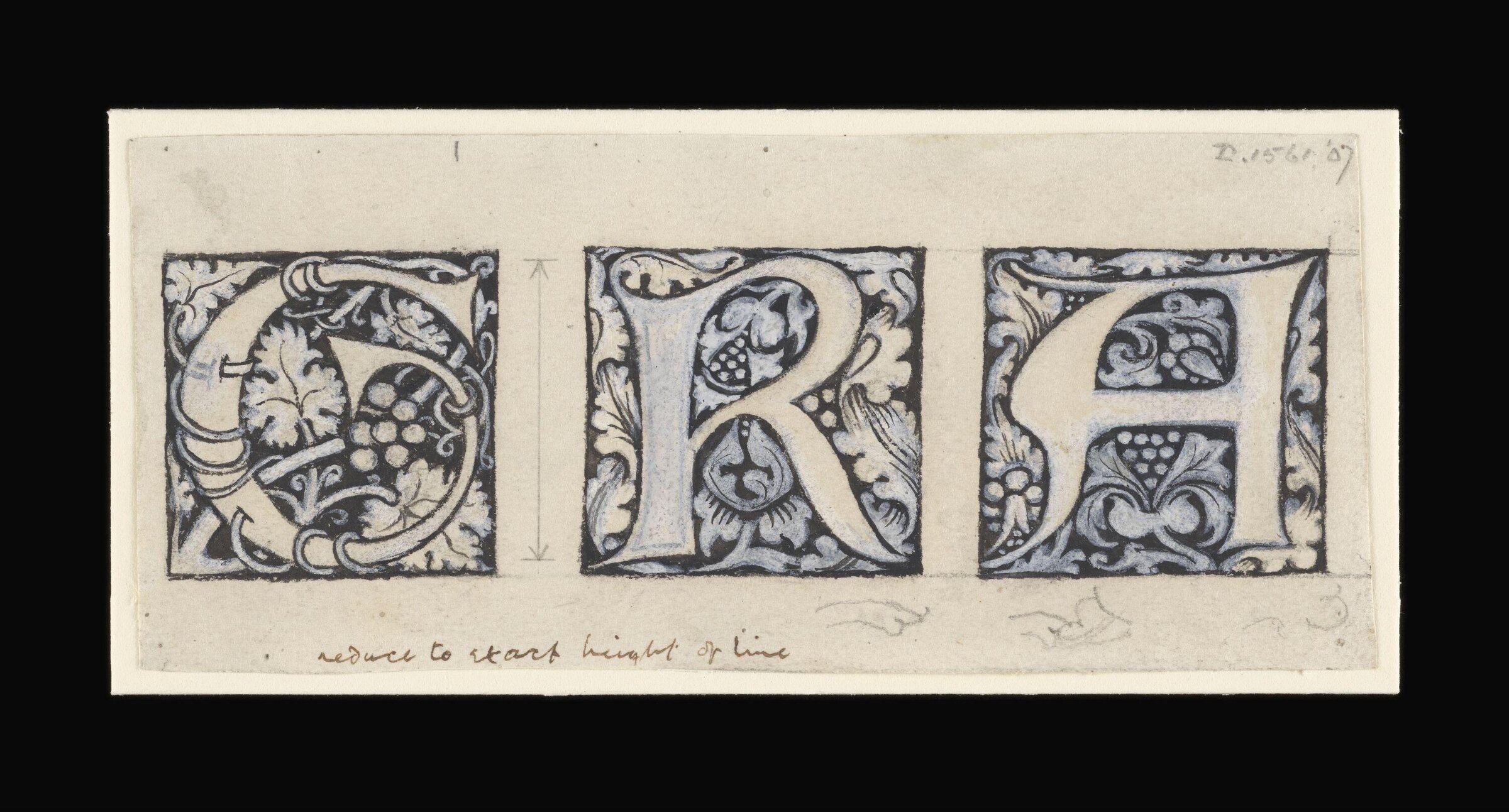
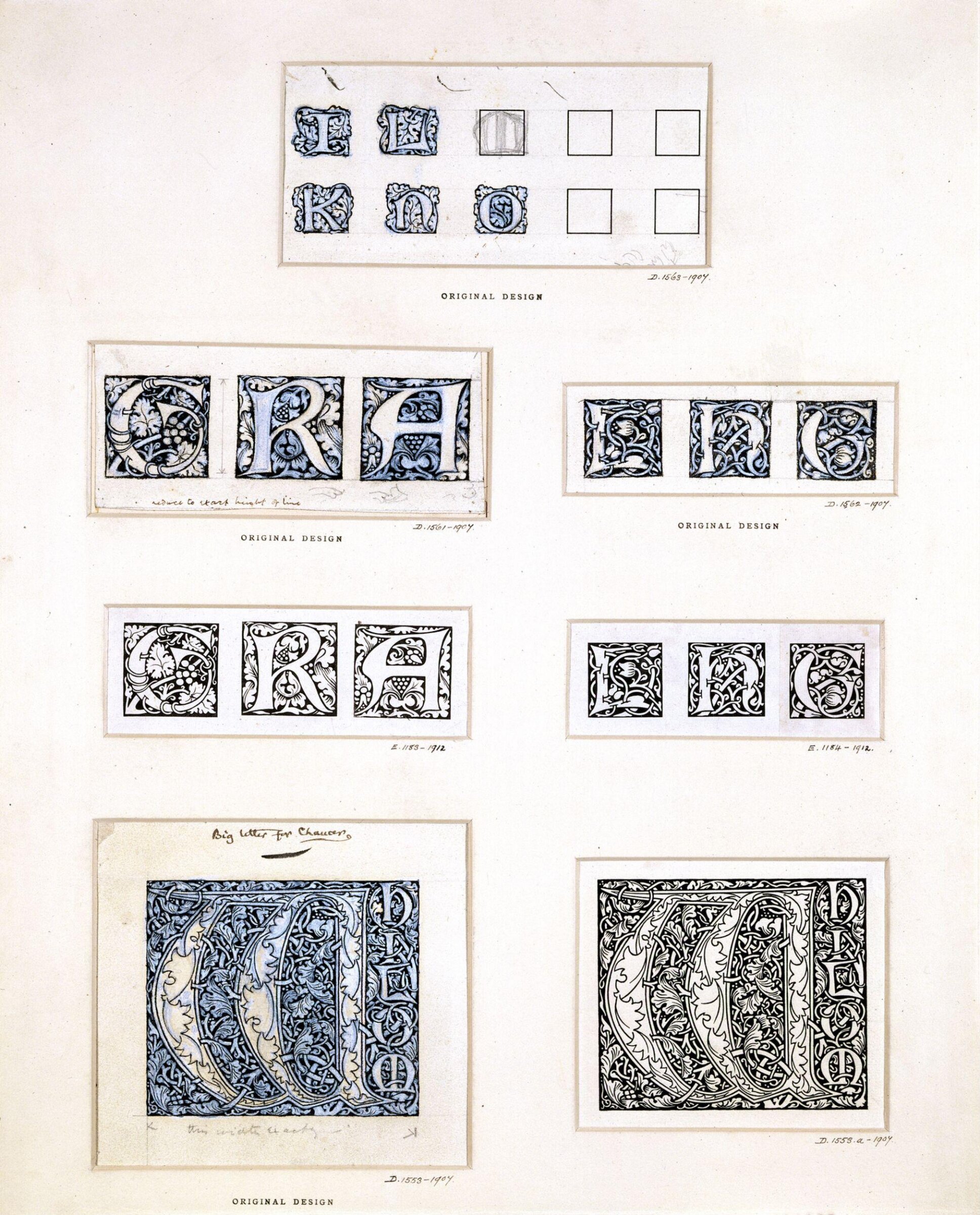
Morris himself carefully designed initial letters, borders and typefaces for book issued by the Kelmscott Press. The borders for Maud were specially designed for the work, but this border was not used in the finished book. The typeface used in this book was called Golden after the book for which it was first designed in 1892, the Golden Legend. In the finished version Morris printed the first page of this poem as prose to make the layout neater.
People
William Morris set up the Kelmscott Press in 1891. Morris was a key figure in the Arts and Crafts Movement and central to the Pre-Raphaelite artistic circle. Inspired by medieval illuminated manuscripts and early printed books, he set up the Kelmscott Press in order to meet his aesthetic ideal of integrated design, in particular unified illustration and text.
维多利亚和阿尔伯特博物馆
作品信息
- 馆藏编号
- D.1556-1907
What it shows
已收入目录
出处
- 维多利亚和阿尔伯特博物馆: the museum's own open data · 8天前获取
- 图片: 维多利亚和阿尔伯特博物馆 — © Victoria and Albert Museum, London
与此同时,在William Morris的生活中
完整生平1885–1891
Editor of “Commonweal”, the League’s paper
From February 1885 he edited the Socialist League’s weekly “Commonweal” for six years, with contributions from Engels, Shaw, Paul Lafargue, Wilhelm Liebknecht and Karl Kautsky; he wrote articles and poems for it and kept it financially afloat; in 1891, when the League’s influence passed to the anarchists, he withdrew from active involvement.
1888–1896
Fantasy romances: from “The House of the Wolfings” to “The Well”
In December 1888 the Chiswick Press published “The House of the Wolfings”, a reconstructed portrait of the life of ancient Germanic-speaking tribes of the Iron Age; it was followed by “The Roots of the Mountains” (1889), “The Story of the Glittering Plain” (1890), “The Wood Beyond the World” (1894) and “The Well at the World’s End” (1896).
January 1890 – March 1891
“News from Nowhere”: a socialist’s utopia
From January to October 1890 he serialised in “Commonweal” his utopian novel “News from Nowhere”, an answer to Bellamy’s “Looking Backward” that pictured a future of harmony between people and their environment in which work is a joy; the paper’s circulation rose markedly, the novel appeared as a book in March 1891, and by 1900 it had been translated into five languages and become a classic of Europe’s socialists.
1891
He founds the Kelmscott Press
In 1891 he founded the Kelmscott Press to revive medieval traditions of bookmaking: small print runs and hand work from papermaking to printing (vellum for some books); he laid out every book himself, drew initials and miniatures and designed typefaces, and Burne-Jones and Walter Crane collaborated with him.
1892
Elected Master of the Art Workers’ Guild
He was elected to the Art Workers’ Guild, founded in 1884, in 1888, although he was then too absorbed in socialism, and in 1892 its master (president); his lectures to members on the art of tapestry were a deserved success.
December 1894
His mother, Emma Morris, dies
In December 1894 his mother, Emma, died at the age of 90; it was a heavy blow to Morris.