Raphael意大利, 1483–1520
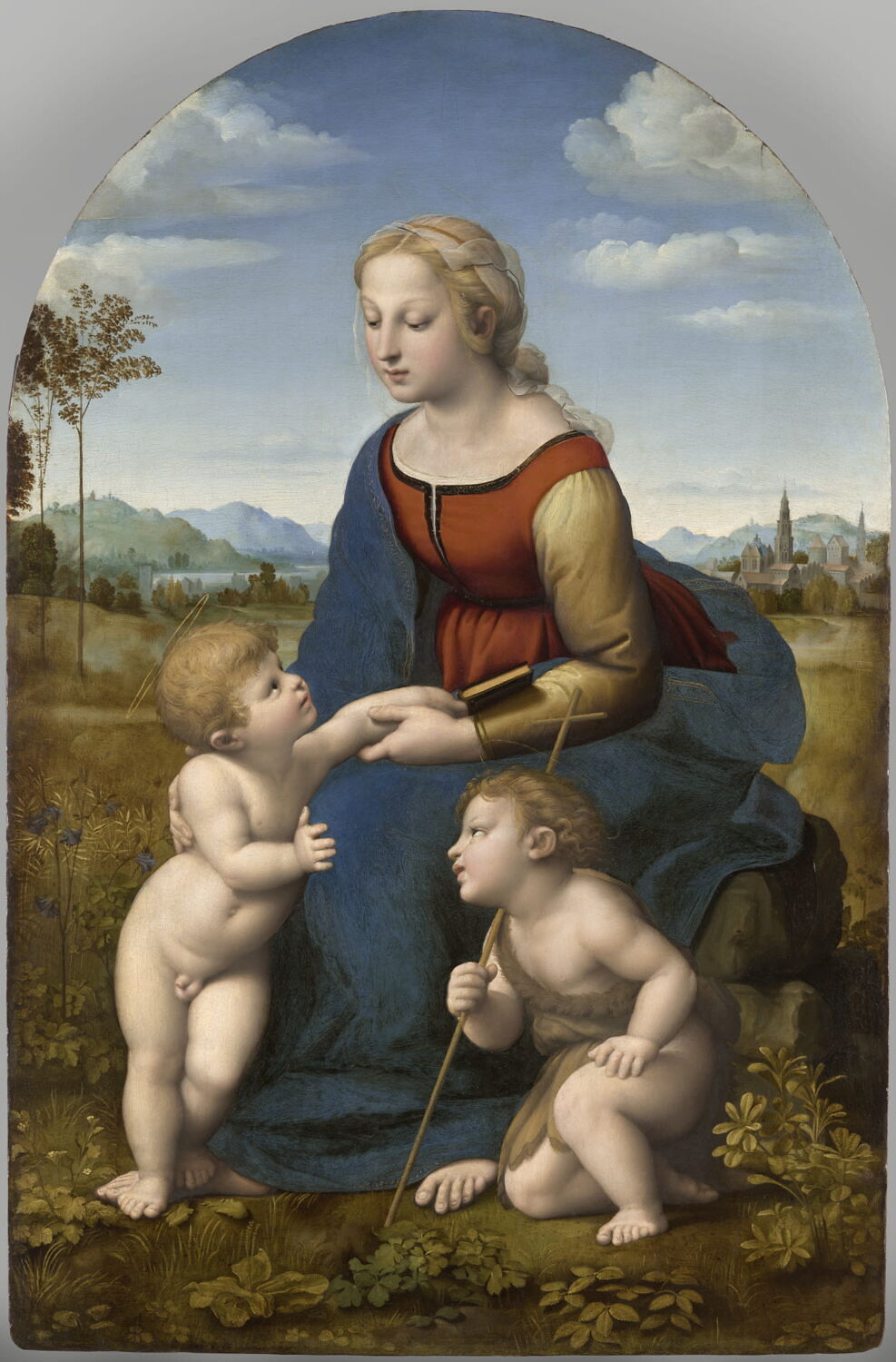
Madonna with Beardless Saint Joseph
能看到吗?
是,正在展出
《Madonna with Beardless Saint Joseph》现在在哪里? 埃尔米塔日博物馆, 展厅 229, 聖彼得堡. 是,正在展出. 核实 2026年8月29日.

聖彼得堡, 俄罗斯
闭馆· 明天 12:00 开馆
正对公众展出。
- 核实
- 此状态始于
- 出处
- 博物馆
关于这幅画
The Madonna with Beardless Saint Joseph is an early painting by Raphael, executed c. 1506, now at the Hermitage Museum. It depicts Saint Joseph, the Virgin Mary, and the Christ Child.
It is usually thought to be one of the small Madonnas painted by Raphael for Guidobaldo da Montefeltro during his one of his brief stays in Urbino between 1505 and 1506, and which Giorgio Vasari saw in that city. The earliest definitive mention of the Hermitage work dates to the 18th century, when it was probably in the Duke of Angoulême's collection in Paris. From there it passed into the collection of Pierre Crozat, which was bought almost in its entirety by Empress Catherine the Great of Russia in 1772, forming the core of the future Hermitage Museum.
继续阅读
The work was restored early in the 19th century, leading Alexander Pushkin to write the poem Renaissance and to refer to the work in his Mozart and Salieri, having his version of Salieri state "I don't find it funny when the painter is useless / It stains Raphael's Madonna for me".
The National Gallery applied for the work to be loaned to its 2020 exhibition marking the 500th anniversary of the artist's death, but this was delayed by the COVID-19 pandemic until 2022, and permission for its loan was withdrawn following the Russian invasion of Ukraine that year.
博物馆的介绍 — 俄语
Рафаэль написал «Святое семейство» во время своего пребывания во Флоренции, возможно, для правителя Урбино Гуидабальдо да Монтефельтро. Пронизанное настроением возвышенной печали, полотно чуждо всему прозаическому и обыденному, что, однако, не лишает героев ощущения естественности. Плавные линии, гармоничное цветовое сочетание и компактная композиция создают ощущение монументальности и величия. Мягкая светотень, моделирующая формы, свидетельствует о влиянии на молодого художника Леонардо да Винчи.
埃尔米塔日博物馆
作品信息
- 馆藏编号
- ГЭ-91
已收入目录
出处
- 埃尔米塔日博物馆
- 图片: 埃尔米塔日博物馆 — Museum open access
Raphael当时的生活
完整生平c. 1503 – c. 1504 · 工作地
Siena
late 1504
Meets Leonardo and Michelangelo
Having moved to Florence, Raphael met Leonardo da Vinci, Michelangelo and Bartolomeo della Porta and closely studied Leonardo's sfumato. His first Florentine commission, portraits of Agnolo Doni and his wife, was painted under the clear impression of the “Mona Lisa”.
1504
Friendship with Baldassare Castiglione
In Urbino Raphael met the philosopher, writer and patron Count Baldassare Castiglione; they formed a firm friendship and correspondence, including the famous letters about the fresco “The Triumph of Galatea”.
1504
To Florence, to study
The mother of the next Duke of Urbino gave Raphael a letter of recommendation to the Gonfaloniere of Florence: “The bearer of this will be found to be Raphael, painter of Urbino, who, being greatly gifted in his profession has determined to spend some time in Florence to study.” She called him “a sensible and well-mannered young man”.
1507
Meets Donato Bramante
Raphael met the architect Donato Bramante, by an unproven account his relative. Bramante became his adviser and patron and later recommended him to Pope Julius II as the best candidate for work in the Vatican.
1508
Moves to Rome at the invitation of Julius II
The new pope, Julius II, invited Raphael to Rome, perhaps at the suggestion of his architect Bramante, a distant relative of the artist. Unlike Michelangelo, kept waiting for months after his summons, Raphael was immediately commissioned to fresco what was to become the pope's private library, a far larger commission than any he had had before.