Rosa Bonheur法国, 1822–1899
Le bélier couché
能看到吗?
不明
《Le bélier couché》现在在哪里? 收藏方: Musée Blanche Hoschedé-Monet, 韋爾農. 不明.
韋爾農, 法國
所有者已知,目前是否展出尚不清楚。
- 此状态始于
- 出处
- 博物馆
关于这件雕塑
博物馆的介绍 — 法语
Epreuve en bronze argenté, creuse ; tête rapportée. ; Animal représenté couché sur le flanc droit, la tête légèrement baissée et tournée à gauche, pattes avant repliées, patte arrière gauche étendue sur la terrasse. Terrasse à double ressaut, ovalisée présentant une surface hachurée imitant l'herbe.
Musée Blanche Hoschedé-Monet
作品信息
- 馆藏编号
- 2000.6.1
画面内容
已收入目录
出处
- Musée Blanche Hoschedé-Monet
- 图片: Musée Blanche Hoschedé-Monet — © Cliché Musée Blanche Hoschedé-Monet, ville de Vernon (Photographe); Ministère de la Culture (France), base Joconde
Rosa Bonheur当时的生活
完整生平1848
First medal and a 3,000-franc state commission
Bonheur won a first medal for “Oxen and Bulls of the Cantal”, which brought her a 3,000-franc state commission — for “Ploughing in the Nivernais”.
1849
“Ploughing in the Nivernais” at the Salon
Painted for the government, the picture was shown at the Salon and won a First Medal — Bonheur's first major success (other sources give that honour to “The Horse Fair”).
March 1849
Death of her father, Raymond Bonheur
Her father died, and Rosa took his place as teacher at the free drawing school for girls. She often told her pupils: “Follow my advice, and I will make you Leonardos in skirts.”
1853
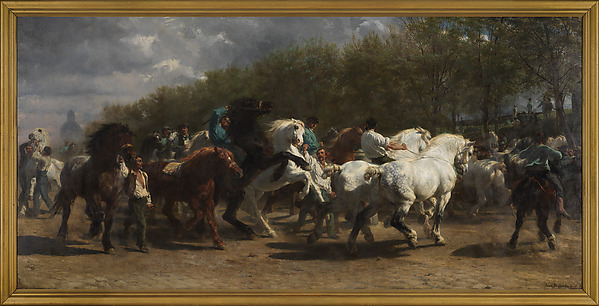
“The Horse Fair” at the Salon
Begun in 1851, the huge canvas (2.4 × 4.9 m) of the horse market on the boulevard de l'Hôpital sparked debate among critics and collectors at the Salon and brought Bonheur into the international art world; she herself refuted the Comte de Nieuwerkerke's hint that it was a state commission.
by 1854
Friendship with the dealer Ernest Gambart
It is not known when they met, but by 1854 the art dealer Ernest Gambart was Bonheur's close friend, sponsor and promoter, going to great lengths to bring her work to wider audiences.
by 1855
Gambart buys “The Horse Fair” for 40,000 francs
Gambart took the painting to an exhibition of French art in England, where William Rossetti praised it and Queen Victoria had it brought to Buckingham Palace for a while; this dispelled doubts that Bonheur had painted it herself and paved the way for her success.