A.W.N. Pugin
Drawing
可否一睹真容?
眼下不见客

维多利亚和阿尔伯特博物馆
倫敦, 英国
仍属馆藏,只是目前没有展出。
- 核实
- 此状态始于
- 出处
- 博物馆
关于作品
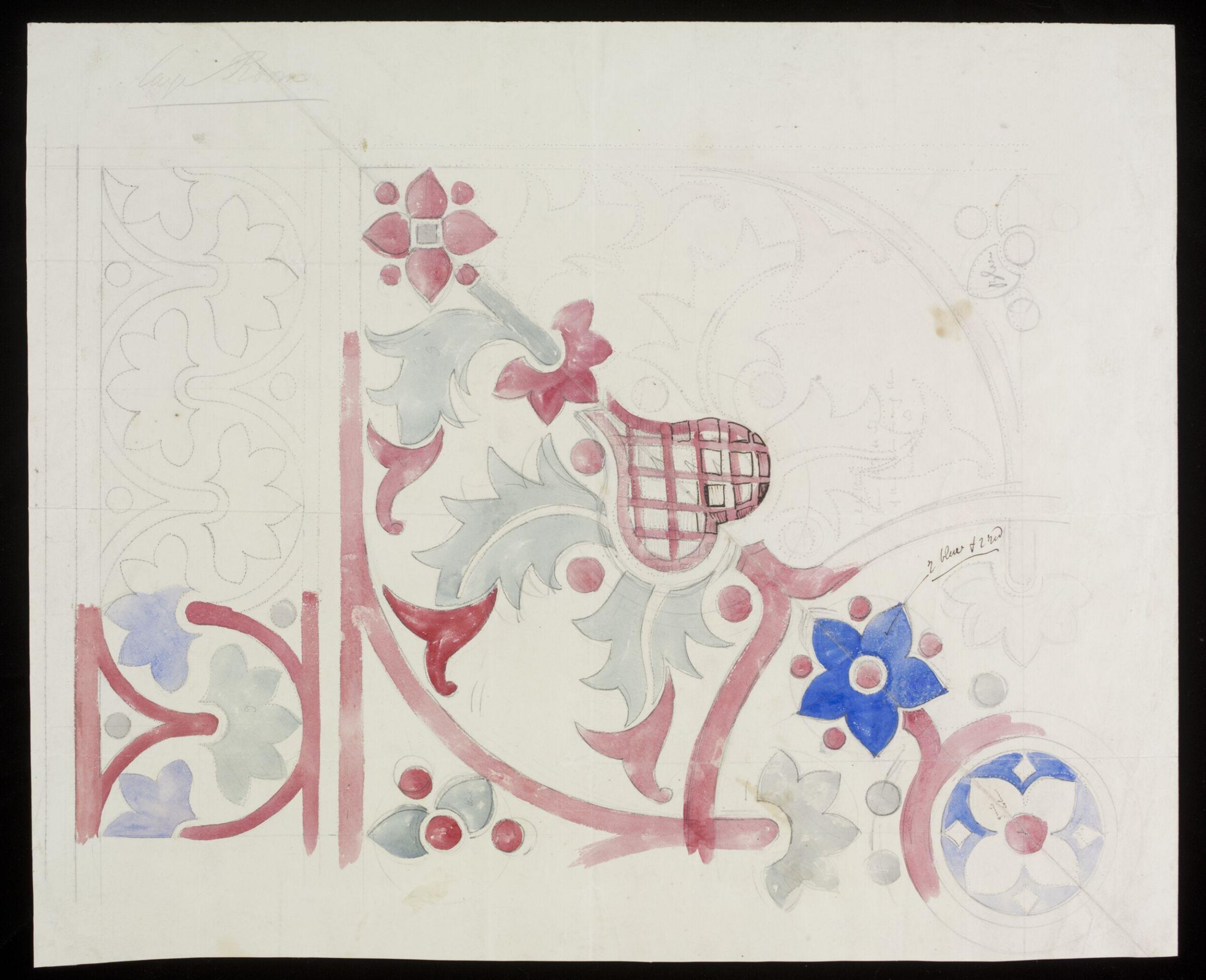
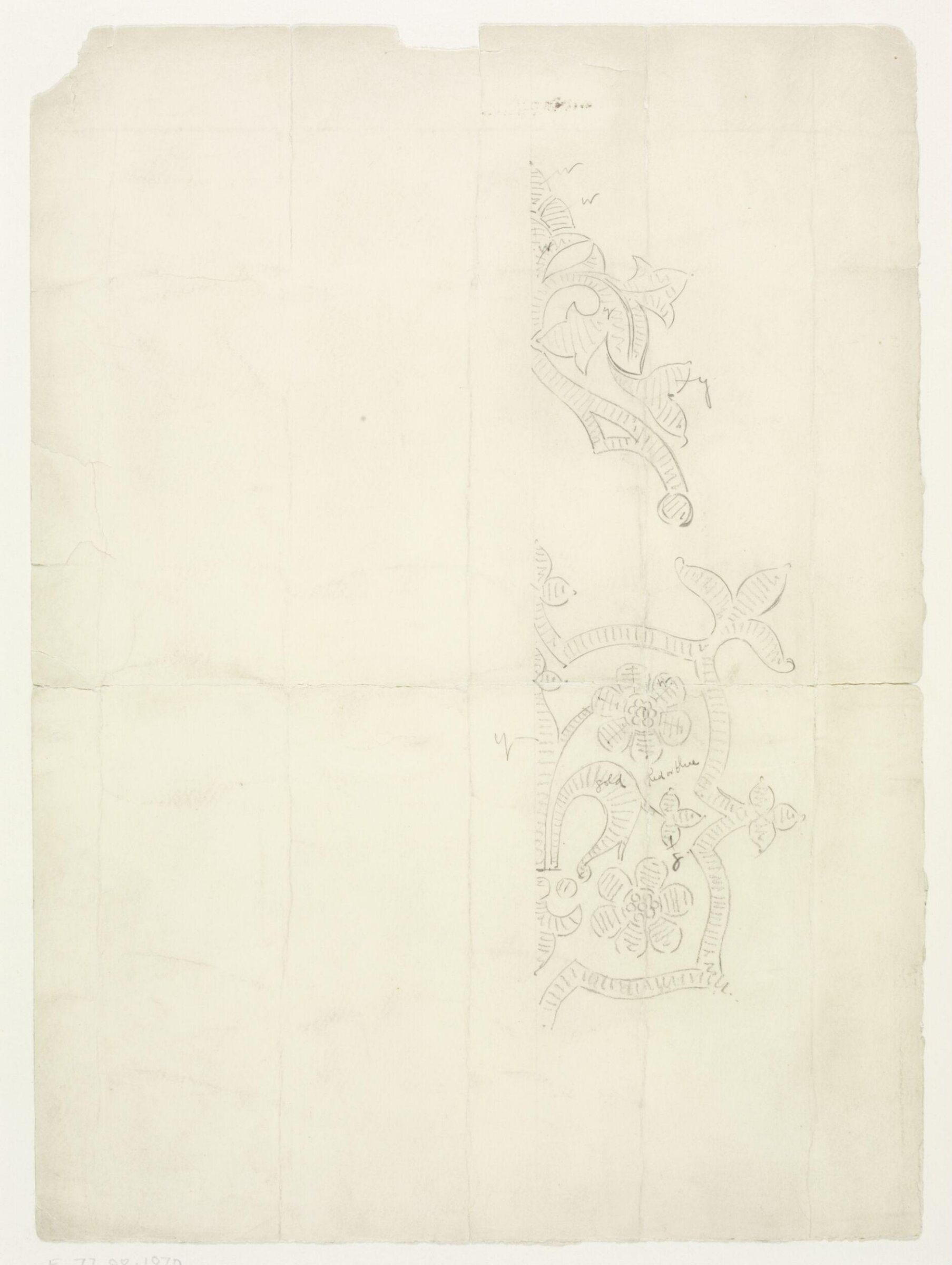
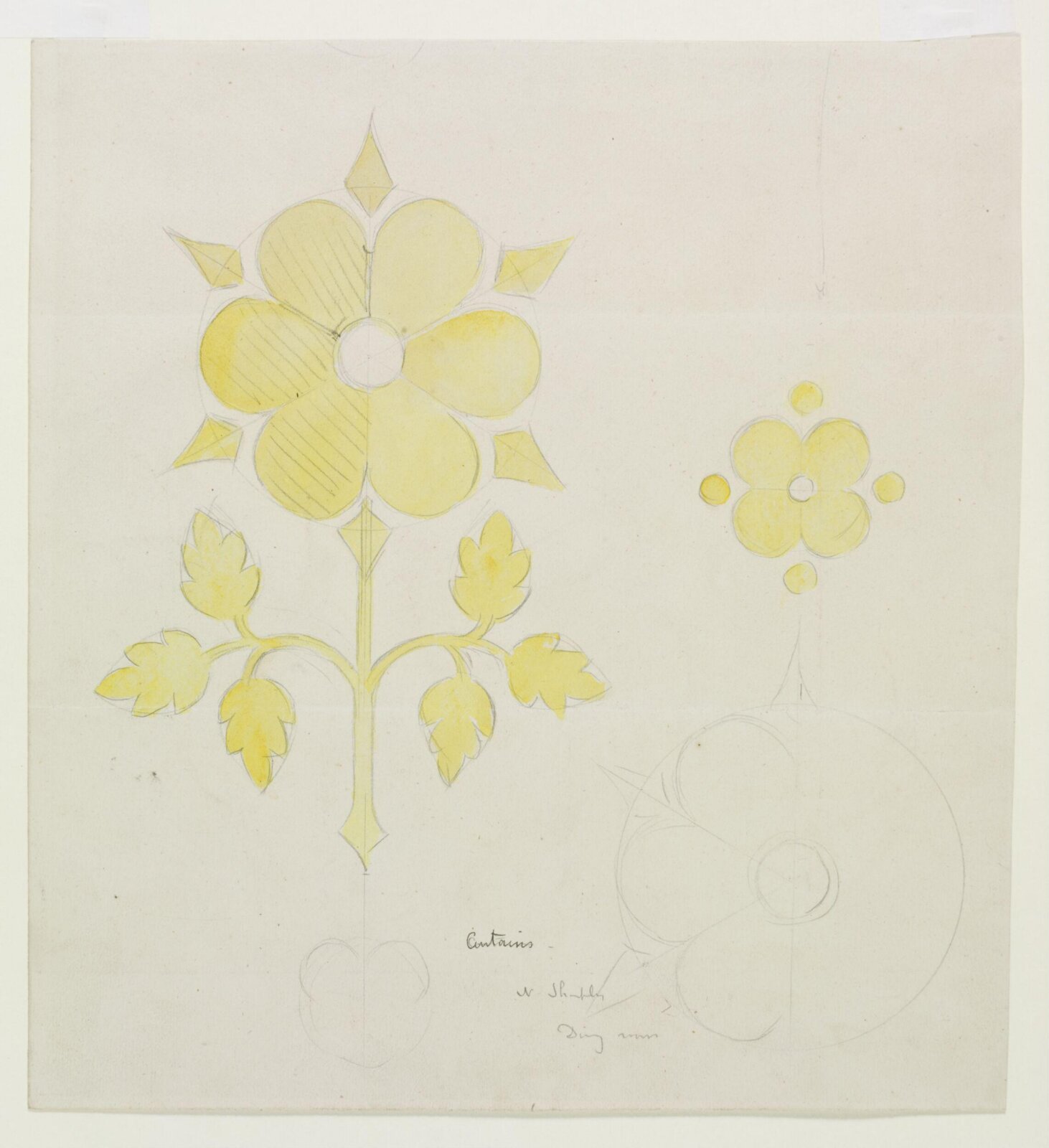
These details of a rose pattern for curtains were made by Pugin. They are one of 11 sheets of designs by Pugin of internal decoration and furniture for Oswald Croft, Bishop Eton, near Liverpool in the V&A's collections. Pugin's designs were to be executed by J.C. Crace of the Crace firm for the owner Henry Sharples in 1847.
继续阅读
Pugin seems to have liked this design because he referred to it in 1850 when ordering material for a tester and bed for the Grange, Ramsgate: 'I should be perfectly satisfied if this stuff was green with yellow roses - like what you sent to Mr. Sharples'. Moreover Crace exhibited this design in cotton damask with yellow roses on a deep pink ground in the Medieval Court at the Great Exhibition and then presented a piece to the Museum of Manufacturers, the fore-runner of the V&A. This survives in the Museum's Textile Department. He had also exhibited the design in silk at the Birmingham Exposition of Arts and Manufacturers in 1849, when it was illustrated in the Journal of Design.
Augustus Welby Northmore Pugin (1812-52) is widely considered as one of the most significant and influential architects, designers and theorists of the 19th century. Following his conversion to Catholicism in 1835, he identified the Gothic style with Christian architecture and his work and writings inspired and framed the Gothic Revival. In 'Contrasts', published in 1836, he condemned classical forms and ardently praised 14th and 15th-century architecture. Pugin is best remembered for his work on the Palace of Westminster.
维多利亚和阿尔伯特博物馆
作品信息
- 馆藏编号
- D.886-1908
画面内容
已收入目录
出处
- 维多利亚和阿尔伯特博物馆
- 图片: 维多利亚和阿尔伯特博物馆 — © Victoria and Albert Museum, London