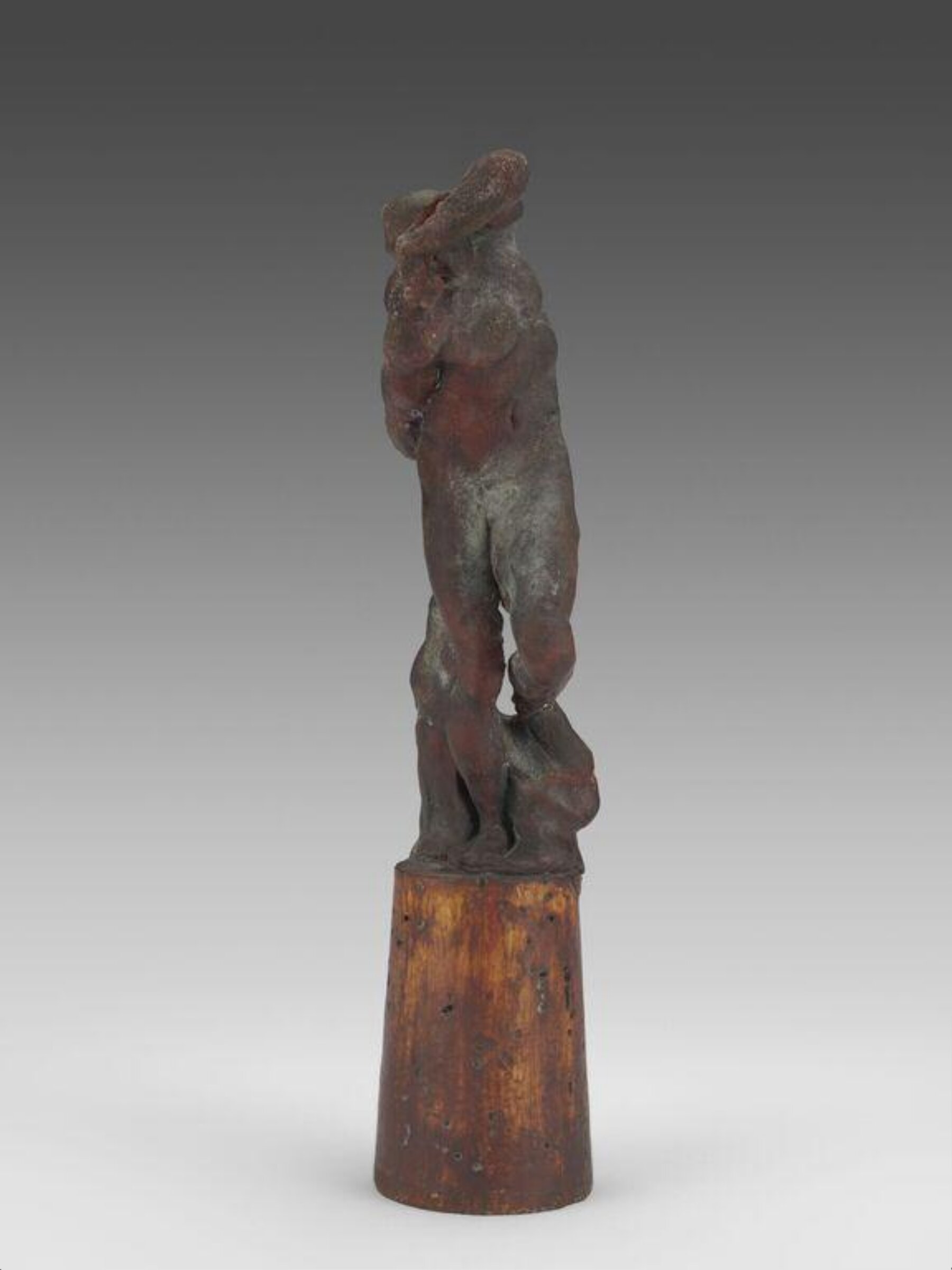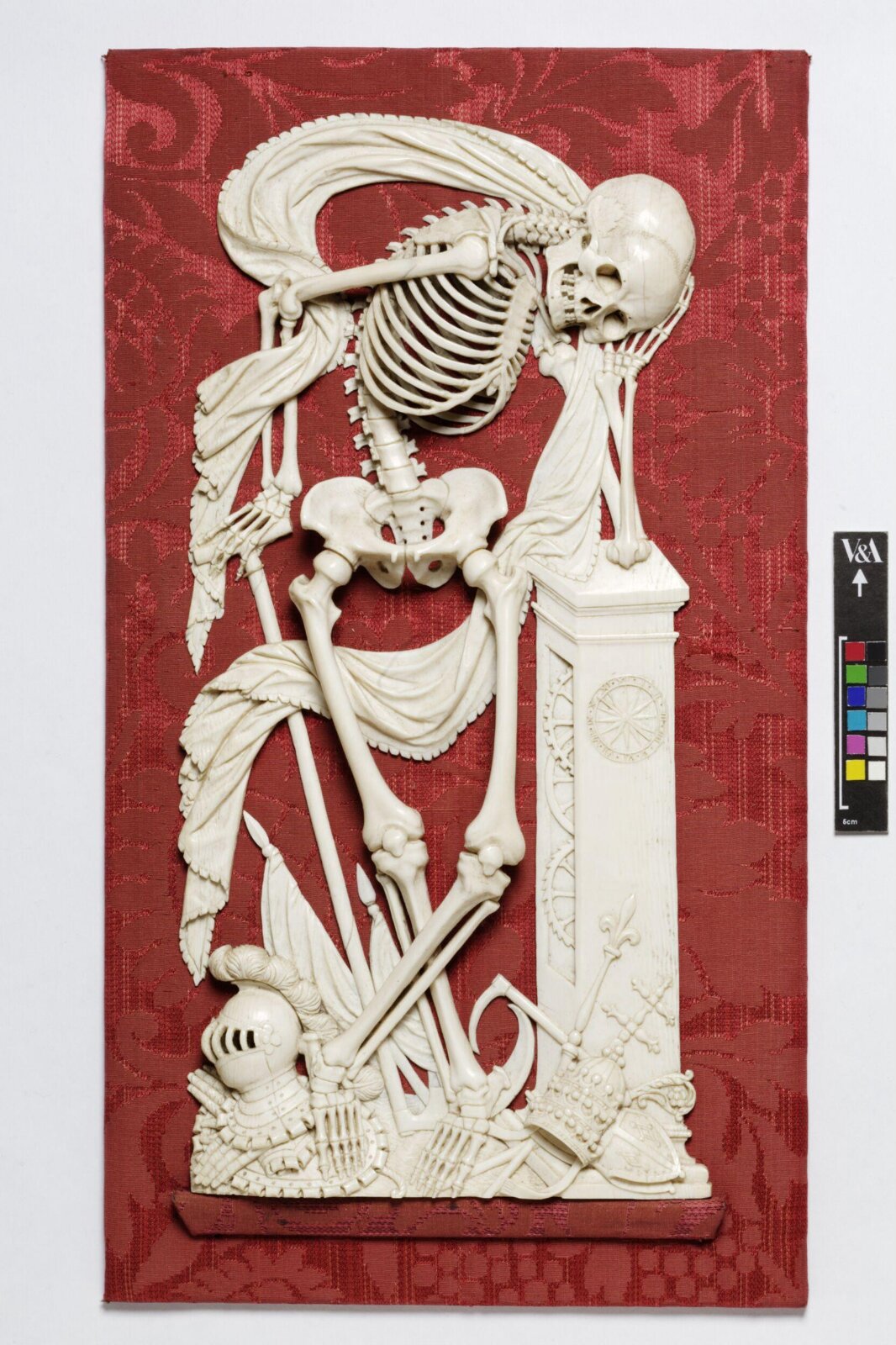
Death as a Skeleton
可否一睹真容?
眼下不见客

维多利亚和阿尔伯特博物馆
倫敦, 英国
仍属馆藏,只是目前没有展出。
- 核实
- 8天前
- 此状态始于
- 2026年9月25日
- 出处
- 博物馆自己的馆藏数据
About the sculpture
This ivory skeleton, a memento mori (reminder of death) may have been once owned by Dr Richard Mead (1673-1754), whose gallery in Great Ormond Street, London displayed his extensive collection of works of art and antiquities in the 1740s. A detailed description of Dr Mead's collection published in Latin in 1790 mentions (in translation) 'a man's skeleton very accurately designed, leaning with his left elbow on a clock and with that hand supporting his head, holding in his right hand a scythe; it is treading underfoot sceptres, crowns, helmets and other symbols of power and rank. The work of Albert Durer. One foot and half an inch high'. This description exactly matches the V&A's ivory, although it is not based on a work by Dürer, but relates to a plate in Andreas Vesalius, 'De Humani Corporis Fabrica', published in 1555.
Read on
Dr Mead's collection was auctioned after his death in 1755, and the ivory skeleton (lot 48) was sold to a Dr Chauncey for £21 10s 6d. Dr Chauncey's collection was in turn sold in 1790, although the buyer of the skeleton at that sale is unknown. The V&A's ivory was given to the Museum by Dr Walter Leo Hildburgh in 1953, its previous provenance unrecorded, but it could well be the one in Dr Mead's collection. It is likely to have been made in Southern Germany, perhaps as early as the 17th century.
维多利亚和阿尔伯特博物馆
作品信息
- 馆藏编号
- A.45-1953
What it shows
已收入目录
出处
- 维多利亚和阿尔伯特博物馆: the museum's own open data · 8天前获取
- 图片: 维多利亚和阿尔伯特博物馆 — © Victoria and Albert Museum, London