![[Buckler Fern], William Henry Fox Talbot, 1839](https://media.getty.edu/iiif/image/9703e257-33ca-4020-8e2d-4c39212e2824/full/!1200,1200/0/default.jpg)
 William Henry Fox Talbot英格兰, 1800–1877
[Buckler Fern]
能看到吗?
目前未展出
《[Buckler Fern]》现在在哪里? 收藏方: J·保羅·蓋蒂博物館, 洛杉矶. 目前未展出. 核实 2026年10月7日.
洛杉矶, 美國
仍属馆藏,只是目前没有展出。
- 核实
- 此状态始于
- 出处
- 博物馆
关于作品
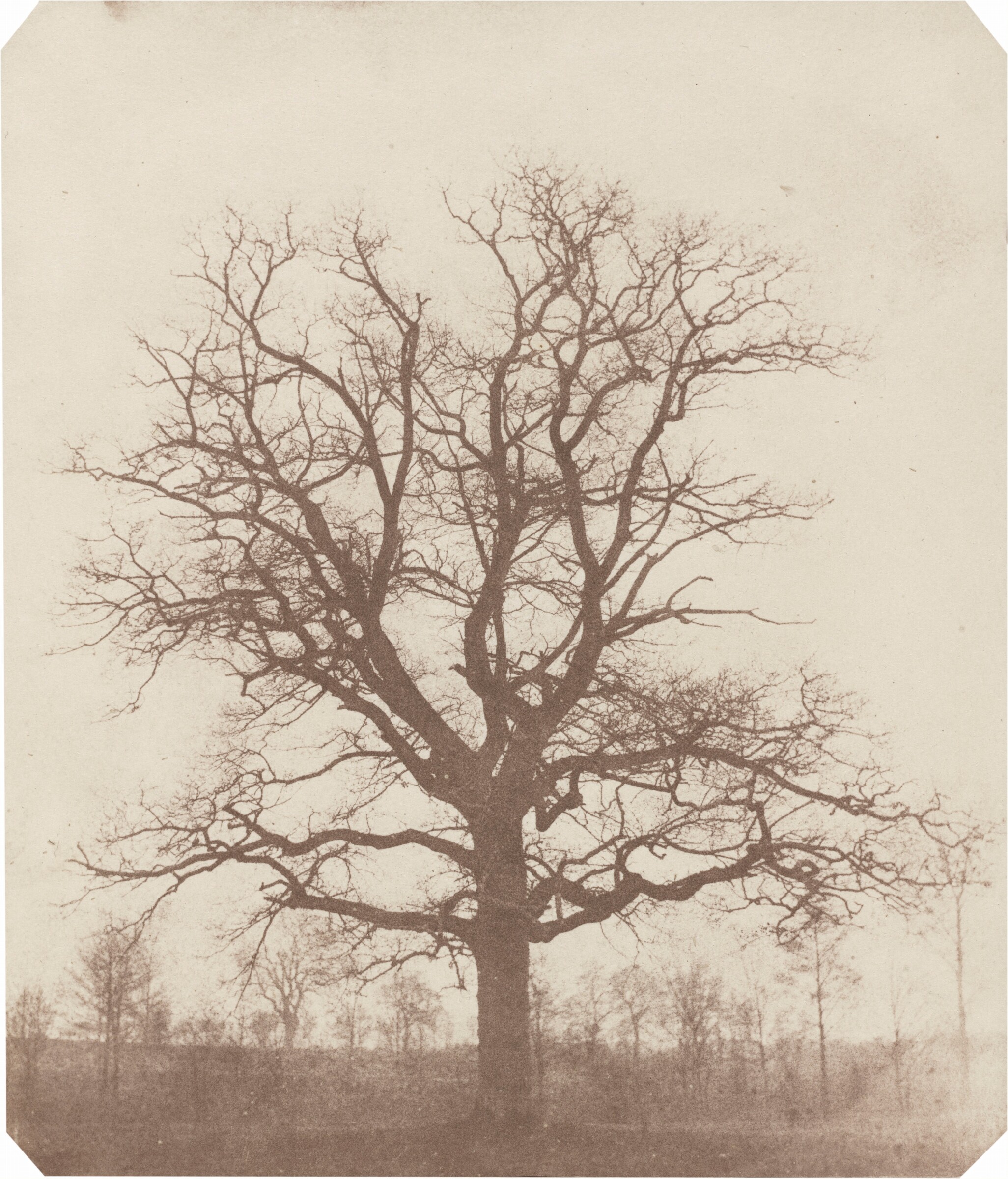
> One of William Henry Fox Talbot’s few close friends outside his family was the Scottish journalist and scientist Sir David Brewster. The two men, initially drawn together by mutual interests in light and optics, were truly comfortable with each other in a way that eluded them with most of their colleagues. Brewster was among the first to hear of Talbot’s new art and immediately became one of its strongest supporters. Perhaps with the help and encouragement of his wife or daughter, he compiled what was to become one of the major resources in the early history of photography: the Brewster Album.
继续阅读
Now in the Getty Museum’s collection, it brings together the pioneering work of Talbot, Brewster, and his various acquaintances in Scotland, including David Octavius Hill and Robert Adamson. > > This picture, signed and dated by Talbot in ink on the verso, was one of the first photographs that Brewster ever saw. It is part of a group that Talbot made in a feverish attempt to get examples distributed to important people in 1839 and must have been created on a rare day that year when the sunlight remained strong. The same exact fern specimen was used by Talbot to make at least six negatives; in two of them, obviously produced after this one, a branch dropped off in the handling. > > Larry Schaaf, *William Henry Fox Talbot*, In Focus: Photographs from the J. Paul Getty Museum (Los Angeles: Getty Publications, 2002), 24. ©2002 J. Paul Getty Trust.
J·保羅·蓋蒂博物館
作品信息
- 馆藏编号
- 84.XZ.574.107
已收入目录
出处
- J·保羅·蓋蒂博物館
- 图片: J·保羅·蓋蒂博物館 — Open Content
William Henry Fox Talbot当时的生活
完整生平1837 · 获奖
Royal Society Bakerian Medal
1837年3月16日
Daughter born: Rosamond Constance Talbot
25 January 1839
First showing of photographs at the Royal Institution
Shortly after Louis Daguerre’s daguerreotype was announced in early January, Talbot asserted his priority and, at a Friday Evening Discourse at the Royal Institution, exhibited several paper photographs he had made in 1835. Within a fortnight he described the nature of his process to the Royal Society, while Daguerre revealed no useful details of his own until mid-August.
1840
Invents the calotype
Talbot found a way to print any number of positives on salted paper from a paper negative; new chemicals cut the exposure to a minute in bright sunlight. He called the method the “calotype” (from kalos, beautiful), informally the “talbotype”: unlike the daguerreotype with its single positive, it effectively created modern photography.
1840–1841
Post: High Sheriff of Wiltshire
February 1841
Patents the calotype
Talbot obtained an English patent for the calotype process and sold licences at £20 each, later lowering the fee for amateurs to £4 while professionals paid up to £300 a year; scientists saw it as a hindrance to scientific freedom. He justified his rigour by the roughly £5,000 he had spent on photography; for science the method was free, and Talbot himself published the first known photomicrograph of a mineral crystal.



![[Group of Trees from the American Walnut], William Henry Fox Talbot, June 1, 1840](https://media.getty.edu/iiif/image/e2239044-50e4-44d2-be46-db53cdc317f1/full/!1200,1200/0/default.jpg)


