Henry Moore英格兰, 1898–1986
Bronze Form
可否一睹真容?
可以,正在迎客
正对公众展出。由谁担保,见下文。
- 核实
- 此状态始于
- 出处
- 博物馆自己的馆藏数据
About the sculpture
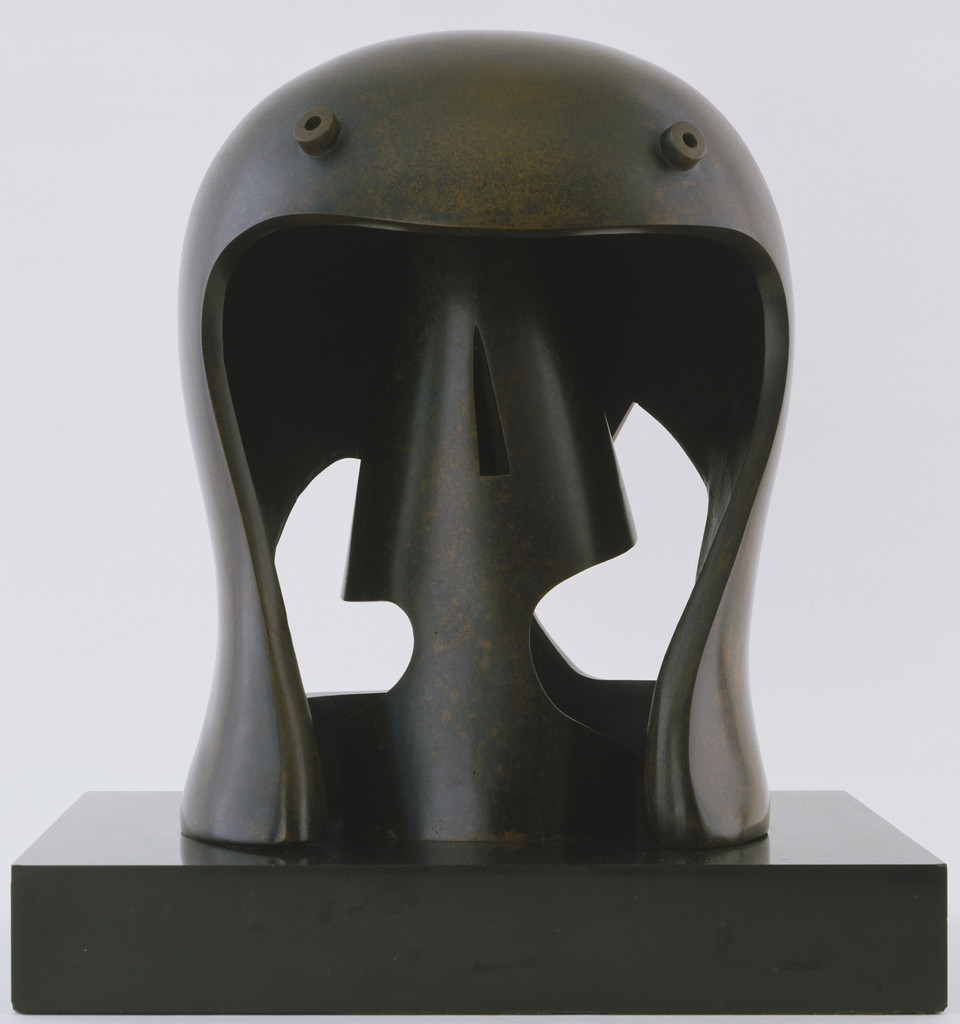
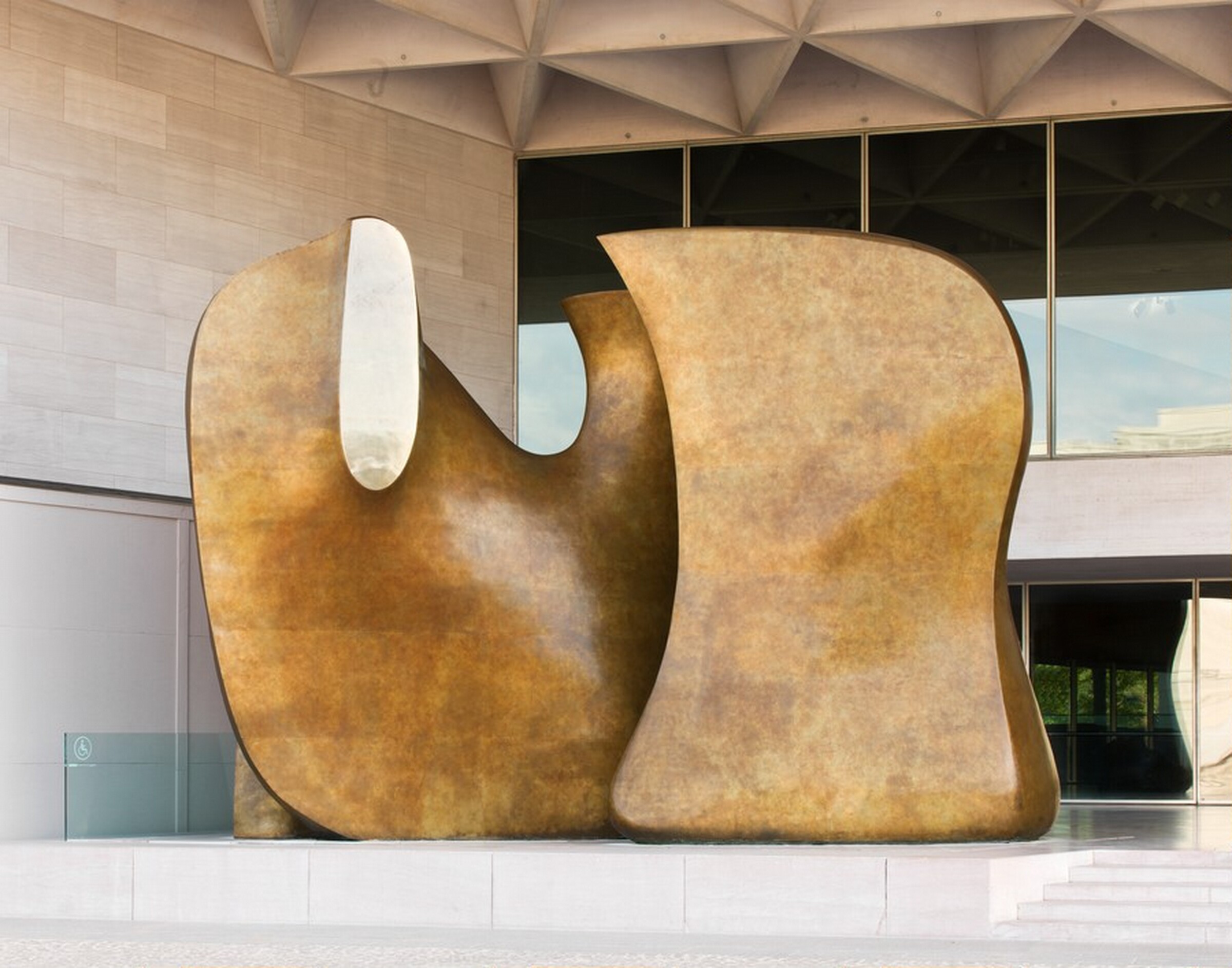
This immense bronze sculpture is more than fourteen feet high. Its title does not reveal a specific subject and the form can be seen as abstract--its golden, undulating surfaces glimmering in sunlight. But the sculpture's vertical orientation also evokes an upright human figure. The dramatic, curvilinear contours suggest that the sculptor had a female form in mind. The sculptor Henry Moore always insisted that his work relate to recognizable forms, "Purely abstract sculpture seems to me to be an activity that would be better fulfilled in another art such as architecture. . . . I have never been tempted to remain a purely abstract sculptor." This sculpture had its origins in a group of drawings created by the artist almost fifty years earlier. In the mid-1930s, Moore made a series of sketches based on carved wood figures from the South Pacific. Around 1940, he began to transform this imagery into three-dimensions, creating a series of helmet-encased heads. *Bronze Form* is directly related to this theme and was completed only a year before the artist's death.
J·保羅·蓋蒂博物館
作品信息
- 馆藏编号
- 2005.117.1