Marcel Duchamp法国, 1887–1968
Bottle Rack (Porte-Bouteilles)

关于这件雕塑
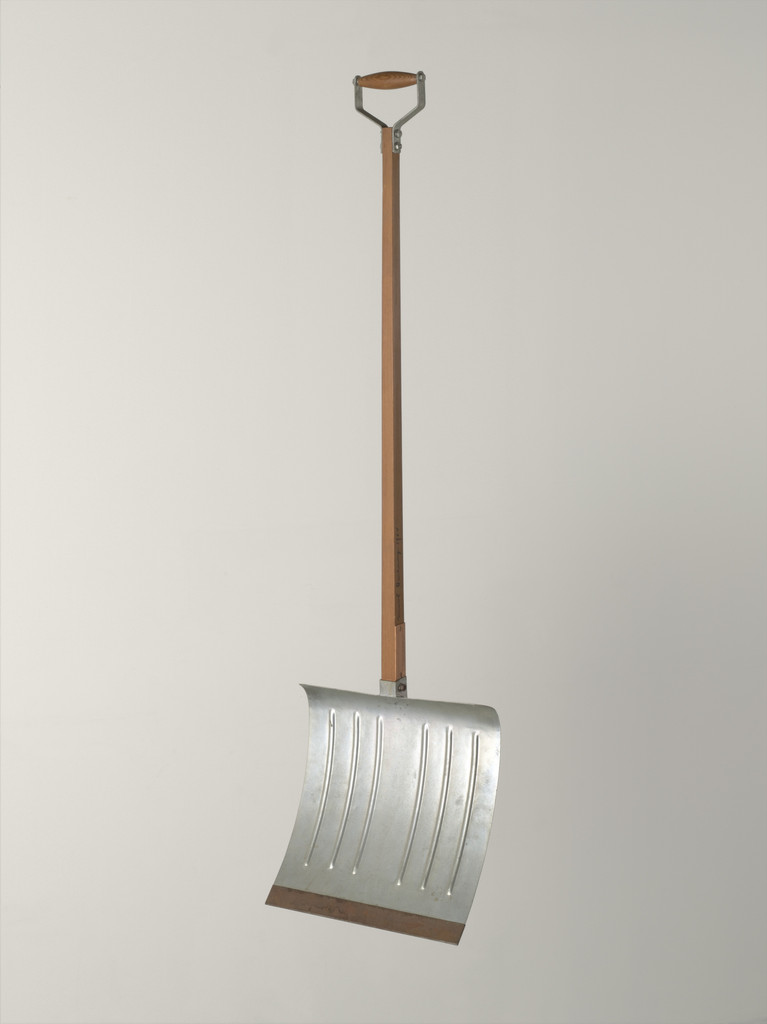
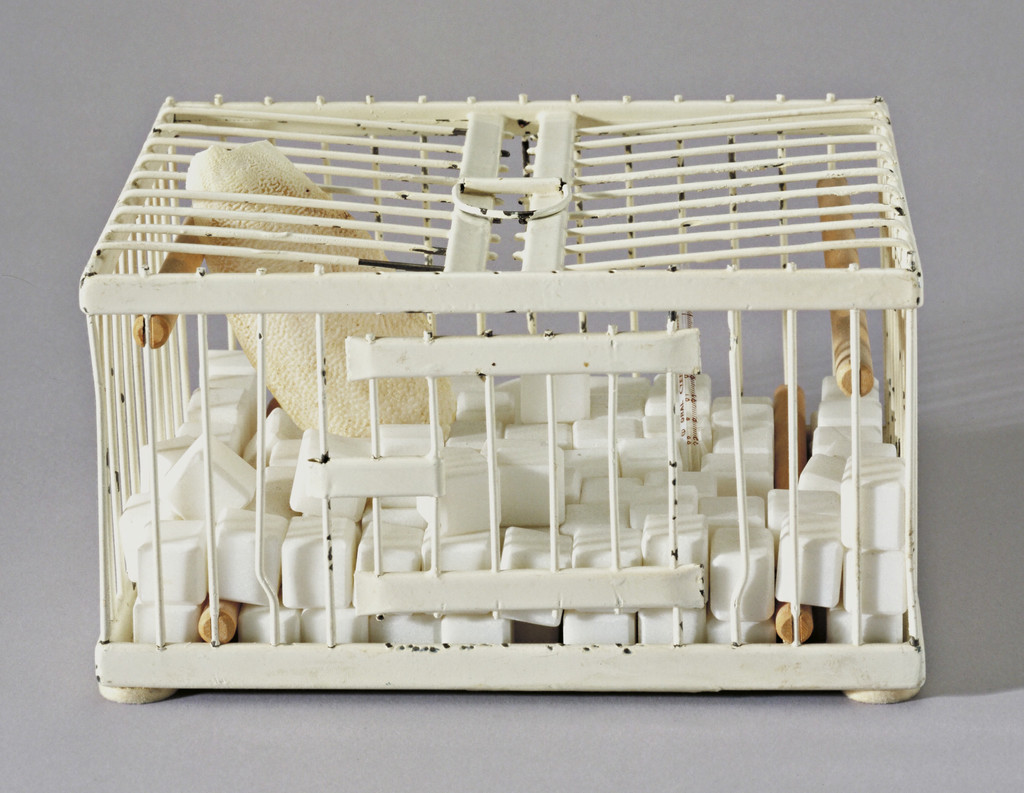
Marcel Duchamp began his career as a painter of conventional portraits and nudes. By 1912, however, he set out to prove the end of “retinal art”—pictures created to delight the eye—in order to “put painting once again at the service of the mind.” His answer was the “readymade,” an ordinary object transformed into a work of art by virtue of the artist selecting it. Taken out of context, repositioned, and signed by the artist, the readymade upended tradition and artistic convention by revolutionizing the way we think about what an artwork is, how it is produced, and the ways in which it is exhibited.
继续阅读
In 1914 Duchamp purchased this mass-produced bottle rack at a department store. He felt free to acquire new versions for exhibitions and display after his sister accidentally discarded the “original.” He selected the present version for the 1959 exhibition Art and the Found Object in New York. Artist Robert Rauschenberg acquired Bottle Rack and asked Duchamp to sign it. He obliged, writing in French, “Impossible for me to recall the original phrase M.D. / Marcel Duchamp /1960.”
芝加哥藝術博物館CC BY 4.0
作品信息
- 馆藏编号
- 2017.422
画面内容
已收入目录
出处
- 芝加哥藝術博物館
- 图片: 芝加哥藝術博物館 — © the artist or rights holder
与此同时,在Marcel Duchamp的生活中
完整生平1912
Takes the “Nude” back from the Salon des Indépendants
Through Duchamp’s brothers, Albert Gleizes asked him to withdraw the painting or at least rename it (as Duchamp later told it); he quietly refused, but went straight to the show and took the canvas home by taxi. “It was really a turning point in my life,” he recalled, adding that after this he would not be very much interested in groups.
1912年11月 · 求学
École des chartes
1913
The Armory Show: the scandal of the “Nude”
At the first major exhibition in New York of the modern trends coming out of Paris, American viewers accustomed to realistic art were scandalised and the Nude stood at the centre of the controversy; it helped secure the sale of all four of Duchamp’s paintings in the show.
1915
Emigration to the United States
When the First World War began, Duchamp, exempted from service because of a heart murmur, felt uncomfortable in Paris, and the sale of all four of his paintings at the Armory Show let him finance the trip: in 1915 he left for New York. To his surprise he found himself a celebrity there and quickly befriended the patron Katherine Dreier and the artist Man Ray.
1917
“Fountain” rejected by the Independents’ show
A urinal signed with the pseudonym “R. Mutt” was submitted to the exhibition of the Society of Independent Artists, which displayed everything submitted without a jury; the committee insisted that it was not art and rejected it. The Dadaists were outraged and Duchamp resigned from the Society’s board.
1923
Back in Paris, and into chess
Back in Paris in 1923 he was in essence no longer a practising artist: his main interest became chess, which he studied for the rest of his life to the exclusion of most other activities.