Parmigianinoİtalya, 1503–1540
Cornice per altare
Görebilir miyim?
Bilinmiyor
“Cornice per altare” şu anda nerede? Koleksiyon: Galleria Estense, Modena. Bugün sergilenip sergilenmediği bilinmiyor.
Modena, İtalya
Sahibi biliniyor; bugün sergilenip sergilenmediği bilinmiyor.
- Bu durumun başlangıcı
- Kaynak
- Müze
Eser hakkında
Müze metninin dili: İtalyanca
Già classificato tra gli anonimo del XVI secolo, il foglio è stato attribuito a Parmigianino da Ekserdjian (1988, p. 450, fig. 7) e l'attribuzione ha in seguito trovato concordi la Romani (1989, p. 66) e Mario Di Giampaolo (1998, p. 66), Tonelli (2004, p. 53, fig. 8) e da ultimo Gnann (2007, p. 492, n° 880). Si tratta di uno studio per una ancona; Ekserdjian ha insistito sulla straordinaria decorazione del timpano per motivare l'attribuzione. L'opera è stata poi riferita ad un primo progetto realizzato nel quarto decennio del Cinquecento per l'altare maggiore di San Giovanni Evangelista a Parma, che non ebbe seguito, essendo poi il manufatto stato eseguito su progetto di Mazzola Bedoli nel 1555 (Tonelli 2004, p. 54, fig. 9).
Devamını oku
Come nota Di Giampaolo (1998, p. 66) questo genere di invenzioni di Parmigianino è piuttosto raro; un altro disegno per un'ancona di Mazzola è stato proposto recentemente da Bruno Adorni, in uno studio relativo a un disegno conservato a Monaco di Baviera inv. 4958 (B. Adorni, Un disegno di Parmigianino per un'ancona, in "Aurea Parma", III-2004; ipotesi raccolta e confermata da Gnann 2007, n° 879)
Galleria Estense
Ayrıntılar
- Envanter numarası
- 1058
Neyi konu alıyor
Katalogda
Kaynaklar
- Galleria Estense
- Görsel: Galleria Estense — Soprintendenza archeologia belle arti e paesaggio per le province di Modena, Reggio Emilia e Ferrara · Beni Culturali Standard (BCS) · Catalogo generale dei Beni Culturali (ICCD – MiC)
Parmigianino: hayatındaki yeri
Tüm yaşam öyküsü11 Ocak 1503
Born
summer 1524
Travels to Rome with his uncles
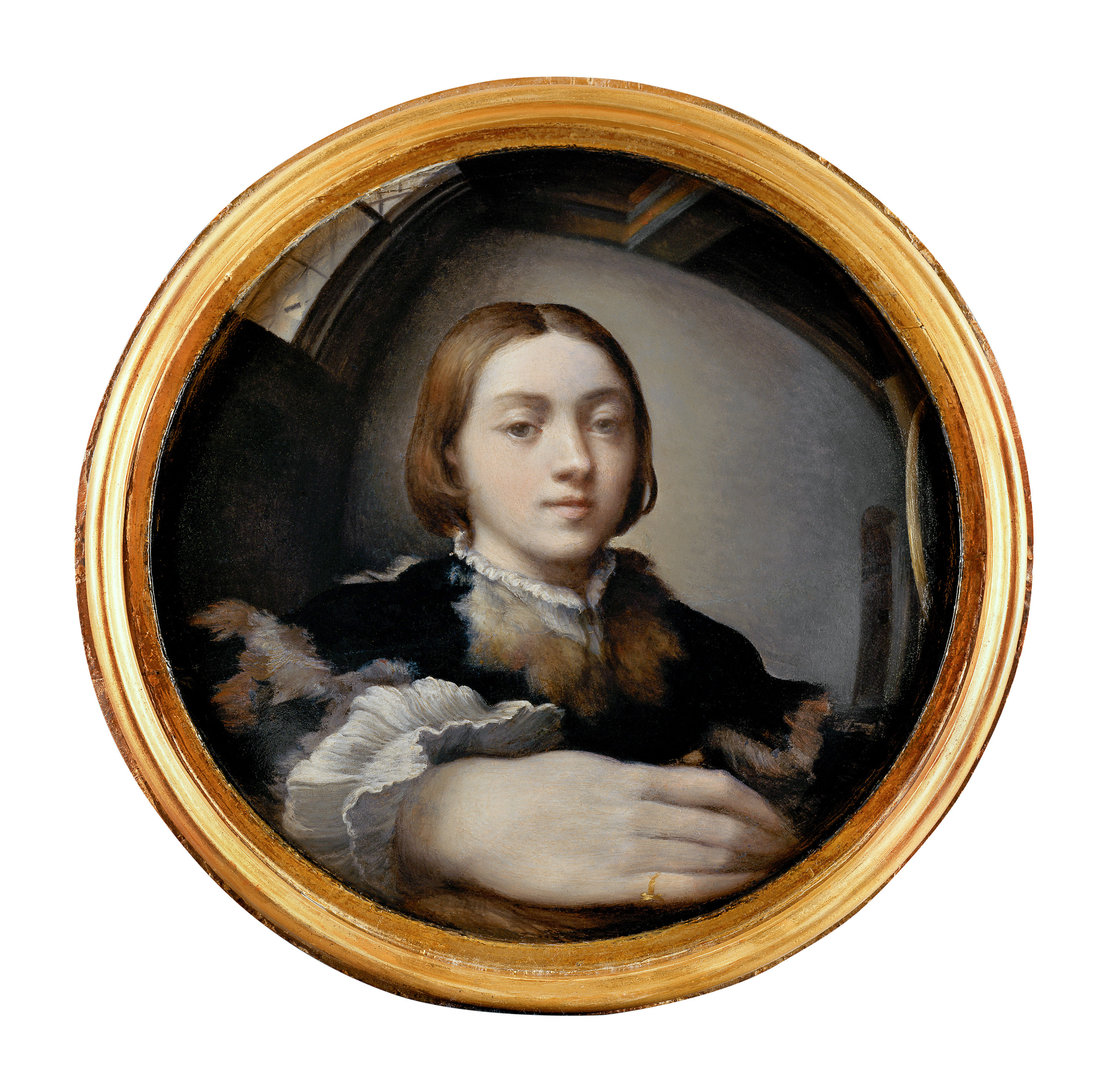
According to Vasari, on hearing Raphael and Michelangelo praised, Francesco longed to see Rome; his uncles approved and advised him to take some of his works to open doors to the lords and artists there. They arrived in Rome in the summer of 1524, and Parmigianino presented several paintings to Pope Clement VII, among them the “Self-Portrait in a Convex Mirror” painted on a wooden hemisphere.
1527
The Sack of Rome finds him at work
During the Sack of Rome by the landsknechts of Emperor Charles V, soldiers burst into the studio where Parmigianino was painting “The Vision of Saint Jerome” but harmed neither the pictures nor the artist. Soon, however, he had to abandon his lodgings and Rome, and he left the altarpiece with the church of Santa Maria della Pace.
1531
Commissioned to decorate Santa Maria della Steccata
In May 1531 Parmigianino was commissioned to fresco the church of Santa Maria della Steccata in praise of the Virgin, with the Coronation as the main scene, and undertook to finish within eighteen months; the work stalled again and again over irregular supplies and the church administration's dislike of his unusual design. Other accounts say the commission was for two altarpieces, of Saint Joseph and Saint John the Baptist. The confraternity advanced him a salary.
1539
Jailed for breach of contract
Absorbed in alchemy (Vasari says the elegant, handsome man turned into a bearded, unkempt, almost savage recluse), the artist did little work in the church, and the Steccata confraternity, which had paid him in advance, had him imprisoned for two months. Released on his promise to finish the work, he again failed to keep it and fled Parma for the small town of Casalmaggiore.
24 Ağustos 1540
Died