Георг БазелицГермания, 1938–2026
Woodman (Waldarbeiter)
Можно ли лицезреть?
Сейчас не принимает

Чикагский институт искусств
Чикаго, США
Числится в собрании, но в залах её сейчас нет.
- Проверено
- В этом положении с
- Источник
- Музей
О картине
Словами музея — на английском
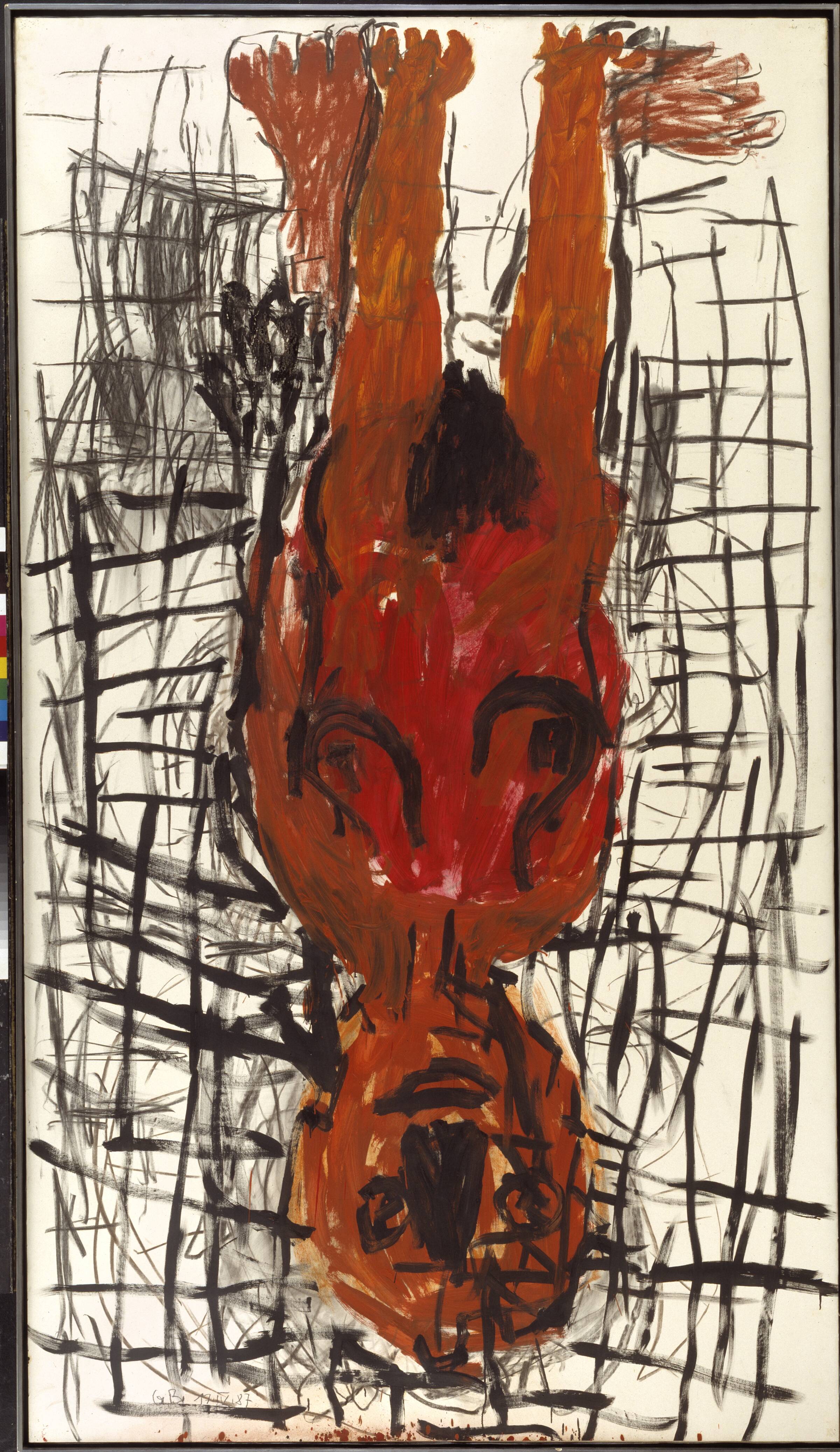
During the early 1960s, Georg Baselitz began producing representational images—characterized by thickly painted surfaces and often emotional and/or tragic themes—that drew inspiration from Germany’s artistic and cultural heritage. Between 1967 and 1969, Baselitz executed a series of Fracture Paintings, in which he segmented his subjects—animals, shepherds, and woodsmen—into horizontal bands or irregular fragments. Strung up sideways against a massive tree trunk, this woodsman heralded the artist’s trademark inverted figures, which first appeared soon after this painting’s completion. Conjuring a world gone mad, Woodman evokes the psychic and physical disorientation Germans experienced after their war-torn nation was partitioned in 1946. Indeed, Baselitz created this work after he left a divided Berlin to reside in a small German village.
Чикагский институт искусствCC BY 4.0
Сведения
- Инвентарный номер
- 1987.14
Что изображено
В каталоге
Источники
- Чикагский институт искусств
- Изображение: Чикагский институт искусств — © автор или правообладатель
А тем временем в жизни художника
Вся жизнь целиком1968
Премия ars viva
В 1968 году Базелицу присудили премию ars viva Комитета по культуре германской экономики.
1970
Первая выставка перевёрнутых картин
В кёльнском Galeriehaus на Линденштрассе Франц Дальем показал первую выставку картин с перевёрнутыми мотивами.
1970
Первая ретроспектива рисунков и графики
В Кунстмузеуме Базеля Дитер Кёпплин устроил первую ретроспективу рисунков и графики Базелица.
1971
Переезд в Форст-ан-дер-Вайнштрассе
Семья Базелица снова переехала — в Форст-ан-дер-Вайнштрассе; старая сельская школа стала мастерской, а в картинах появились птицы.