 Альбрехт ДюрерГермания, 1471–1528
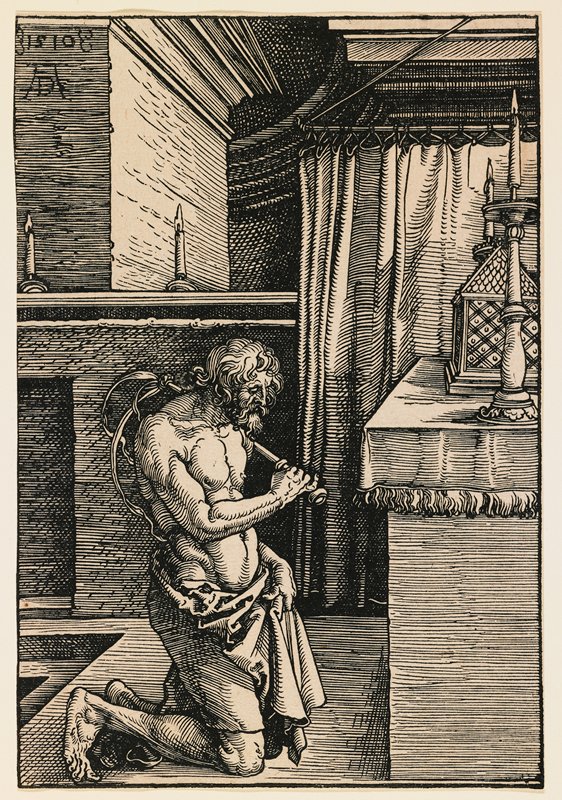
The Penitent
Можно ли лицезреть?
Сейчас не принимает

Миннеаполисский институт искусства
Миннеаполис, США
Числится в собрании, но в залах её сейчас нет.
- Проверено
- В этом положении с
- Источник
- Музей
О работе
Словами музея — на английском
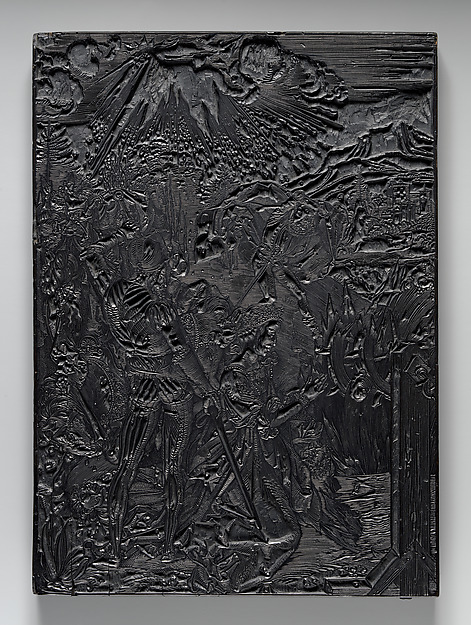
Albrecht Dürer was the leading artist of the German Renaissance. Extremely influential in many fields, he is widely recognized as one of the greatest printmakers of all time. Among his achievements are his advances in the depiction of human anatomy, emotion, and perspectival space, all of which are brilliantly rendered in this small print.
Читать дальше
Though the image obviously shows a repentant man flagellating himself, more specific identification remains elusive. The image is sometimes described as a self-portrait; indeed, the man's features are not unlike the artist's, and Dürer did have a penchant for self-portraiture, both explicit and disguised. The ark on the altar has prompted another plausible suggestion—that the figure is David, the Old Testament king who repented and whose penitential prayer is Psalm 51. If so, Dürer appears to have followed the spirit rather that the letter of the second book of Samuel 11-12, which records the story of the king's repentance after his sinful treatment of Bathsheba, and her husband Uriah. The account makes no mention of self-flagellation. Still, the lack of Christian symbols couple with a temple-like setting suggest an Old Testament subject.
Миннеаполисский институт искусства
Сведения
- Инвентарный номер
- 2009.47.1
В каталоге
Источники
- Миннеаполисский институт искусства
- Изображение: Миннеаполисский институт искусства — общественное достояние
А тем временем в жизни художника
Вся жизнь целиком1507–1528
Место работы: Нюрнберг
1509
Избран в Большой совет Нюрнберга
Дюрер был избран названным членом Большого совета Нюрнберга; возможно, в этом качестве он участвовал в художественных проектах города.
1509
Покупает большой дом в Нюрнберге
Дюрер купил у наследников астронома Бернхарда Вальтера большой дом, где разместилась его мастерская и где после его смерти до 1539 года жила его вдова.
1511
Издаёт «Большие страсти» и «Жизнь Марии»
Дюрер выпустил книгами две серии гравюр на дереве — «Большие страсти» и «Жизнь Марии» — вместе со вторым изданием «Апокалипсиса», а также 37 листов «Малых страстей». В послевенецианских гравюрах он развил светотеневую моделировку.
1512
Император Максимилиан I — главный покровитель
С 1512 года главным покровителем Дюрера стал император Максимилиан I. Для него Дюрер с учениками создал «Триумфальную арку» — гигантскую ксилографию 295 × 357 см из оттисков 192 досок, задуманную по образцу древнеримских арок.
3 января 1512
Привилегия Нюрнберга против подделок
Городской совет Нюрнберга дал Дюреру привилегию на распространение его гравюр: подделывателям грозило наказание.

![Lot and His Daughters [reverse], Альбрехт Дюрер, ок. 1496/1499](https://api.nga.gov/iiif/7565a449-f82a-414b-9bda-c93f55a51b4d/full/!2400,2400/0/default.jpg)