Джаспер ДжонсСША, 1930
Perilous Night
Можно ли лицезреть?
Сейчас не принимает

Чикагский институт искусств
Чикаго, США
Числится в собрании, но в залах её сейчас нет.
- Проверено
- позавчера
- В этом положении с
- 19 авг. 2026 г.
- Источник
- Данные самого музея
О работе
Словами музея — в подлиннике
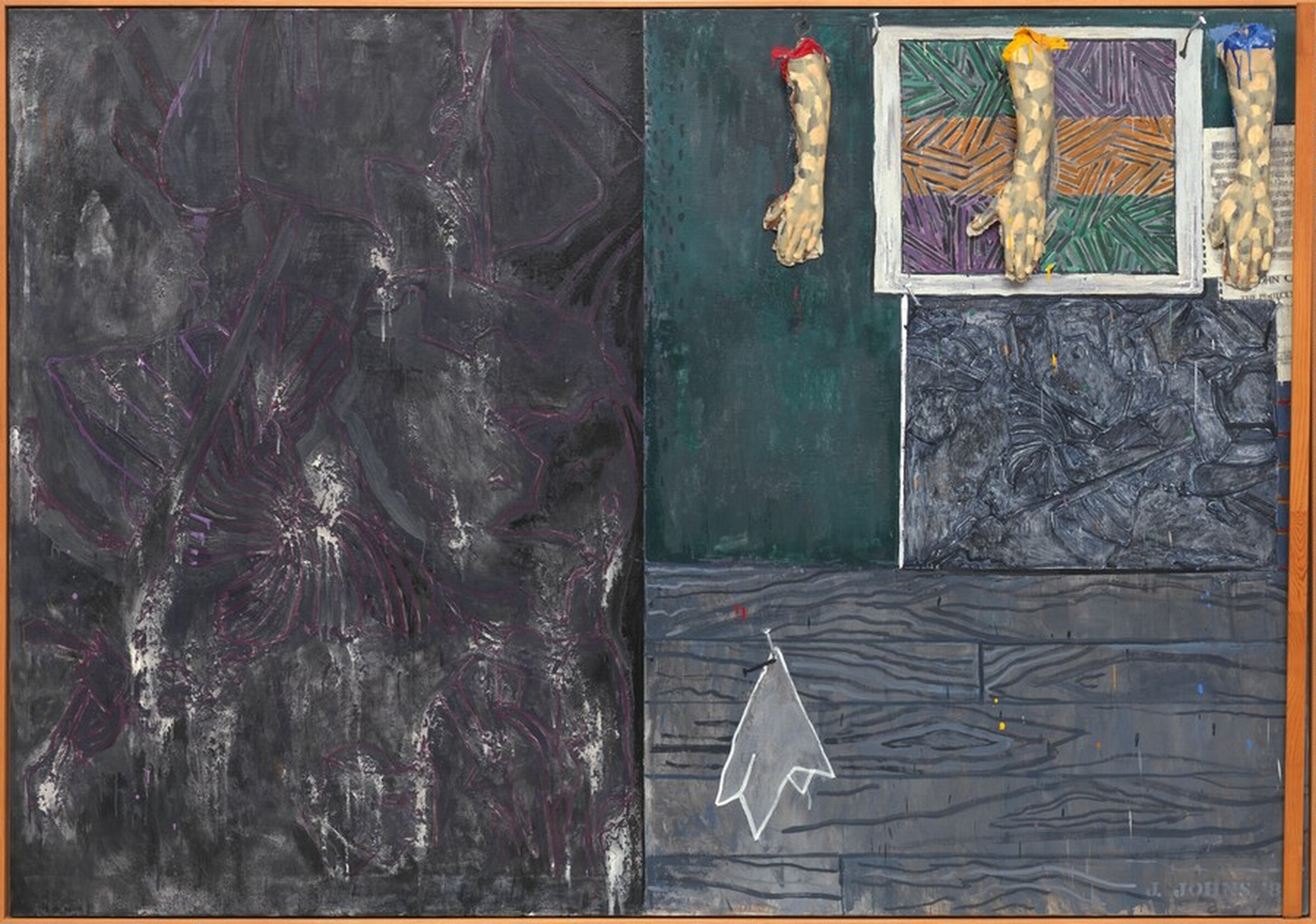
Jasper Johns began his career in the mid-1950s by re-creating, with great precision, such familiar images as targets, letters, numbers, and flags. Although his subject matter has become less commonplace, he continues to “borrow” from the public domain. Perilous Night, for instance, owes its title to a pivotal and expressive piece of music written by the American composer John Cage (1912–1992) in 1945. Both score and cover sheet are rendered on the right-hand side of the drawing with Johns’s characteristically fluid handling of ink. On the sheet’s left side is a freehand rendition—abstracted, reversed, and turned ninety degrees—of a single, terror-stricken soldier from the Resurrection panel of Matthias Grünewald’s sixteenth-century masterwork the Isenheim Altarpiece (Unterlinden Museum, Colmar).
Читать дальше
Between the soldier and the musical score is a black imprint of Johns’s right arm, evidence perhaps of the creative power that can merge two disparate images into a cogent statement. The overcome soldier witnessing the Resurrection of Christ and a piece of music marking a key transition in a composer’s career both point to “perilous nights” that can change the course of a human life. Characteristically, Johns also explored the same subject in different media. This somberly colored drawing derives from a painting of the same name (1982; National Gallery of Art, Washington, DC).
Чикагский институт искусствCC BY 4.0
Сведения
- Инвентарный номер
- 1989.82
В каталоге
Источники
- Чикагский институт искусств: открытые данные самого музея · получено 6 дней назад
- Изображение: Чикагский институт искусств — © автор или правообладатель
А тем временем в жизни художника
Вся жизнь целиком1967–1980
Художественный советник труппы Мерса Каннингема
Джонс давно помогал труппе Мерса Каннингема — собирал для неё деньги и внимание, в 1950-е помогал Раушенбергу с декорациями и костюмами, — а в 1967–1980 годах был её художественным советником.
1973–1987
Фермерский дом со стеклянной мастерской в Стони-Пойнте
С 1973 по 1987 год Джонс держал в Стони-Пойнте (штат Нью-Йорк) простой фермерский дом 1930-х годов с мастерской со стеклянными стенами.
1980
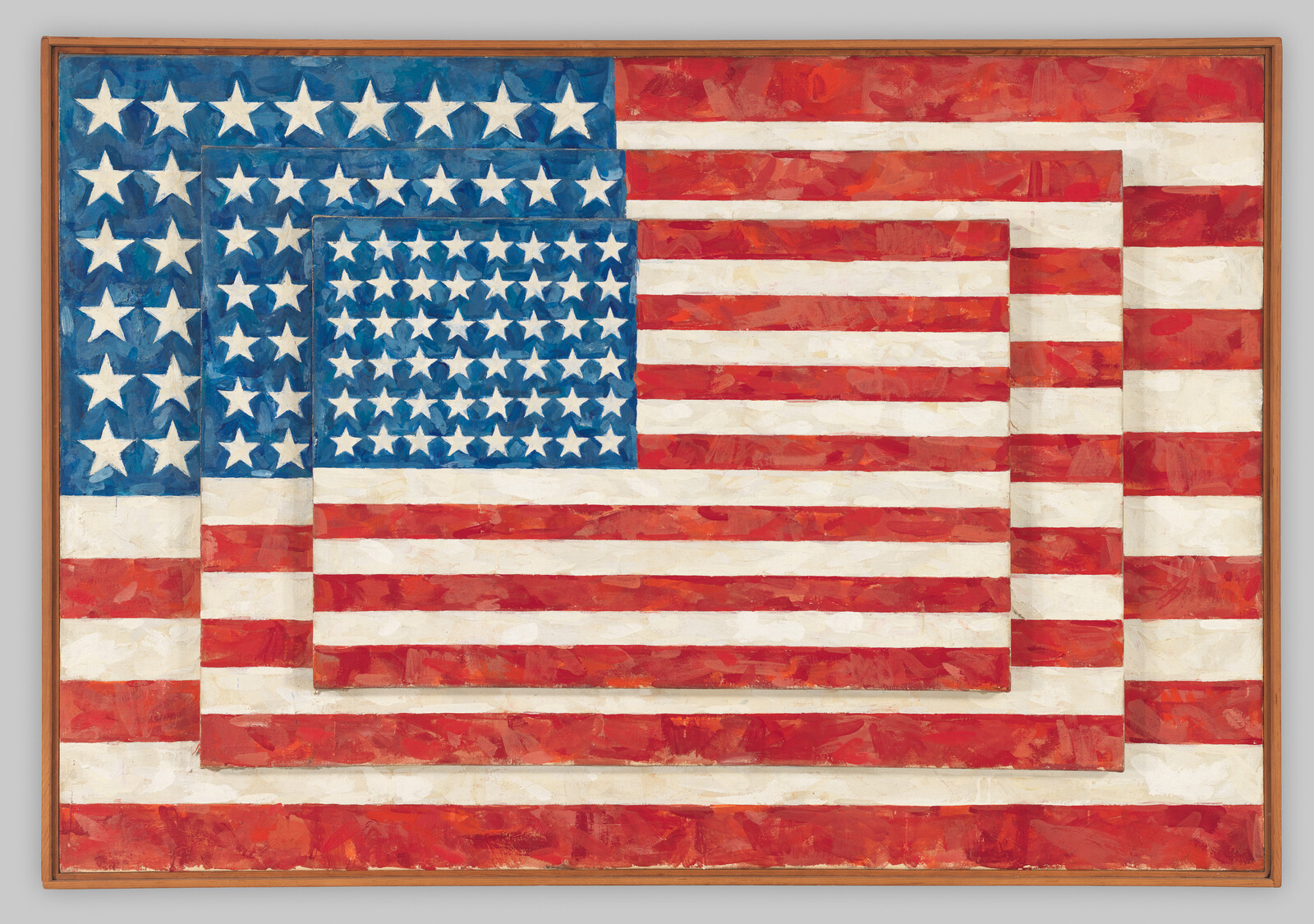
Музей Уитни покупает «Три флага» за миллион
В 1980 году Музей американского искусства Уитни заплатил за «Три флага» (1958) 1 миллион долларов — самую высокую цену, когда-либо уплаченную за работу живущего художника.
![Flags II [trial proof], Джаспер Джонс, 1967-1970](https://api.nga.gov/iiif/9f010b4d-1f11-4448-bf9a-ccc0c4ba4a2a/full/!2400,2400/0/default.jpg)