 Кете КольвицГермания, 1867–1945
Downtrodden
Можно ли лицезреть?
Сейчас не принимает

Миннеаполисский институт искусства
Миннеаполис, США
Числится в собрании, но в залах её сейчас нет.
- Проверено
- В этом положении с
- Источник
- Данные самого музея
О работе
Словами музея — на английском
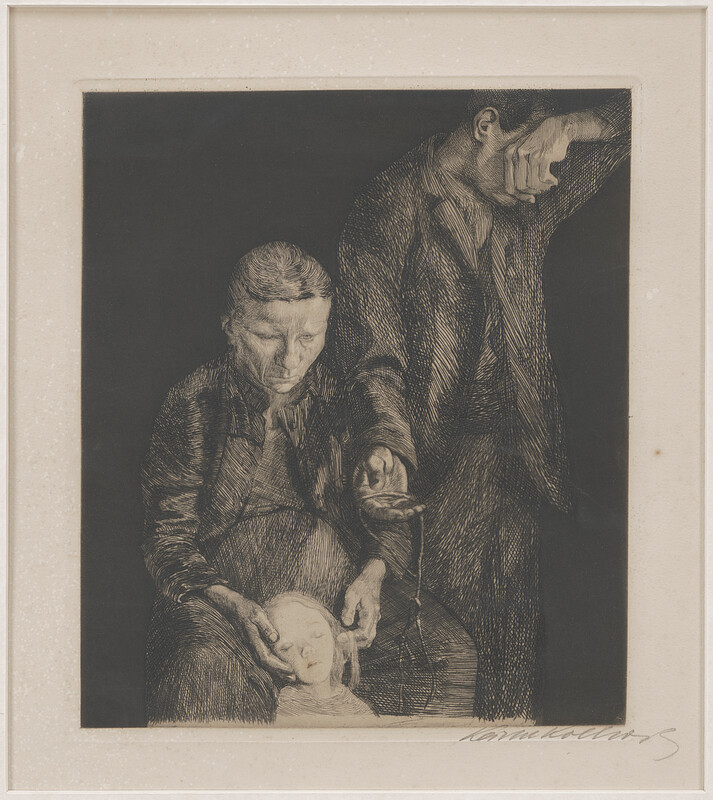
A care-worn couple grieve for a sick or dead child. The man stands leaning against a wall, his face buried in his left arm, while his right is slightly extended in a gesture of supplication or benediction. The woman leans over slightly, using her hands to support the head of the limp child. Käthe Kollwitz originally intended this image to serve as the left panel of a 34-inch-wide triptych, whose central panel featured a naked male corpse laid out on a cloth-covered slab (derived from Hans Holbein’s famous painting of the dead Christ in the Kunstmuseum Basel) with another sword-bearing figure leaning over him. The right wing of the triptych showed nude women, one bound to a tree trunk, one embracing the trunk, and another seeming to mourn the others while imploring the viewer.
Читать дальше
Kollwitz credited the symbolist Max Klinger with inspiring much of her interest in printmaking, and the triptych shows her employing his brand of hyperdramatic otherworldliness. The result was an odd juxtaposition of melodrama in the center and right sections versus the restrained tragedy of the left. After printing just a few impressions of the full composition, Kollwitz cut the plate, separating the left section from the others. She then went on to print editions of the separate plates. This impression of the left section shows the inner drama that Kollwitz would continue to pursue throughout her career.
Миннеаполисский институт искусства
Сведения
- Инвентарный номер
- 2023.57.7
В каталоге
Источники
- Миннеаполисский институт искусства: открытые данные самого музея · получено 7 дней назад
- Изображение: Миннеаполисский институт искусства — общественное достояние
А тем временем в жизни художника
Вся жизнь целиком1898
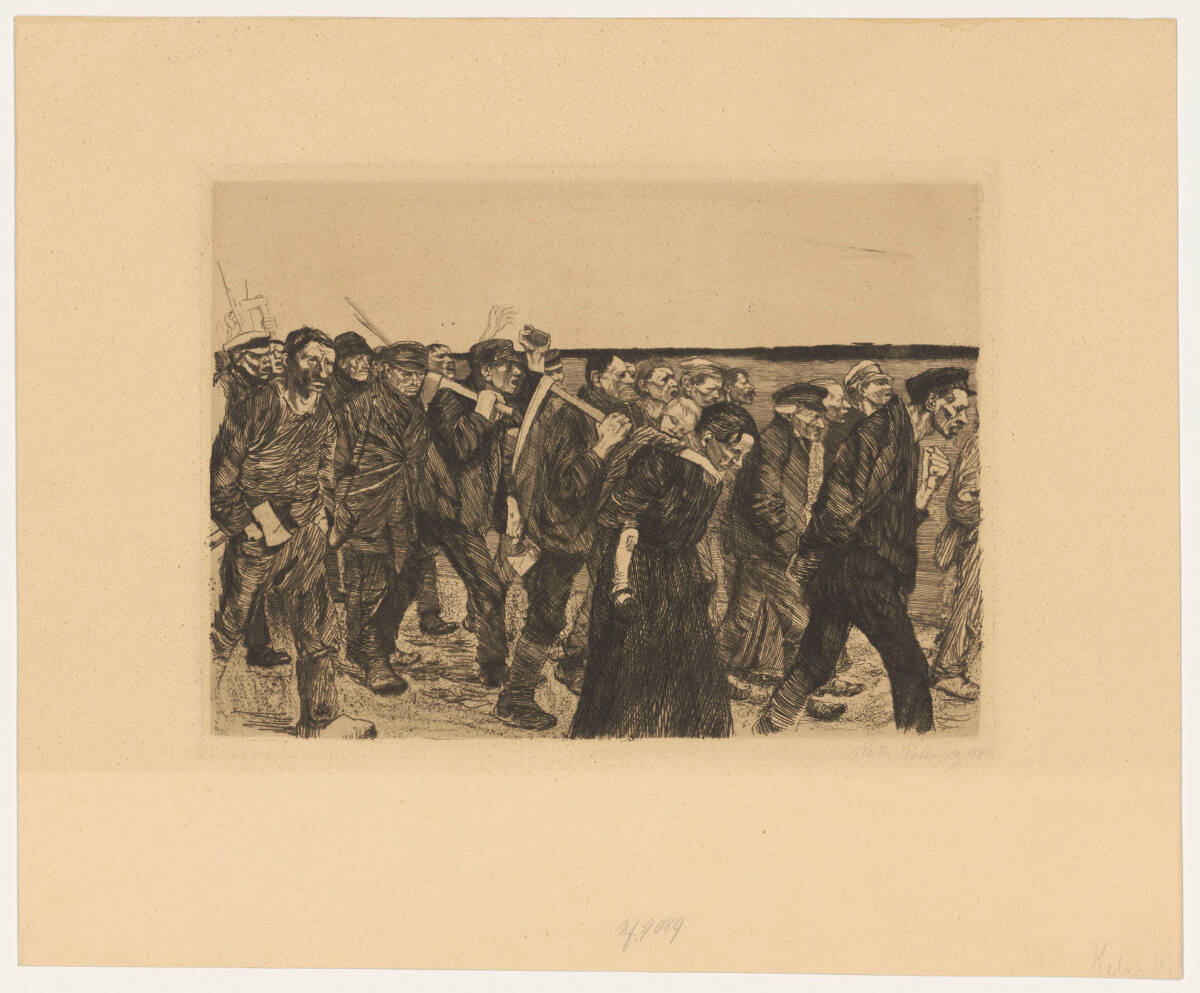
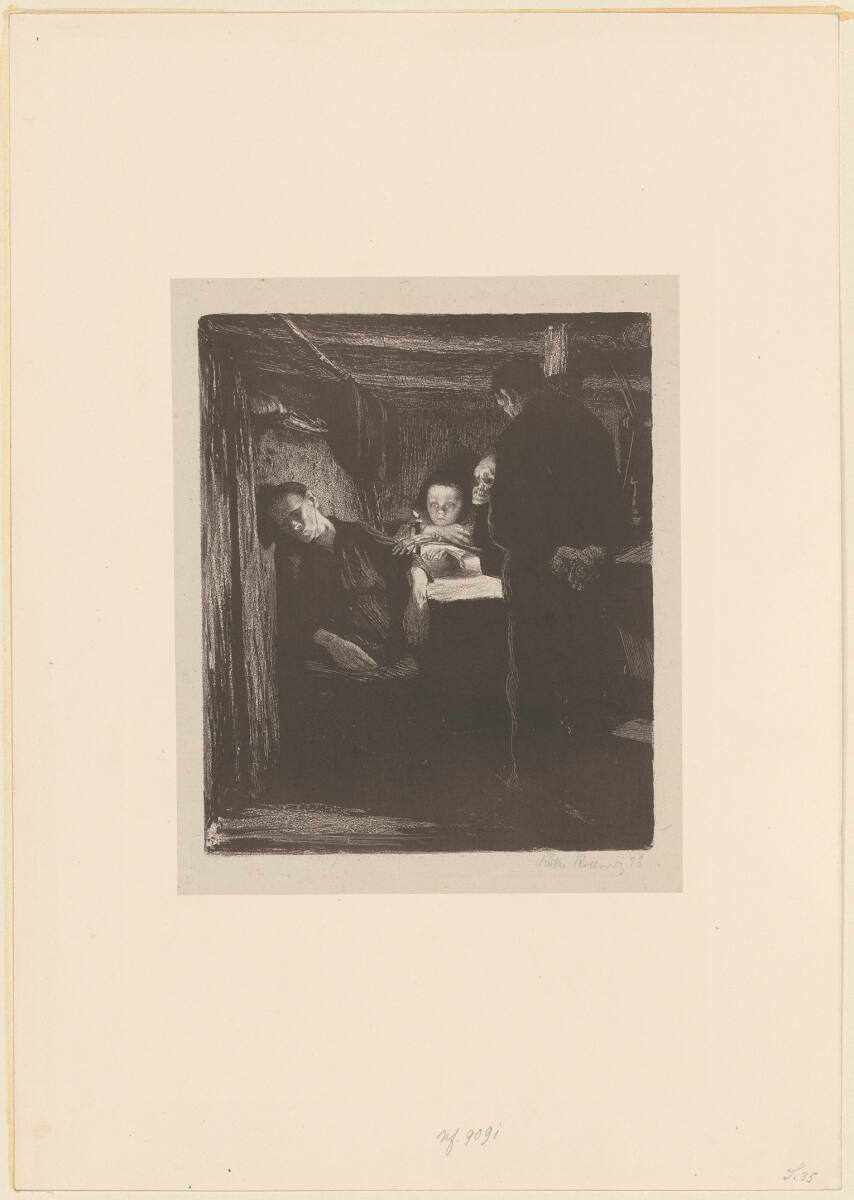
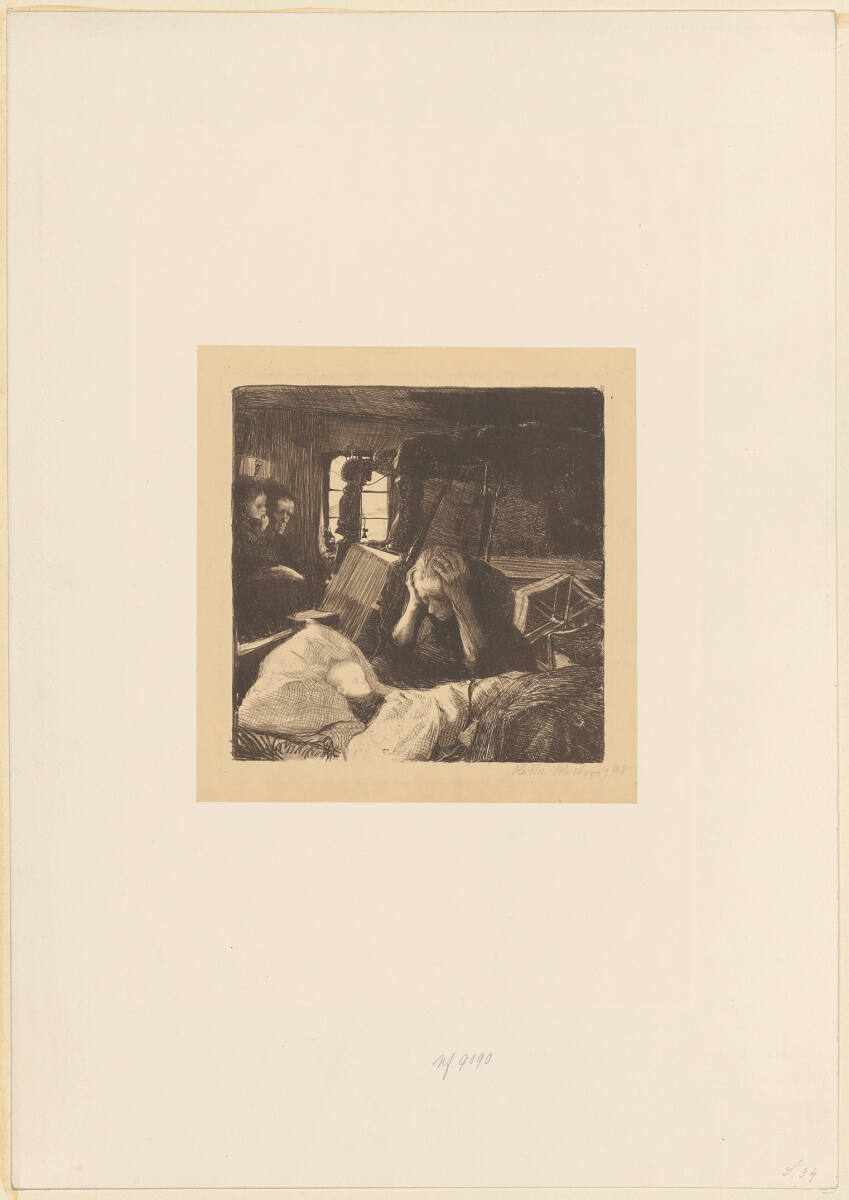
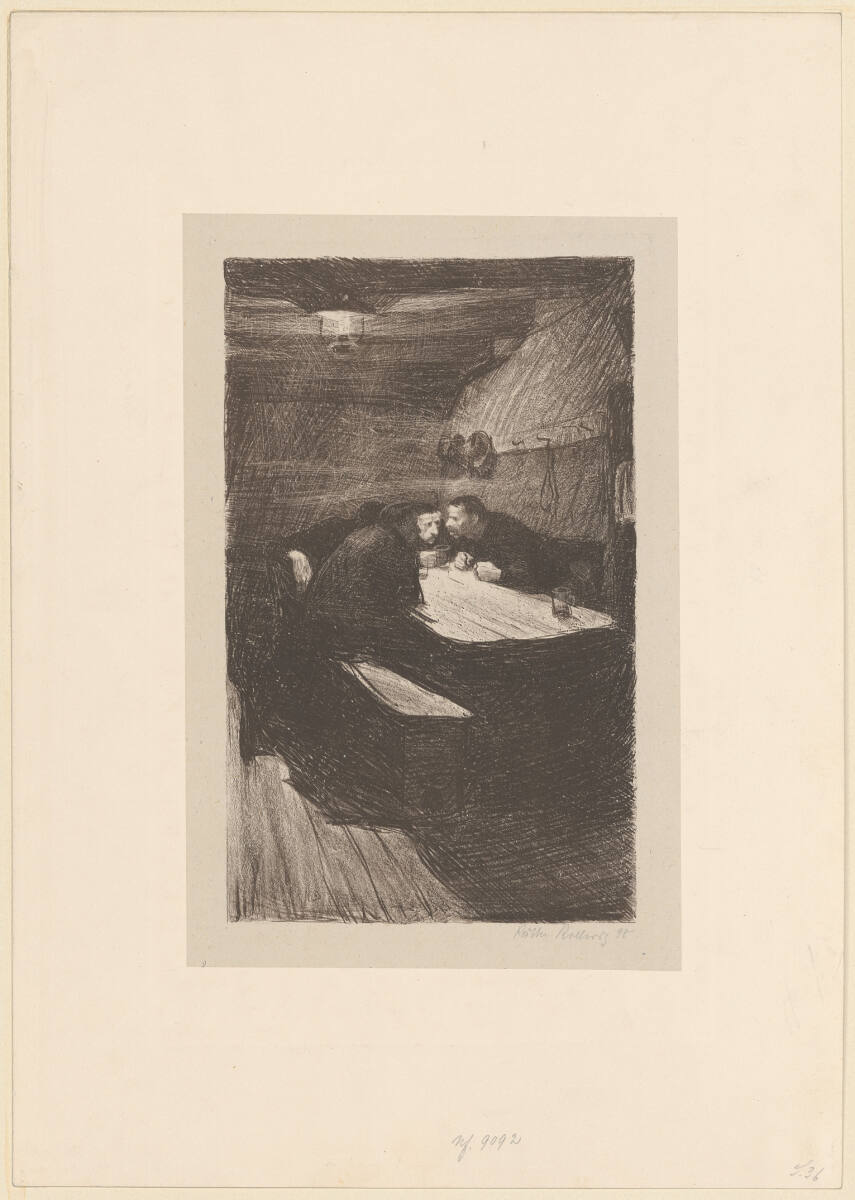
«Восстание ткачей» на Большой Берлинской выставке
В 1898 году цикл был показан публике на Большой Берлинской художественной выставке и получил широкое признание.
1898
Кайзер не дал женщине золотую медаль
Адольф Менцель выдвинул её работы на золотую медаль Большой Берлинской выставки 1898 года, но Вильгельм II не утвердил награду: по его словам, медаль для женщины — это уже слишком, ордена и медали подобают груди достойных мужчин.
1898–1903
Преподаёт в Женском художественном училище
В 1898–1903 годах была преподавателем Женского художественного училища в Берлине.