 Роберт РаушенбергСША, 1925–2008
Acre (Carnal Clock)
Можно ли лицезреть?
Сейчас не принимает

Миннеаполисский институт искусства
Миннеаполис, США
Числится в собрании, но в залах её сейчас нет.
- Проверено
- 7 часов назад
- В этом положении с
- 25 сент. 2026 г.
- Источник
- Данные самого музея
О работе
Словами музея — на английском
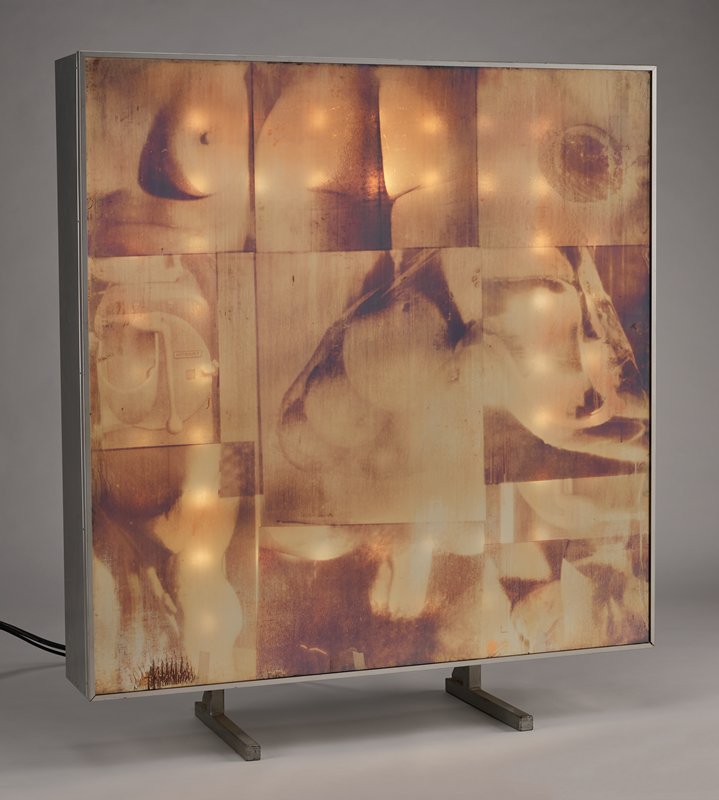
One of several unique constructions from Rauschenberg's Carnal Clock series, Acre is both a work of art and a functioning clock of sorts. When operating, the electric-powered device is designed to sequentially illuminate one or more images in a predetermined pattern. In an early interview, Rauschenberg described the mechanics of the clock: There are always two lights on; one is the minute hand, and the other is the hour hand and they do what they have to do and it's at midnight and noon that all the lights come on for one minute, and then you get to see the whole thing at once.
Читать дальше
The construction features both appropriated images and photographs Rauschenberg made specifically for this series, documenting his own body and those of some of his close friends. The work's nudity and sexual content is partially hidden from view by the reflective surface of the light box, slowing the initial comprehension of the imagery. Acre was intended to startle viewers, who were simultaneously confronted with their own reflections and graphic images of naked men and women. On this aspect of the work, Rauschenberg noted: Carnal Clocks could be considered offensive. I think Carnal Clocks was racy. My flesh tells the time marked by real people who are all still living. It was an embarrassing project. Part of the project was embarrassment as a medium, because it was about my working out my shyness to photograph my friends' intimate parts.
Миннеаполисский институт искусства
Сведения
- Инвентарный номер
- 69.134
В каталоге
Источники
- Миннеаполисский институт искусства: открытые данные самого музея · получено 6 дней назад
- Изображение: Миннеаполисский институт искусства — Robert Rauschenberg, Acre (Carnal Clock), 1969 © Robert Rauschenberg Foundation
А тем временем в жизни художника
Вся жизнь целиком27 июня 1968 – 6 октября 1968
Выставка: 4. documenta
26 июля 1968
Покупает дом на острове Каптива
26 июля 1968 года Раушенберг купил Пляжный дом — свою первую собственность на острове Каптива у побережья Флориды, но постоянным жильём он стал лишь осенью 1970 года. По другим данным, дом был куплен в 1970 году.
1969
По приглашению NASA видит запуск «Аполлона-11»
NASA пригласило Раушенберга на запуск «Аполлона-11». В ответ на это событие он создал серию литографий Stoned Moon, соединив схемы и снимки из архивов NASA со своими рисунками и рукописным текстом.
осень 1970
Перебирается на Каптиву насовсем
С осени 1970 года дом на Каптиве стал постоянным жильём и мастерской Раушенберга. Первыми здесь появились серии «Картоны» (1971–1972) и «Ранние египтяне» (1973–1974) из местного картона и песка: вместо городских образов он теперь предпочитал натуральные волокна ткани и бумаги.
1970
Учреждает программу помощи художникам Change, Inc.
Раушенберг создал программу Change, Inc., выдававшую художникам в трудном положении единовременные экстренные гранты до 1000 долларов.
1970
Участвует в создании павильона «Пепси» в Осаке
Раушенберг участвовал в создании павильона «Пепси» для Всемирной выставки 1970 года в Осаке; режиссёром открытия был хореограф и художник Реми Чарлип.