 László Moholy-NagyEstados Unidos, 1895–1946
Untitled
Será possível contemplá-la?
De momento, não recebe

Instituto de Artes de Minneapolis
Minneapolis, Estados Unidos
Pertence à coleção, mas de momento não está exposta.
- Verificado
- Neste estado desde
- Fonte
- Os dados da própria coleção do museu
Sobre a obra
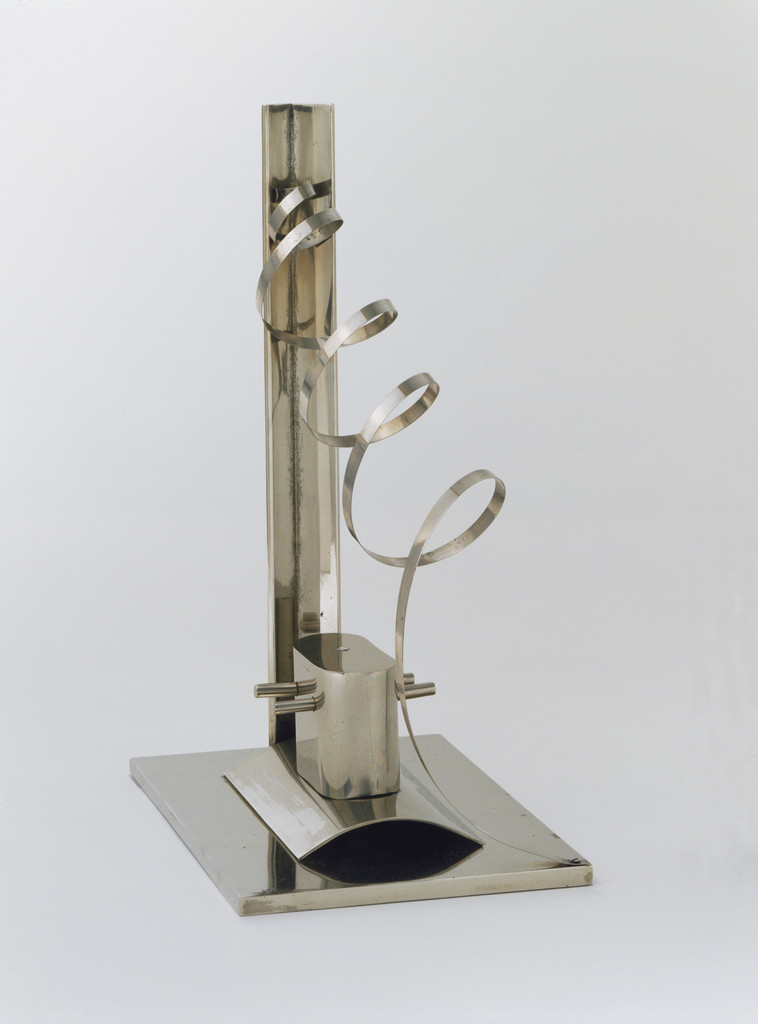
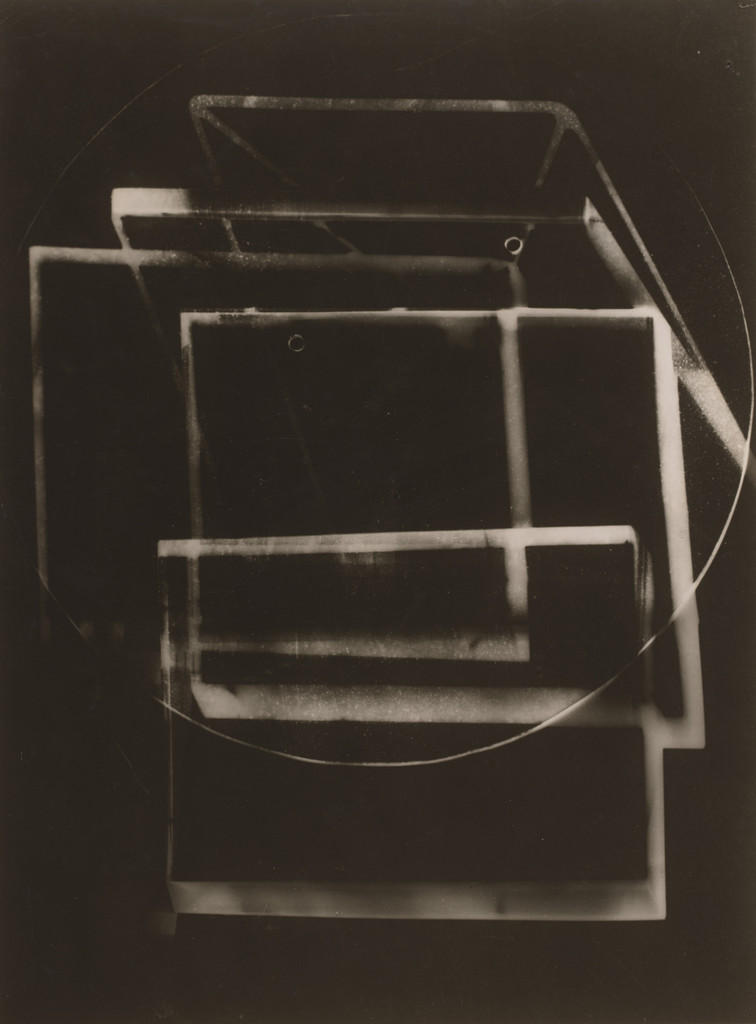
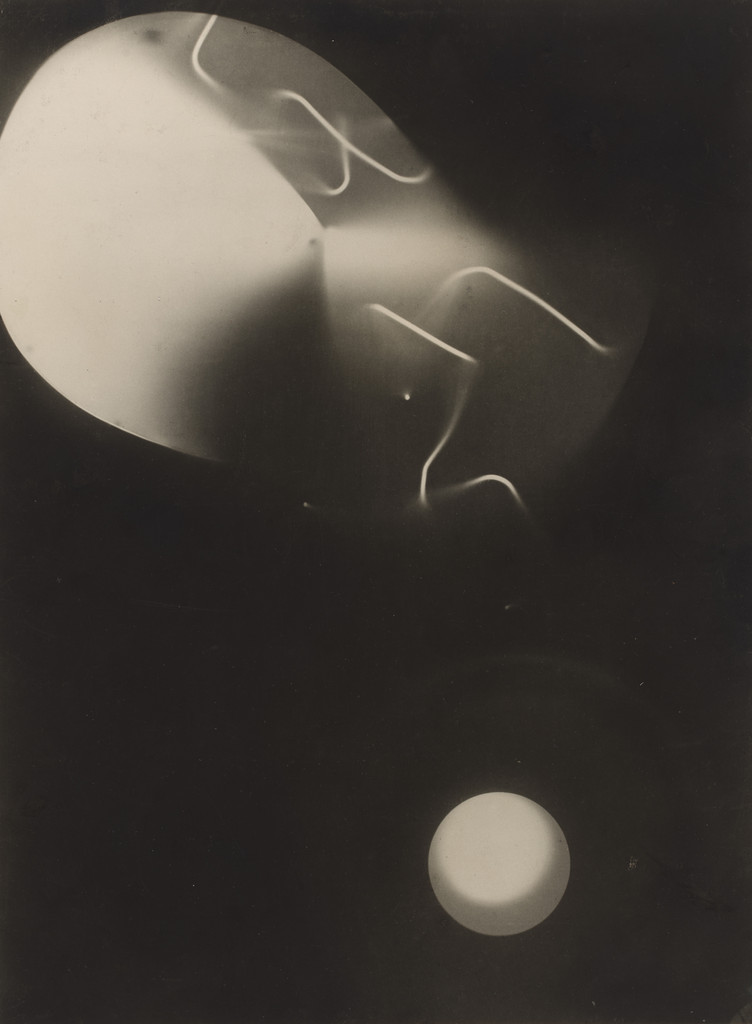
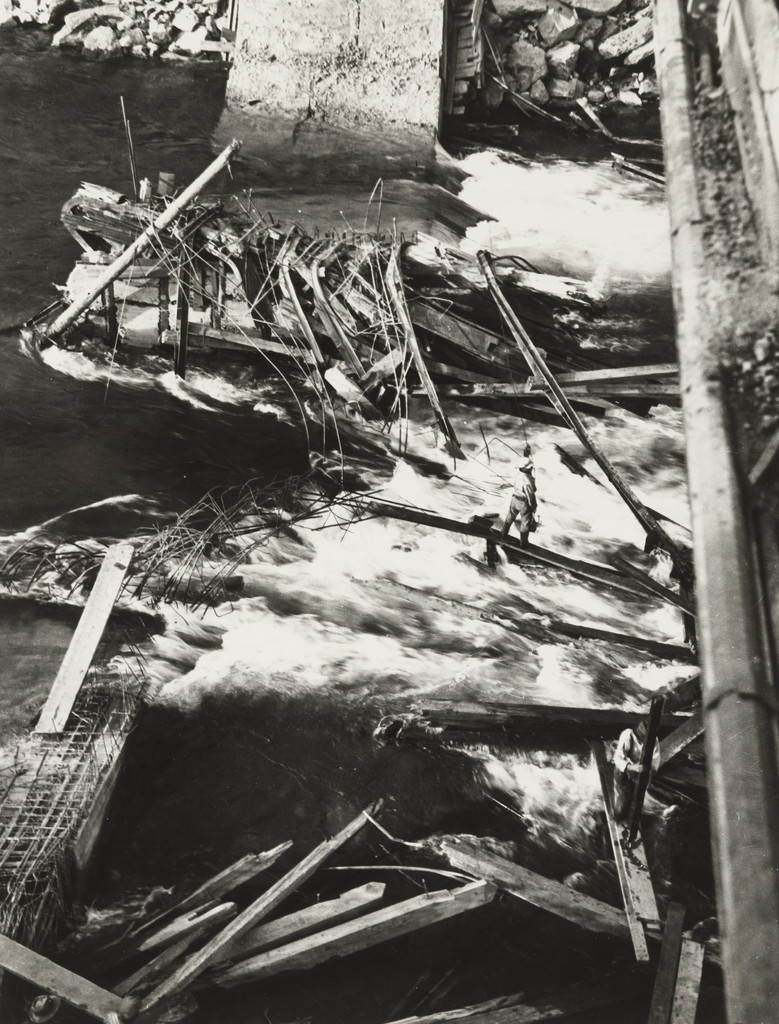
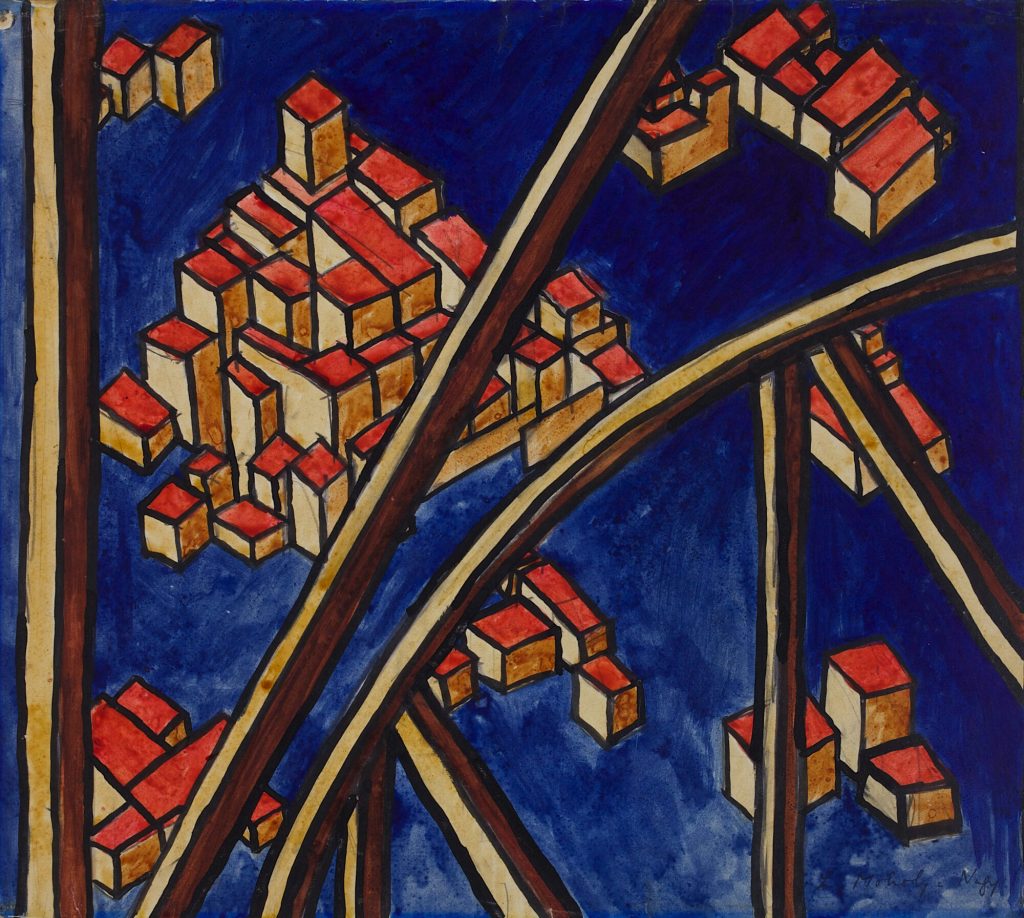
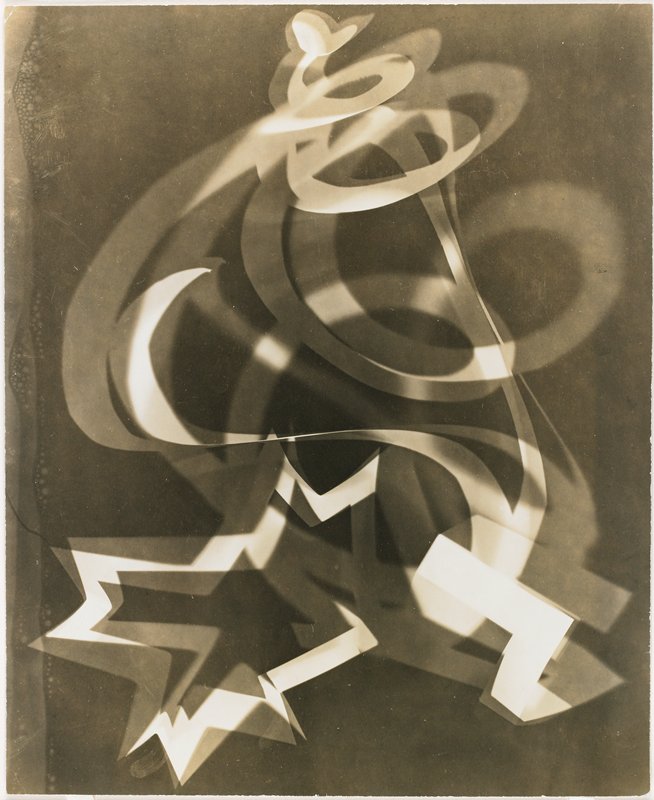
László Moholy-Nagy was a leading figure of the Bauhaus, a modern art and design school founded by the architect Walter Gropius, as well as being a prominent member of the related New Objectivity Movement. Moholy-Nagy worked as a painter, graphic artist, photographer, and teacher, and he produced this image without a camera by arranging objects directly on a sheet of photo paper and exposing it to light. The resulting photogram is a negative shadow image with tonal variations. Although this process was used by photographers in the 1800s and popularized as a children’s amusement, 20th-century avant-garde artists revived it as a way to embrace abstraction and explore the optical properties of light.
Instituto de Artes de Minneapolis
Pormenores
- Número de inventário
- 99.9
No catálogo
Fontes
- Instituto de Artes de Minneapolis: the museum's own open data · obtido há 6 dias
- Imagem: Instituto de Artes de Minneapolis — © Minneapolis Institute of Art
Entretanto, na vida de László Moholy-Nagy
A vida inteira1935
London: the Isokon and a dream of an English Bauhaus
In 1935 Moholy-Nagy moved with his family to London and joined the circle of émigré artists and intellectuals in Hampstead: he lived for eight months with Walter Gropius in the Isokon building, then settled in Golders Green. He and Gropius planned an English Bauhaus but could not secure backing, and the Royal College of Art turned him down for a teaching post.
1935–1937 · Residência
London
1937
Director of the New Bauhaus in Chicago
On Walter Gropius's recommendation and at the invitation of Walter Paepcke, chairman of the Container Corporation of America, Moholy-Nagy moved to Chicago as founding director of the New Bauhaus. The school's philosophy was unchanged from the original, and it was housed in the Prairie Avenue mansion Richard Morris Hunt had designed for the department-store magnate Marshall Field.
1937
Works in the “Degenerate Art” exhibition
Nazi Germany included Moholy-Nagy's works in its infamous propaganda exhibition “Degenerate Art” in Munich.
1937–1946 · Residência
Chicago
February 1939
The New Bauhaus closes; the School of Design opens
By 1938 the New Bauhaus had closed for financial reasons, but with Paepcke's continued support Moholy-Nagy kept the programme going, reopening it in February 1939 as the School of Design in Chicago, which he led for the rest of his life. After the closure he also returned to commercial design, which he pursued until his death, serving as art adviser to the Spiegel mail-order house.