 Georges BraqueFrança, 1882–1963
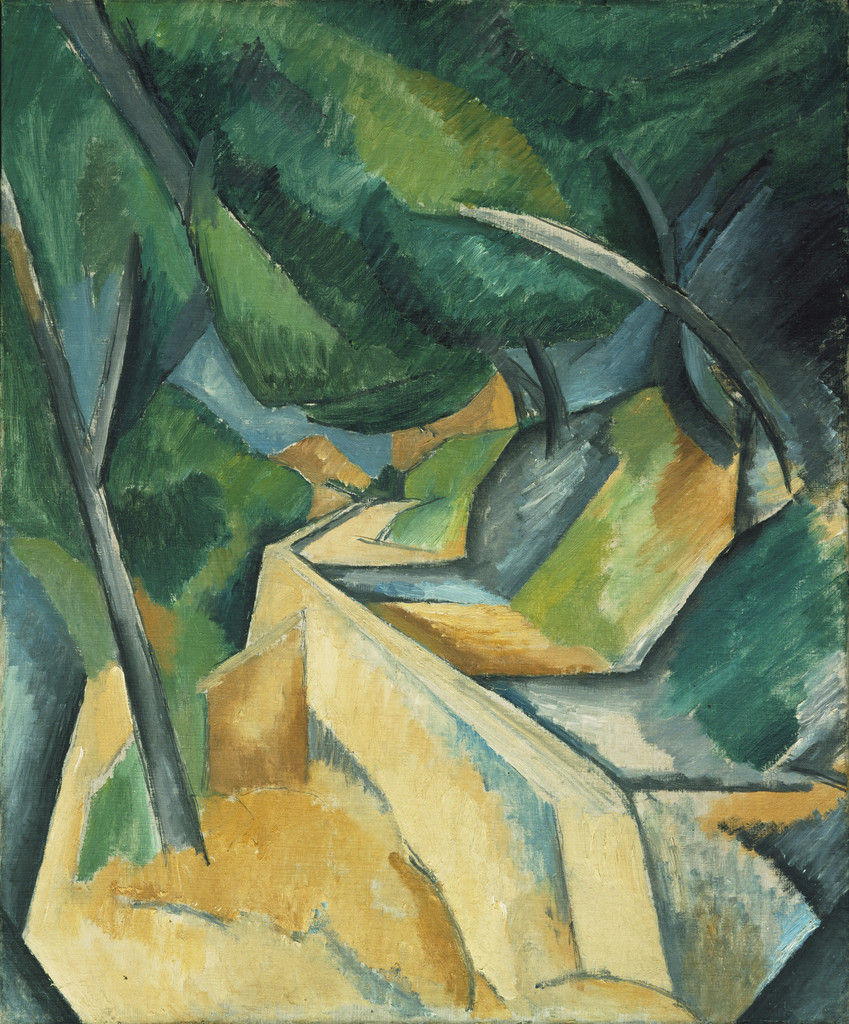
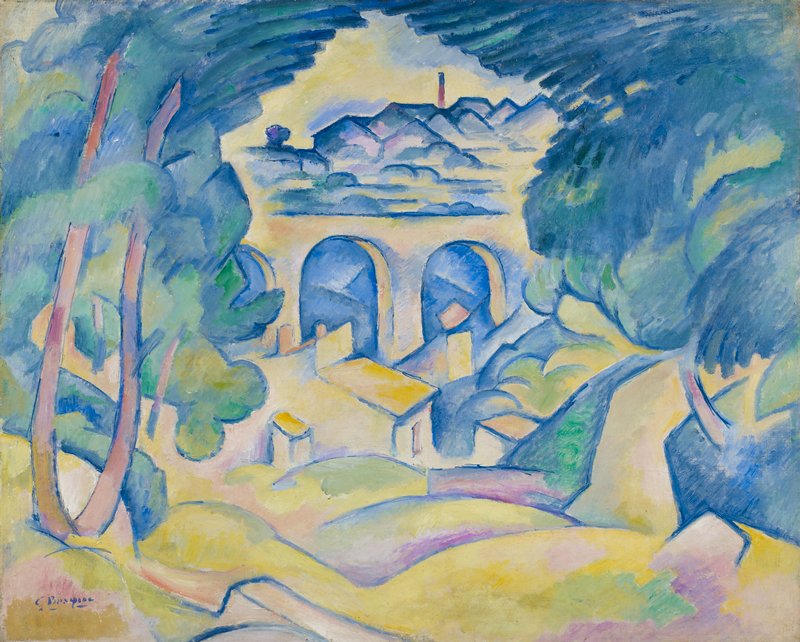
The Viaduct at L'Estaque
Posso vê-la?
Não exposta de momento
Onde está «The Viaduct at L'Estaque» hoje? Coleção: Instituto de Artes de Minneapolis, Minneapolis. Não exposta de momento. Verificado 29 de setembro de 2026.

Minneapolis, Estados Unidos
Pertence à coleção, mas de momento não está exposta.
- Verificado
- Neste estado desde
- Fonte
- O museu
Sobre a pintura
The Viaduct at L'Estaque (French: Viaduc à l'Estaque) is an oil-on-canvas painting by Georges Braque, executed in 1907. The painting has the dimensions of 63.5 by 78.74 cm. It is housed at the Minneapolis Institute of Art.
Nas palavras do museu
Between 1906 and 1910, Georges Braque made several trips to the south of France and the port at L'Estaque, just west of Marseilles. There, he found the new landscapes to paint using the nonnaturalistic colors of the Fauves.
During his 1907 stay, Braque also became influenced by the art of Paul Cézanne, who had painted there earlier. Like Cézanne, Braque reduced the site to simple geometric forms. Moving beyond Cézanne's solid masses, however, Braque made the tilting planes obey his own--rather than nature's--laws. Two years after finishing this picture, Braque abandoned Fauvism for Cubism.
Instituto de Artes de Minneapolis
Pormenores
- Número de inventário
- 82.22
No catálogo
Fontes
- Instituto de Artes de Minneapolis
- Imagem: Instituto de Artes de Minneapolis — © Artists Rights Society (ARS), New York / ADAGP, Paris
Na vida de Georges Braque
A vida inteira1905
Conversion to Fauvism
Braque's earliest works were Impressionist, but after seeing the Fauves — Matisse, Derain and others — exhibited in 1905, he adopted their brilliant colour. He worked most closely with his fellow natives of Le Havre, Raoul Dufy and Othon Friesz, developing a somewhat more subdued Fauvism.
1906
With Othon Friesz to L'Estaque and Antwerp
In 1906 Braque travelled with Friesz to paint in L'Estaque, in Antwerp and back home in Le Havre. The same year produced Seascape, L'Estaque, now in the Thyssen-Bornemisza Museum in Madrid.
1907
Success at the Salon des Indépendants
In May 1907 Braque successfully exhibited Fauvist works at the Salon des Indépendants.
October – November 1907
Meets Pablo Picasso
In the autumn of 1907 Braque visited Picasso's studio, and after the meeting sharply changed his manner, striving for economy of means and geometric forms (another view holds that the encounter rather accelerated and intensified his pursuit of Cézanne's ideas).
14 November 1908
Exhibition at Kahnweiler's and Vauxcelles's “cubes”
Reviewing Braque's exhibition at Kahnweiler's gallery, the critic Louis Vauxcelles called him a daring man who despises form, “reducing everything, places and figures and houses, to geometric schemas, to cubes”.
1909–1912
Creates Cubism together with Picasso
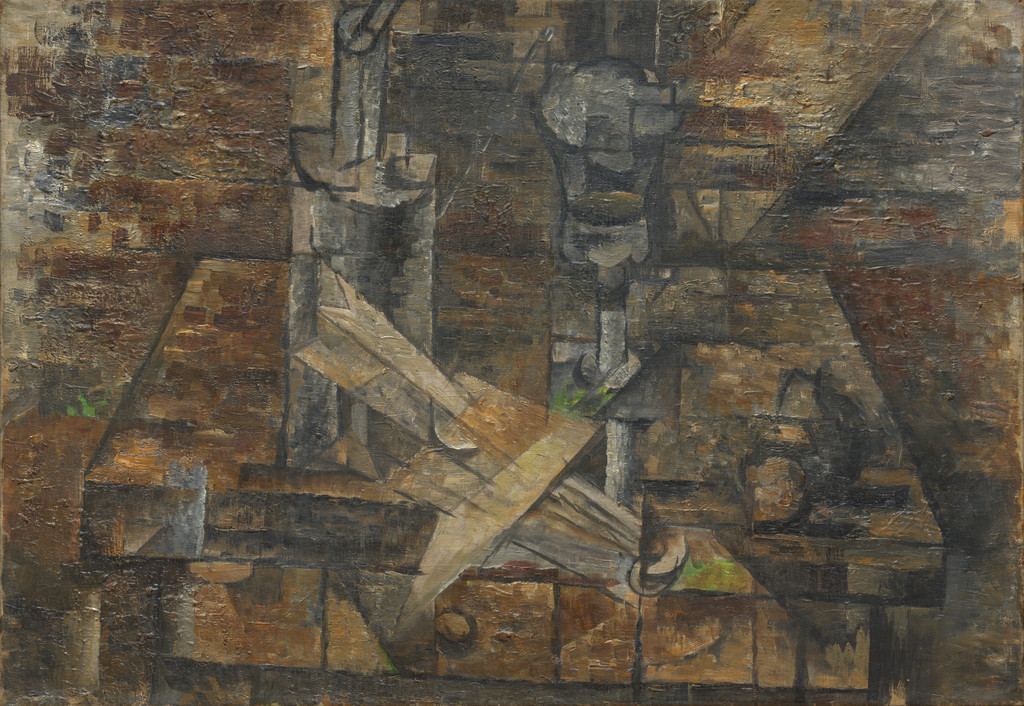
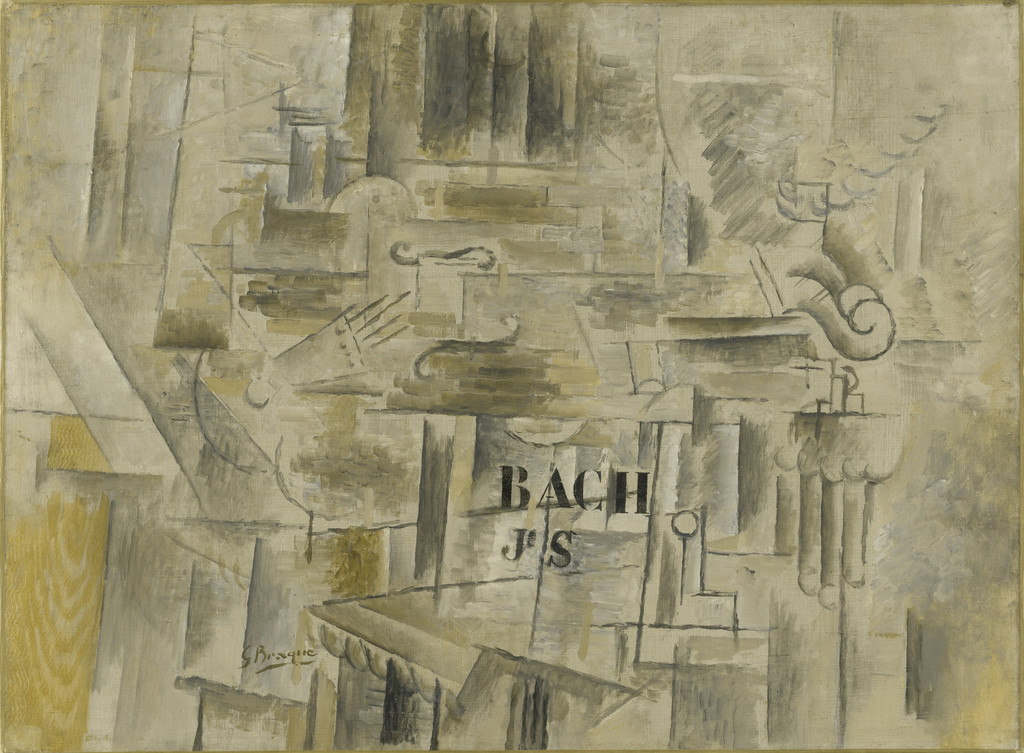
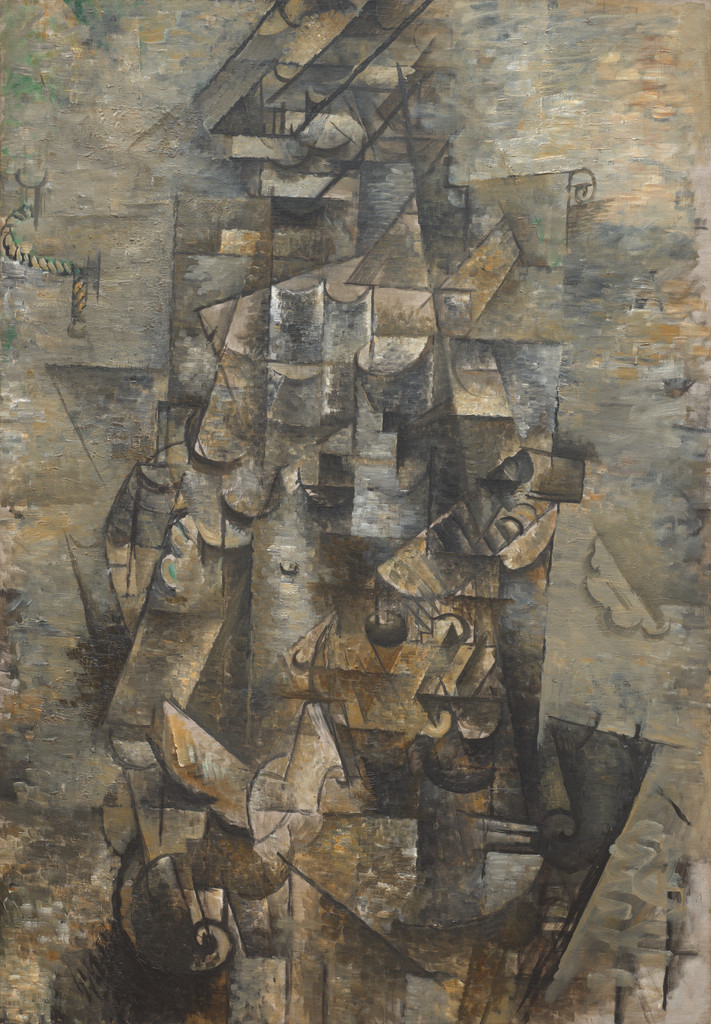
From 1909 to 1912 (other accounts say from as early as 1908) Braque worked with Picasso on the theoretical foundations of Cubism and became one of the movement's founders; for many years their paintings of the period were indistinguishable. Braque likened their partnership to being roped together on a mountain.