 Alfred StieglitzEstados Unidos, 1864–1946
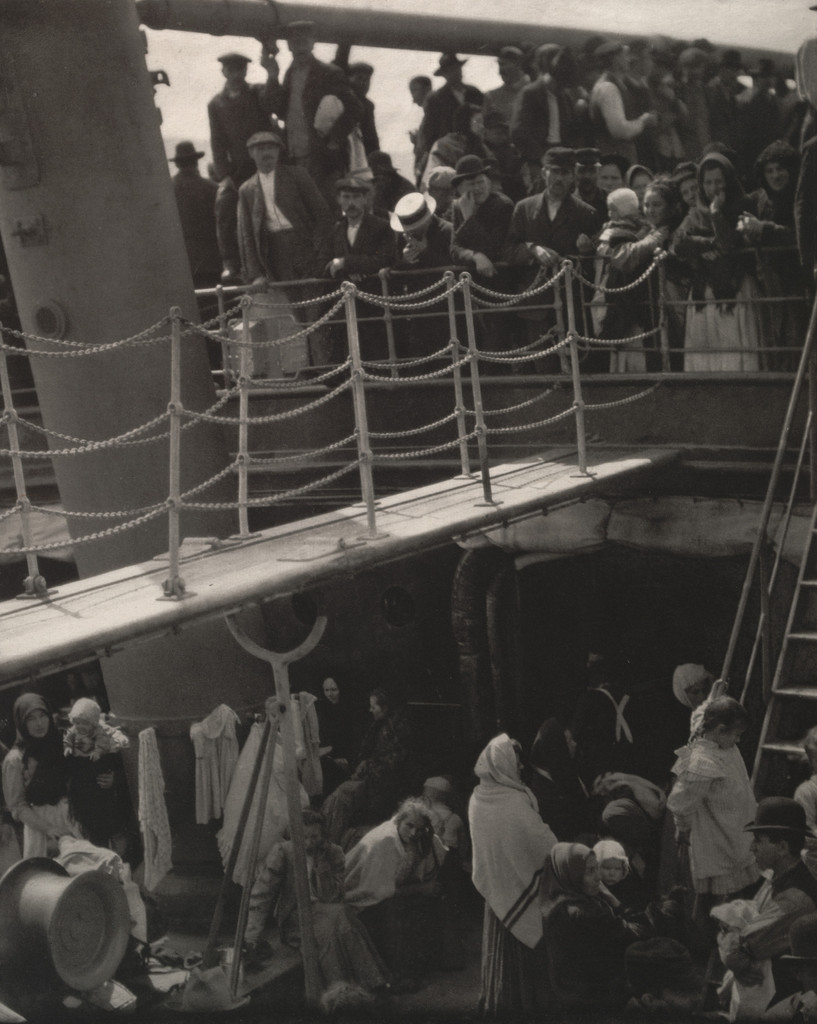
The Steerage
Será possível contemplá-la?
Sim, recebe visitas

Exposta ao público.
- Verificado
- Fonte
- O museu
Sobre a obra
A Direção é uma foto em preto e branco tirada por Alfred Stieglitz em 1907. Foi saudada como uma das maiores fotos de todos os tempos porque captura em uma única imagem um documento formativo de sua época e uma das primeiras obras do modernismo artístico.
Ler mais
Muito se escreveu sobre a cena como um documento cultural de um período importante, quando muitos imigrantes estavam vindo para a América. Na verdade, a foto foi tirada em um cruzeiro da América para a Europa e, por essa razão, alguns críticos a interpretaram como um registro de pessoas que foram recusadas pelos funcionários da Imigração dos Estados Unidos e foram obrigadas a voltar para casa. Embora alguns dos passageiros possam ter sido recusados por não cumprirem os requisitos financeiros ou de saúde para entrar, é mais provável que a maioria deles fossem vários artesãos que trabalhavam no florescente comércio de construção da época. Os trabalhadores altamente qualificados em trabalhos manuais, como marcenaria e colocação de mármore, receberam vistos temporários de dois anos para concluir seus empregos e, em seguida, voltaram para suas terras natais quando o trabalho foi finalizado.
Pormenores
- Número de inventário
- 436.1986
No catálogo
Fontes
- Museu de Arte Moderna
- Imagem: Museu de Arte Moderna — © the artist or rights holder
Entretanto, na vida de Alfred Stieglitz
A vida inteira25 November 1905
The 291 gallery opens on Fifth Avenue
On November 25, 1905, the Little Galleries of the Photo-Secession opened at 291 Fifth Avenue with one hundred prints by thirty-nine photographers; Edward Steichen had encouraged Stieglitz to lease the three rooms across from his own apartment. The gallery was an instant success, with almost fifteen thousand visitors in its first season and print sales of nearly $2,800, more than half of them Steichen's work.
1907
Paris: Gertrude Stein and a turn to painting
In Paris in 1907 Stieglitz met Gertrude Stein and was captivated by Rodin, Matisse, Toulouse-Lautrec, Cézanne and Rousseau. He decided to turn his photography gallery into a full art gallery to introduce the conservative American public to the newest European art.
1907
Pamela Colman Smith's drawings at 291
In December 1906 Stieglitz met the 28-year-old artist Pamela Colman Smith and decided to show her drawings and watercolours, thinking it “highly instructive to compare drawings and photographs”. Her show, which opened in January 1907, drew far more visitors than any previous photography show, and all her works were sold.
January – April 1908
Rodin and Matisse at 291
In January 1908 Stieglitz showed drawings by Rodin at his gallery, and in April an exhibition of Matisse, beginning his campaign to introduce the American public to the newest European art.
1909
Death of his father, Edward Stieglitz
His father, Edward Stieglitz (1833–1909), who had once taken the family to Europe for the children's education, died; as he would later do after his mother's death, Alfred buried his grief in his work.
December 1909 – 1910
Toulouse-Lautrec, Rousseau and Cézanne lithographs
In December 1909 Stieglitz showed paintings by Toulouse-Lautrec at his gallery, and in 1910 works by Matisse, Rodin and Rousseau and lithographs by Cézanne.