Francisco de ZurbaránEspanha, 1598–1664
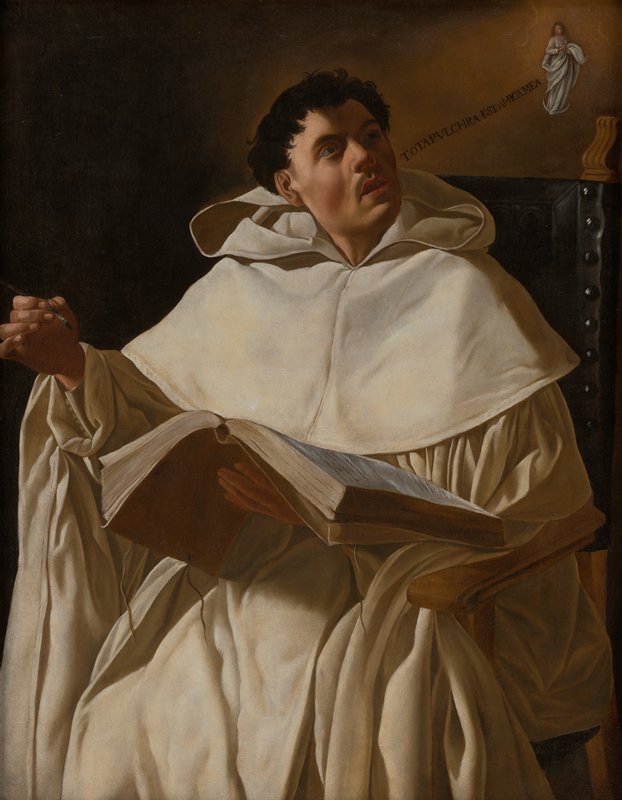
St Fernando
Posso vê-la?
Não exposta de momento
Onde está «St Fernando» hoje? Coleção: Hermitage, São Petersburgo. Não exposta de momento. Verificado 29 de agosto de 2026.

São Petersburgo, Rússia
Pertence à coleção, mas de momento não está exposta.
- Verificado
- Neste estado desde
- Fonte
- O museu
Pormenores
- Número de inventário
- ГЭ-5158
No catálogo
Fontes
- Hermitage
- Imagem: Hermitage — Museum open access
Na vida de Francisco de Zurbarán
A vida inteira1614–1658 · Local de trabalho
Seville
29 August 1628
The Mercedarians commission 22 paintings for their monastery
On 29 August 1628 the Mercedarians of Seville commission Zurbarán to produce 22 paintings for their monastery. Between 1628 and 1630 he paints a cycle on Saint Peter Nolasco and a cycle on the life of Saint Bonaventura.
1629
Invited to move to Seville
In 1629 the Elders of Seville, whose city stands to gain from his growing reputation, invite Zurbarán to relocate there permanently. He accepts and moves with his wife Beatriz de Morales, the three children of his first marriage, a relative called Isabel de Zurbarán and eight servants.
c. 1630
Appointed painter to Philip IV
Towards 1630 Zurbarán is appointed painter to Philip IV. There is a story that on one occasion the sovereign laid his hand on the artist’s shoulder, saying “Painter to the king, king of painters”.
1634
Madrid: the “Labours of Hercules” for the Buen Retiro
In 1634 Zurbarán travels to Madrid, where for the newly built Buen Retiro palace he departs from religious subjects: he paints a cycle of ten canvases of the deeds of Hercules (now in the Prado) and the historical composition “The Defence of Cádiz”. Studying the work of Italian painters and meeting other leading masters in the capital enriches his art.
late 1630s
The workshop produces for export to South America
From the late 1630s Zurbarán’s workshop produces many paintings for export to South America. “Jacob and His Twelve Sons” seems to have been aimed at the South American market too, but the originals were acquired for Auckland Castle in England.