 Albrecht DürerAlemanha, 1471–1528
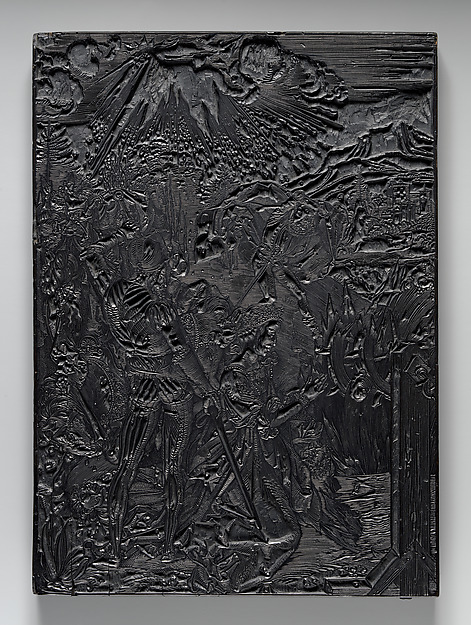
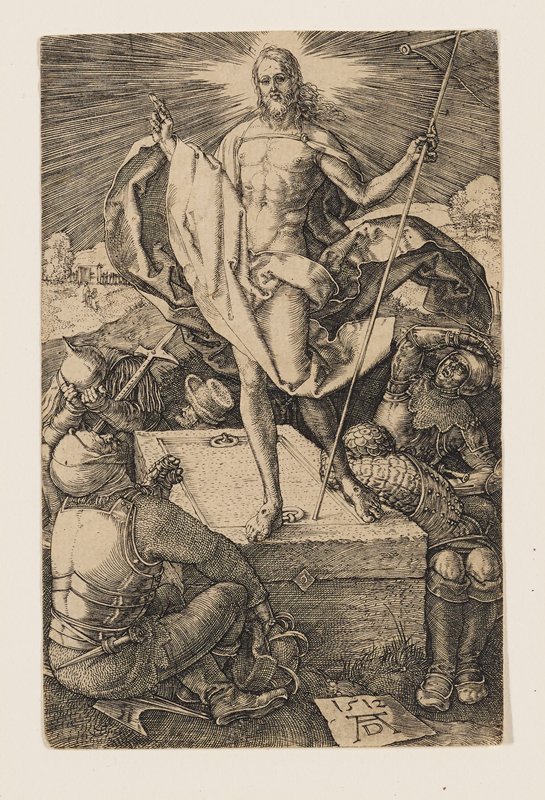
Resurrection
Será possível contemplá-la?
De momento, não recebe

Instituto de Artes de Minneapolis
Minneapolis, Estados Unidos
Pertence à coleção, mas de momento não está exposta.
- Verificado
- anteontem
- Neste estado desde
- 25 de set. de 2026
- Fonte
- Os dados da própria coleção do museu
Sobre a obra
According to the sixteenth-century biographer Vasari, a number of Dürer's prints reached Florence, among them the Engraved Passion series, where they were judged to be the ultimate in perfection and quality attainable in the medium of engraving. Among the Florentine artists who studied them was Jacopo Pontormo (1494-1556). In 1522-23 while escaping the plague in a monastery outside Florence, Pontormo painted a fresco series illustrating the Passion. Perhaps attracted to the intensely spiritual nature of the Dürer's depictions, Pontormo based the figures in some of his frescoes on the corresponding scenes in the Engraved Passion. The Resurrection is one of these.
Instituto de Artes de Minneapolis
Pormenores
- Número de inventário
- P.136
No catálogo
Fontes
- Instituto de Artes de Minneapolis: the museum's own open data · obtido há 6 dias
- Imagem: Instituto de Artes de Minneapolis — public domain
Entretanto, na vida de Albrecht Dürer
A vida inteira1507–1528 · Local de trabalho
Nuremberg
1511
Publishes the Great Passion and the Life of the Virgin
Dürer published two woodcut series as books, the Great Passion and the Life of the Virgin, with a second edition of the Apocalypse and the 37 woodcuts of the Little Passion. His post-Venetian woodcuts developed chiaroscuro modelling.
1512
Emperor Maximilian I becomes his chief patron
From 1512 Emperor Maximilian I was Dürer's chief patron. For him Dürer and his workshop produced the Triumphal Arch, a giant woodcut 295 × 357 cm printed from 192 blocks and modelled on the triumphal arches of ancient Rome.
3 January 1512
Nuremberg's privilege against forgeries
Nuremberg's city council granted Dürer a privilege for the sale of his prints, with penalties for anyone who forged them.
1513–1516
Three years without painting
Complaining that painting did not pay enough to justify the time compared with his prints, Dürer produced no paintings from 1513 to 1516.
1514
Death of his mother
In the year of Melencolia I and St Jerome in His Study, the artist's mother, Barbara Holper, died.
![Madonna and Child [obverse], Albrecht Dürer, c. 1496/1499](https://api.nga.gov/iiif/878db7e6-10ae-4cae-ba5d-6d6f5c413ae8/full/!2400,2400/0/default.jpg)
![Lot and His Daughters [reverse], Albrecht Dürer, c. 1496/1499](https://api.nga.gov/iiif/7565a449-f82a-414b-9bda-c93f55a51b4d/full/!2400,2400/0/default.jpg)