 Frank StellaEstados Unidos, 1936–2024
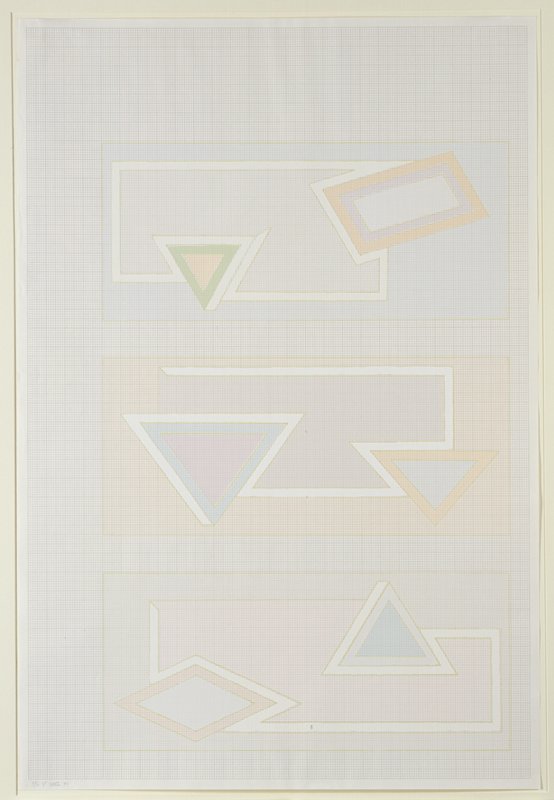
Pastel Stack
Será possível contemplá-la?
De momento, não recebe

Instituto de Artes de Minneapolis
Minneapolis, Estados Unidos
Pertence à coleção, mas de momento não está exposta.
- Verificado
- ontem
- Neste estado desde
- 25 de set. de 2026
- Fonte
- Os dados da própria coleção do museu
Sobre a obra
Referring to his severe and depersonalized view of art, painter, sculptor, and printmaker Frank Stella once stated, A painting is a flat surface with paint on it, nothing more. Beginning in the 1960s, he embraced the stark geometric abstraction of Minimalism as his primary mode of expression. In paintings, drawings, and prints alike, Stella used form, color, line, and pattern as his fundamental visual vocabulary.
In Pastel Stack, the artist's first screenprint, Stella depicts a stack of rectangles, each penetrated with simple geometric forms, abstract arrangements appropriated from his Polygon series of paintings of 1965-67. Printed in tinted and transparent colors, these forms appear to float over an underlying grid pattern.
Instituto de Artes de Minneapolis
Pormenores
- Número de inventário
- P.70.76
No catálogo
Fontes
- Instituto de Artes de Minneapolis: the museum's own open data · obtido há 5 dias
- Imagem: Instituto de Artes de Minneapolis — © Frank Stella / Artists Rights Society (ARS), New York
Entretanto, na vida de Frank Stella
A vida inteira1960s
Travels in the Middle East
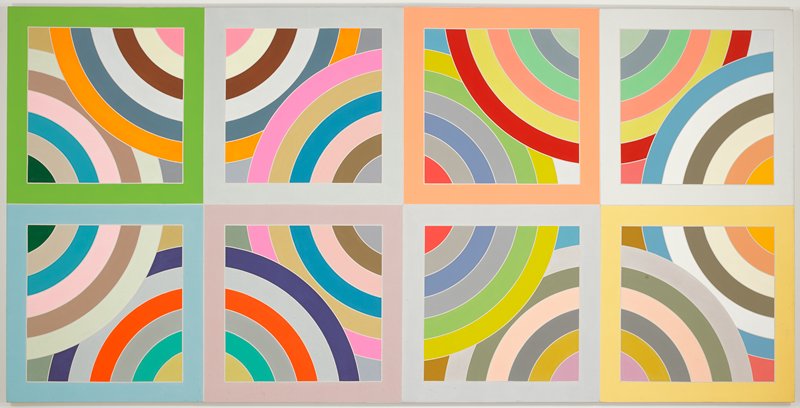
He visits circular-plan cities in the Middle East and is especially intrigued by the arches and decorative patterns he sees in the architecture and art of Iran; these cities will later give their names to works of the Protractor series.
27 de junho de 1968 – 6 de outubro de 1968
Exhibition: 4. documenta
1969
End of his marriage to Barbara Rose
His marriage to the art historian Barbara Rose, begun in 1961, ends; they had two children, Rachel and Michael.
1970
Retrospective at the Museum of Modern Art
The Museum of Modern Art in New York presents a retrospective of Stella's work, making him the youngest artist to receive one.
1970
Boycott of the American Pavilion in Venice
Invited to the 35th Venice Biennale, Stella joins a boycott by artists opposed to the US wars in Vietnam and Cambodia and withdraws his works from display at the American Pavilion.
1970s
Introduces relief: “maximalist” painting
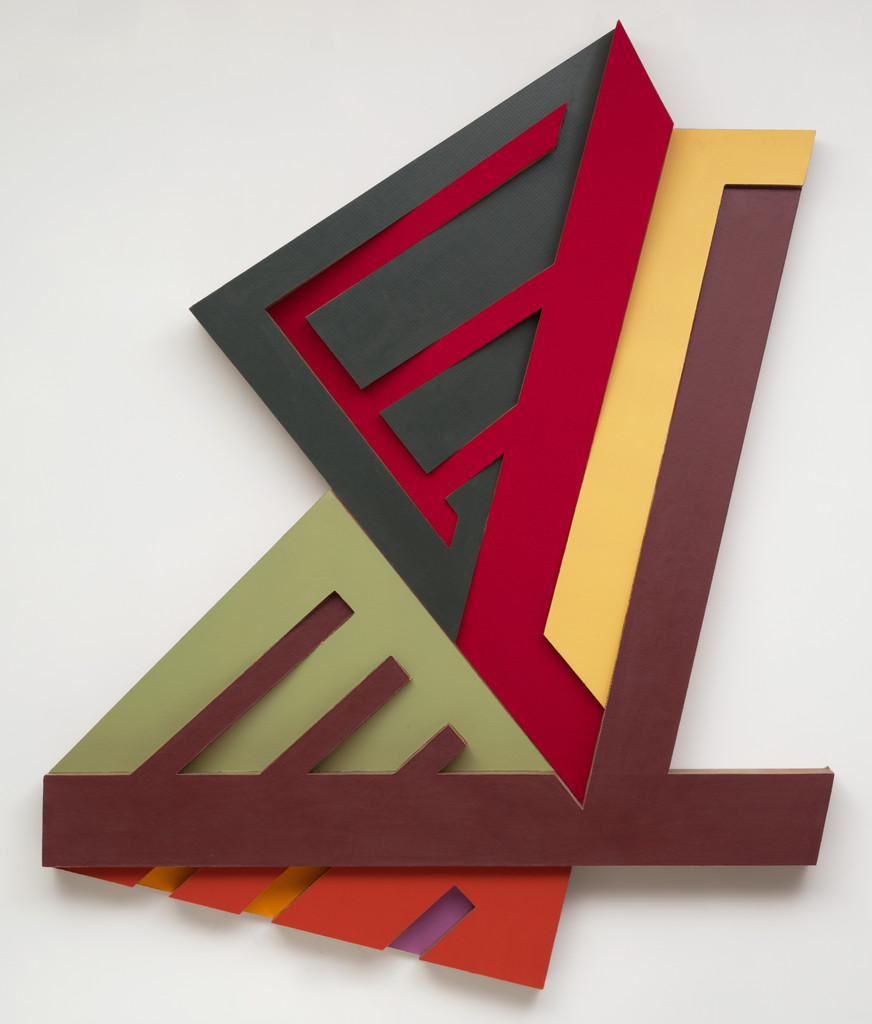
He brings relief into his work and calls such painting “maximalist” for its sculptural qualities; in the Eccentric Polygon series the shaped canvases take on still less regular forms and collage elements appear, such as pieces of canvas glued to plywood, and aluminum then becomes the main support of his paintings.