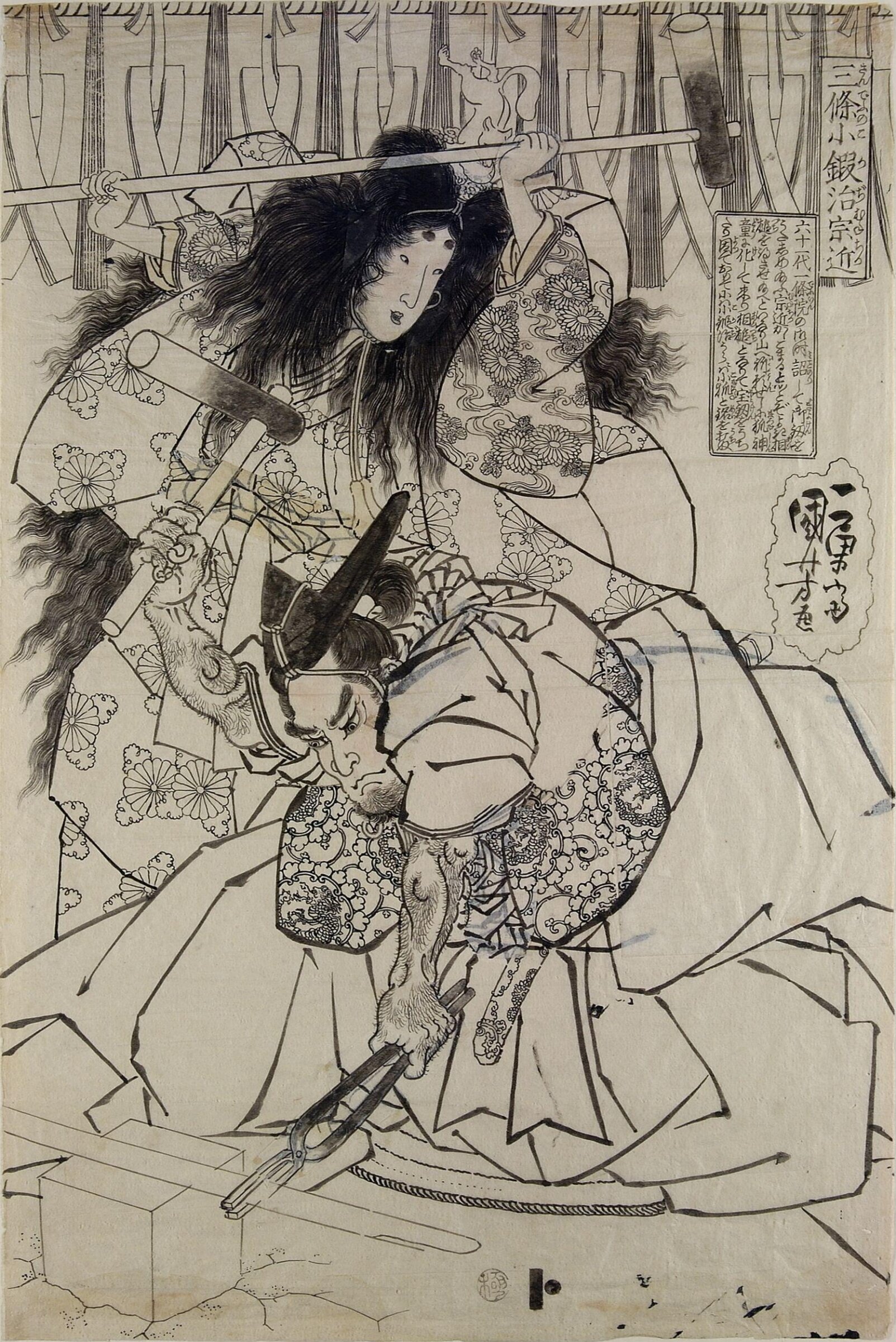
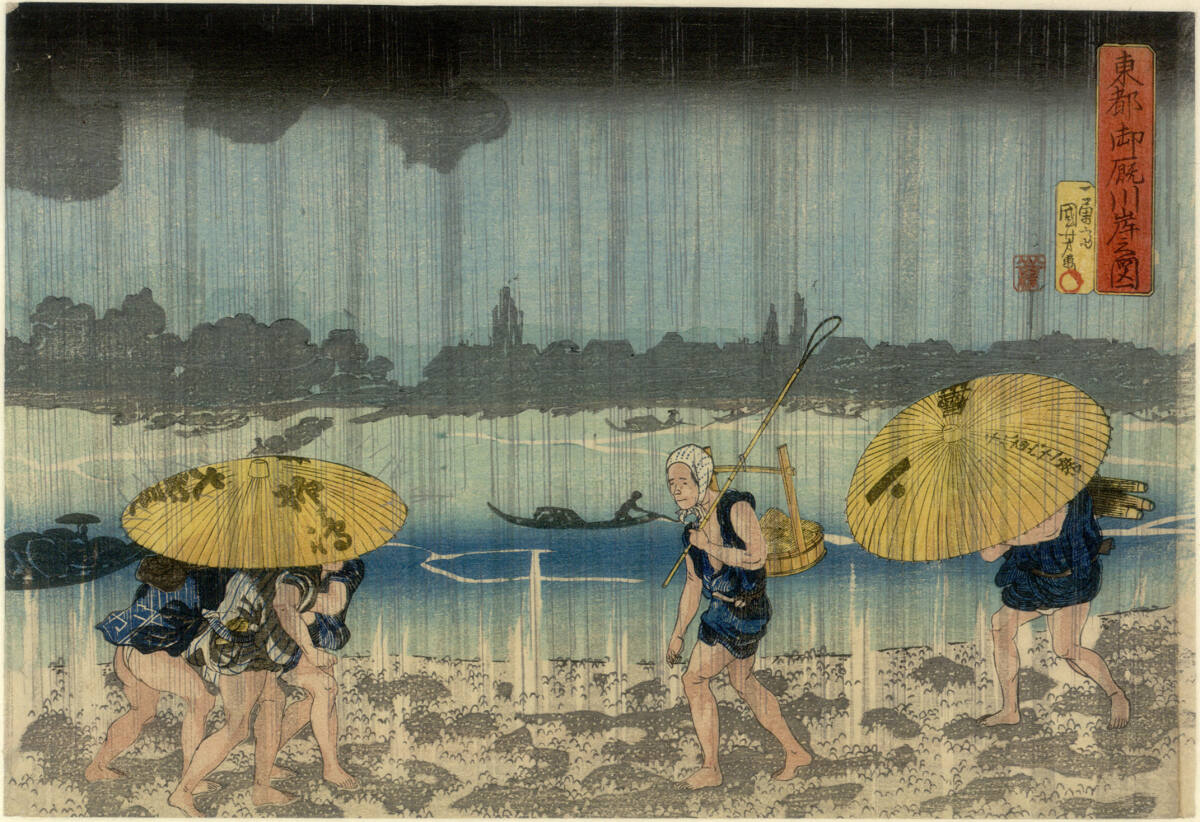
Utagawa KuniyoshiJapão, 1797–1861
Ôe no Chisato
Posso vê-la?
Desconhecido
Onde está «Ôe no Chisato» hoje? Coleção: Museu Estatal de Amesterdão, Amesterdão. Desconhecido.

Amesterdão, Países Baixos
O proprietário é conhecido; não se sabe se hoje está exposta.
- Fonte
- O museu
Sobre a obra
Nas palavras do museu — em holandês
Danseres Giô tijdens een maanverlichte nacht op de Saga vlakte. Scene uit een kabukitoneelstuk. Gedicht door Ôe no Chisato, een dichter uit de negende, begin tiende eeuw.
Museu Estatal de Amesterdão
Pormenores
- Número de inventário
- RP-P-2016-1-11
O que mostra
No catálogo
Fontes
- Museu Estatal de Amesterdão
- Imagem: Museu Estatal de Amesterdão — public domain
Na vida de Utagawa Kuniyoshi
A vida inteira1841–1843
Tenpo Reforms: actors and courtesans banned
The Tenpo Reforms, meant to ease an economic crisis, curb displays of luxury and officially ban the depiction of courtesans and actors. Kuniyoshi answers with caricature prints and comic pictures (giga) that disguise real actors and courtesans; many allegorically criticize the shogunate — for example a 1843 design of Minamoto no Yorimitsu asleep, haunted by the Earth Spider and his demons — and become popular among a politically dissatisfied public.
1843
A warning from the authorities and destroyed blocks
The authorities warn him for making caricatures of the shogun and his chief minister, and his printing blocks are confiscated and destroyed.
late 1840s
Actors return — in a “childish” manner
He returns to actor prints (other accounts say by the early 1850s), evading censorship with childish, cartoon-like portraits of kabuki actors; the best known is “Scribbling on the storehouse wall”, where kana are sloppily written in a childlike hand under the faces. He also puts cats in the place of humans in kabuki and satirical prints and experiments with wide composition and magnified details, as in “Masakado's daughter the princess Takiyasha, at the old Soma palace”.