ART WIKI32 979 em exposição
MapaColeçãoArtistasMuseusExposiçõesRevista
Entrar

ART WIKI

Onde está a obra-prima, e a que horas se abre a porta.

Coleções: Art Institute of Chicago, Galeria Nacional de Arte, Galeria Tretiakov, Getty Villa, Harvard Art Museums, Hermitage, Hirshhorn Museum and Sculpture Garden, Instituto de Artes de Minneapolis, Museu de Arte de Cleveland, Museu de Arte Moderna, Museu do Louvre, Museu Estatal de Amesterdão, Museu J. Paul Getty, Museu Metropolitano de Arte, Museu Nacional de Arte da Dinamarca, Museu Pushkin, Museu Russo, Museu Smithsoniano de Arte Americana, Museu Vitória e Alberto, Museu Whitney de Arte Americana, National Museum of Asian Art, National Portrait Gallery, Catálogo Estatal do Fundo Museológico da Rússia (274 museus), Europeana (19 museus), Wikidata (6 museus), Paris Musées (12 museus) e Joconde, a base de museus do Ministério da Cultura de França (495 museus). As imagens pertencem aos titulares dos direitos.

Secções

  • Mapa
  • Pesquisa
  • Coleção
  • Obras-primas
  • Em exposição agora
  • Artistas

Mais

  • Museus e galerias
  • Exposições
  • Revista
  • De onde vêm os dados
  • Privacidade e cookies
InícioMapaCatálogo
  1. Coleção/
  2. Harvard Art Museums/
  3. Oak Leaves
Oak Leaves, Philipp Otto Runge, 19th century
Philipp Otto Runge, retratoPhilipp Otto RungeAlemanha, 1777–1810

Oak Leaves

19th century · Drawing

Será possível contemplá-la?

De momento, não recebe

Harvard Art Museums

Cambridge, Estados Unidos

Pertence à coleção, mas de momento não está exposta.

Verificado
há 3 dias
Neste estado desde
27 de set. de 2026
Fonte
O museu
No mapaPágina do museu

Pormenores

Número de inventário
1985.53

No catálogo

Desenhos e aguarelasNeoclassicismoRomantismoSéculo XIXAlemanha

Fontes

  • Harvard Art Museums
  • Imagem: Harvard Art Museums — © President and Fellows of Harvard College

Entretanto, na vida de Philipp Otto Runge

A vida inteira
  1. 1798–1801

    Studies at the Royal Academy in Copenhagen

    Having decided to become an artist, Runge studies at the Copenhagen Academy under Jens Juel and Nicolai Abildgaard with the financial support of his brother Daniel; Caspar David Friedrich had studied there shortly before him. He draws from the nude and studies anatomy, geometry and perspective. Some accounts date the start of his studies to 1799.

  2. 1801–1804

    The Dresden Academy and the circle of Romantics

    In 1801 Runge moves to Dresden and studies at the Academy under Anton Graff until 1804. He grows close to the “Dresden Romantics” — Caspar David Friedrich, Johann Gottfried Quistorp and Ludwig Tieck; Tieck introduces him to the mystical treatises of Jakob Böhme and to the ideas of Novalis.

  3. 3 de abril de 1804

    Married: Pauline Runge

  4. 1807

    Arrives at the idea of the color sphere

    In 1807 Runge arrives at the concept of the color sphere, expanding the hue circle into a sphere with white and black as its opposite poles, as his letter to Goethe of 21 November 1807 shows. He hoped that his disk color-mixing experiments, dated 1807 or by other accounts 1808, would give the sphere scientific support.

  5. 1810

    The “Color Sphere” (Farben-Kugel) is published

    Early in 1810 the treatise “Color Sphere” (Farben-Kugel) is published in Hamburg: a description of the sphere, an illustrated essay on the rules of color harmony and an essay on color in nature by Runge's friend Henrik Steffens. Goethe, who had read the manuscript before publication, mentions it in his Theory of Colors (1810) as successfully concluding efforts of this kind.

  6. 2 December 1810

    Death in Hamburg

    On 2 December 1810 Runge dies in Hamburg of consumption (tuberculosis) at the age of thirty-three, his life's work spanning little more than ten years. His youngest child is born the next day and is given his father's name.
Mais obras de Philipp Otto Runge

Todas as obras
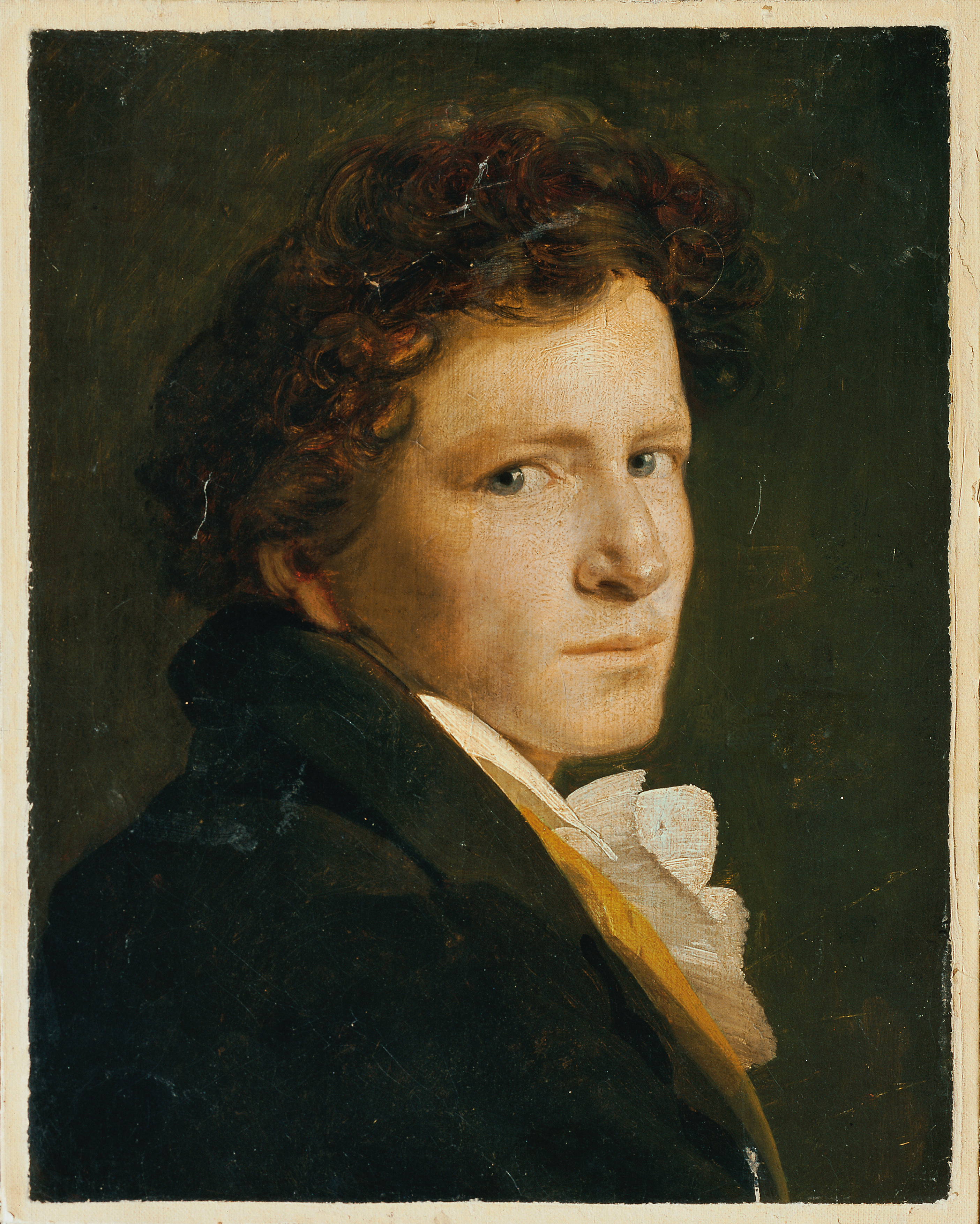
Brustbild eines jungen Mannes, Philipp Otto Runge

Brustbild eines jungen Mannes

Österreichische Galerie Belvedere

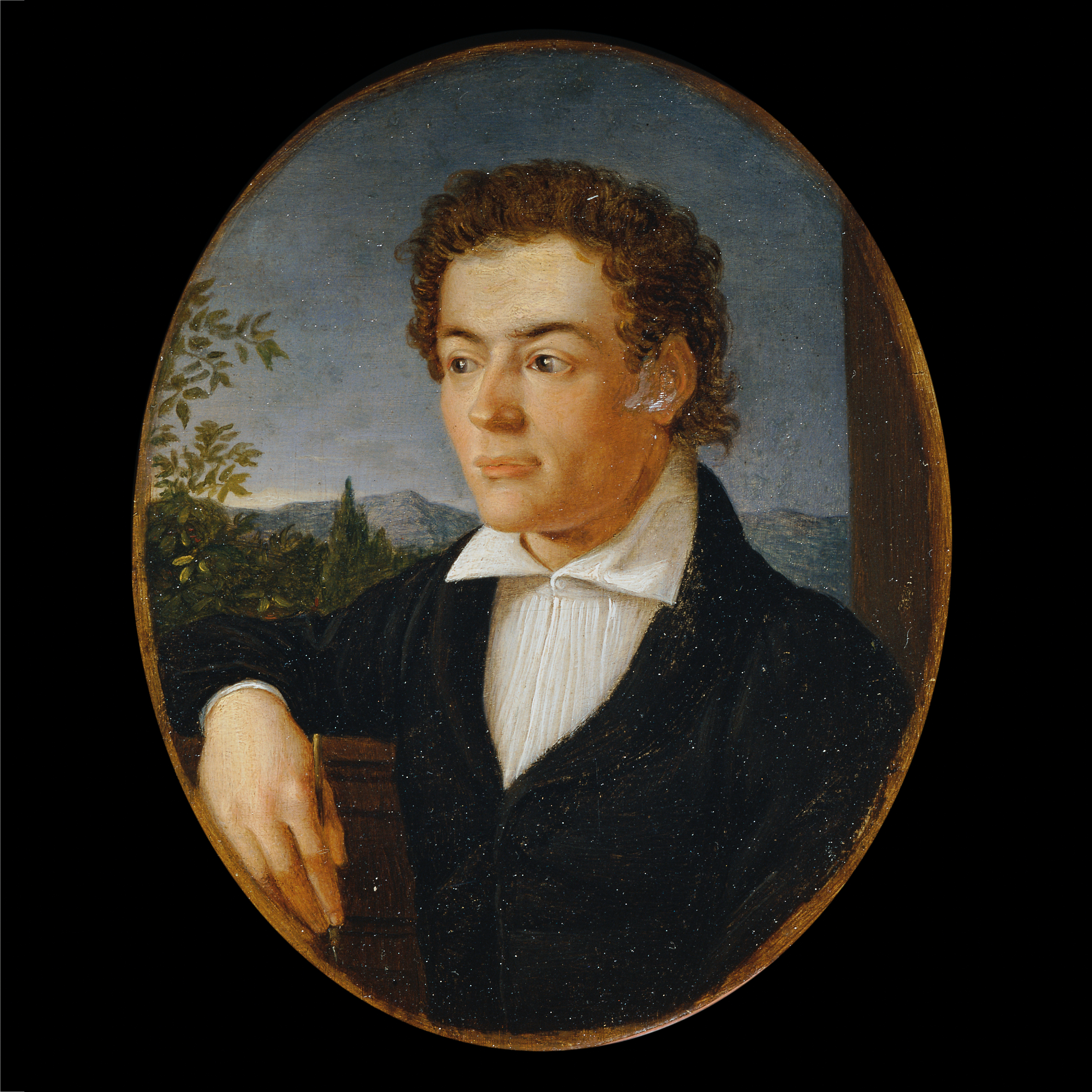
Brustbild eines jungen Mannes vor einer Abendlandschaft, Philipp Otto Runge

Brustbild eines jungen Mannes vor einer Abendlandschaft

Österreichische Galerie Belvedere

Porträtkopf eines Herrn, angeblich des Künstlers Bruder Daniel, Philipp Otto Runge

Porträtkopf eines Herrn, angeblich des Künstlers Bruder Daniel

Kupferstichkabinett Dresden

Kind mit Wickenblüte, Philipp Otto Runge

Kind mit Wickenblüte

Österreichische Galerie Belvedere

Brustbild eines jungen Mannes schräg nach rechts, wahrscheinlich fälschlich als Bildnis des Schwagers des Malers Friedrich Overbeck bezeichnet, Philipp Otto Runge

Brustbild eines jungen Mannes schräg nach rechts, wahrscheinlich fälschlich als Bildnis des Schwagers des Malers Friedrich Overbeck bezeichnet

Kupferstichkabinett Dresden

Kopf einer älteren Dame in weißer Haube, wahrscheinlich fälschlich als Bildnis der Mutter des Malers Friedrich Overbeck bezeichnet, Philipp Otto Runge

Kopf einer älteren Dame in weißer Haube, wahrscheinlich fälschlich als Bildnis der Mutter des Malers Friedrich Overbeck bezeichnet

Kupferstichkabinett Dresden

Poppy, Philipp Otto Runge, about 1800–1803

Poppy

about 1800–1803 · Não exposta · Museu J. Paul Getty

Die vier Tageszeiten: Nacht, Philipp Otto Runge, 1802–1807

Die vier Tageszeiten: Nacht

1802–1807 · Albertina

Vizinhas de sala: Harvard Art Museums

Página do museu
Glück auf in Deutschland (N:4), Pınar Öğrenci, 2024

Pınar Öğrenci

Glück auf in Deutschland (N:4), 2024

Glück auf in Deutschland (N:10), Pınar Öğrenci, 2024

Pınar Öğrenci

Glück auf in Deutschland (N:10), 2024

Glück auf in Deutschland (N:7b), Pınar Öğrenci, 2024

Pınar Öğrenci

Glück auf in Deutschland (N:7b), 2024

Glück auf in Deutschland (N:6), Pınar Öğrenci, 2024

Pınar Öğrenci

Glück auf in Deutschland (N:6), 2024

Glück auf in Deutschland (N:11), Pınar Öğrenci, 2024

Pınar Öğrenci

Glück auf in Deutschland (N:11), 2024

Dwarpalika (Temple Guardian), Sneha Shrestha, 2023

Sneha Shrestha

Dwarpalika (Temple Guardian), 2023

The Eternal Pond of the Universe, Bingyi 冰逸, 2022-2024

Bingyi 冰逸

The Eternal Pond of the Universe, 2022-2024

Triangle Constellation, Carlos Amorales, 2015

Carlos Amorales

Triangle Constellation, 2015