ART WIKI32 979 em exposição
MapaColeçãoArtistasMuseusExposiçõesRevista
Entrar

ART WIKI

Onde está a obra-prima, e a que horas se abre a porta.

Coleções: Art Institute of Chicago, Galeria Nacional de Arte, Galeria Tretiakov, Getty Villa, Harvard Art Museums, Hermitage, Hirshhorn Museum and Sculpture Garden, Instituto de Artes de Minneapolis, Museu de Arte de Cleveland, Museu de Arte Moderna, Museu do Louvre, Museu Estatal de Amesterdão, Museu J. Paul Getty, Museu Metropolitano de Arte, Museu Nacional de Arte da Dinamarca, Museu Pushkin, Museu Russo, Museu Smithsoniano de Arte Americana, Museu Vitória e Alberto, Museu Whitney de Arte Americana, National Museum of Asian Art, National Portrait Gallery, Catálogo Estatal do Fundo Museológico da Rússia (274 museus), Europeana (19 museus), Wikidata (6 museus), Paris Musées (12 museus) e Joconde, a base de museus do Ministério da Cultura de França (495 museus). As imagens pertencem aos titulares dos direitos.

Secções

  • Mapa
  • Pesquisa
  • Coleção
  • Obras-primas
  • Em exposição agora
  • Artistas

Mais

  • Museus e galerias
  • Exposições
  • Revista
  • De onde vêm os dados
  • Privacidade e cookies
InícioMapaCatálogo
  1. Coleção/
  2. Museu J. Paul Getty/
  3. Poppy
Poppy, Philipp Otto Runge, about 1800–1803
Philipp Otto Runge, retratoPhilipp Otto RungeAlemanha, 1777–1810

Poppy

about 1800–1803 · Drawing · 25 × 10 cm

Será possível contemplá-la?

De momento, não recebe

MJP
Museu J. Paul Getty

Los Angeles, Estados Unidos

Pertence à coleção, mas de momento não está exposta.

Verificado
há 22 horas
Neste estado desde
7 de out. de 2026
Fonte
O museu
No mapaPágina do museu

Sobre a obra

Throughout his career, Philipp Otto Runge used scissors to cut remarkable freehand silhouettes of plants. Here he renders the curving slender stem of a poppy, its spiky leaves, and the individual scallops of each petal with astounding precision. In the unlikely medium of flat-white paper he captures the living specimen's vitality and individuality. While Runge's early black silhouettes conform to the Romantic tradition of commemorating a sitter's face by recording the shadow of his or her unique profile, his plant cutouts were made with white paper, which is more consistent with traditional depictions of animate vegetation.

MJPMuseu J. Paul Getty

Pormenores

about 1800–1803
17771810
Número de inventário
2013.58

No catálogo

Desenhos e aguarelasNeoclassicismoRomantismoSéculo XIXAlemanha

Fontes

  • Museu J. Paul Getty
  • Imagem: Museu J. Paul Getty — Open Content

Entretanto, na vida de Philipp Otto Runge

A vida inteira
  1. 1798–1801

    Studies at the Royal Academy in Copenhagen

    Having decided to become an artist, Runge studies at the Copenhagen Academy under Jens Juel and Nicolai Abildgaard with the financial support of his brother Daniel; Caspar David Friedrich had studied there shortly before him. He draws from the nude and studies anatomy, geometry and perspective. Some accounts date the start of his studies to 1799.

  2. 1801

    Meets Pauline Bassenge

    In Dresden Runge meets the sixteen-year-old Pauline Bassenge, his future wife.

  3. 1801–1804

    The Dresden Academy and the circle of Romantics

    In 1801 Runge moves to Dresden and studies at the Academy under Anton Graff until 1804. He grows close to the “Dresden Romantics” — Caspar David Friedrich, Johann Gottfried Quistorp and Ludwig Tieck; Tieck introduces him to the mystical treatises of Jakob Böhme and to the ideas of Novalis.

  4. 14 – 19 November 1803

    Meets Goethe in Weimar

    On a trip to Weimar Runge meets Goethe at the house of Christian Gottlob von Voigt and visits the poet with Ludwig Tieck on 17 and 18 November; they discuss art and natural philosophy at length. It is the start of a friendly and working relationship based on their shared interest in color and art.

  5. 3 de abril de 1804

    Married: Pauline Runge

  6. 3 April 1804

    Marries Pauline Bassenge

    On 3 April 1804 Runge marries Pauline Susanne Bassenge (1785–1881) in Dresden and soon moves back to Hamburg with her; they have four children.
Mais obras de Philipp Otto Runge

Todas as obras
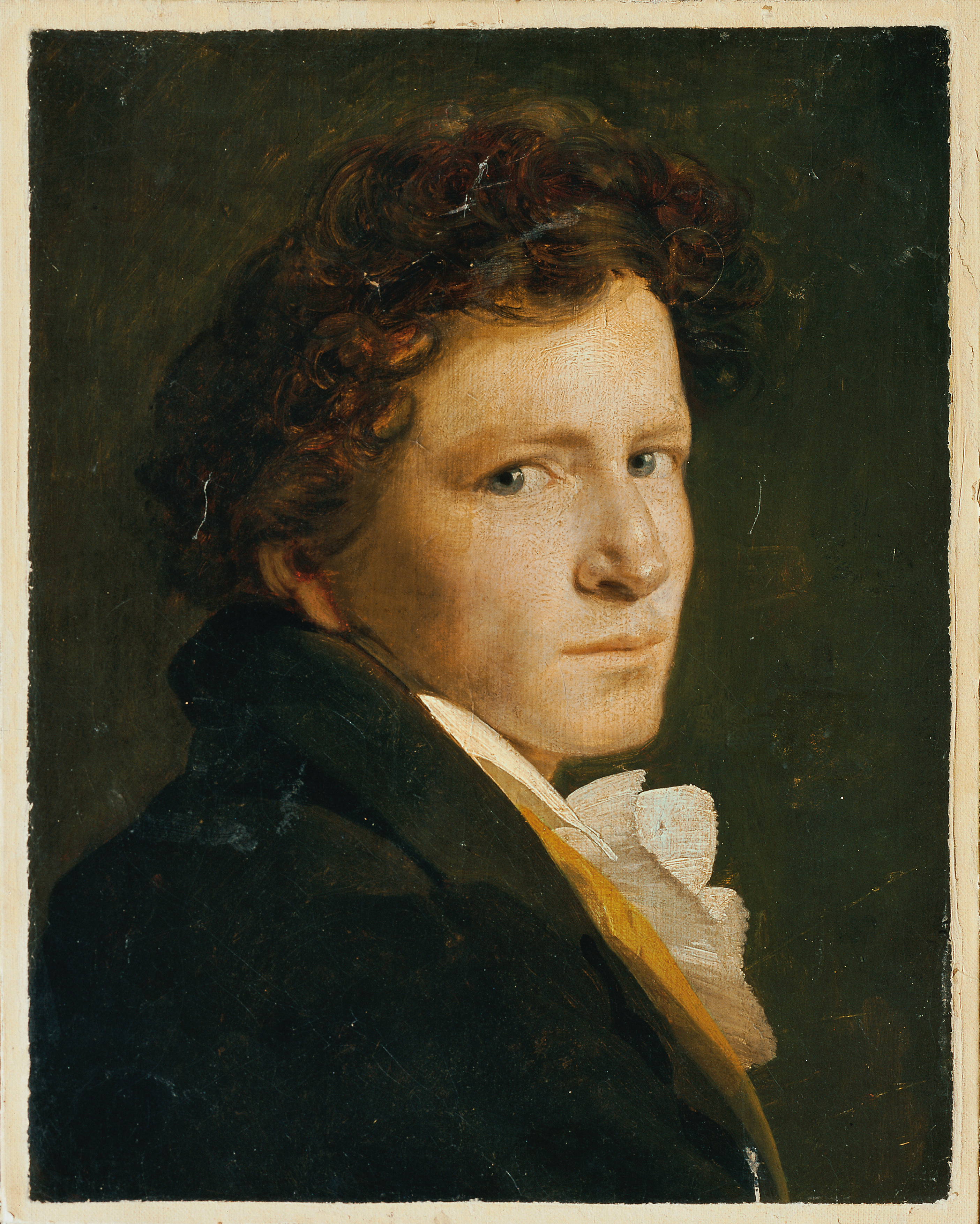
Brustbild eines jungen Mannes, Philipp Otto Runge

Brustbild eines jungen Mannes

Österreichische Galerie Belvedere

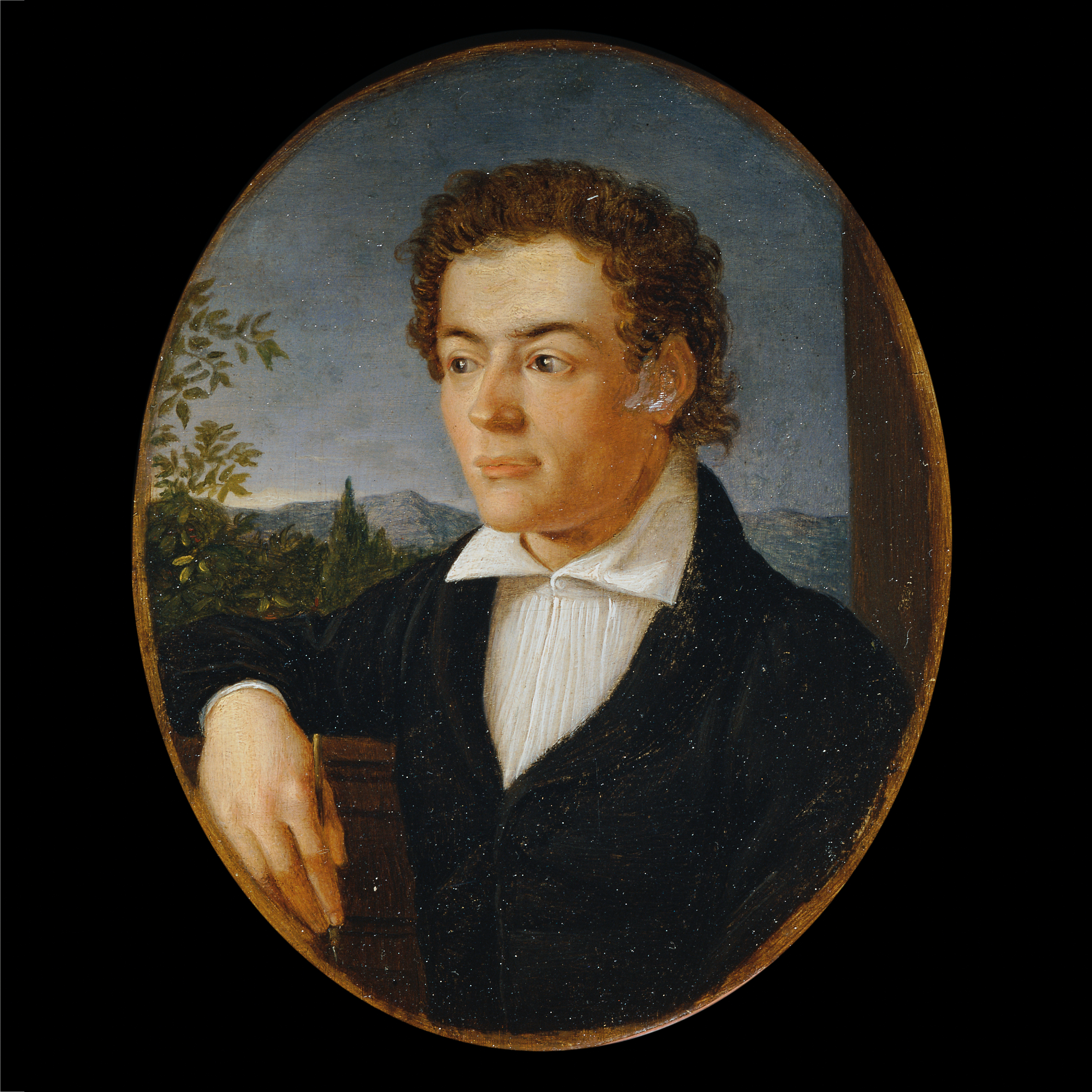
Brustbild eines jungen Mannes vor einer Abendlandschaft, Philipp Otto Runge

Brustbild eines jungen Mannes vor einer Abendlandschaft

Österreichische Galerie Belvedere

Porträtkopf eines Herrn, angeblich des Künstlers Bruder Daniel, Philipp Otto Runge

Porträtkopf eines Herrn, angeblich des Künstlers Bruder Daniel

Kupferstichkabinett Dresden

Kind mit Wickenblüte, Philipp Otto Runge

Kind mit Wickenblüte

Österreichische Galerie Belvedere

Brustbild eines jungen Mannes schräg nach rechts, wahrscheinlich fälschlich als Bildnis des Schwagers des Malers Friedrich Overbeck bezeichnet, Philipp Otto Runge

Brustbild eines jungen Mannes schräg nach rechts, wahrscheinlich fälschlich als Bildnis des Schwagers des Malers Friedrich Overbeck bezeichnet

Kupferstichkabinett Dresden

Kopf einer älteren Dame in weißer Haube, wahrscheinlich fälschlich als Bildnis der Mutter des Malers Friedrich Overbeck bezeichnet, Philipp Otto Runge

Kopf einer älteren Dame in weißer Haube, wahrscheinlich fälschlich als Bildnis der Mutter des Malers Friedrich Overbeck bezeichnet

Kupferstichkabinett Dresden

Die vier Tageszeiten: Nacht, Philipp Otto Runge, 1802–1807

Die vier Tageszeiten: Nacht

1802–1807 · Albertina

Die vier Tageszeiten: Morgen, Philipp Otto Runge, 1802–1807

Die vier Tageszeiten: Morgen

1802–1807 · Albertina

Vizinhas de sala: Museu J. Paul Getty

Página do museu
Irises, Vincent van Gogh, 1889

Vincent van Gogh

Lírios, 1889

The Portal of Rouen Cathedral in Morning Light, Claude Monet, 1894

Claude Monet

The Portal of Rouen Cathedral in Morning Light, 1894

Wheatstacks, Snow Effect, Morning (Meules, Effet de Neige, Le Matin), Claude Monet, 1891

Claude Monet

Wheatstacks, Snow Effect, Morning (Meules, Effet de Neige, Le Matin), 1891

Sunrise (Marine), Claude Monet, 1872 or 1873

Claude Monet

Sunrise (Marine), 1872 or 1873

Still Life with Flowers and Fruit, Claude Monet, 1869

Claude Monet

Still Life with Flowers and Fruit, 1869

Saint Bartholomew, Rembrandt Harmensz. van Rijn, 1661

Rembrandt van Rijn

Saint Bartholomew, 1661

Daniel and Cyrus Before the Idol Bel, Rembrandt Harmensz. van Rijn, 1633

Rembrandt van Rijn

Daniel and Cyrus Before the Idol Bel, 1633

The Abduction of Europa, Rembrandt Harmensz. van Rijn, 1632

Rembrandt van Rijn

O Rapto de Europa, 1632