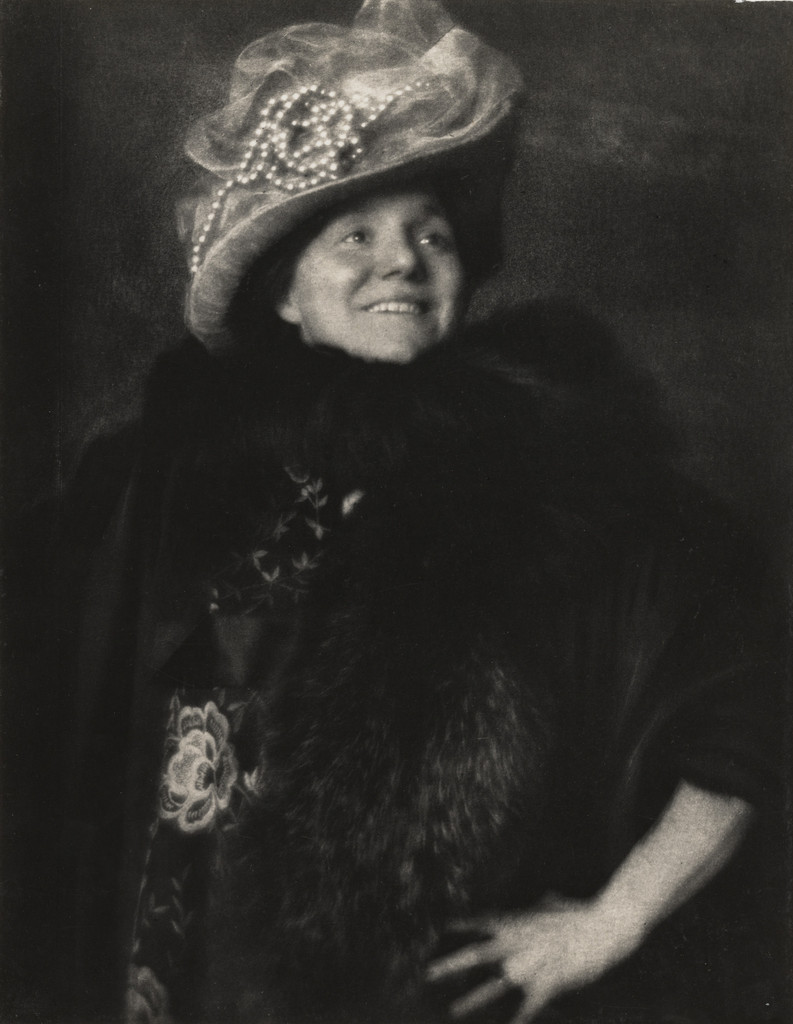
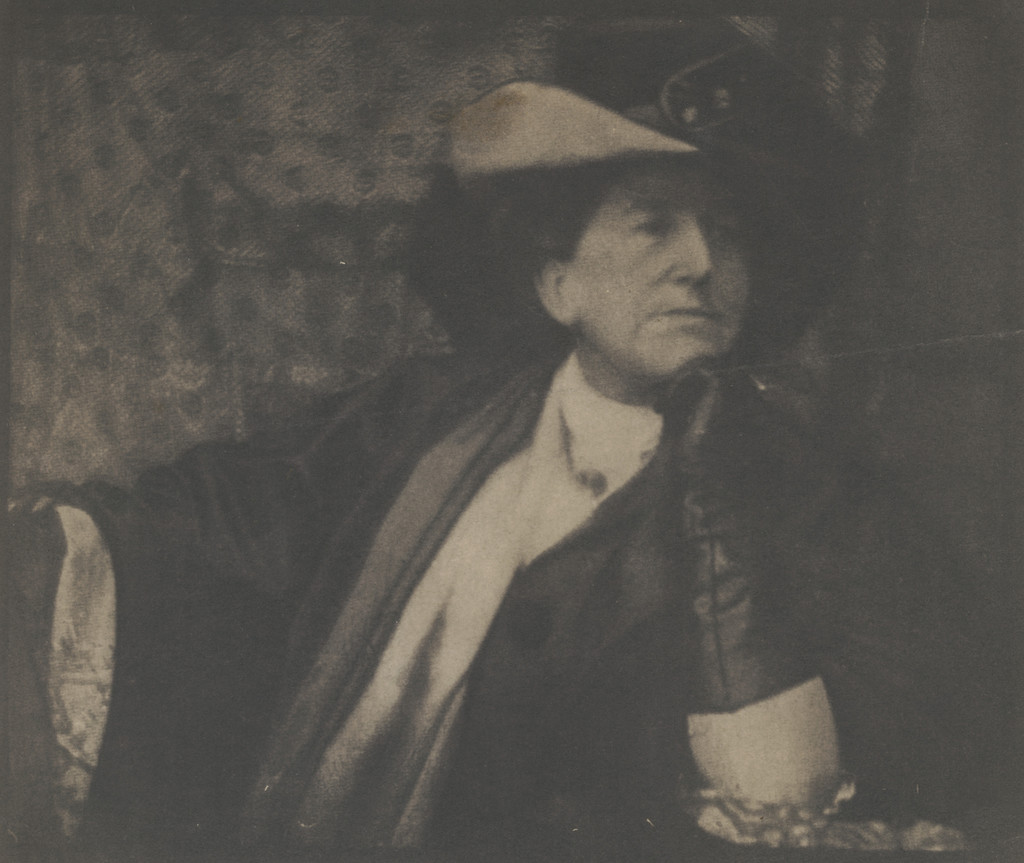
Edward SteichenEstados Unidos, 1879–1973
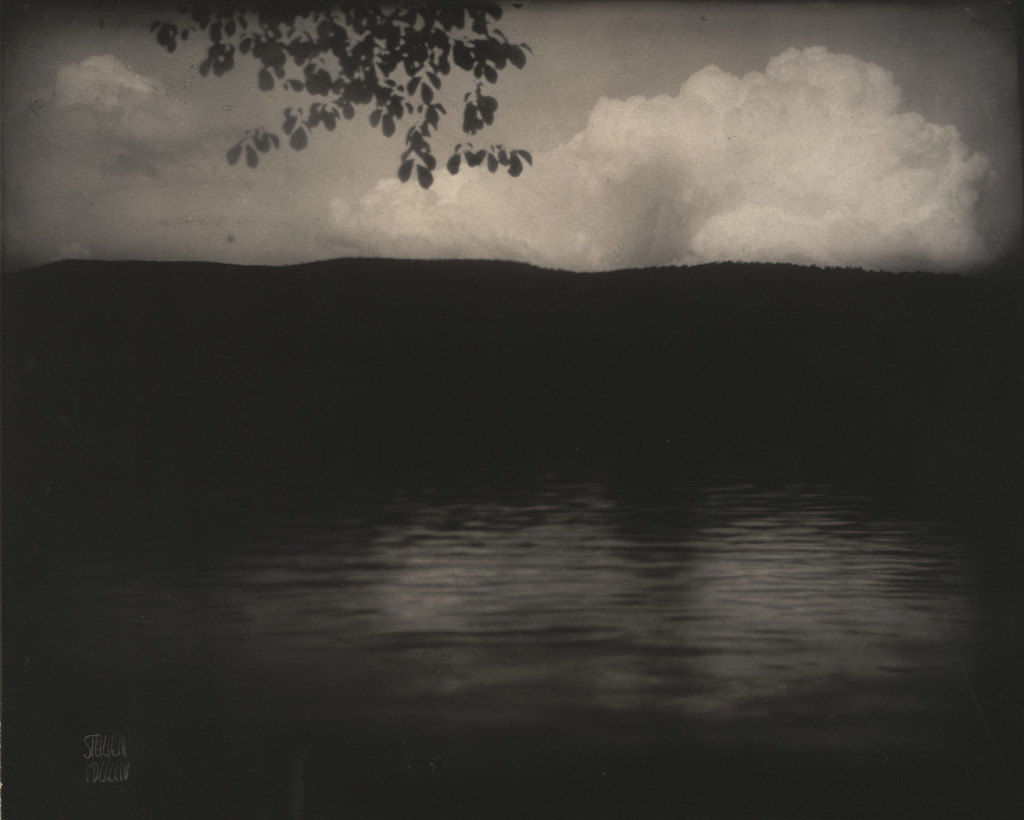
Midnight Lake George
Posso vê-la?
Não exposta de momento
Onde está «Midnight Lake George» hoje? Coleção: Art Institute of Chicago, Chicago. Não exposta de momento. Verificado 29 de setembro de 2026.

Chicago, Estados Unidos
Pertence à coleção, mas de momento não está exposta.
- Verificado
- Neste estado desde
- Fonte
- O museu
Sobre a obra
Edward Steichen, a painter as well as a photographer, was an early adherent of Pictorialism, which promoted photography as a fine art and emphasized handcraft in printing. A protégé of the photographer Alfred Stieglitz, he designed the cover and layout of Stieglitz’s journal Camera Work, a publication championing the medium’s artistic potential. Steichen excelled at the gum bichromate process, which allowed artists to layer different colors and manipulate the emulsion, while still wet, in a painterly fashion; here, he was able to enhance highlights by removing pigment with a brush. As he wrote in the first issue of Camera Work, “every photograph is a fake from start to finish, a purely impersonal, unmanipulated photograph being practically impossible.”
For more on Edward Steichen’s work in the Art Institute’s collection visit the website: Edward Steichen's World War I Years.
Ler mais
For more on the Alfred Stieglitz collection at the Art Institute, along with in-depth object information, please visit the website: The Alfred Stieglitz Collection.
Art Institute of ChicagoCC BY 4.0
Pormenores
- Número de inventário
- 1949.829
No catálogo
Fontes
- Art Institute of Chicago
- Imagem: Art Institute of Chicago — © the artist or rights holder
Na vida de Edward Steichen
A vida inteira1902
The Camera Work logo and the Photo-Secession
When Stieglitz is planning the magazine that becomes Camera Work, he asks Steichen to design its logo with a custom typeface; Steichen becomes the most frequently shown photographer in the journal. In the same year he is one of the founders of the Photo-Secession in New York.
1904
First experiments with colour photography
He begins experimenting with colour photography and becomes one of the earliest in the United States to use the Autochrome Lumière process.
1 de julho de 1904
Daughter born: Mary Calderone
1905
The Little Galleries of the Photo-Secession
With Stieglitz he creates the Little Galleries of the Photo-Secession in what had been Steichen’s portrait studio; the gallery later becomes known as 291 after its address and presents some of the first American exhibitions of Rodin, Matisse, Cézanne, Picasso and Brâncuși. Constantly crossing between Europe and the US by steamship, he becomes, in the art historian William A. Ewing’s words, one of the earliest “jet setters,” bringing European art to America.