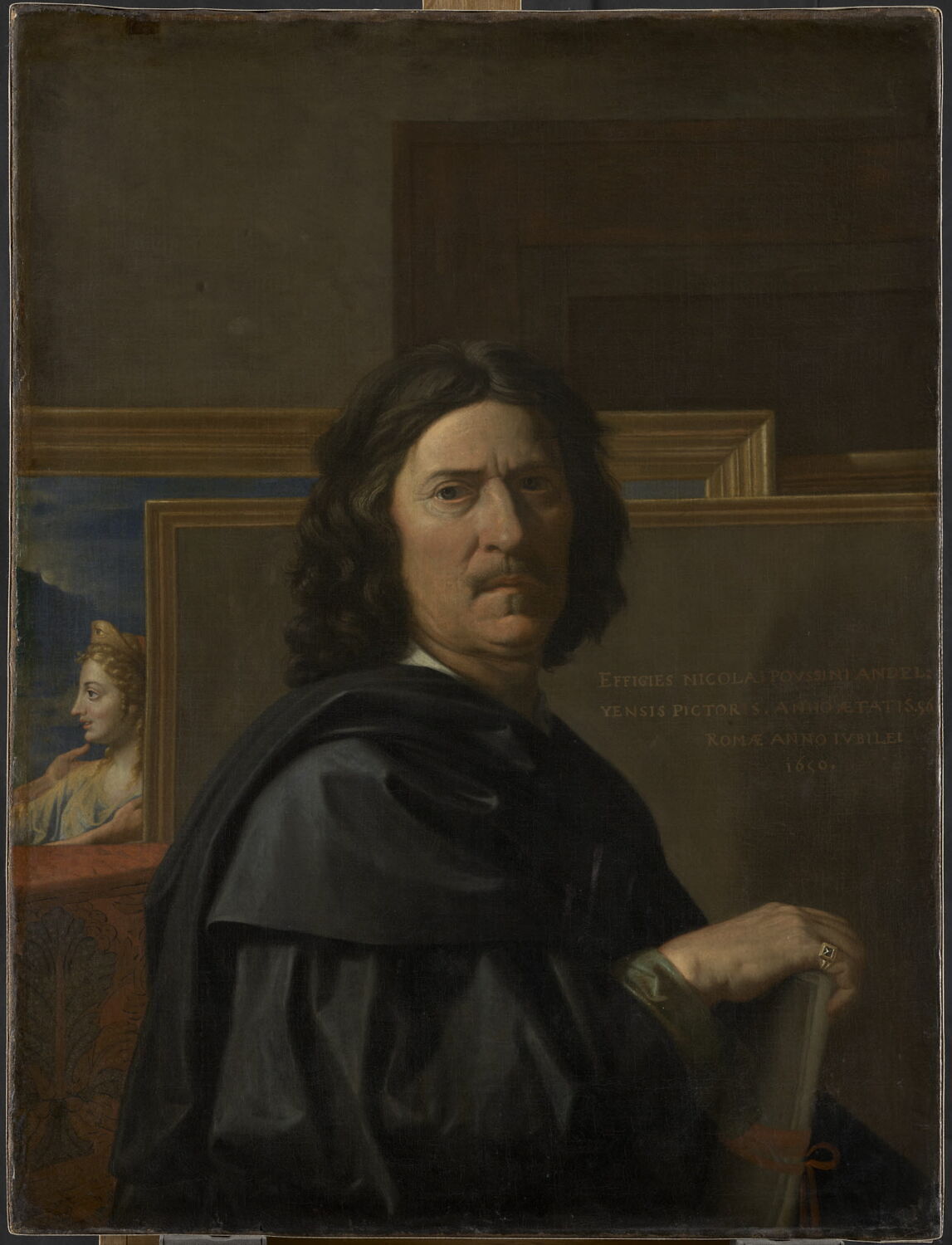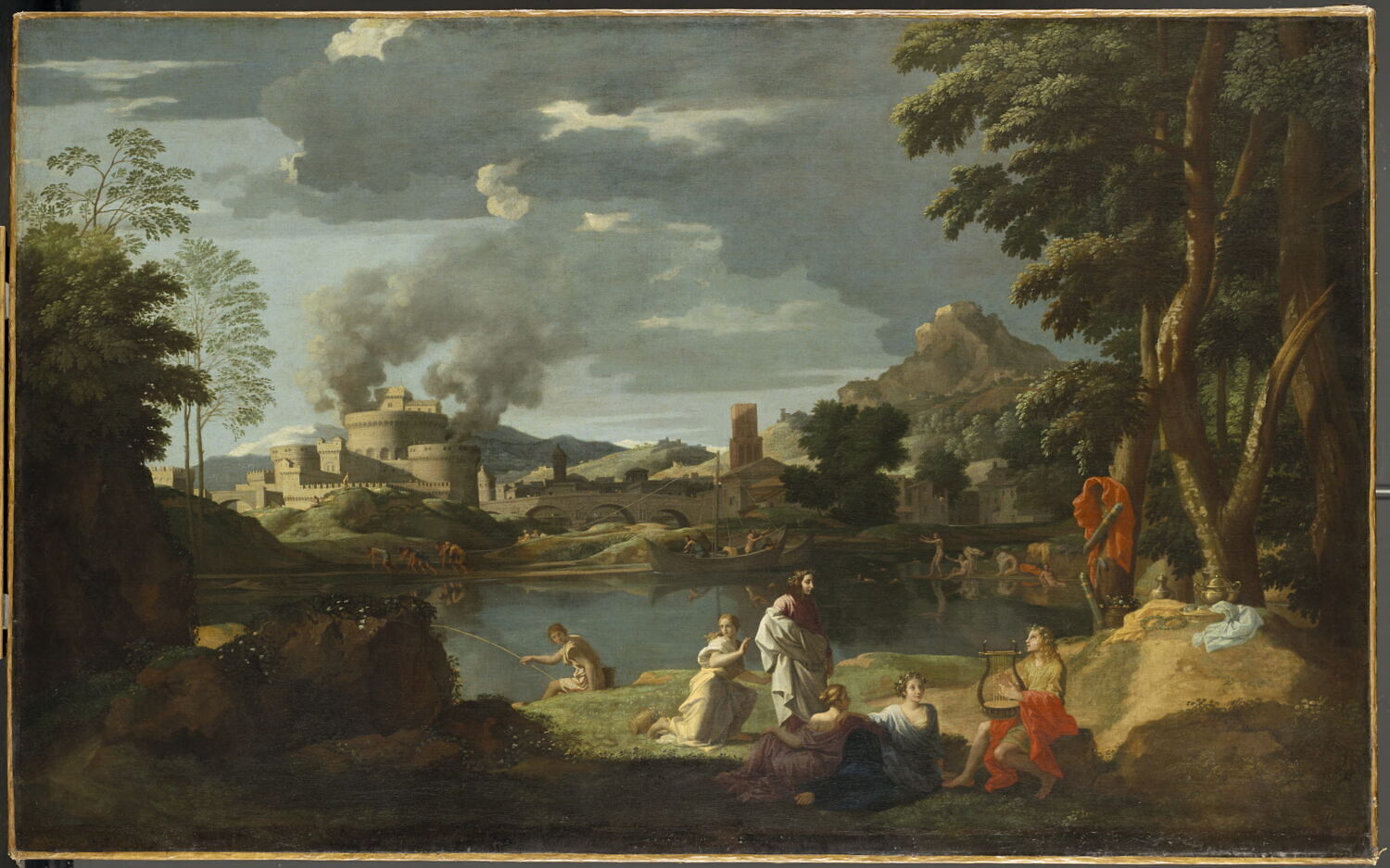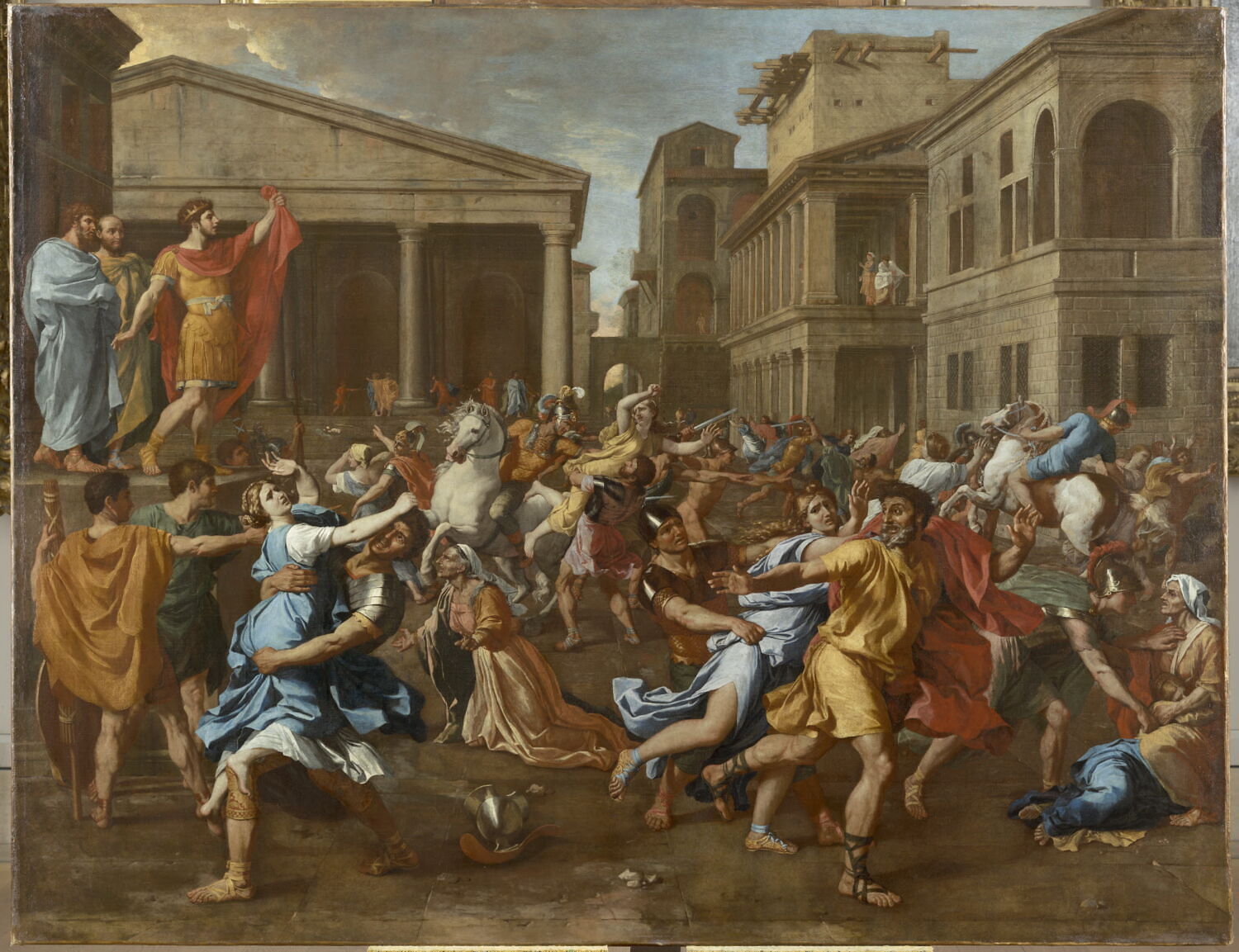
 Nicolas PoussinFrança, 1594–1665
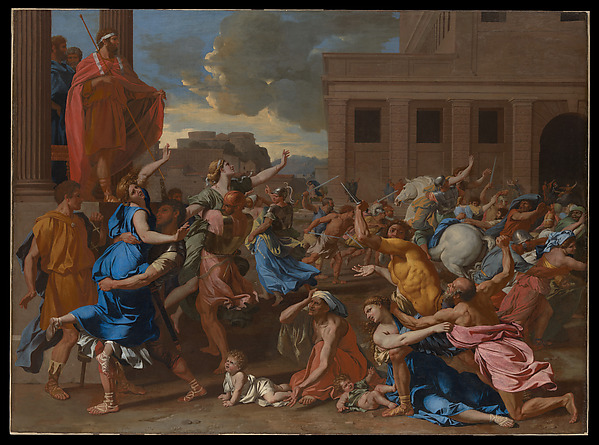
L'enlèvement des Sabines
Será possível contemplá-la?
Sim, recebe visitas

Exposta ao público.
- Verificado
- Neste estado desde
- Fonte
- O museu
Pormenores
- Número de inventário
- INV 7290
No catálogo
Fontes
- Museu do Louvre
- Imagem: Museu do Louvre — © 2014 GrandPalaisRmn (musée du Louvre) / Tony Querrec
Entretanto, na vida de Nicolas Poussin
A vida inteira1624–1640
Domenichino’s academy, anatomy, measuring ancient statues
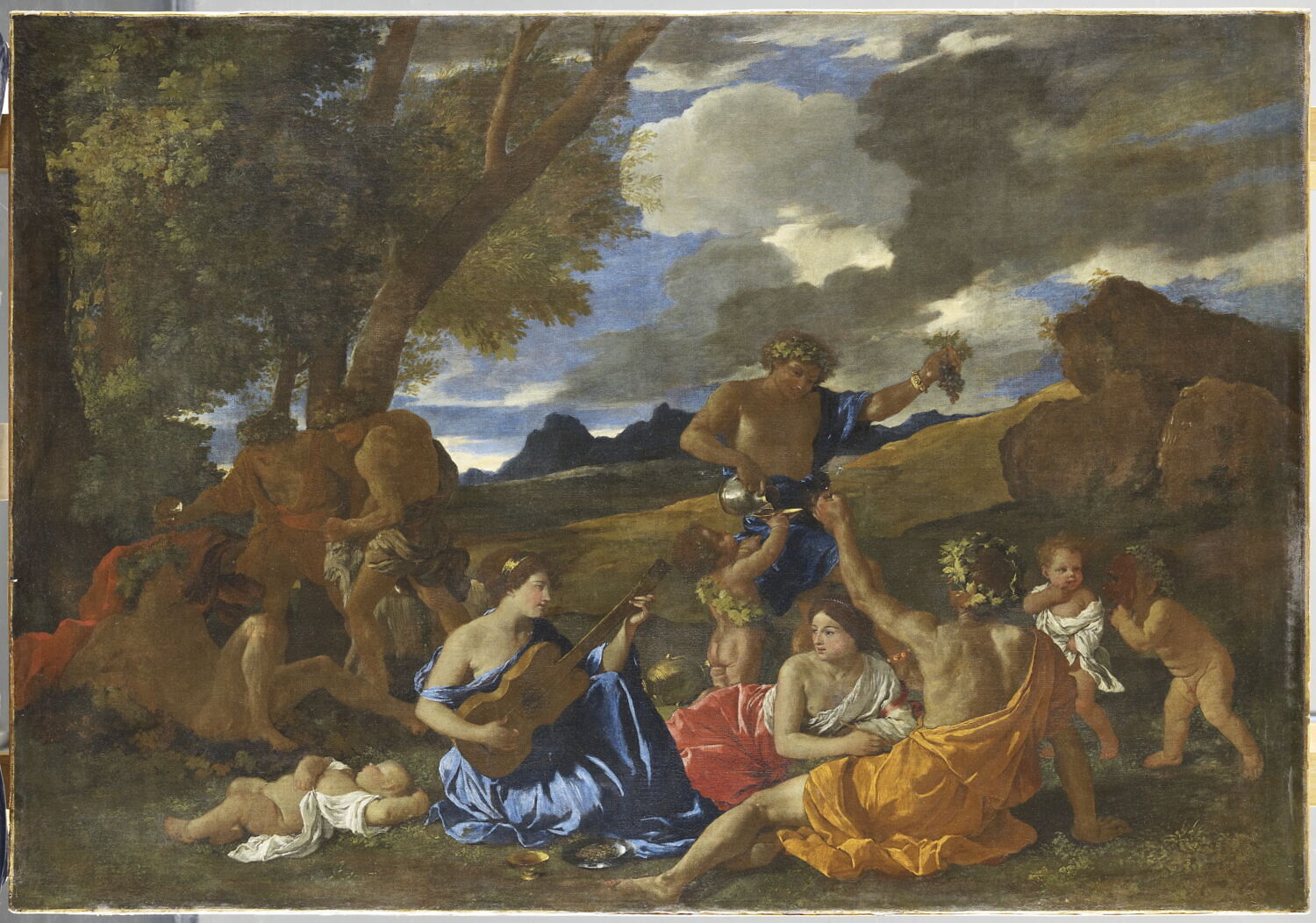
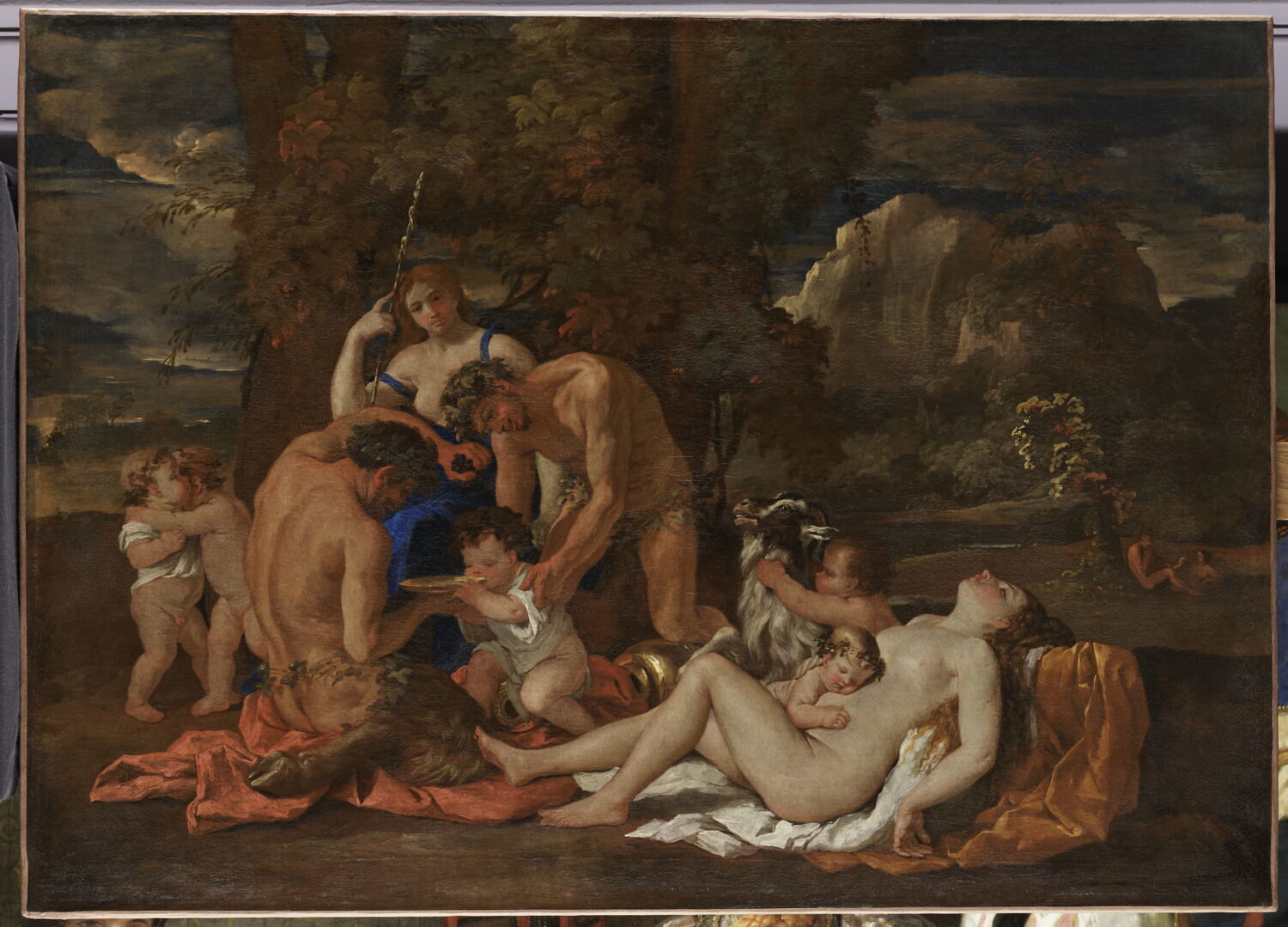
He resumed his study of anatomy with the surgeon Larchet, drew models at Domenichino’s academy, worked in the open air and measured ancient statues — on the back of the drawing “The Victory of Joshua” survive his measurements of the Apollo Belvedere; unlike many, he did not “restore” the lost fragments of antiques. In his Roman years he began to learn modelling, made wax models, arranged them in the order he wanted on a board, and copied Titian’s “Bacchanal” — in oil and as a bas-relief together with one of the Duquesnoy brothers.
1630s
Cassiano dal Pozzo — his chief patron
Poussin’s flowering coincided with his complete abandonment of church commissions: he gathered a circle of patrons around him but strove for independence, accepting commissions from connoisseurs without binding himself to any of them permanently. The most important was Cassiano dal Pozzo; in the surviving correspondence the relationship comes close to servitude, although the painter did not live in his house.
1630s
Brother-in-law Gaspard Dughet — his first pupil
After the wedding Poussin went on living in the house on the Via Paolina; with him lived Anne-Marie’s brother Gaspard Dughet, the future well-known landscape painter, and from 1636 his younger brother Jean. Poussin became Gaspard’s first teacher, and Gaspard later took his surname; the marriage seems to have been a happy one, but childless.
1635
Richelieu commissions “Bacchanals” and “The Birth of Venus”
His first French commissions came from the envoy François de Créquy and then from Cardinal Richelieu — a series of “Bacchanals”; for Richelieu he also created “The Birth of Venus” (1635), an elaborate composition full of dynamic figures.
1639
Begins his correspondence with Paul Fréart de Chantelou
From 1639 until the painter’s death runs his correspondence with the court counsellor and royal maître d’hôtel Paul Fréart de Chantelou — a monument of long friendship and the chief source on Poussin’s daily occupations; the letters are in French and make no literary claims.
1640
December 1640: Poussin returns to Paris
François Sublet de Noyers, Superintendent of the King’s Buildings, whose invitations Poussin had declined, sent his cousins Roland and Paul Fréart to Rome, offering the title of First Painter to the King and a substantial residence at the Tuileries. Poussin yielded, and in December 1640 he was back in Paris.