 Jean-Louis-Ernest MeissonierFrança, 1815–1891
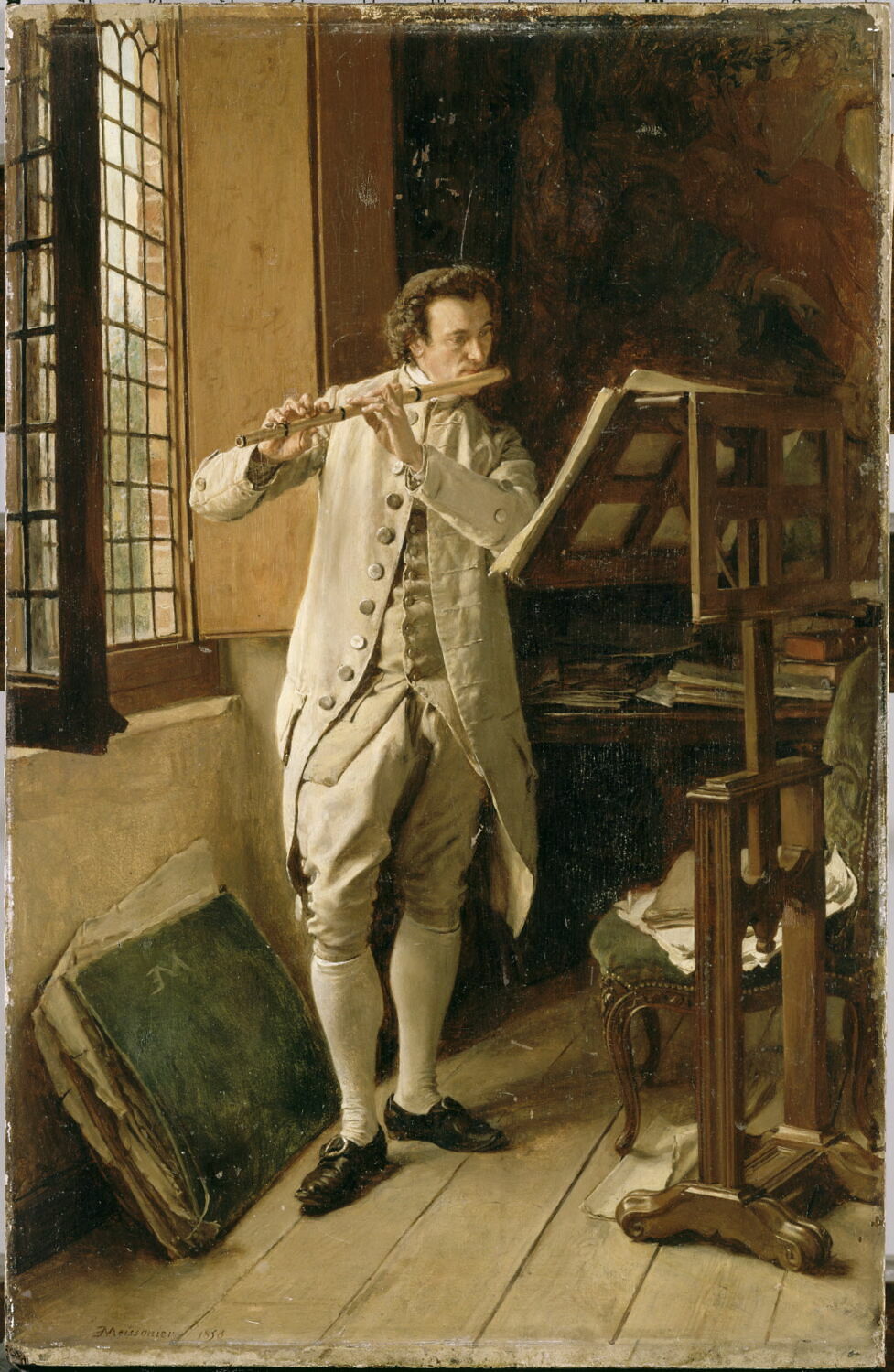
Le Joueur de flûte
Posso vê-la?
Desconhecido
Onde está «Le Joueur de flûte» hoje? Coleção: Museu do Louvre, Paris. Desconhecido.

Paris, França
O proprietário é conhecido; não se sabe se hoje está exposta.
- Neste estado desde
- Fonte
- O museu
Pormenores
- Número de inventário
- RF 1436
No catálogo
Fontes
- Museu do Louvre
- Imagem: Museu do Louvre — © 1992 GrandPalaisRmn (musée du Louvre) / Hervé Lewandowski
Na vida de Jean-Louis-Ernest Meissonier
A vida inteira1856 · Prémio
Officer of the Legion of Honour
1857
Nine works at the Salon of 1857
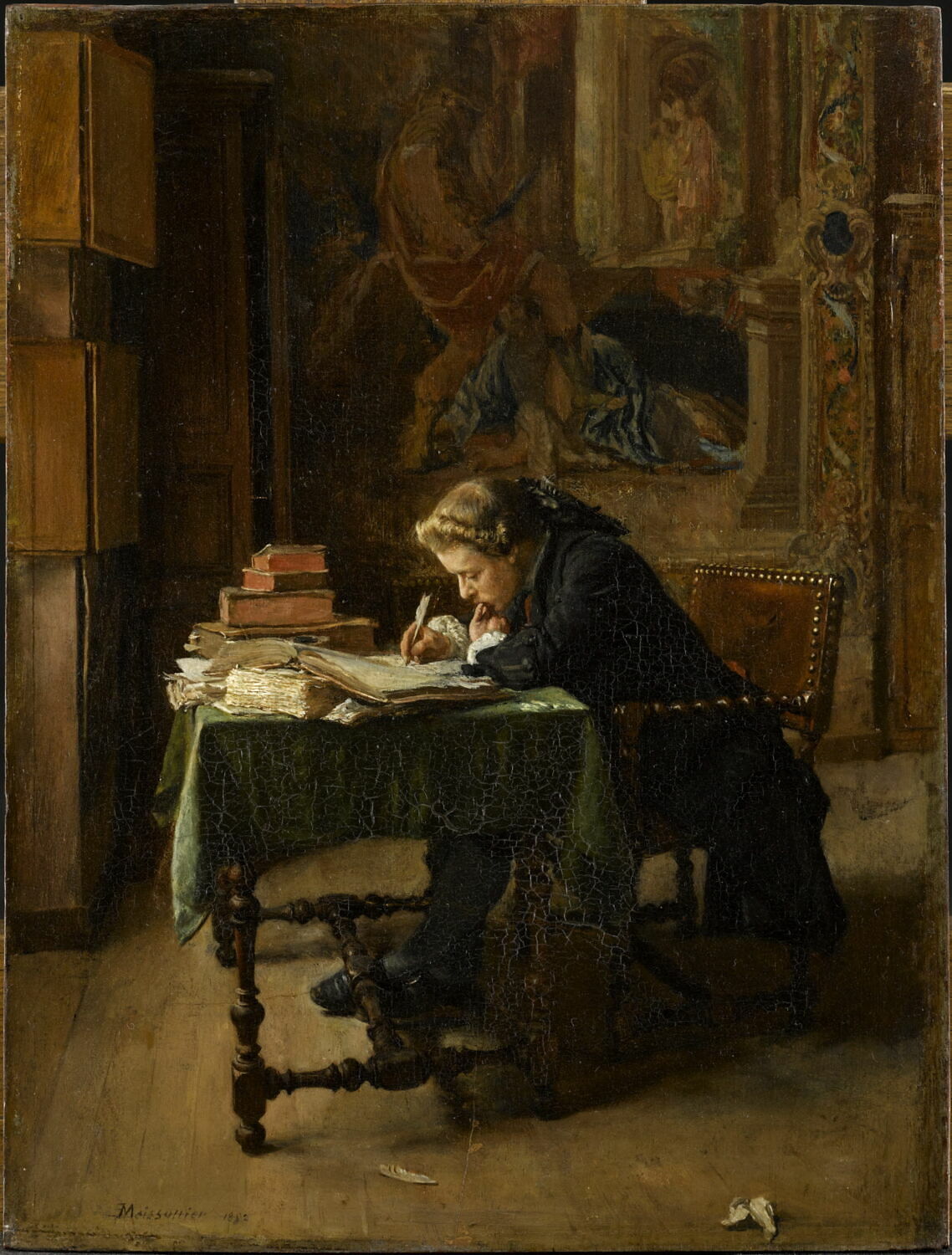
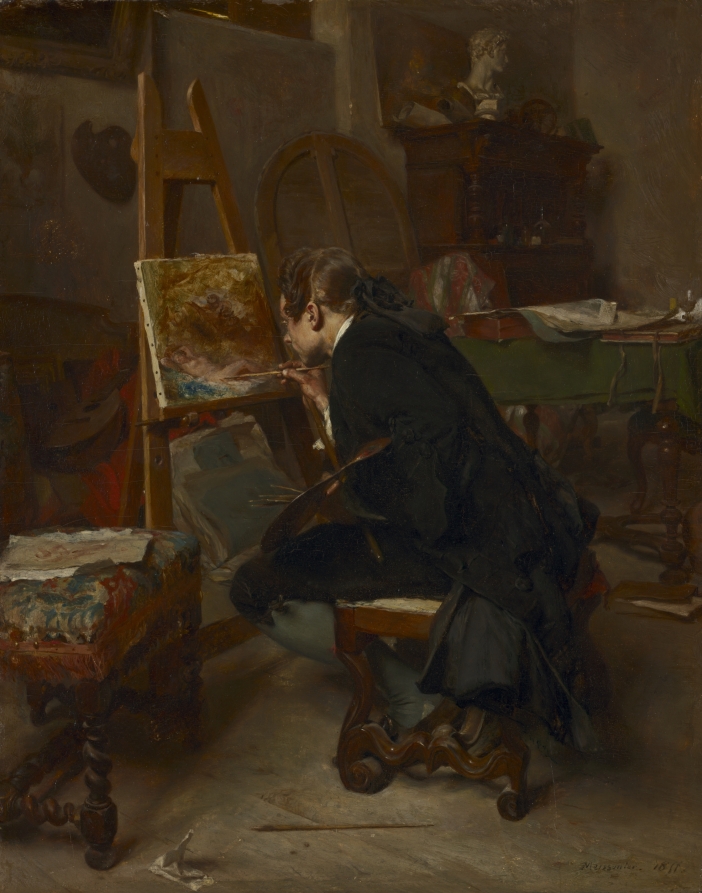
His triumph is sustained: Meissonier shows nine pictures and drawings, among them Young Man of the Time of the Regency, The Painter, The Shoeing Smith, The Musician and A Reading at Diderot’s. With Gérôme and Cabanel he counts as one of the three most successful artists of the Second Empire.
summer 1859
A government commission for scenes of the Italian campaign
In the summer of 1859, when Napoleon III and Victor Emmanuel II set out to oust the Habsburgs from northern Italy, Meissonier receives a government commission to illustrate scenes from the campaign. Napoleon III attached him to the imperial staff, and the painter accompanied the emperor in Italy.
1860s
A turn to battle subjects and high prices
In the 1860s he begins to paint historical and battle scenes from the time of the French Revolution, the Napoleonic Wars and the conflicts of Emperor Napoleon III; his contemporaries valued them even more than his earlier genre works. In time he received 300,000 francs each for The Charge of the Cuirassiers and Napoleon I in 1814, and 200,000 for Napoleon III at Solferino, which its first owner later resold for 850,000.