 Leonardo da VinciItália, 1452–1519
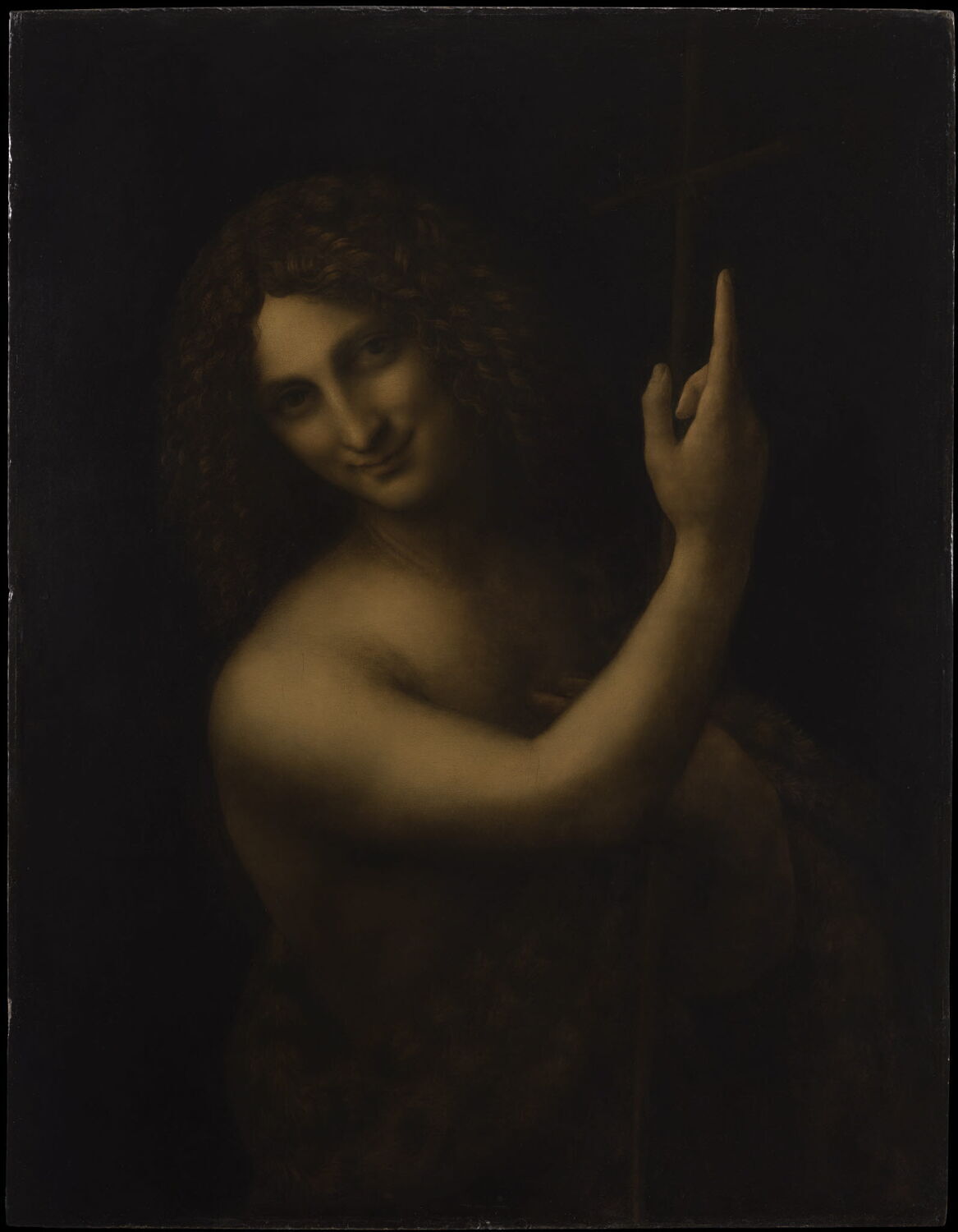
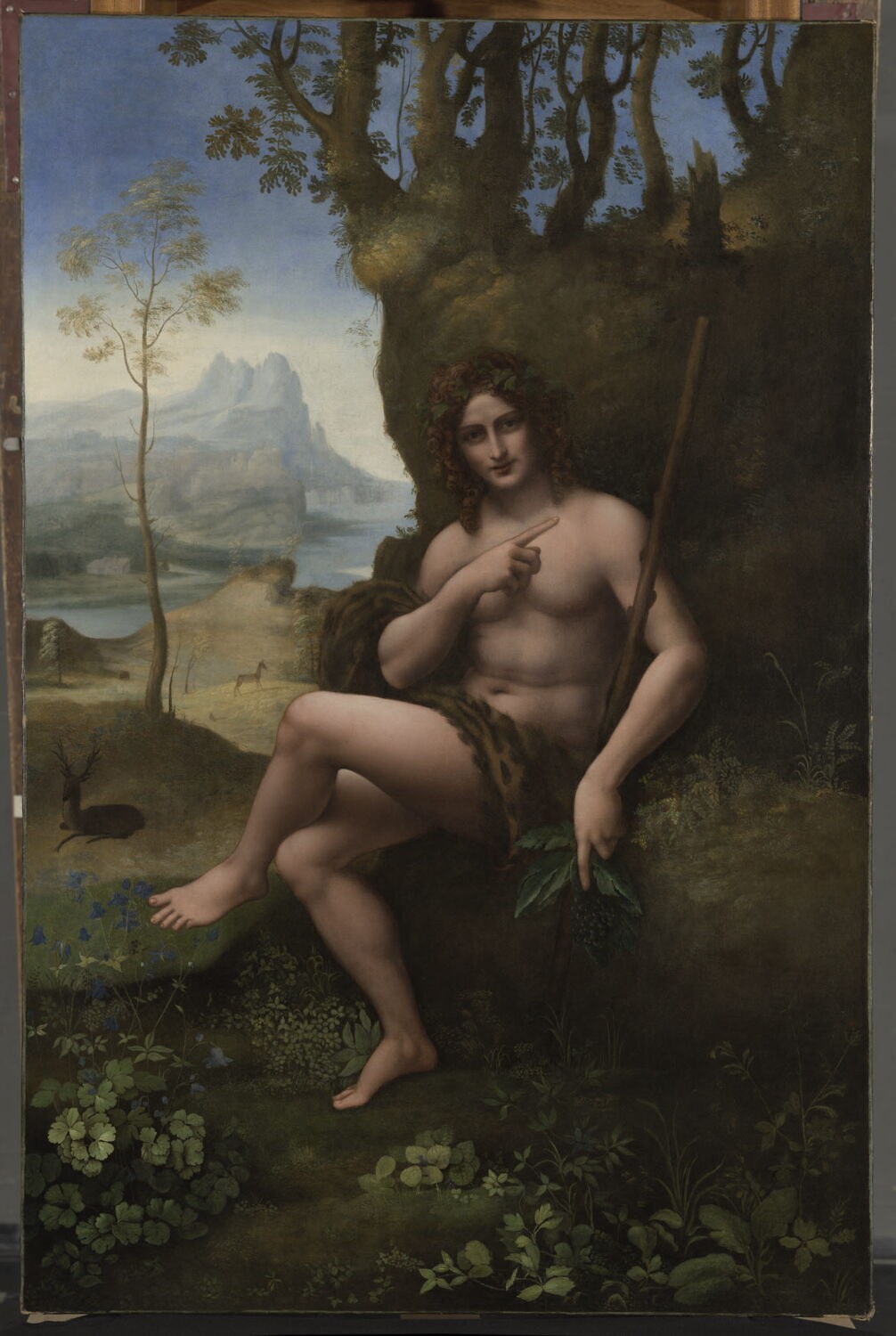
Saint Jean Baptiste
Posso vê-la?
Sim, exposta agora
Onde está «Saint Jean Baptiste» hoje? Museu do Louvre, Salle 710, Aile Denon, Niveau 1, Paris. Sim, exposta agora. Verificado 26 de setembro de 2026.

Aberto agora· até às 18:00
Exposta ao público.
- Verificado
- Neste estado desde
- Fonte
- O museu
Sobre a pintura
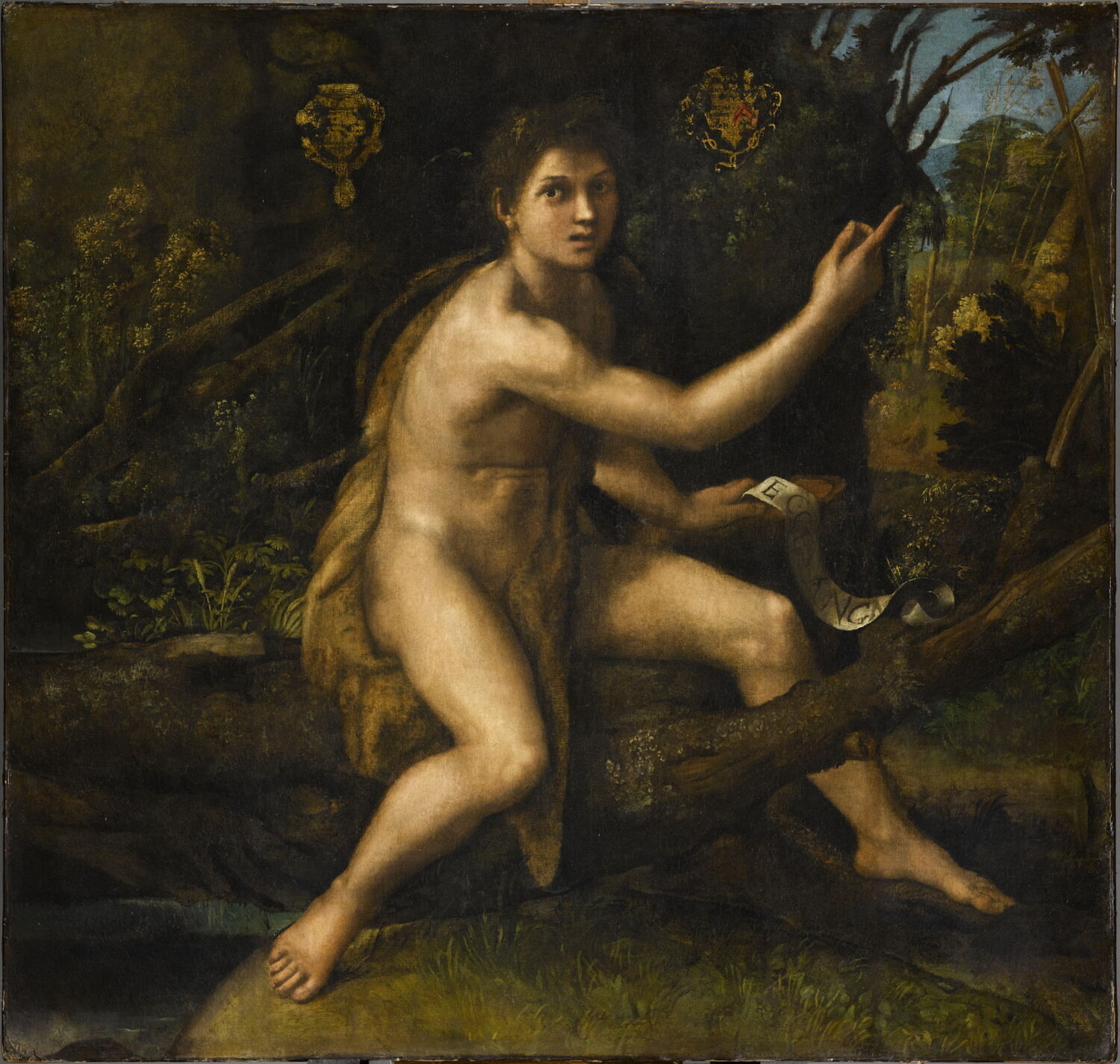
Bacchus, originally Saint John the Baptist, is a painting in the Musée du Louvre, Paris, France, by the Italian Renaissance artist Leonardo da Vinci and Francesco Melzi, while in Leonardo's workshop. Sydney J. Freedberg assigns the drawing to Leonardo's second Milan period. Among the Lombard painters who have been suggested as possible authors are Cesare da Sesto, Marco d'Oggiono, Francesco Melzi, and Cesare Bernazzano. The painting shows a male figure with garlanded head and leopard skin loincloth, seated in an idyllic landscape. He points with his right hand off to his left, and with his left hand grasps his thyrsus and also points down to earth.
The painting originally depicted John the Baptist. In the late 17th century, between the years 1683 and 1693, it was overpainted and altered to serve as Bacchus.
The model for the John the Baptist / Bacchus / Angelo incarnato series was Salaì.
Ler mais
Cassiano dal Pozzo remarked of the painting in its former state, which he saw at Fontainebleau in 1625, that it had neither devotion, decorum nor similitude, the suavely beautiful, youthful and slightly androgynous Giovannino was so at variance with artistic conventions in portraying the Baptist – neither the older ascetic prophet nor the Florentine baby Giovannino, but a type of Leonardo's invention, of a disconcerting, somewhat ambiguous sensuality, familiar in Leonardo's half-length and upward-pointing Saint John the Baptist, also in the Louvre.
The overpainting transformed the image of St. John into one of a pagan deity, by converting the long-handled cross-like staff of the Baptist to a Bacchic thyrsus and adding a vine wreath. The fur robe is the legacy of John the Baptist, but has been overpainted with leopard-spots relating, like the wreath, to Bacchus, the Roman god of wine and intoxication.
Pormenores
- Número de inventário
- INV 780
No catálogo
Fontes
- Museu do Louvre
- Imagem: Museu do Louvre — © 2019 GrandPalaisRmn (musée du Louvre) / Michel Urtado
Na vida de Leonardo da Vinci
A vida inteira1513–1516
Illness in Rome, perhaps a first stroke
In Rome Leonardo fell ill, in what may have been the first of several strokes that eventually led to his death.
19 December 1515
At the meeting of Francis I and Leo X in Bologna
Leonardo attended the meeting of King Francis I of France and Pope Leo X. For Francis he built a walking mechanical lion from whose chest a bouquet of lilies appeared; it may have greeted the king in Lyon or been used during the talks with the pope.
1516
Moves to France at the invitation of Francis I
Leonardo accepted the French king's invitation and settled at the Château du Clos Lucé near the royal Château d'Amboise. As First Painter, Engineer and Architect to the King he received an annual pension of a thousand écus.
c. 1517
His right hand goes numb
Two years before his death Leonardo's right hand went numb, and he could barely move about without help. He spent his third year in Amboise in bed.
23 April 1519
His will: Francesco Melzi the principal heir
Leonardo made his will. His principal heir was his pupil and friend Francesco Melzi, who took charge of the master's paintings, tools, library and papers; his pupil Salaì and a servant each received half of his vineyards.
2 de maio de 1519
Died

![Wreath of Laurel, Palm, and Juniper with a Scroll inscribed Virtutem Forma Decorat [reverse], Leonardo da Vinci, c. 1474/1478](https://api.nga.gov/iiif/ff62e8d0-45c4-498f-ad36-6358de827e04/full/!2400,2400/0/default.jpg)
![Ginevra de' Benci [obverse], Leonardo da Vinci, c. 1474/1478](https://api.nga.gov/iiif/8f29e3c9-a289-4d53-abf0-31a66e9e98fa/full/!2400,2400/0/default.jpg)