 Paul GauguinFrança, 1848–1903
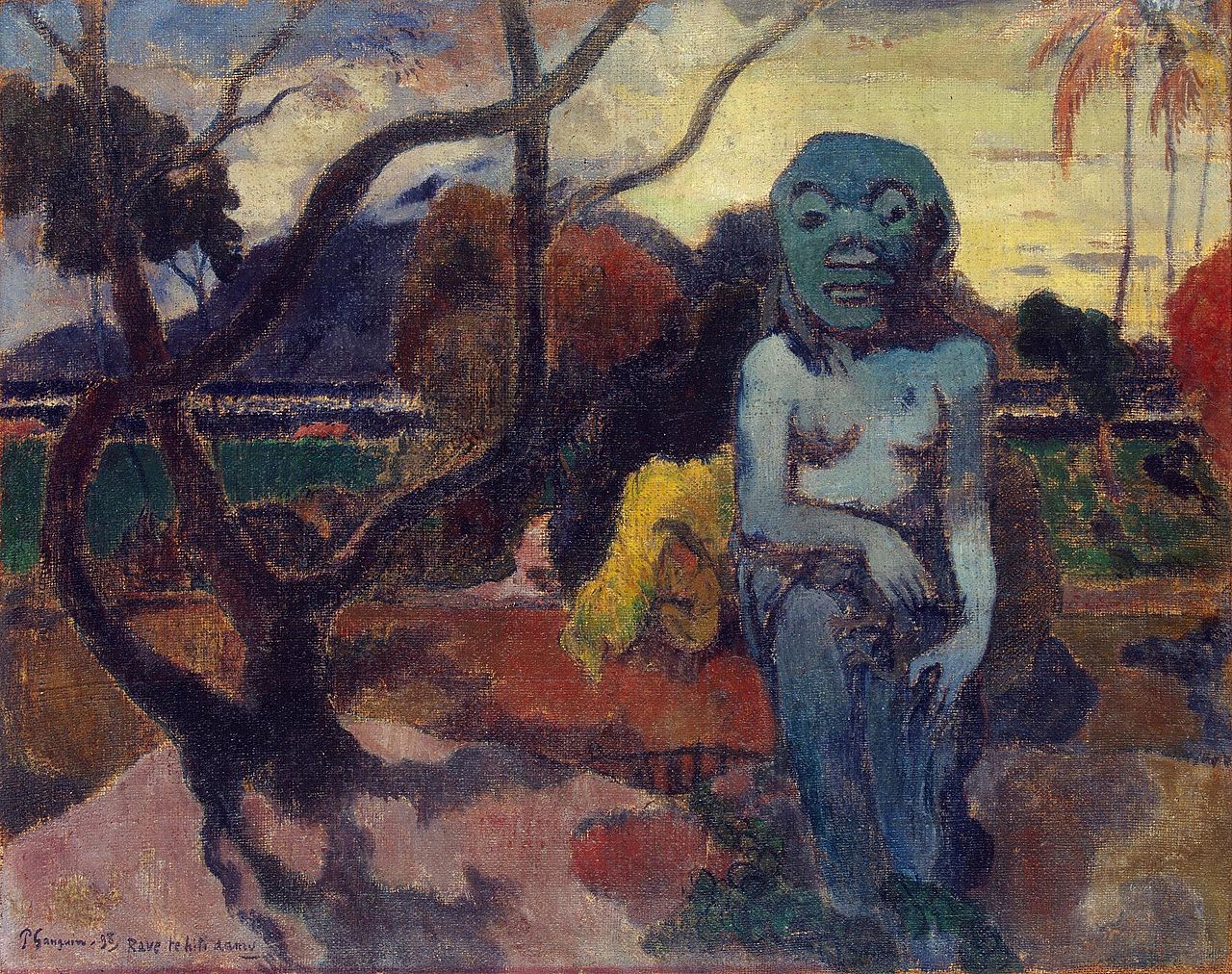
Rave te hiti aamu (The Idol)
Será possível contemplá-la?
Sim, recebe visitas

Hermitage
Sala412São Petersburgo, Rússia
Exposta ao público. Quem o garante vem indicado abaixo.
- Verificado
- 29 de ago. de 2026
- Neste estado desde
- 30 de ago. de 2026
- Fonte
- Os dados da própria coleção do museu
About the painting
In the museum's own words — the original
В картине, написанной на острове Таити, изображен таинственный экзотический мир. Идол - его органичная часть. Это не столько изваяние, сколько загадочное существо - воплощение жизни, не тронутой цивилизацией. Силуэту фигуры вторят напряженные изгибы стволов деревьев. Сумрачный колорит усиливает тревожность настроения. Образ этого идола неоднократно появлялся в творчестве Гогена. Художник назвал его Овири (Дикарь). Овири - символ смерти и плодородия. В идоле много общего с полинезийской богиней Луны, Хиной, которой поклонялись островитяне. В этом существе воплощены силы природы, созидающей и убивающей. В Полинезию Гогена привела романтическая мечта о естественной, первобытной жизни. Идол - воплощение одной из волнующих тайн этой жизни.
Hermitage
Pormenores
- Número de inventário
- ГЭ-9121
No catálogo
Fontes
- Hermitage: the museum's own open data · obtido 29 de ago. de 2026
- Imagem: Hermitage — Museum open access
Entretanto, na vida de Paul Gauguin
A vida inteira1891–1901 · Local de trabalho
Tahiti
April 1897
News of the Death of His Daughter Aline
In April 1897 Gauguin received news that his beloved daughter Aline had died of pneumonia; the same month he learned that he had to vacate his house, and, taking out a bank loan for a new one, by the end of the year he was on the brink of ruin and despair.
c. 1898
Suicide Attempt
After finishing Where Do We Come From? What Are We? Where Are We Going?, Gauguin attempted suicide by taking arsenic, but the dose proved too large, and a violent fit of vomiting saved his life.
1899
Birth of a Son by Pahura
In 1899 the artist's Tahitian lover Pahura bore him a son; the painting Women by the Sea (Maternity) is associated with this event.
1899
Son born: Emile Gauguin
last years of life
Illnesses of the Final Years
In his last years the artist suffered severely from heart disease, eczema, and the after-effects of arsenic poisoning; the intense pain had to be dulled with morphine. His situation was aggravated by constant conflicts with the administration over his attempts to defend the rights of the native population.



![Pair of Wooden Shoes (Sabots) [left], Paul Gauguin, 1889/1890](https://api.nga.gov/iiif/44a731a9-e900-4898-a282-01034fcaa6ca/full/!2400,2400/0/default.jpg)