 Erich HeckelAlemanha, 1883–1970
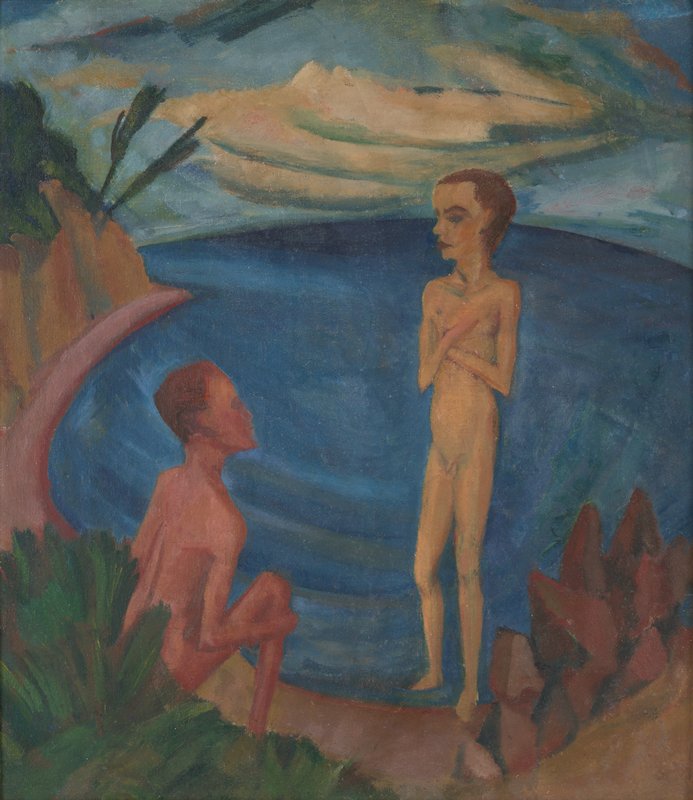
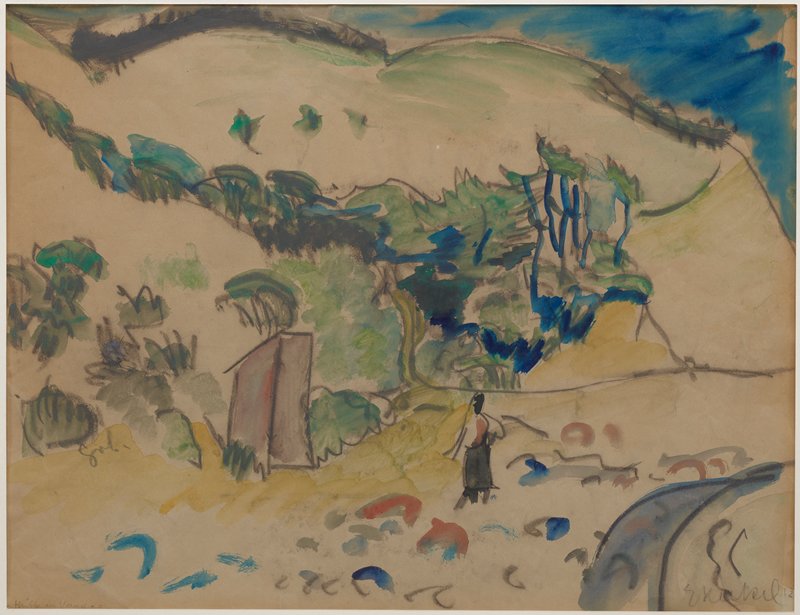
Hütte am Strand
Será possível contemplá-la?
De momento, não recebe

Instituto de Artes de Minneapolis
Minneapolis, Estados Unidos
Pertence à coleção, mas de momento não está exposta.
- Verificado
- Neste estado desde
- Fonte
- O museu
Sobre a obra
In 1905, Erich Heckel and fellow architecture students in Dresden--Ernst Ludwig Kirchner, Karl Schmidt-Rottluff, and Fritz Bleyl--founded Die Brücke (The Bridge) a progressive artists' group which became central force in German Expressionism. The group struggled with police suppression and public distaste for their art. Undeterred, they used printmaking and watercolor as vehicles for quickly producing art that could be sold at prices within reach of broad sectors of society.
Continuar a ler
Members of Die Brücke enjoyed being in nature. For three summers, 1909-11, they took summer vacations together on the Moritzburg lakes just north of Dresden. This is probably where Heckel made the present watercolor in 1911, and he probably painted on the spot. Quick, nervously energetic strokes indicate the lakeshore, beach, changing hut, a fellow vacationer, and the surrounding wooded hills, all beneath a bright blue sky. Die Brücke broke up in 1913, and Heckel pursued his own path, eventually being denigrated by the Nazis as a Degenerate Artist. Among other things, the Nazis could not accept his rough, unfinished treatment of many subjects, as seen in the present watercolor.
Instituto de Artes de Minneapolis
Pormenores
- Número de inventário
- 2023.106.3
No catálogo
Fontes
- Instituto de Artes de Minneapolis
- Imagem: Instituto de Artes de Minneapolis — © Minneapolis Institute of Art
Entretanto, na vida de Erich Heckel
A vida inteira1905–1913
Secretary, treasurer and manager of Die Brücke
Heckel is the group’s secretary and treasurer and often its business manager: he builds contacts with other up-and-coming artists, such as the Munich-based Franz Marc, which brings Die Brücke publicity, even a mention in the almanac of the Blaue Reiter. His brother introduced the group to African sculpture.
December 1911
Moves from Dresden to Berlin
In December 1911 Heckel moves from Dresden to Berlin.
1912
Friendship with Franz Marc and Lyonel Feininger
In 1912 Heckel’s friendship with Franz Marc and Lyonel Feininger begins.
1913
The dissolution of Die Brücke
Die Brücke existed from 1905 to 1913; in 1913 the group dissolved.
1913
A first solo exhibition at the Gurlitt Gallery
Heckel’s first solo exhibition opens at the Gurlitt Gallery in Berlin.
1914
Volunteers at the outbreak of war, but is turned down
When war breaks out in 1914 Heckel volunteers for service in Berlin and undergoes a brief training, but the army ultimately rejects him as too old.