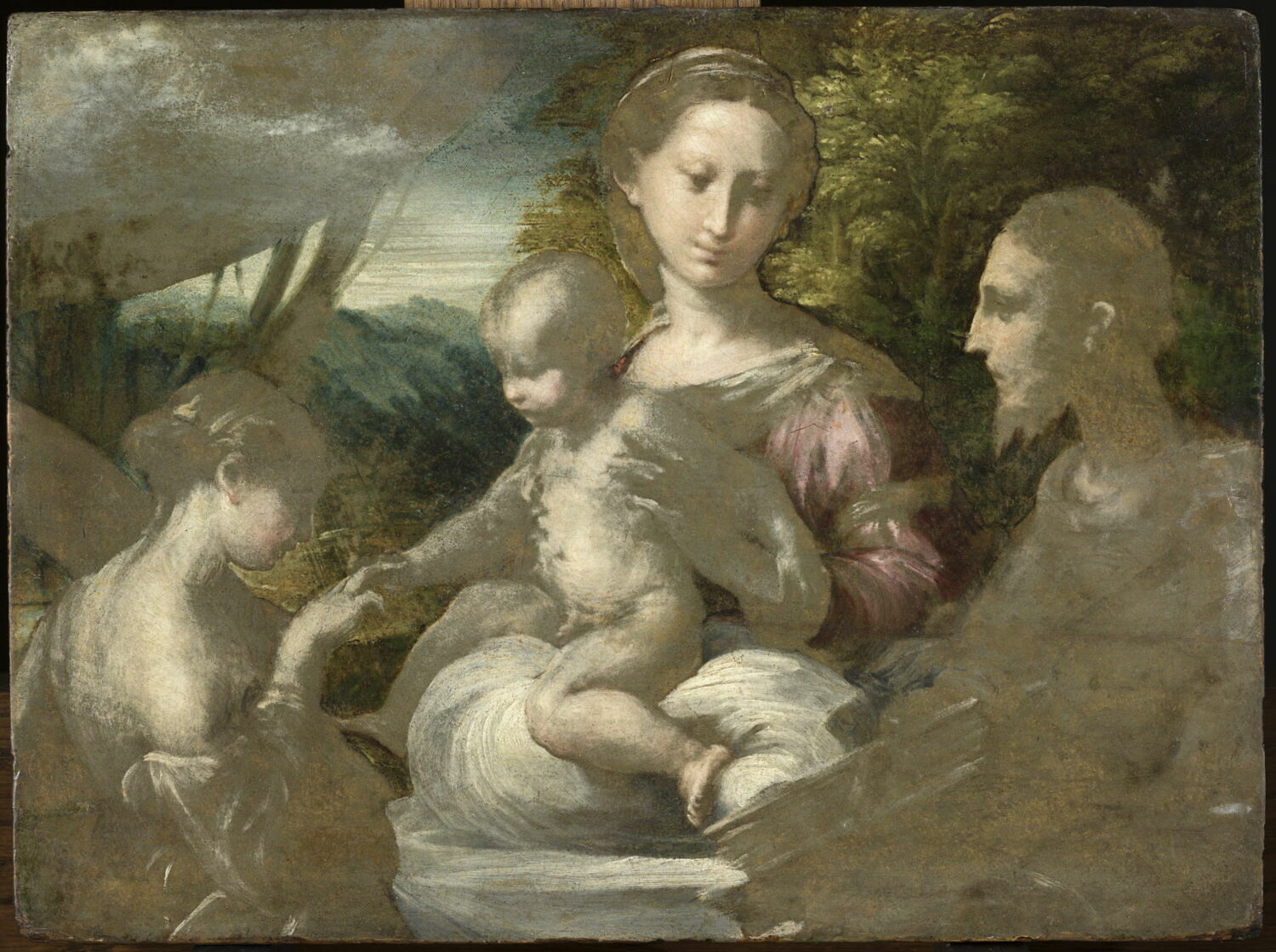
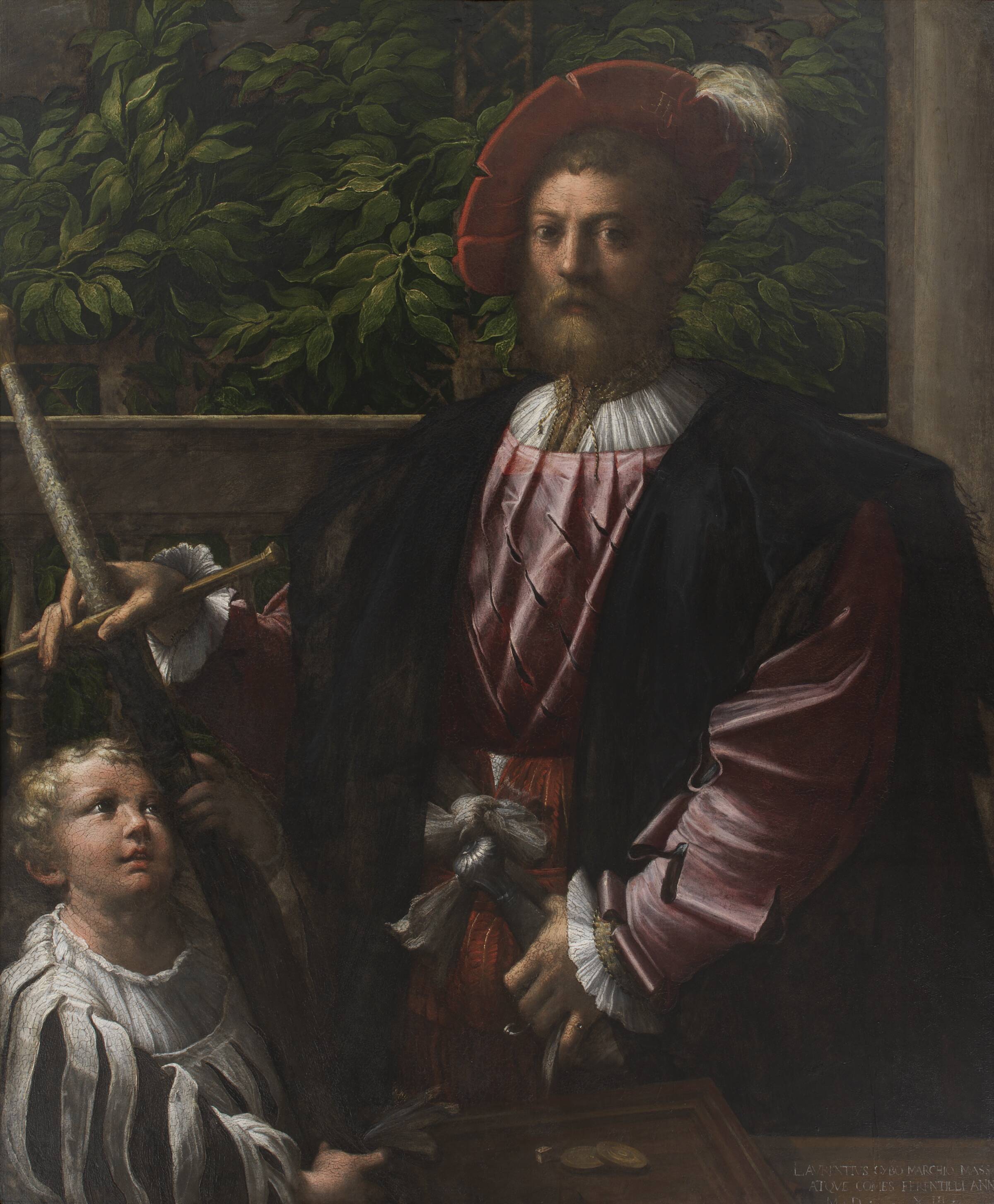
ParmigianinoItália, 1503–1540
Entombment (second version)
Será possível contemplá-la?
De momento, não recebe

Harvard Art Museums
Cambridge, Estados Unidos
Pertence à coleção, mas de momento não está exposta.
- Verificado
- anteontem
- Neste estado desde
- 27 de set. de 2026
- Fonte
- Os dados da própria coleção do museu
Pormenores
- Número de inventário
- G2998
No catálogo
Fontes
- Harvard Art Museums: the museum's own open data · obtido há 5 dias
- Imagem: Harvard Art Museums — © President and Fellows of Harvard College
Entretanto, na vida de Parmigianino
A vida inteira1524–1527
Joins the circle of Raphael's pupils
In Rome Parmigianino grew close to Raphael's pupils working in the Vatican — Perino del Vaga, Baldassarre Peruzzi and Polidoro da Caravaggio — as well as Sebastiano del Piombo and Rosso Fiorentino; he copied the frescoes of Raphael's Stanze and the tapestry cartoons made for the Sistine Chapel. Vasari records that in Rome he was celebrated as “a Raphael reborn”.
1527
The Sack of Rome finds him at work
During the Sack of Rome by the landsknechts of Emperor Charles V, soldiers burst into the studio where Parmigianino was painting “The Vision of Saint Jerome” but harmed neither the pictures nor the artist. Soon, however, he had to abandon his lodgings and Rome, and he left the altarpiece with the church of Santa Maria della Pace.
1527
Flees ravaged Rome for Bologna
After the Sack of Rome Parmigianino moved to Bologna, where he spent four years by some accounts, nearly three by others. His first Bolognese work was “Saint Roch with a Donor” for the basilica of San Petronio, and here his palette grew cooler.
by 1530
Returns to his native Parma
By 1530 Parmigianino had come back from Bologna to Parma. Here, among other works, he painted “The Madonna with the Long Neck” and took on the decoration of the church of Santa Maria della Steccata.
May 1531
Commissioned to decorate Santa Maria della Steccata
In May 1531 Parmigianino was commissioned to fresco the church of Santa Maria della Steccata in praise of the Virgin, with the Coronation as the main scene, and undertook to finish within eighteen months; the work stalled again and again over irregular supplies and the church administration's dislike of his unusual design. Other accounts say the commission was for two altarpieces, of Saint Joseph and Saint John the Baptist. The confraternity advanced him a salary.