 Andy WarholEstados Unidos, 1928–1987
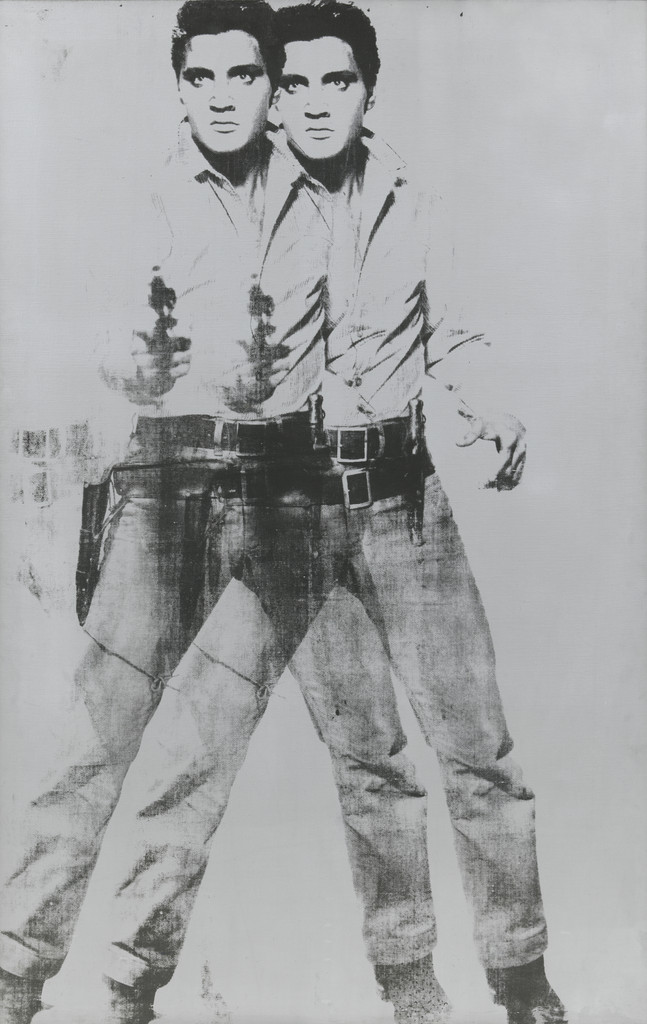
Double Elvis
Dá para ver?
Não está exposta no momento
Onde está “Double Elvis” hoje? Coleção: Museu de Arte Moderna, Nova Iorque. Não está exposta no momento. Verificado 10 de novembro de 2026.

Nova Iorque, Estados Unidos
Pertence à coleção, mas no momento não está exposta.
- Verificado
- Fonte
- O museu
Sobre a pintura
Double Elvis é uma pintura de 1963 de Andy Warhol no Museum of Modern Art de Nova York, provavelmente baseada num fotograma de Flaming Star (1960). Esteve entre as vinte e três telas de Elvis mostradas em 1963 pela Ferus Gallery, em Los Angeles. Warhol enviou à galeria um rolo com imagens repetidas e deixou que a equipe cortasse a tela em seções. A obra usa tinta de serigrafia sobre acrílico e está fora de exposição no momento.
Detalhes
- Número de inventário
- 2480.2001
No catálogo
Fontes
- Museu de Arte Moderna
- Imagem: Museu de Arte Moderna — © the artist or rights holder
Na vida de Andy Warhol
A vida inteira1961
A decisão de pintar dinheiro
Depois de visitar, em dezembro de 1961, a instalação «Магазин», de Claes Oldenburg, Warhol regressou a casa desesperado, convencido de que as suas pinturas de banda desenhada não eram suficientemente originais. Aceitou o conselho jocoso de Muriel Flatow, dado por 50 dólares, de pintar aquilo de que mais gostava, o dinheiro, e começou a representar notas de dólar.
1961–1962
Mastering silkscreen
Seeking technical advice, Warhol turned to Floriano Vecchi of Tiber Press, who showed him the basics of silkscreen printing: transferring designs to acetate, preparing screens and pulling ink with a squeegee. The experiments became a turning point and soon led to some of his earliest silkscreen works.
9 July 1962
Soup cans at the Ferus Gallery
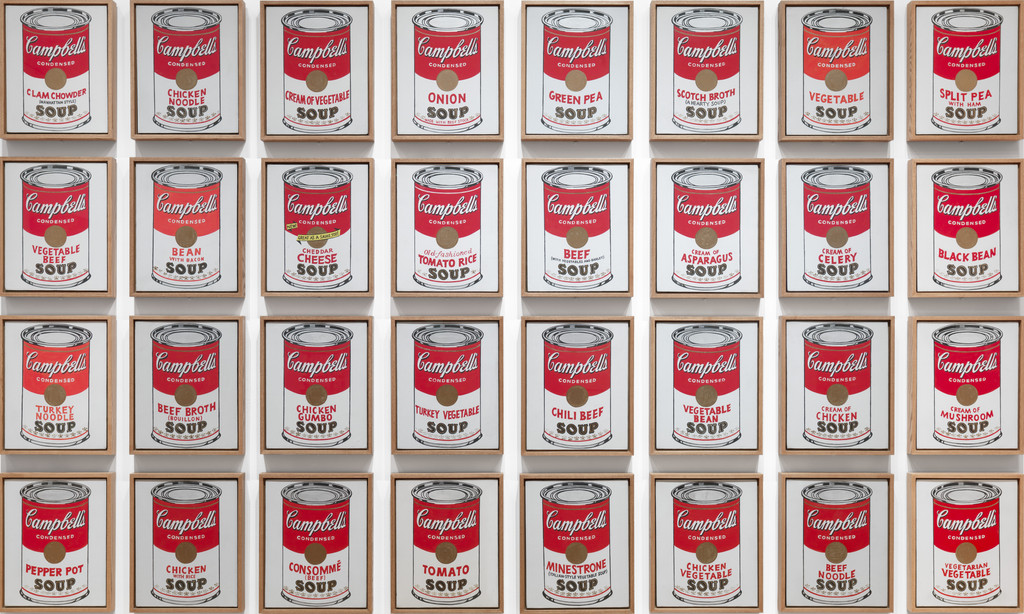
The Los Angeles dealer Irving Blum, surprised that Warhol had no gallery, offered him a solo show at the Ferus Gallery. Warhol sent 32 canvases, one for each variety of Campbell's soup; the exhibition opened on 9 July 1962 and marked his West Coast debut.
1962
“The New Realists” at the Sidney Janis Gallery
Invited by the dealer Sidney Janis, Warhol took part in the exhibition The New Realists, showing 200 Soup Cans, Big Campbell's Soup Can 19c (Beef Noodle) and Do It Yourself (Flowers). The show was widely seen as a turning point for the acceptance of Pop art: The New Yorker likened its effect on the New York art world to an “earthquake”.
1964
The Factory on 47th Street
By 1964 Warhol had moved his studio to 231 East 47th Street, which became known as the Factory; Billy Name covered it in aluminium foil and silver paint. The poet Gerard Malanga helped him with silkscreens and films, and working with assistants became a lasting feature of his method.
1965
Paris: announcing his retirement from painting
The second Flowers series was shown at Galerie Ileana Sonnabend in Paris; during the trip Warhol announced that he was retiring from painting to focus on film, saying he no longer believed in painting.