ART WIKI32 963 em exposição
MapaColeçãoArtistasMuseusExposiçõesRevista
Entrar

ART WIKI

Onde está a obra-prima, e a que horas se abre a porta.

Coleções: Art Institute of Chicago, Galeria Nacional de Arte, Galeria Tretiakov, Getty Villa, Harvard Art Museums, Hermitage, Hirshhorn Museum and Sculpture Garden, Instituto de Artes de Minneapolis, Museu de Arte de Cleveland, Museu de Arte Moderna, Museu do Louvre, Museu Estatal de Amesterdão, Museu J. Paul Getty, Museu Metropolitano de Arte, Museu Nacional de Arte da Dinamarca, Museu Pushkin, Museu Russo, Museu Smithsoniano de Arte Americana, Museu Vitória e Alberto, Museu Whitney de Arte Americana, National Museum of Asian Art, National Portrait Gallery, Catálogo Estatal do Fundo Museológico da Rússia (274 museus), Europeana (19 museus), Wikidata (6 museus), Paris Musées (12 museus) e Joconde, a base de museus do Ministério da Cultura de França (495 museus). As imagens pertencem aos titulares dos direitos.

Secções

  • Mapa
  • Pesquisa
  • Coleção
  • Obras-primas
  • Em exposição agora
  • Artistas

Mais

  • Museus e galerias
  • Exposições
  • Revista
  • De onde vêm os dados
  • Privacidade e cookies
InícioMapaCatálogo
  1. Coleção/
  2. Museu de Arte de Cleveland/
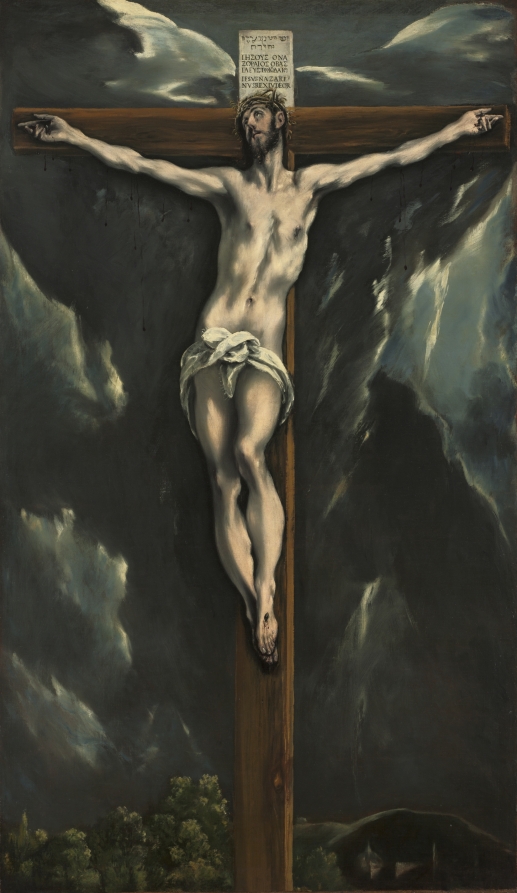
  3. Christ on the Cross
Christ on the Cross, El Greco, c. 1600–1610
El Greco, retratoEl GrecoGrécia, 1541–1614

Christ on the Cross

c. 1600–1610 · Painting

Será possível contemplá-la?

Sim, recebe visitas

Museu de Arte de Cleveland

Cleveland, Estados Unidos

Sala212 Baroque Painting and Sculpture

Exposta ao público. Quem o garante vem indicado abaixo.

Verificado
há 3 dias
Neste estado desde
19 de ago. de 2026
Fonte
O museu
No mapaPágina do museu

Sobre a pintura

El Greco (Spanish for "the Greek") was trained on his native island, Crete, as a painter of small-scale devotional images (icons). In the late 1560s he moved first to Venice, where he may have worked with Tintoretto (1518-1594), and then to Rome. Finally, he settled in Toledo, Spain. Tintoretto's influence is visible here in the colors and in the elongated figural proportions. The graphic depiction of blood, however, may reflect the Spanish interest in Christ's sufferings as a subject for meditation.

Museu de Arte de Cleveland

Pormenores

c. 1600–1610
15411614
Número de inventário
1952.222

No catálogo

PinturasÓleoPintura venezianaBarrocoSéculo XVIIEspanha

Fontes

  • Museu de Arte de Cleveland
  • Imagem: Museu de Arte de Cleveland — Museum open access

Entretanto, na vida de El Greco

A vida inteira
  1. 1597–1607

    A decade of intense activity

    The decade from 1597 to 1607 was a period of intense activity for El Greco: his workshop made pictorial and sculptural ensembles for religious institutions — three altars for the Chapel of San José in Toledo (1597–99), three paintings for the Colegio de Doña María de Aragón in Madrid (1596–1600), and the high altar, four lateral altars and St Ildefonso for the Hospital of Charity at Illescas (1603–05).

  2. 1604

    Birth of his grandson Gabriel

    In 1604 El Greco's son Jorge Manuel and Alfonsa de los Morales had a son, Gabriel; his godfather was Gregorio Angulo, governor of Toledo and a personal friend of the artist.

  3. 13 December 1604

    Death of his brother Manoússos

    El Greco's elder brother Manoússos, a wealthy merchant, spent the last years of his life (1603–04) in the painter's Toledo home and died on 13 December 1604.

  4. 1607–1608

    The lawsuit with the hospital at Illescas

    In 1607–08 El Greco was involved in a protracted legal dispute with the Hospital of Charity at Illescas over payment for his work, which included painting, sculpture and architecture. This and other disputes contributed to the economic difficulties of his last years.

  5. 1608

    His last major commission: the Hospital of Saint John the Baptist

    In 1608 El Greco received his last major commission, for the Hospital of Saint John the Baptist in Toledo.

  6. 1611

    A visit from Francisco Pacheco

    The painter and theorist Francisco Pacheco, who visited El Greco in 1611, condemned his idea of the primacy of colour over form and his broad-brush manner, yet called the master “a writer of painting, sculpture and architecture”.
Mais obras de El Greco

Todas as obras
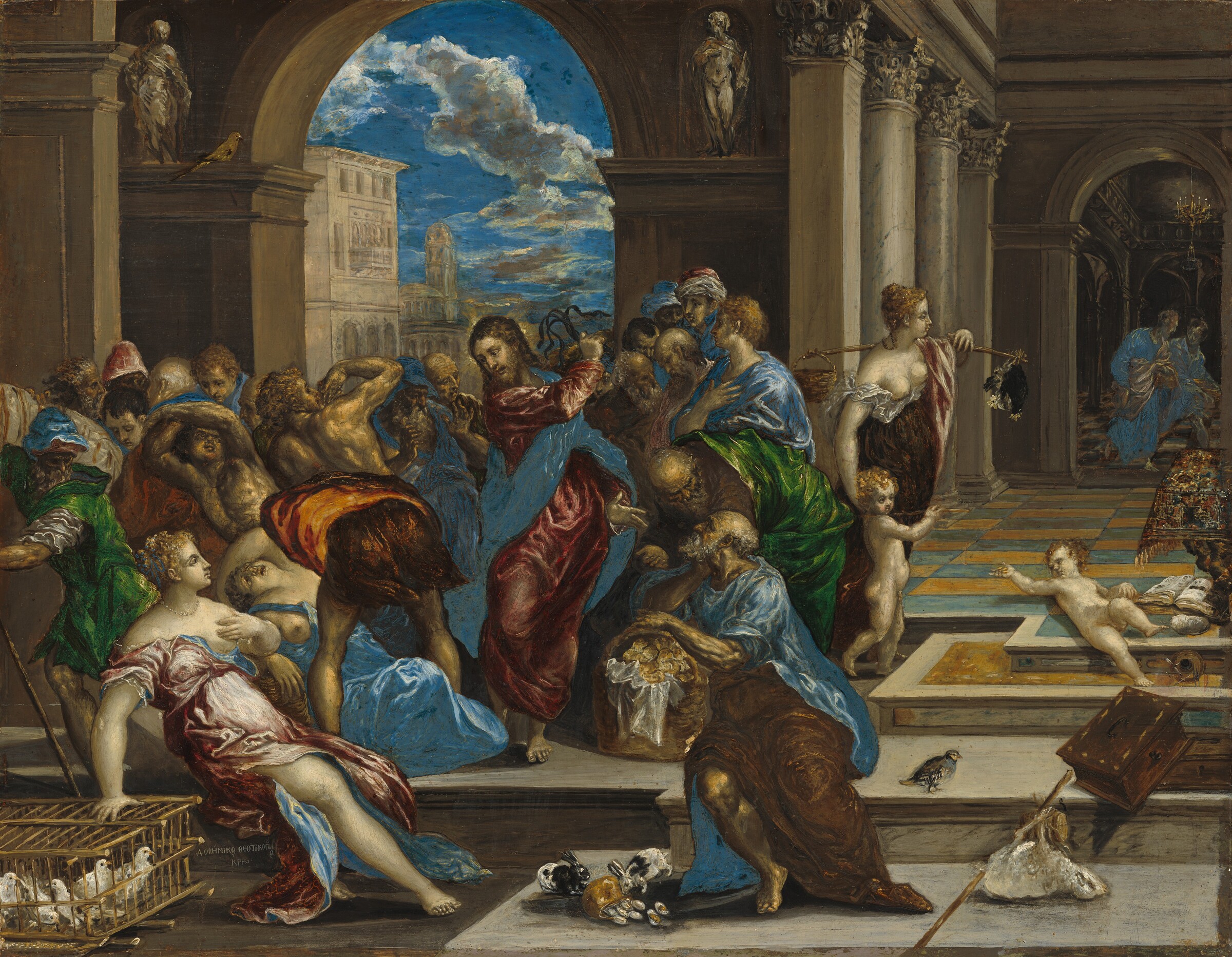
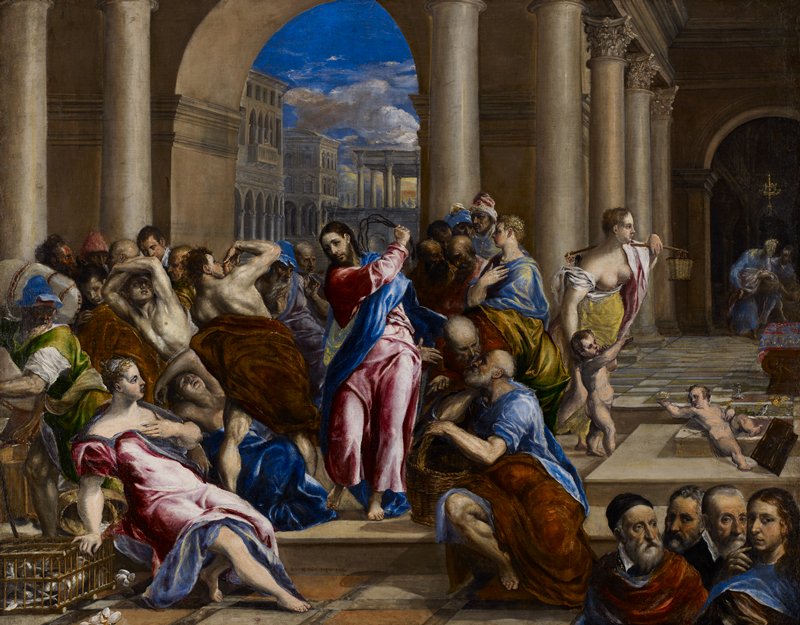
Christ Driving the Money Changers from the Temple, El Greco, c. 1570–75

Christ Driving the Money Changers from the Temple

c. 1570–75 · Instituto de Artes de Minneapolis

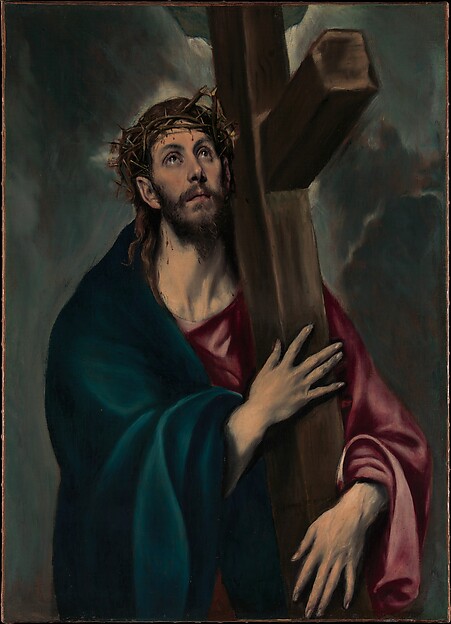
Christ Carrying the Cross, El Greco, ca. 1577–87

Christ Carrying the Cross

ca. 1577–87 · Museu Metropolitano de Arte

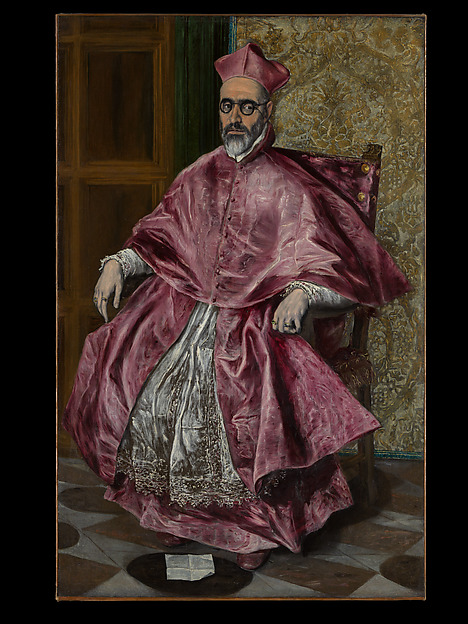
Cardinal Fernando Niño de Guevara (1541–1609), El Greco, ca. 1600

Cardinal Fernando Niño de Guevara (1541–1609)

ca. 1600 · Museu Metropolitano de Arte

Saint Jerome as Scholar, El Greco, ca. 1610

Saint Jerome as Scholar

ca. 1610 · Museu Metropolitano de Arte

Christ Cleansing the Temple, El Greco, probably before 1570

Christ Cleansing the Temple

probably before 1570 · Galeria Nacional de Arte

Portrait of the Poet Alonso Ercilla y Zuniga, El Greco, 1570s

Portrait of the Poet Alonso Ercilla y Zuniga

1570s · Hermitage

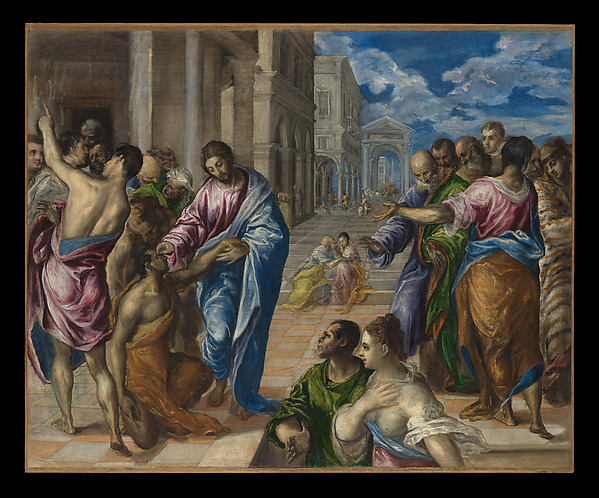
Christ Healing the Blind, El Greco, ca. 1570

Christ Healing the Blind

ca. 1570 · Museu Metropolitano de Arte

Saint Bernard, El Greco, c. 1577

Saint Bernard

c. 1577 · Hermitage

Vizinhas de sala: Museu de Arte de Cleveland

Página do museu
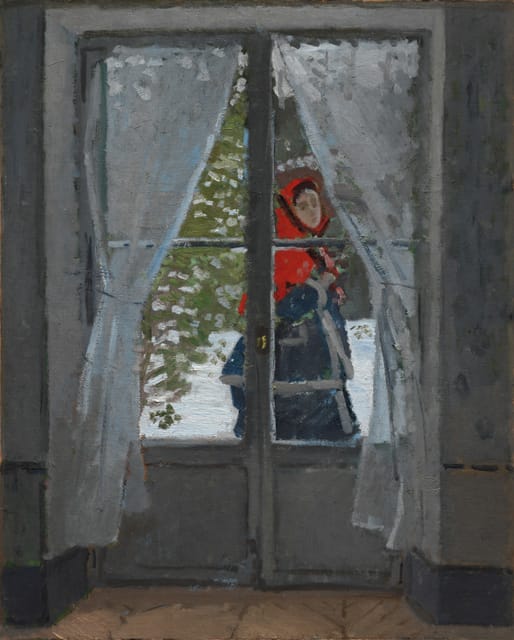
The Red Kerchief, Claude Monet, c. 1868–73

Claude Monet

The Red Kerchief, c. 1868–73

Melencolia I, Albrecht Dürer, 1514

Albrecht Dürer

Melancolia I, 1514

The Virgin and Child with the Pear, Albrecht Dürer, 1511

Albrecht Dürer

The Virgin and Child with the Pear, 1511

The Nativity, Albrecht Dürer, probably c. 1509/1510

Albrecht Dürer

The Nativity, probably c. 1509/1510

The Virgin and Child on a Crescent with a Starry Crown, Albrecht Dürer, 1508

Albrecht Dürer

The Virgin and Child on a Crescent with a Starry Crown, 1508

The Lamentation, Albrecht Dürer, 1507

Albrecht Dürer

The Lamentation, 1507

Large Horse, Albrecht Dürer, 1505

Albrecht Dürer

Large Horse, 1505

Nemesis (The Great Fortune), Albrecht Dürer, c. 1501/1502

Albrecht Dürer

Nemesis (The Great Fortune), c. 1501/1502