ART WIKI32 963 em exposição
MapaColeçãoArtistasMuseusExposiçõesRevista
Entrar

ART WIKI

Onde está a obra-prima, e a que horas se abre a porta.

Coleções: Art Institute of Chicago, Galeria Nacional de Arte, Galeria Tretiakov, Getty Villa, Harvard Art Museums, Hermitage, Hirshhorn Museum and Sculpture Garden, Instituto de Artes de Minneapolis, Museu de Arte de Cleveland, Museu de Arte Moderna, Museu do Louvre, Museu Estatal de Amesterdão, Museu J. Paul Getty, Museu Metropolitano de Arte, Museu Nacional de Arte da Dinamarca, Museu Pushkin, Museu Russo, Museu Smithsoniano de Arte Americana, Museu Vitória e Alberto, Museu Whitney de Arte Americana, National Museum of Asian Art, National Portrait Gallery, Catálogo Estatal do Fundo Museológico da Rússia (274 museus), Europeana (19 museus), Wikidata (6 museus), Paris Musées (12 museus) e Joconde, a base de museus do Ministério da Cultura de França (495 museus). As imagens pertencem aos titulares dos direitos.

Secções

  • Mapa
  • Pesquisa
  • Coleção
  • Obras-primas
  • Em exposição agora
  • Artistas

Mais

  • Museus e galerias
  • Exposições
  • Revista
  • De onde vêm os dados
  • Privacidade e cookies
InícioMapaCatálogo
  1. Coleção/
  2. Instituto de Artes de Minneapolis/
  3. C. - C. = Fisch
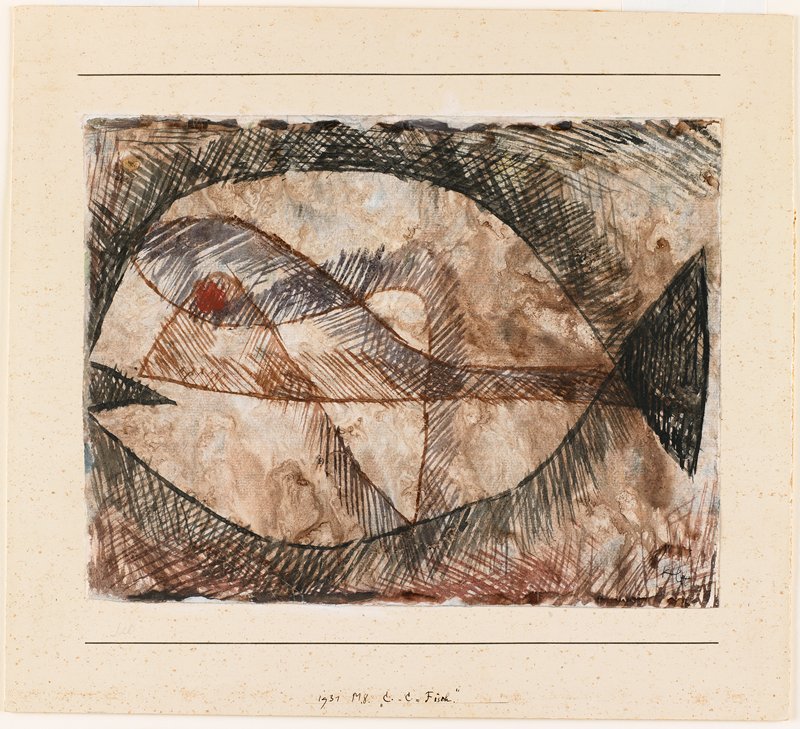
C. - C. = Fisch, Paul Klee, 1931
Paul Klee, retratoPaul KleeAlemanha, 1879–1940

C. - C. = Fisch

1931 · Drawing · 23.18 × 31.43 cm

Será possível contemplá-la?

De momento, não recebe

Instituto de Artes de Minneapolis

Minneapolis, Estados Unidos

Pertence à coleção, mas de momento não está exposta.

Verificado
há 3 dias
Neste estado desde
25 de set. de 2026
Fonte
O museu
No mapaPágina do museu

Sobre a obra

With the title C. - C. = Fisch, Paul Klee emphasizes the creative process at the heart of his drawing. According to the equation, Klee subtracted one letter C from another to form the fish's body, with the extended intersection of the two mirrored Cs defining the tail fin. The fish's eye and lateral fin can be discerned among a tangle of expressive, freely-drawn lines that also suggest a sense of motion, as if the fish is swimming forward. Throughout the compostion, Klee emphasizes the basic geometric elements of shape and line that are characteristic of much of his work, while reminding us that the artmaking process itself is the essential part of the picture. The notation S.cl on the mount of the drawing means Sonderclasse, or Special class in English. It was inscribed by Klee to identify those works he especially liked.

Instituto de Artes de Minneapolis

Pormenores

1931 · aos 52 anos
18791940
Número de inventário
77.41

No catálogo

Desenhos e aguarelasAguarelaModernismoSéculo XXSuíça

Fontes

  • Instituto de Artes de Minneapolis
  • Imagem: Instituto de Artes de Minneapolis — © Minneapolis Institute of Art

Entretanto, na vida de Paul Klee

A vida inteira
  1. 1921–1931

    The preliminary course on the “theory of form”

    Klee developed a preliminary course in the “theory of form” that began with the “point as the beginning of all beginnings”, moving through space, and the “cosmic egg” from which line, spiral, square, circle and cube are born. Students listened to lectures illustrated with Klee’s own abstract watercolours and then painted their own, trying to express movement, balance, flight and tension.

  2. 1928–1929

    A journey to Egypt

    Egypt impressed Klee less than Tunisia, yet in the desert he felt an almost mystical bond with the land: he was drawn to the proportions of the ancient funerary monuments and to the esoteric numerology by which they were built. His later “Ad Parnassum” was influenced by the trip.

  3. 1931

    Leaving the Bauhaus for the Düsseldorf Academy

    Teaching at the Bauhaus shifted ever more from painting towards an architectural aesthetic, which no longer suited Klee: in 1931 he gave up his post there and became a professor at the Düsseldorf Academy of Art.

  4. 1933

    Nazi harassment, a house search and dismissal

    When the Nazis came to power a campaign of persecution was launched against Klee: the press called him a “typical Galician Jew”, his flat in Dessau was searched, and in Düsseldorf he was barred from work until he produced documents proving Aryan descent. He was forced to give up his professorship.

  5. late 1933

    Emigration to Switzerland

    At the end of 1933, at his wife’s insistence, Klee left Germany and returned to Bern. He applied for Swiss citizenship, but a positive answer came only after his death.

  6. 1933–1934

    Shows in London and Paris, and a meeting with Picasso

    In 1933–34 Klee had shows in London and Paris and finally met Pablo Picasso, whom he greatly admired.

Mais obras de Paul Klee

Todas as obras
New House in the Suburbs, Paul Klee, 1924

New House in the Suburbs

1924 · Galeria Nacional de Arte

May Picture, Paul Klee, 1925

May Picture

1925 · Museu Metropolitano de Arte

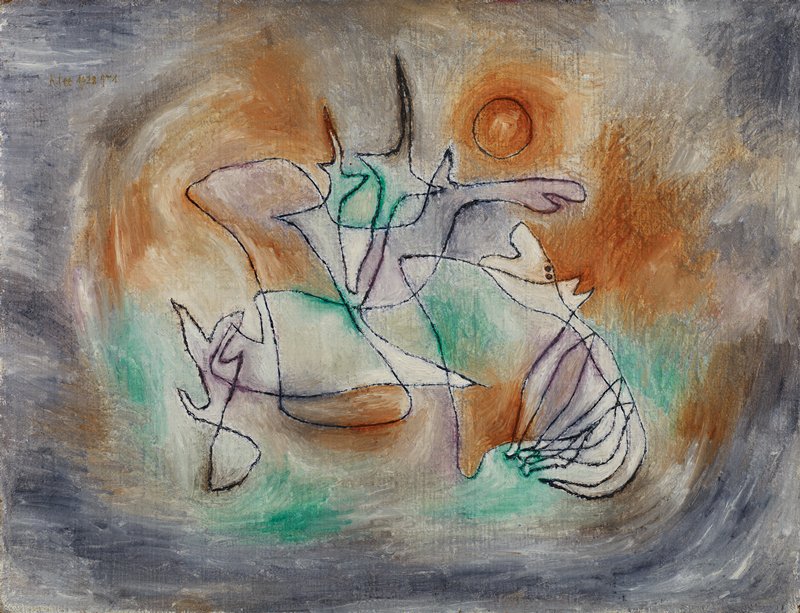
Howling Dog, Paul Klee, 1928

Howling Dog

1928 · Instituto de Artes de Minneapolis

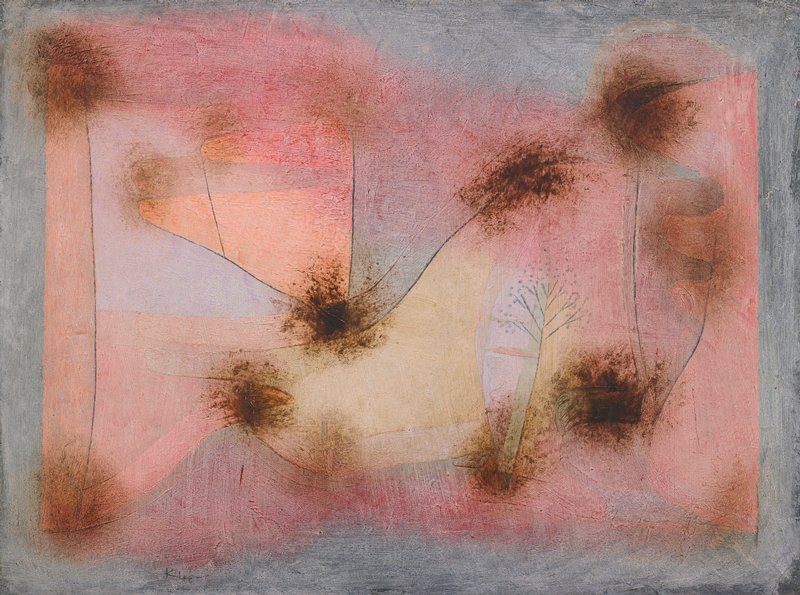
Hardy Plants, Paul Klee, 1934

Hardy Plants

1934 · Instituto de Artes de Minneapolis

Stakim, Paul Klee, c. 1928

Stakim

c. 1928 · Art Institute of Chicago

Fleeing Ghost, Paul Klee, 1929

Fleeing Ghost

1929 · Art Institute of Chicago

In the Magic Mirror, Paul Klee, 1934

In the Magic Mirror

1934 · Art Institute of Chicago

Auslöschendes Licht, Paul Klee

Auslöschendes Licht

Albertina

Vizinhas de sala: Instituto de Artes de Minneapolis

Página do museu
Olive Trees, Vincent van Gogh, 1889

Vincent van Gogh

Olive Trees, 1889

Grainstack, Sun in the Mist, Claude Monet, 1891

Claude Monet

Grainstack, Sun in the Mist, 1891

Lucretia, Rembrandt van Rijn, 1666

Rembrandt van Rijn

Lucretia, 1666

Self-Portrait with Dr. Arrieta, Francisco José de Goya y Lucientes, 1820

Francisco de Goya

Self-Portrait with Dr. Arrieta, 1820

Study for Improvisation V, Vassily Kandinsky, 1910

Vasily Kandinsky

Study for Improvisation V, 1910

Tahitian Landscape, Paul Gauguin, 1891

Paul Gauguin

Tahitian Landscape, 1891

Chestnut Trees at Jas de Bouffan, Paul Cézanne, c. 1885–86

Paul Cézanne

Chestnut Trees at Jas de Bouffan, c. 1885–86

The Union of England and Scotland (Charles I as the Prince of Wales), Peter Paul Rubens, 1633–34

Peter Paul Rubens

The Union of England and Scotland (Charles I as the Prince of Wales), 1633–34