
Alemanha · 1745–1808
Jacob Wilhelm Mechau
Jacob Wilhelm Mechau was a German landscape painter, graphic artist and etcher.
Onde ver Jacob Wilhelm Mechau

A Civita Castellana
1793 · Art Institute of Chicago

Romitorio a Albano
1785 · Não exposta · Galeria Nacional de Arte

Sotto a Ponte Lupo a Tivoli
1790 · Não exposta · Galeria Nacional de Arte

Ziekenhuis van St. Franciscus bij Subiaco
1790 - 1795 · Museu Estatal de Amesterdão

Onder de Ponte Lupo
1790 · Museu Estatal de Amesterdão

Poort van de H. Jan
1790 · Museu Estatal de Amesterdão

Ponte Molle
1792 · Não exposta · Galeria Nacional de Arte

La Fontana Egeria
1792 · Não exposta · Galeria Nacional de Arte

Castella Gandolfo
1792 · Não exposta · Galeria Nacional de Arte

Entrata nel bosco di Marino
1792 · Não exposta · Galeria Nacional de Arte

Italiaans landschap met landhuis
1792 · Museu Estatal de Amesterdão

Italiaans landschap met toren
1792 · Museu Estatal de Amesterdão

Italiaans landschap met romaanse kerk
1792 · Museu Estatal de Amesterdão

Milvische brug
1792 · Museu Estatal de Amesterdão

Italiaans landschap met stadsmuur en man op ezel
1792 · Museu Estatal de Amesterdão

Italiaans landschap met ruïne
1792 · Museu Estatal de Amesterdão

Fontein van Egeria
1792 · Museu Estatal de Amesterdão

Italiaans landschap met ossenwagen bij dorp
1792 · Museu Estatal de Amesterdão

A Cività Castellana
1793 · Não exposta · Galeria Nacional de Arte

Sito di ricreazione dei Pittori Fiaminchi del Secolo passato a Monte Testaccio
1793 · Não exposta · Galeria Nacional de Arte

Vicino a Subiaco
1793 · Não exposta · Galeria Nacional de Arte

Avanzi dell'acqua Marzia, Claudia e dell'Aniene vecchio
1793 · Não exposta · Galeria Nacional de Arte

Arco della Toretta o sia parte dell'acqua Claudia, agli Arci vicino a Tivoli
1793 · Não exposta · Galeria Nacional de Arte

Il ponte Salaro
1793 · Não exposta · Galeria Nacional de Arte

Gezicht op het Marsveld
1793 · Museu Estatal de Amesterdão

Nabij Civita Castellana
1793 · Museu Estatal de Amesterdão

Herberg op de Monte Testaccio, ontspanningsplaats van de Bentveugels
1793 · Museu Estatal de Amesterdão

Ravijn van Subiaco
1793 · Museu Estatal de Amesterdão

Gezicht op het Marsveld
1793 · Museu Estatal de Amesterdão

Salariobrug
1793 · Museu Estatal de Amesterdão

Ruïne bij Tivoli
1793 · Museu Estatal de Amesterdão

Ponte Celio a Cività Castellana
1794 · Não exposta · Galeria Nacional de Arte

Papigno, vicino a Terni
1794 · Não exposta · Galeria Nacional de Arte

Francesco fuori di Subiacao
1794 · Não exposta · Galeria Nacional de Arte

Arco di Druso
1794 · Não exposta · Galeria Nacional de Arte

Fontana Blandusia, volgarmente detta Acquoria a Tivoli
1794 · Não exposta · Galeria Nacional de Arte

Arco di Druso, ora porta di San Sebastiano
1794 · Não exposta · Galeria Nacional de Arte

Boog van Drusus
1794 · Museu Estatal de Amesterdão

Celliobrug bij Civita Castellana
1794 · Museu Estatal de Amesterdão

Fontein van Blandusia bij Tivoli
1794 · Museu Estatal de Amesterdão

Boog van Drusus
1794 · Museu Estatal de Amesterdão

Boog van Drusus en Poort van de H. Sebastiaan
1794 · Museu Estatal de Amesterdão

Caduta del Velino a Papigno, vicino a Terni
1795 · Não exposta · Galeria Nacional de Arte

Porta di Falerium ora Fallari città destrutta etrusca
1795 · Não exposta · Galeria Nacional de Arte

Porta di San Paolo
1795 · Não exposta · Galeria Nacional de Arte

Ospitaletto di San Francesco, fuori di Subiaco
c. 1795 · Não exposta · Galeria Nacional de Arte

Oude poort van Fallari
1795 · Museu Estatal de Amesterdão

Kluizenaarskapel in Albano
1795 · Museu Estatal de Amesterdão

Oude brug te Castellana
1795 · Museu Estatal de Amesterdão

Poort van St. Paul en Piramide van Cestius
1795 · Museu Estatal de Amesterdão

Ponte antico a Cività Castellana, volgarmente detto ponte Terano
1798 · Não exposta · Galeria Nacional de Arte

Alla porta di San Giovanni
1798 · Não exposta · Galeria Nacional de Arte

Mountain Landscape
1798 · Não exposta · Hermitage

Landscape
1798 · Não exposta · Hermitage

Literary Illustration: Gentleman and Kneeling Gardener
n.d. · Não exposta · Art Institute of Chicago

Goddess Appearing to Two Figures
n.d. · Não exposta · Art Institute of Chicago

Literary Illustration: Two Men and Woman in Interior
n.d. · Não exposta · Art Institute of Chicago

Ponte Molle
18th-19th century · Não exposta · Harvard Art Museums

Castella Gandolfo
18th-19th century · Não exposta · Harvard Art Museums

Vicino a Subiaco
18th-19th century · Não exposta · Harvard Art Museums

Caduta del Velino a Papino vicino a Terni
18th-19th century · Não exposta · Harvard Art Museums

Sito...die pittori fiaminghi...a monte testaccio
18th-19th century · Não exposta · Harvard Art Museums

Ponte Cellio a Cività Castellana
18th-19th century · Não exposta · Harvard Art Museums

Porta di Giovanni
18th-19th century · Não exposta · Harvard Art Museums

Porta di San Paolo
18th-19th century · Não exposta · Harvard Art Museums

Ponte antico a Cività Castellana
18th-19th century · Não exposta · Harvard Art Museums

Romitorio a Albano
18th-19th century · Não exposta · Harvard Art Museums

Arco di Druso
18th-19th century · Não exposta · Harvard Art Museums

Entrata nel bosco di Marine
18th-19th century · Não exposta · Harvard Art Museums

Papigno vicino a Terni
18th-19th century · Não exposta · Harvard Art Museums

Sotto a Ponte Lupo a Tivoli
18th-19th century · Não exposta · Harvard Art Museums

Porta di Falerium
18th-19th century · Não exposta · Harvard Art Museums

Arco della torretta vicin' a Tivoli
18th-19th century · Não exposta · Harvard Art Museums

Fontana Blandusia a Tivoli
18th-19th century · Não exposta · Harvard Art Museums

A Cività Castellana
18th-19th century · Não exposta · Harvard Art Museums

Arco di Druso
18th-19th century · Não exposta · Harvard Art Museums

Horse and Cart Travelling under a Bridge
18th-19th century · Não exposta · Harvard Art Museums

Avanzi dell'aqua Marzia, Claudia, e dell' Aniene vecchio
18th-19th century · Não exposta · Harvard Art Museums

Apollo and the Graces
18th-19th century · Não exposta · Harvard Art Museums

Francesco fuori di Subiaco
18th-19th century · Não exposta · Harvard Art Museums

Allegorie der Sünde (Schöne junge Frau mit bloßen Brüsten und Bocksfüßen bei einem Einsiedler vor einer Höhle; die Frau zeigt auf ein Kreuz)
Albertina

Ohnmacht Elisabeths, nachdem sie König Karl von Anjou im Palast zu Neapel vergeblich um das Leben ihres Sohnes Konradin angefleht hat
Albertina

Dramatische Szene in orientalischen Kostümen in einem Schlafgemach (Eine in sich zusammensinkende Frau in den Armen eines Mannes, davor auf dem Boden ein Brief und ein Dolch)
Albertina

"Fort Schlange !" (Theaterszene in gotisierender Dekoration: Dame mit einem Dolch in der Linken und zwei Knaben zu ihren Füßen)
Albertina
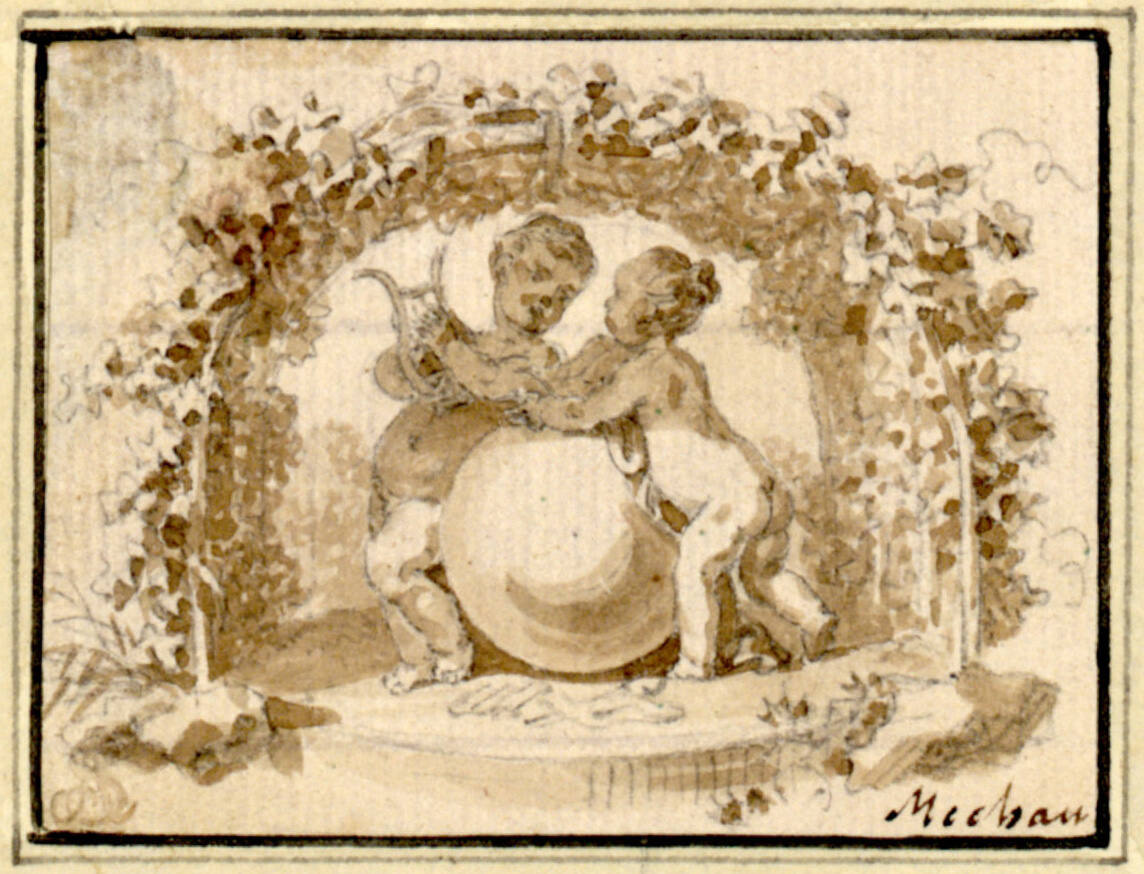
Puttenpaar mit Lyra, an eine große Kugel gelehnt, unter einer Blattlaube
Albertina

Vignette mit laubgeschmücktem Medaillon (Gemmenartiges Profilbildnis eines bärtigen Mannes nach rechts)
Albertina

Don Sylvio und Donna Felicia im Garten
Albertina
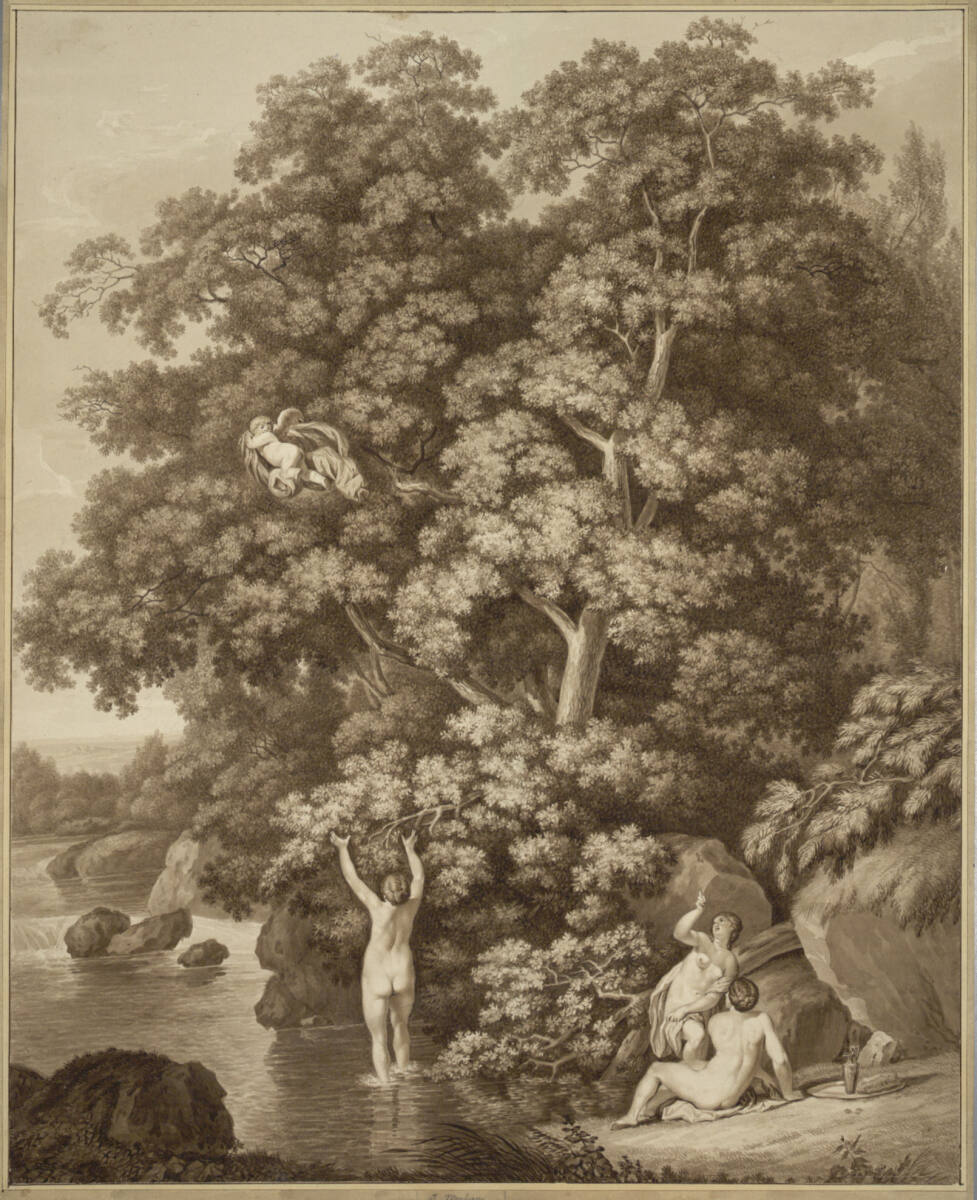
"Das Bad der Grazien" (Die drei Grazien am Fluss unter einer Gruppe von mächtigen Laubbäumen; Amor entflieht mit dem Hemd einer Grazie)
Albertina

Vier Putten mit Attributen der Architektur
Albertina

Vignette mit queroval eingeschriebenem Medaillon (Philosoph und morgenländische Tänzerin)
Albertina

Don Diego, mit Mordabsicht, kommt in das Zimmer, in dem Ritter Navarro und seine Mutter am Sterbebett der Donna Gabriele wachen
Albertina

Der Kobold West, in Gestalt eines Vogels, entführt Selandines Kind
Albertina

Vignette mit blumengeschmücktem Medaillon und Rocaille-Dekor (Vier Putten beim Bumenpflücken im Wald)
Albertina
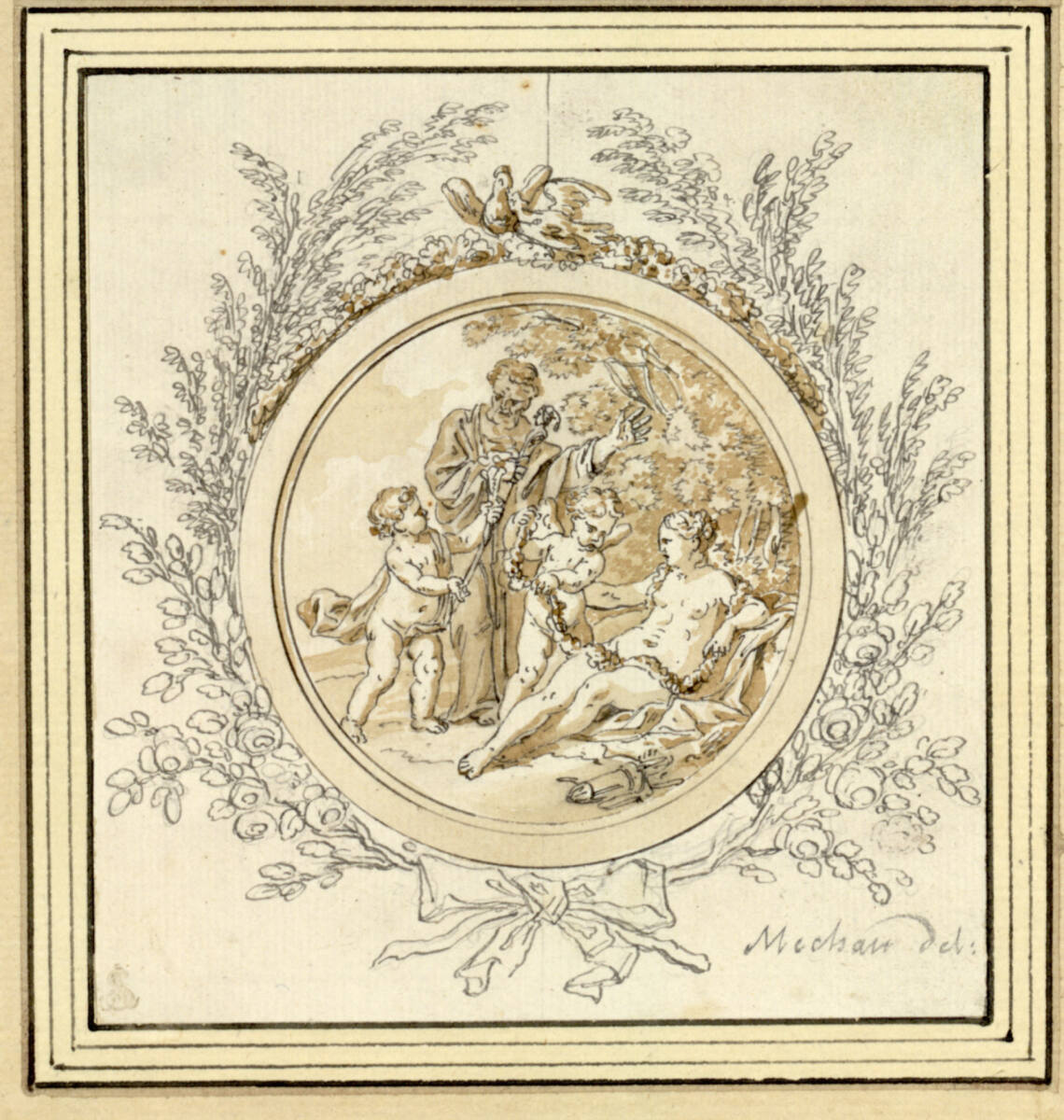
Grußkarte zur Hochzeit (Venus und Amor, Momus und ein weiterer Putto)
Albertina
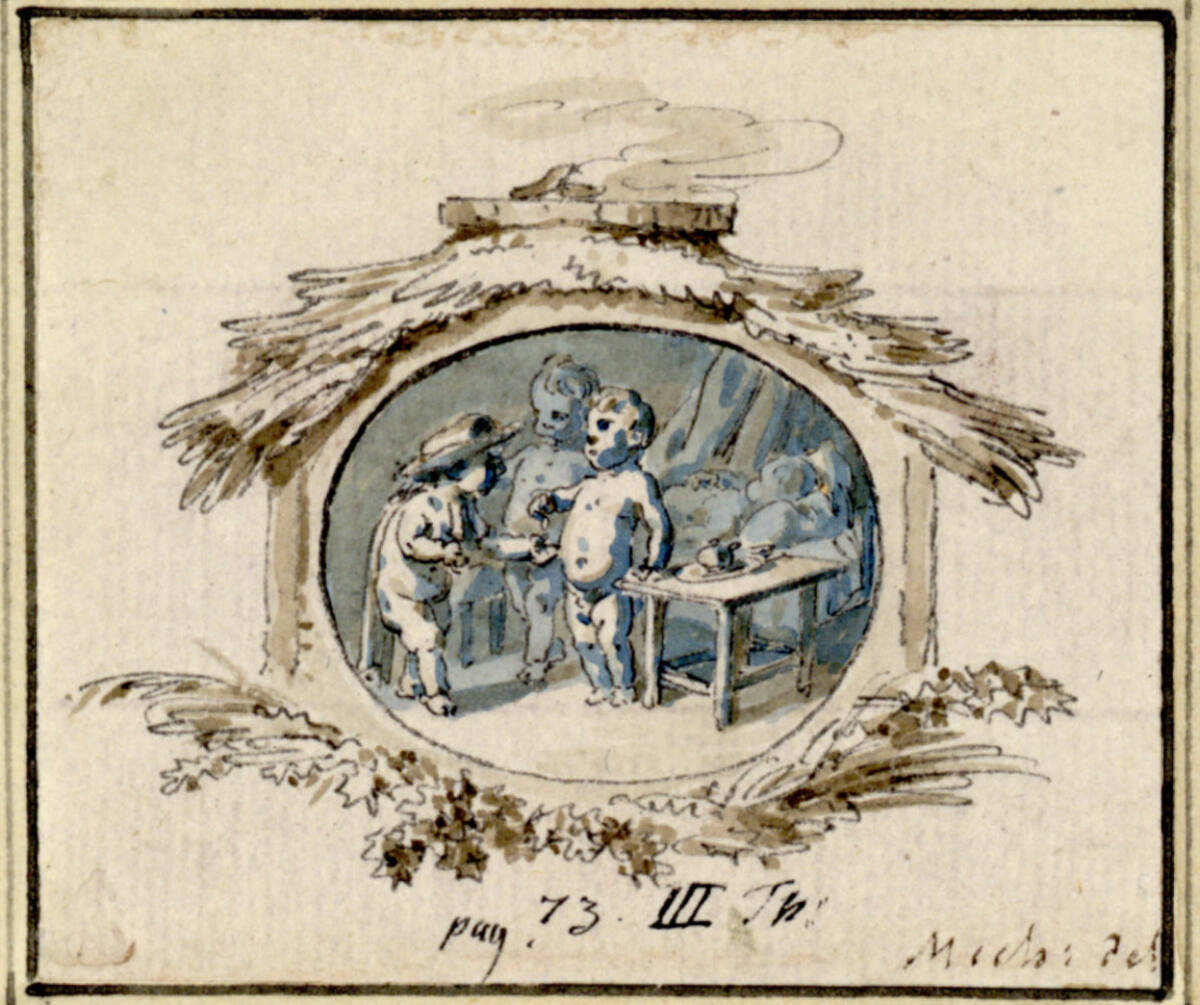
"Unterredung im Sterbhause" (Szene eines auf die Begräbniskosten eines armen frommen Mannes spekulierenden Priesters, dargestellt durch Putten)
Albertina

Allegorische Szene mit Athene und zwei Jünglingen
Albertina