ParmigianinoWłochy, 1503–1540
Minerva
Czy można zobaczyć?
Nie wiadomo
Gdzie jest teraz „Minerva”? Kolekcja: Gallerie dell’Accademia, Wenecja. Nie wiadomo, czy jest dziś na wystawie.
Wenecja, Włochy
Wiemy, do kogo należy, ale nie wiemy, czy jest dziś na wystawie.
- Ten status od
- Źródło
- Muzeum
O dziele
Tekst muzeum, język: włoski
Nell'inventario del Selvatico (1854), descritto come "Pallade cogli emblemi dell'Arte", e schedato sotto il nome di Pellegrino Tibaldi; attribuzione giustamente rimossa dal Venturi (1910) che lo considera una "imitazione da Parmigiano"; per noi è una copia dal disegno in Collezione Krautheimer a New York. Rispetto al n. 502 (cat. 7), la figura è rappresentata nella identica posizione con la differenza dello scudo che fuoriesce obliquamente dalla nicchia
Gallerie dell’Accademia
Szczegóły
- Numer inwentarzowy
- 501
Co przedstawia
W katalogu
Źródła
- Gallerie dell’Accademia
- Zdjęcie: Gallerie dell’Accademia — di Venezia · Beni Culturali Standard (BCS) · Catalogo generale dei Beni Culturali (ICCD – MiC)
Z życia: Parmigianino
Cały życiorys11 stycznia 1503
Born
summer 1524
Travels to Rome with his uncles
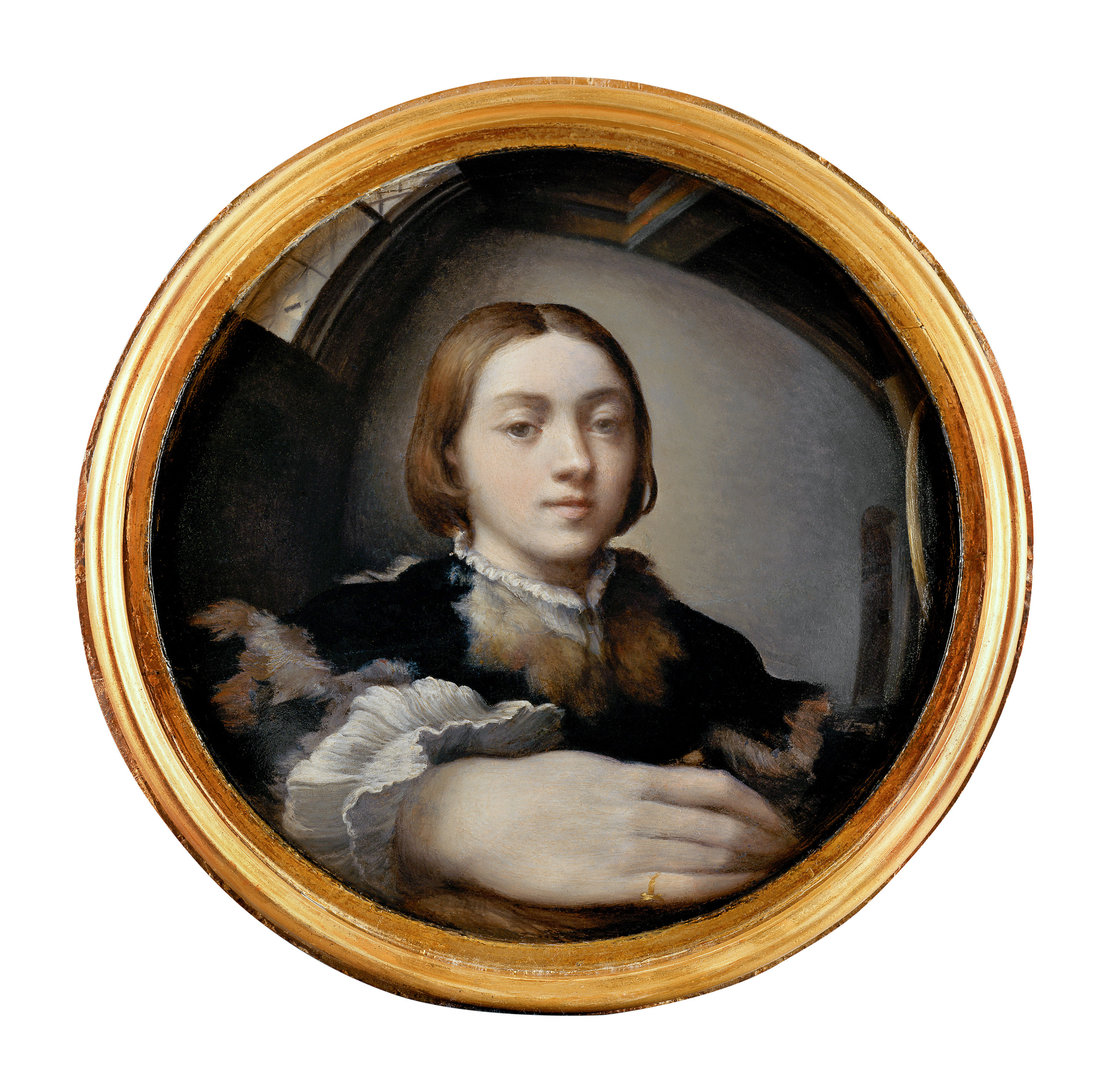
According to Vasari, on hearing Raphael and Michelangelo praised, Francesco longed to see Rome; his uncles approved and advised him to take some of his works to open doors to the lords and artists there. They arrived in Rome in the summer of 1524, and Parmigianino presented several paintings to Pope Clement VII, among them the “Self-Portrait in a Convex Mirror” painted on a wooden hemisphere.
1527
The Sack of Rome finds him at work
During the Sack of Rome by the landsknechts of Emperor Charles V, soldiers burst into the studio where Parmigianino was painting “The Vision of Saint Jerome” but harmed neither the pictures nor the artist. Soon, however, he had to abandon his lodgings and Rome, and he left the altarpiece with the church of Santa Maria della Pace.
1531
Commissioned to decorate Santa Maria della Steccata
In May 1531 Parmigianino was commissioned to fresco the church of Santa Maria della Steccata in praise of the Virgin, with the Coronation as the main scene, and undertook to finish within eighteen months; the work stalled again and again over irregular supplies and the church administration's dislike of his unusual design. Other accounts say the commission was for two altarpieces, of Saint Joseph and Saint John the Baptist. The confraternity advanced him a salary.
1539
Jailed for breach of contract
Absorbed in alchemy (Vasari says the elegant, handsome man turned into a bearded, unkempt, almost savage recluse), the artist did little work in the church, and the Steccata confraternity, which had paid him in advance, had him imprisoned for two months. Released on his promise to finish the work, he again failed to keep it and fled Parma for the small town of Casalmaggiore.
24 sierpnia 1540
Died