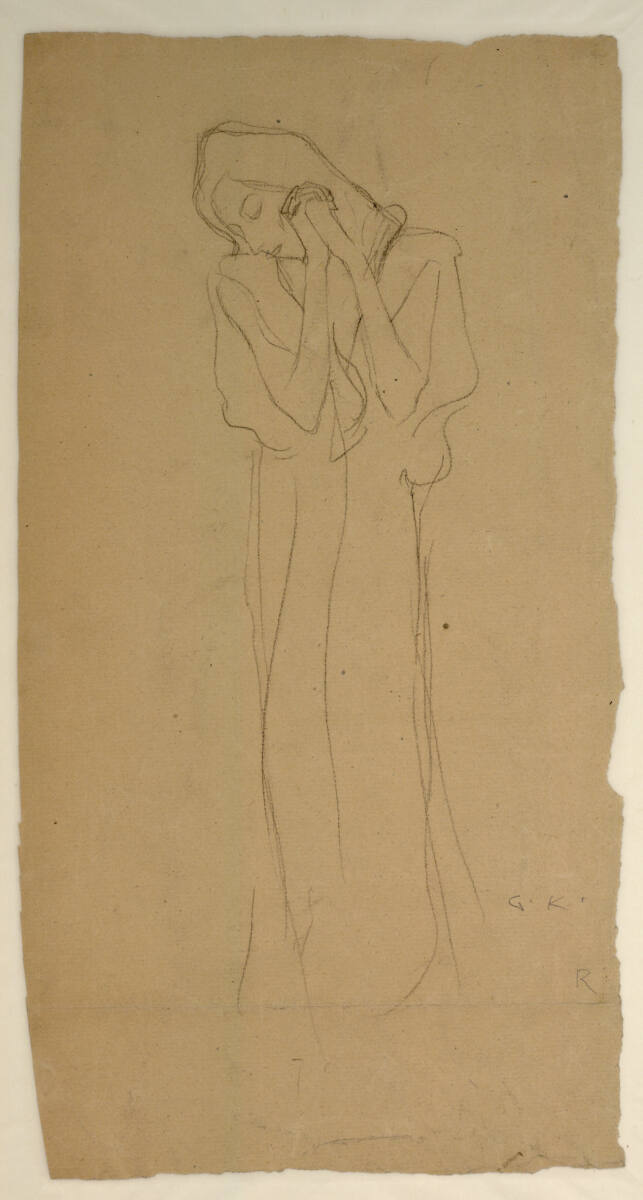
 Gustav KlimtOostenrijk, 1862–1918
Studie für „Mitleid“ im Beethovenfries
Kan ik het zien?
Onbekend
Waar is „Studie für „Mitleid“ im Beethovenfries” nu? Collectie: Albertina, Wenen. Onbekend.

Wenen, Oostenrijk
De eigenaar is bekend; of het werk nu te zien is, is onbekend.
- Ongewijzigd sinds
- Bron
- Het museum
Gegevens
In de catalogus
Bronnen
- Albertina
- Afbeelding: Albertina — Public Domain Mark 1.0
In het leven van Gustav Klimt
Het hele leven1897–1917
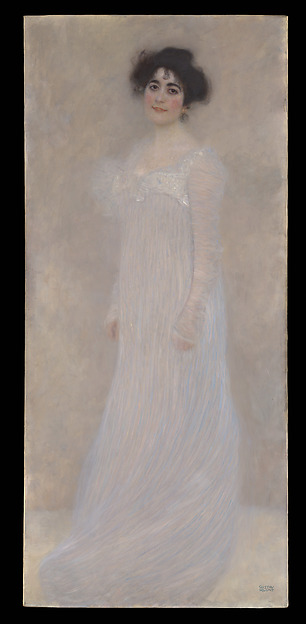
Society portraits of Viennese ladies
Over twenty years Klimt painted nearly twenty society portraits of women, which gave him financial independence; Carl Moll introduced him to many of the sitters, most of them from the Jewish upper bourgeoisie. In the portraits the ladies are hidden in sumptuous clothing, their heads and hands seeming to float detached from reality.
1898/1899
Son born: Gustav Ucicky
1900
“Philosophy” at the Secession: the scandal
First shown at the Secession's seventh exhibition, “Philosophy” provoked protests from the public and university professors, and a scandal unprecedented in Vienna brought the exhibition a record 35,000 visitors. Three weeks after the opening the painting went to the World Fair in Paris and won a gold medal.
1900–1907
He returns the advance and keeps the paintings
The state commission refused to accept the three “Faculty Paintings”; Klimt told the minister he would return the 60,000-krone advance, refused to work for the Austrian state again and kept the pictures. The ministry demanded them, but Klimt did not open the door to the removal men — and the affair ended in his victory.
1901
“Medicine”: accused of a “triumph of death”
The Secession's tenth exhibition showed “Medicine” with the goddess Hygieia; a feuilleton in the Neue Freie Presse accused Klimt of depicting a “triumph of death” instead of medicine's victories. In an interview about these scandals he declared that what mattered to him was not how many people liked a picture but who they were.
1903
His first solo show at the Secession
The Secession's first solo exhibition was devoted to Klimt and proved exceptionally successful: the artist earned 36,000 kronen.