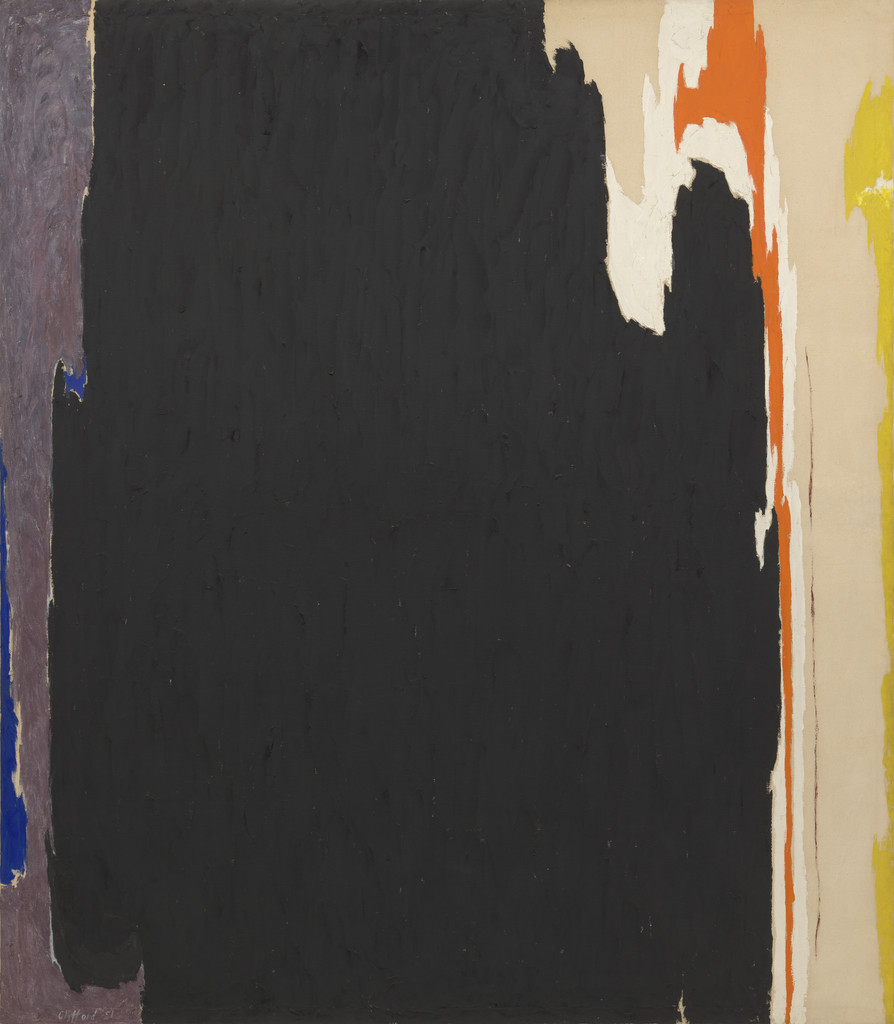
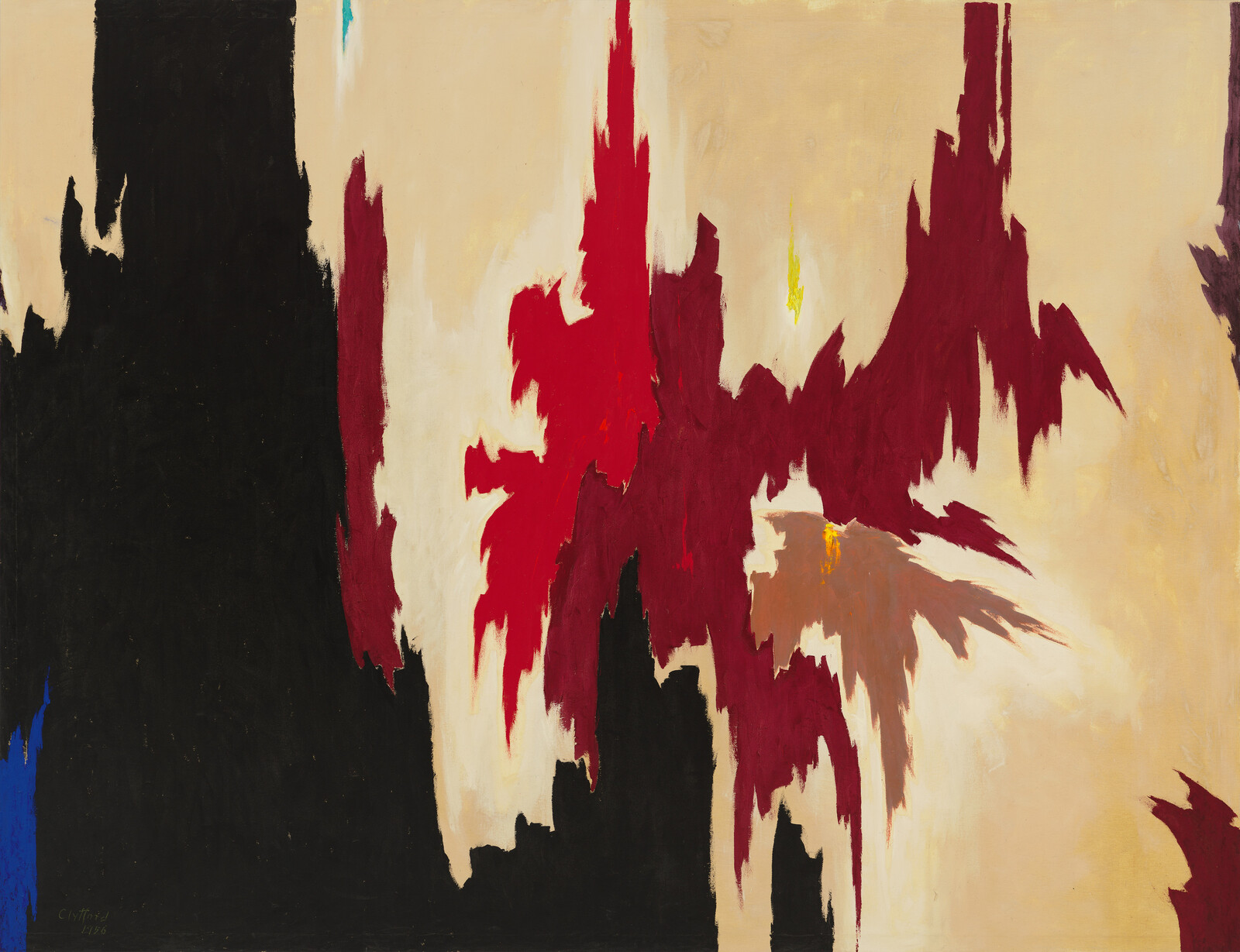
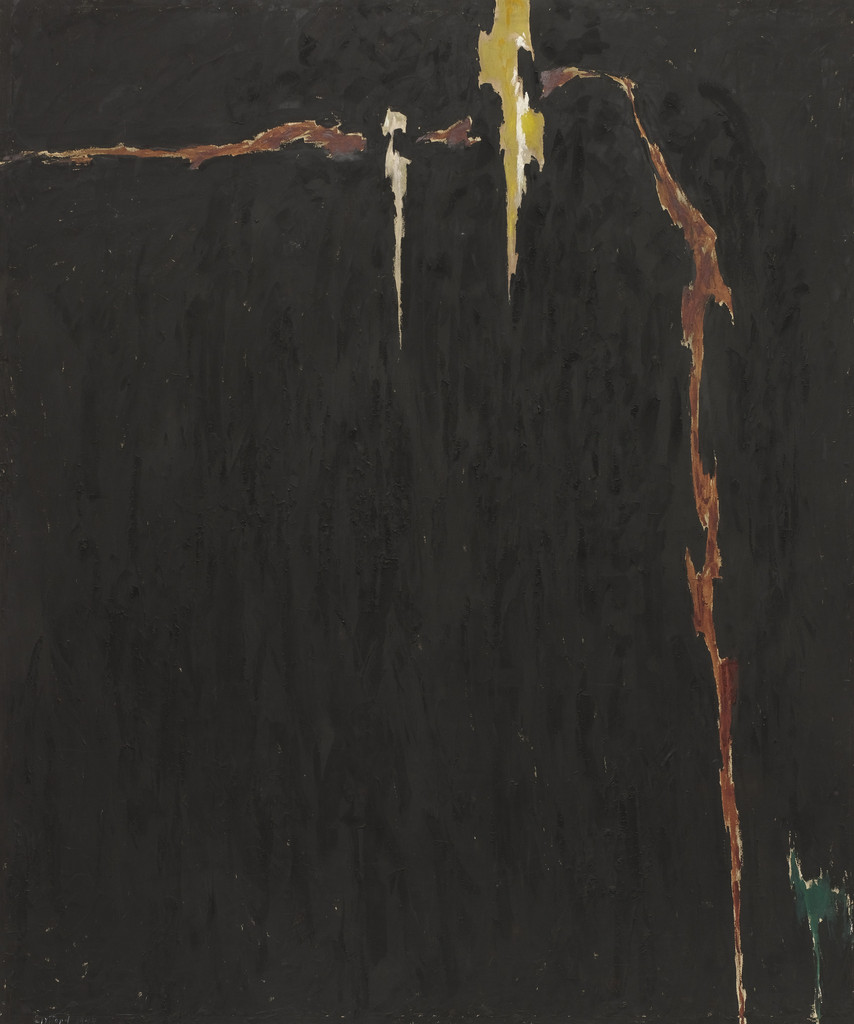
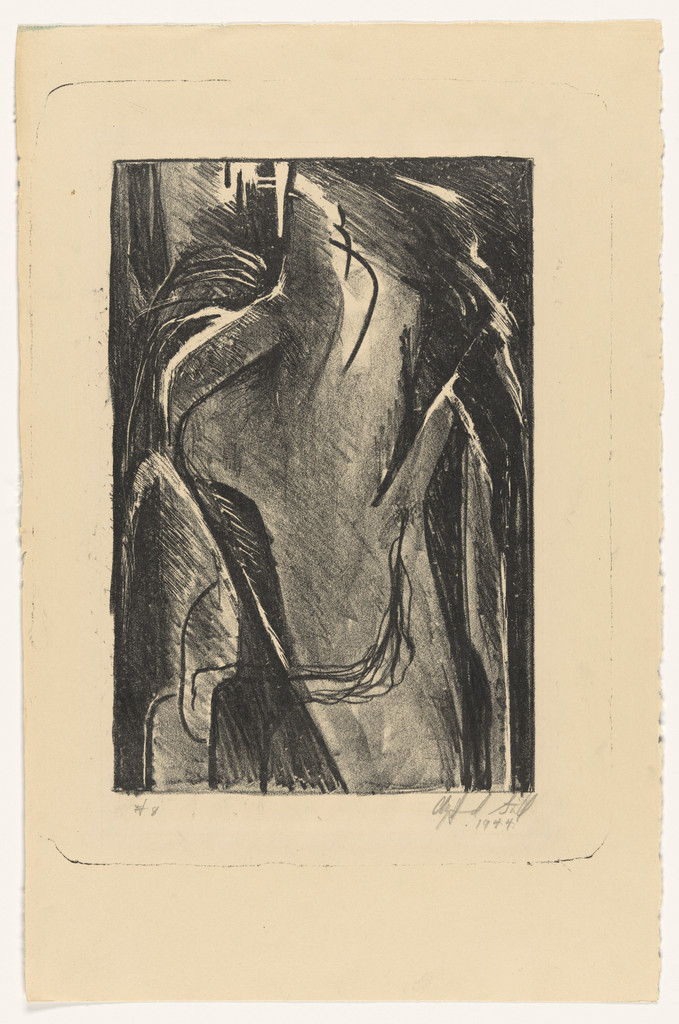
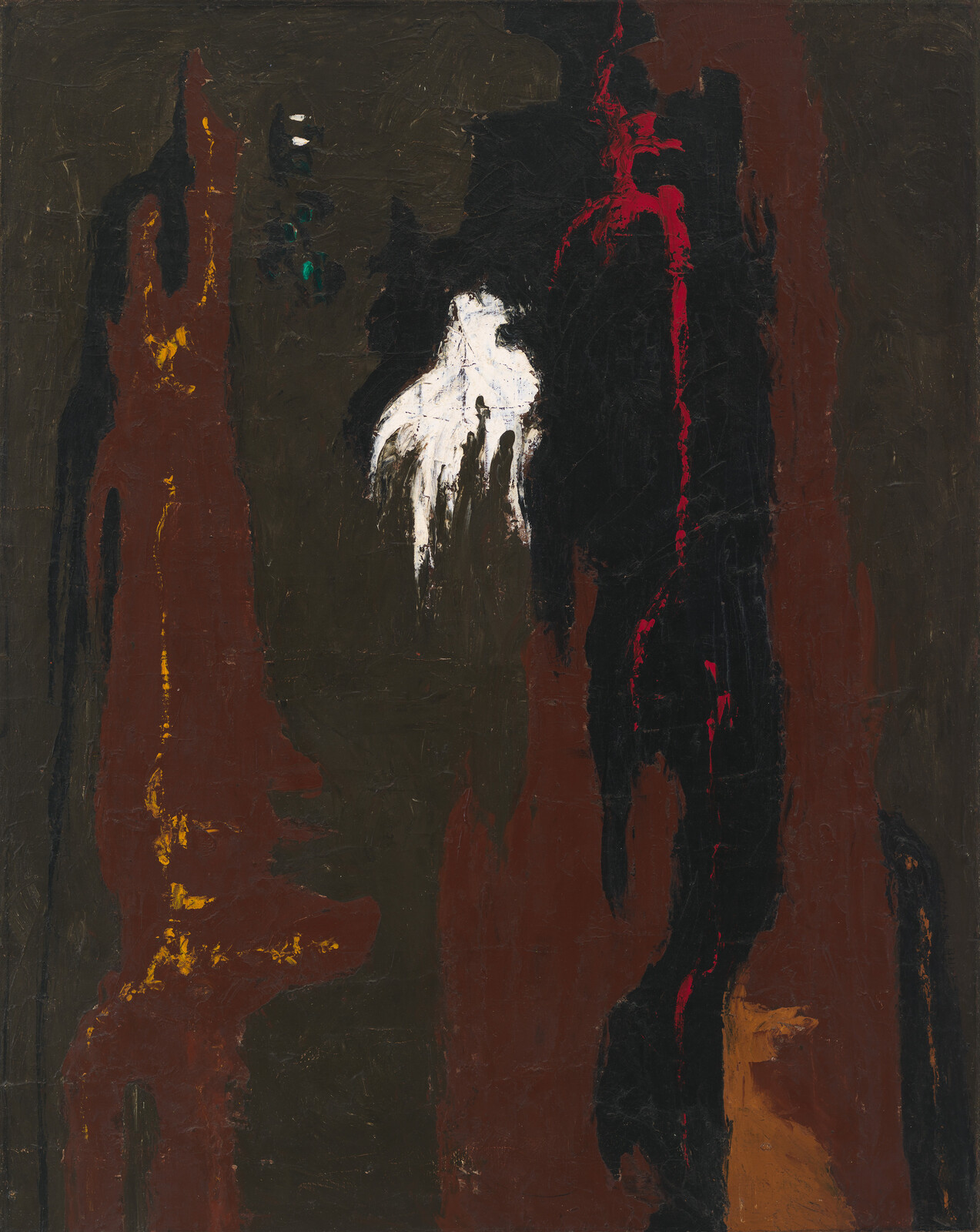
In the late 1940s, Clyfford Still, along with Barnett Newman and Mark Rothko, originated the type of Abstract Expressionism known as Field Painting, a term used to describe large canvases dominated by one uniform color or a few colors closely related in hue and value. In contrast to Newman and Rothko, who usually applied paint thinly and uniformly, Still used a palette knife, creating textural effects that give the surface a complex, nearly sculptural sense of materiality. Named after the years of its creation, 1951–52 is a rare, nearly all-black work in the artist’s oeuvre. A vertical white line to the right of center and a thin streak of red-orange along the left side provide the sole interruptions in the black field. The subtle modulations of texture and finish support the artist’s claim that "I do not oversimplify—in fact, I revel in the extra complex."