ART WIKI33.040 te zien
KaartCollectieKunstenaarsMuseaTentoonstellingenJournal
Inloggen

ART WIKI

Waar het meesterwerk hangt en wanneer men u toelaat.

Collecties: Art Institute of Chicago, Cleveland Museum of Art, Getty Villa, Harvard Art Museums, Hermitage, Hirshhorn Museum and Sculpture Garden, J. Paul Getty Museum, Louvre, Metropolitan Museum of Art, Minneapolis Institute of Art, Museum of Modern Art, National Gallery of Art, National Museum of Asian Art, National Portrait Gallery, Poesjkinmuseum, Rijksmuseum Amsterdam, Russisch Museum, Smithsonian American Art Museum, Statens Museum for Kunst, Tretjakovgalerij, Victoria and Albert Museum, Whitney Museum of American Art, Staatscatalogus van het Russische museumfonds (274 musea), Europeana (19 musea), Wikidata (6 musea), Paris Musées (12 musea) en Joconde, de museumdatabank van het Franse ministerie van Cultuur (495 musea). De afbeeldingen behoren toe aan hun rechthebbenden.

Rubrieken

  • Kaart
  • Zoeken
  • Collectie
  • Meesterwerken
  • Nu te zien
  • Kunstenaars

Meer

  • Musea & galerieën
  • Tentoonstellingen
  • Journal
  • Waar de gegevens vandaan komen
  • Privacy & cookies
StartpaginaKaartCatalogus
  1. Collectie/
  2. Art Institute of Chicago/
  3. American Gothic
American Gothic, Grant Wood, 1930
Grant Wood, portretGrant WoodVerenigde Staten, 1891–1942

American Gothic

1930 · Painting

MeesterwerkNr. 10van de honderd beroemdste schilderijen ter wereld

Over het schilderij

American Gothic is een schilderij van de Amerikaanse kunstschilder Grant Wood uit 1930. Het is in de stijl van het realisme en is 78 bij 65,3 cm groot. Het bevindt zich in de collectie van het Art Institute of Chicago.

Wikipedia · CC BY-SA

In de woorden van het museum

In American Gothic, Grant Wood directly evoked images of an earlier generation by featuring a farmer and his daughter posed stiffly and dressed as if they were, as the artist put it, “tintypes from my old family album.” They stand outside of their home, built in an 1880s style known as Carpenter Gothic. Wood had seen a similar farmhouse during a visit to Eldon, Iowa.

When it was exhibited at the Art Institute in 1930, the painting became an instant sensation, its ambiguity prompting viewers to speculate about the figures and their story. Many understood the work to be a satirical comment on midwesterners out of step with a modernizing world. Yet Wood intended it to convey a positive image of rural American values, offering a vision of reassurance at the beginning of the Great Depression.

Art Institute of Chicago · CC BY 4.0

Gegevens

1930 · op 39-jarige leeftijd
18911942
Inventarisnummer
1930.934

Intussen, in het leven van Grant Wood

Het hele leven
  1. 1922–1928

    Four trips to Europe: the Impressionists and Van Eyck

    Between 1922 and 1928 Wood made four trips to Europe, studying many styles of painting, especially Impressionism and Post-Impressionism; it was the 15th-century Flemish artist Jan van Eyck who influenced him most, giving him the clarity of technique that he brought into his new work.

  2. 1924–1935

    “5 Turner Alley”: a studio in a carriage-house hayloft

    From 1924 to 1935 Wood lived with his mother in the hayloft of a carriage house in Cedar Rapids that he had converted into his personal studio; it had no address until Wood made one up: “5 Turner Alley”.

  3. 1928

    Munich: stained-glass windows for the Veterans Memorial

    In 1928 Wood travelled to Munich to oversee the making of the stained-glass windows he had designed for the Veterans Memorial Building in Cedar Rapids.

  4. 1930

    “American Gothic” in Chicago: a $300 prize

    The painting was first exhibited in 1930 at the Art Institute of Chicago, where it still hangs; it won a $300 prize and made news stories nationwide, bringing Wood immediate recognition.

  5. 1930s

    Helps Curry and Benton return to the Midwest

    John Steuart Curry and Thomas Hart Benton, who with Wood are the artists most associated with Regionalism, returned to the Midwest thanks to his encouragement; he helped them find teaching positions at colleges, Curry in Wisconsin and Benton in Missouri.

Meer van Grant Wood

Alle werken

In dezelfde zaal · Gallery 263, Art Institute of Chicago

Museumpagina

Over hetzelfde thema · Farm life

Alle werken over dit thema
  • 1932

    Helps found the Stone City Art Colony

    In 1932 Wood helped found the Stone City Art Colony near his hometown to help artists get through the Great Depression.

  • Mag men het zien?

    Ja, het ontvangt bezoek

    Art Institute of Chicago

    Chicago, Verenigde Staten

    Zaal263

    Publiek tentoongesteld. Wie daarvoor instaat, staat hieronder.

    Gecontroleerd
    9 dagen geleden
    Ongewijzigd sinds
    19 aug 2026
    Bron
    Het museum
    Op de kaartMuseumpagina

    Wat het toont

    Farm lifeCentury of ProgressWorld's fairsChicago World's FairsArchitectuurChicagoFashionPeoplePortret

    In de catalogus

    SchilderijenOlieverfAmerikaanse schilderkunstModernisme20e eeuwRealismeCedar Rapids

    Bronnen

    • Art Institute of Chicago
    • Afbeelding: Art Institute of Chicago — © the artist or rights holder
    The Midnight Ride of Paul Revere, Grant Wood, 1931

    The Midnight Ride of Paul Revere

    1931 · Metropolitan Museum of Art

    In the Spring, Grant Wood, 1939

    In the Spring

    1939 · Museum of Modern Art

    January, Grant Wood, 1940–41

    January

    1940–41 · Cleveland Museum of Art

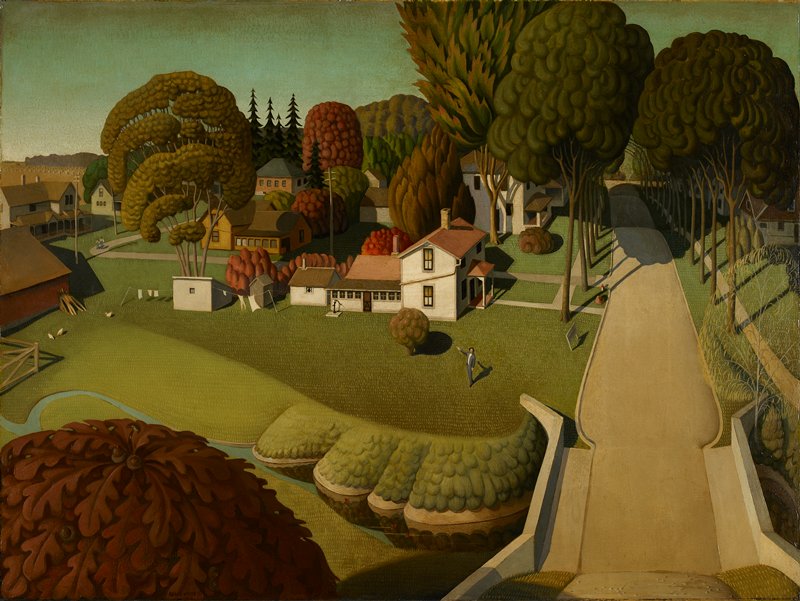
    The Birthplace of Herbert Hoover, West Branch, Iowa, Grant Wood, 1931

    The Birthplace of Herbert Hoover, West Branch, Iowa

    1931 · Niet te zien · Minneapolis Institute of Art

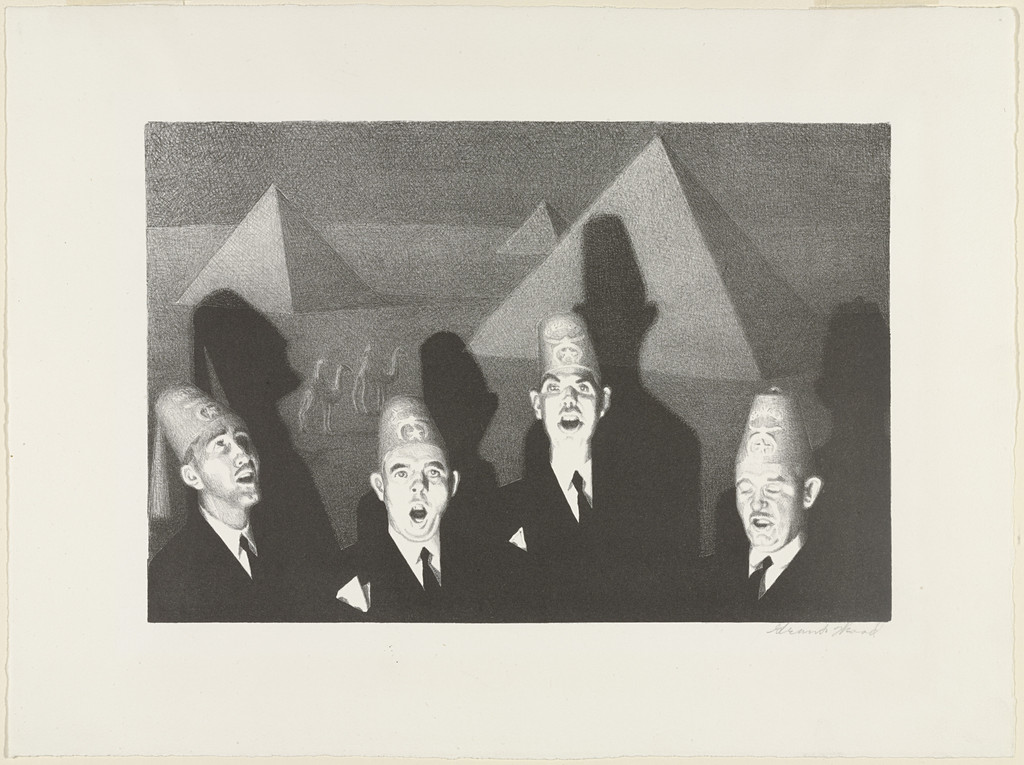
    Shriners' Quartet, Grant Wood, 1933

    Shriners' Quartet

    1933 · Niet te zien · Museum of Modern Art

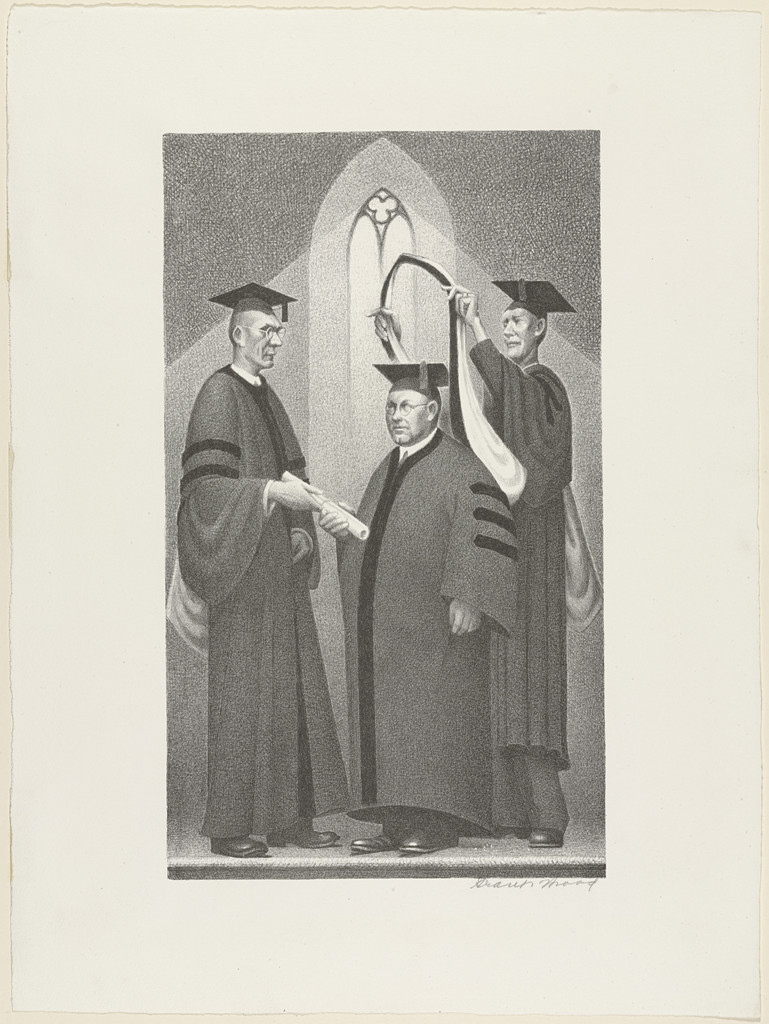
    Honorary Degree, Grant Wood, 1937

    Honorary Degree

    1937 · Niet te zien · Museum of Modern Art

    New Road, Grant Wood, 1939

    New Road

    1939 · Niet te zien · National Gallery of Art

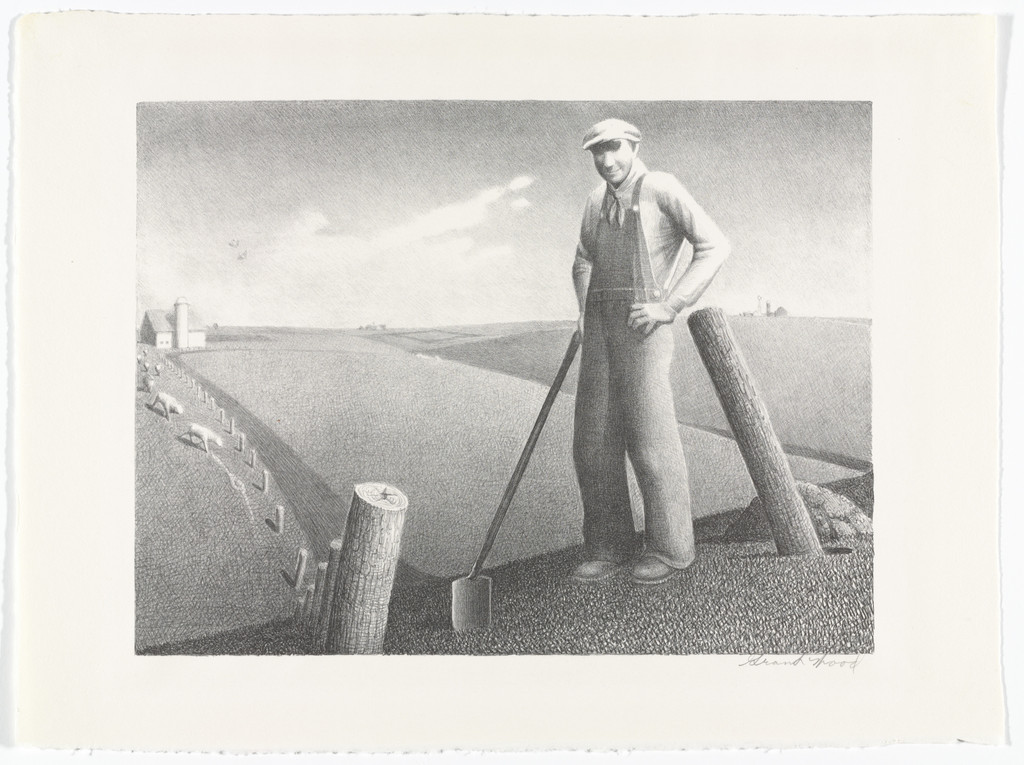
    Haying, Grant Wood, 1939

    Haying

    1939 · Niet te zien · National Gallery of Art

    Picture of Dorian Gray, Ivan Albright, 1943–44

    Ivan Albright

    Picture of Dorian Gray, 1943–44

    The Room No. VI, Eldzier Cortor, 1948

    Eldzier Cortor

    The Room No. VI, 1948

    The Wedding, Jacob Lawrence, 1948

    Jacob Lawrence

    The Wedding, 1948

    Cotton Pickers, Thomas Hart Benton, 1945

    Thomas Hart Benton

    Cotton Pickers, 1945

    Weaving, Diego Rivera, 1936

    Diego Rivera

    Weaving, 1936

    Train Station, Walter Ellison, 1935

    Walter Ellison

    Train Station, 1935

    Zapata, José Clemente Orozco, 1930

    José Clemente Orozco

    Zapata, 1930

    Head, Fang, Mid–late 19th century

    Fang

    Head, Mid–late 19th century

    Stoke-by-Nayland, John Constable, 1836

    John Constable

    Stoke-by-Nayland, 1836

    Art Institute of Chicago

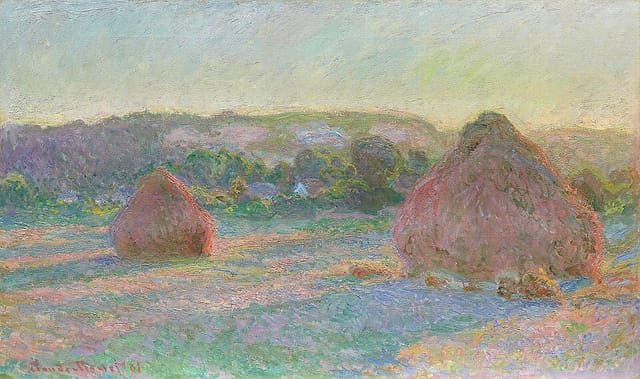
    Stacks of Wheat (End of Summer), Claude Monet, 1890–91

    Claude Monet

    Stacks of Wheat (End of Summer), 1890–91

    Art Institute of Chicago

    Cabin in the Cotton, Horace Pippin, c. 1931–37

    Horace Pippin

    Cabin in the Cotton, c. 1931–37

    Niet te zien · Art Institute of Chicago

    Cotton Pickers, Thomas Hart Benton, 1945

    Thomas Hart Benton

    Cotton Pickers, 1945

    Art Institute of Chicago

    Harvest Talk, Charles White, 1953

    Charles White

    Harvest Talk, 1953

    Niet te zien · Art Institute of Chicago

    Pasturage, André Dunoyer de Segonzac, 1912

    André Dunoyer de Segonzac

    Pasturage, 1912

    Niet te zien · Art Institute of Chicago

    Untitled, František Oliverius

    František Oliverius

    Untitled

    Niet te zien · Art Institute of Chicago

    Untitled, František Oliverius

    František Oliverius

    Untitled

    Niet te zien · Art Institute of Chicago