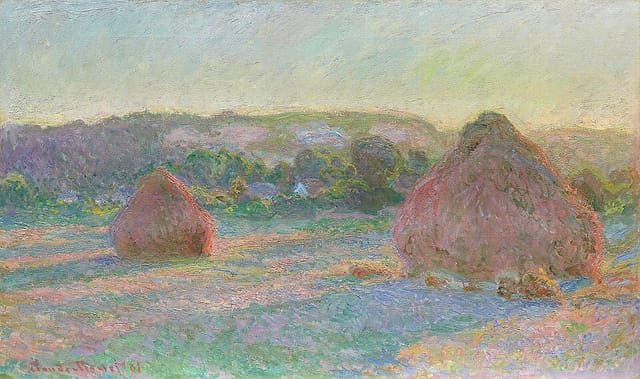
Etienne Jules MareyFrankrijk, 1830–1904
Man Bicycling
Kan ik het zien?
Nu niet te zien
Waar is „Man Bicycling” nu? Collectie: Art Institute of Chicago, Chicago. Nu niet te zien. Gecontroleerd 29 september 2026.

Chicago, Verenigde Staten
Het hoort bij de collectie, maar is momenteel niet tentoongesteld.
- Gecontroleerd
- Ongewijzigd sinds
- Bron
- Het museum
Over het werk
Physiologist Étienne-Jules Marey’s lifelong fascination with bodily movement led him to develop what he called “chronophotography”—meaning “photography of time”—a process that may have influenced the locomotion studies of Eadweard Muybridge, which are generally better known. To create his chronophotographs, Marey modified an ordinary camera by placing a rotating metal disk with multiple slots cut at regular intervals behind the lens and leaving the lens open. As the subject moved in front of a dark background, the disk acted as a shutter, exposing a sequence of images on a single photographic plate. As a member of the Académie Nationale de Médicine, Marey likely made this view of a bicyclist as part of a campaign to develop sports attire that would maximize comfort and minimize fatigue. Cubist, Futurist, and Dada artists all looked to Marey’s work as they attempted to picture the interdependence of space and time formulated by Albert Einstein.
Art Institute of ChicagoCC BY 4.0
Gegevens
- Inventarisnummer
- 2011.810
In de catalogus
Bronnen
- Art Institute of Chicago
- Afbeelding: Art Institute of Chicago — CC0
In het leven van Etienne Jules Marey
Het hele leven1880s
Develops chronophotography
He develops animated photography into a separate field, chronophotography; his revolutionary idea is to record several phases of a movement on a single photographic surface.
1889
Creates the chronophotographe film camera
He develops the chronophotographe camera, which takes images on film at even spacing; he cannot play the images back, however, because he cannot advance the film evenly between frames.
1889
Edison visits Marey
Edison visits Marey and solves the problem of advancing the frames evenly with a sprocketed film-advance mechanism, working together with W. L. Dickson.
1895
Becomes president of the Academy of Sciences
He becomes president of the French Academy of Sciences.
1900
Photographic exhibitions for the Paris World’s Fair
As head of the French Photographic Society he organises numerous photographic exhibitions for the opening of the Paris World’s Fair.
1901
Builds a smoke machine with 58 trails
He builds a smoke machine with 58 smoke trails, one of the first aerodynamic wind tunnels. Towards the end of his life he returned to the movement of quite abstract forms, such as a falling ball, and his last great work was the observation and photography of smoke trails.