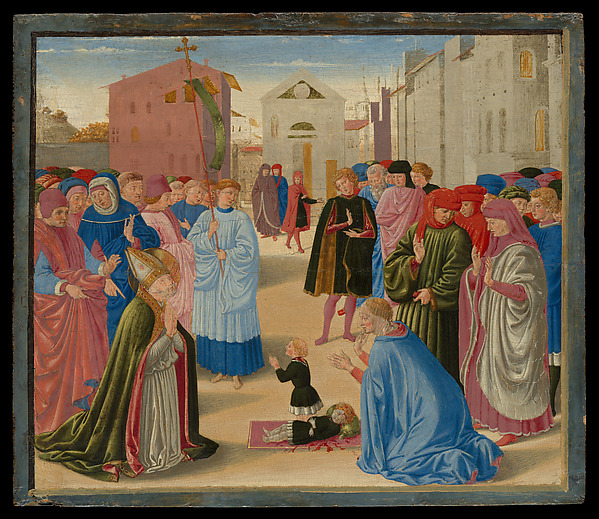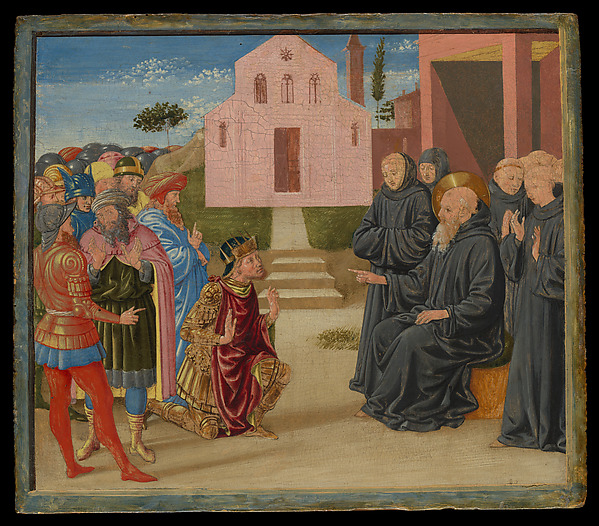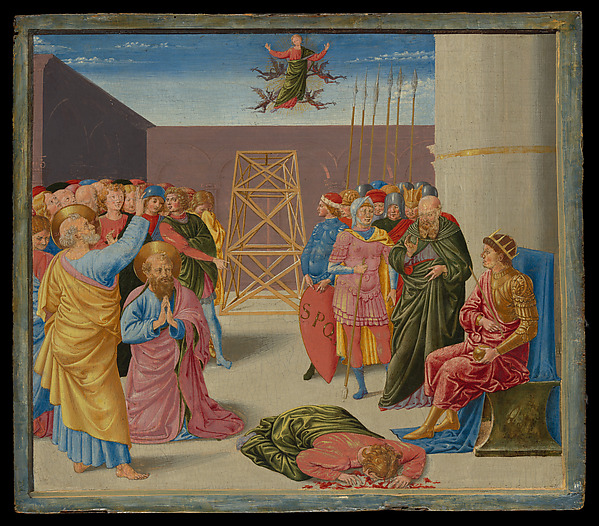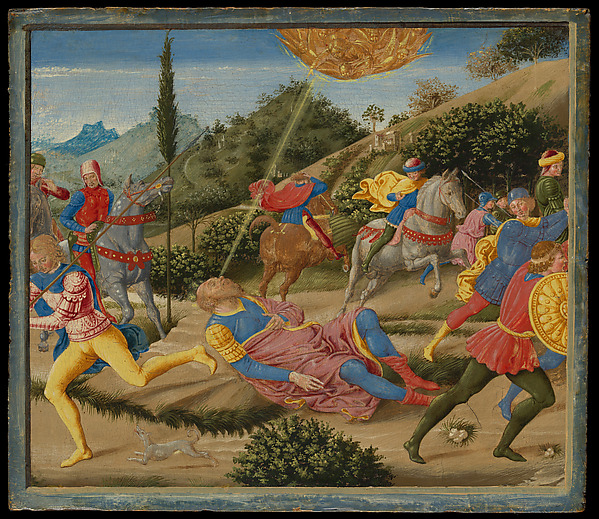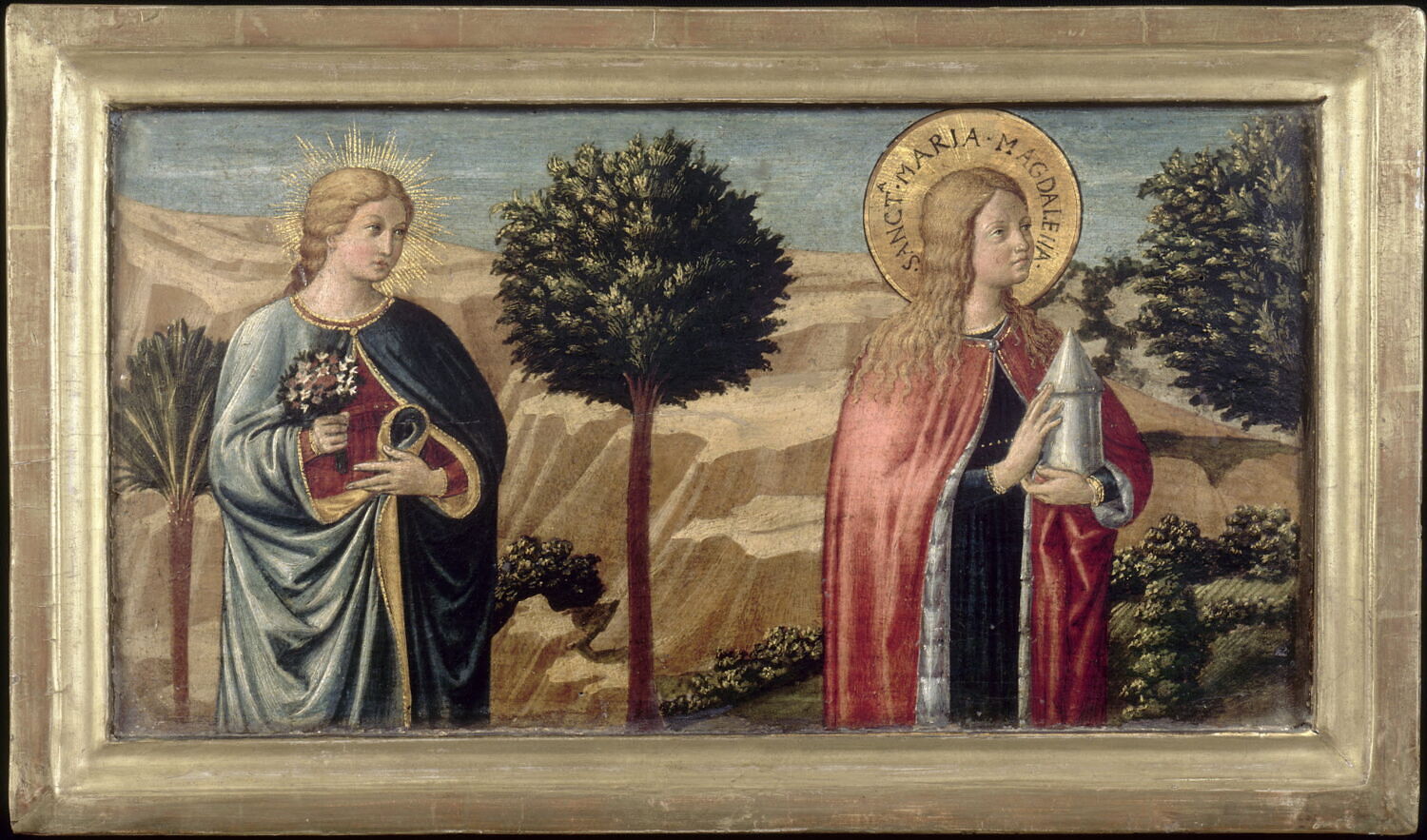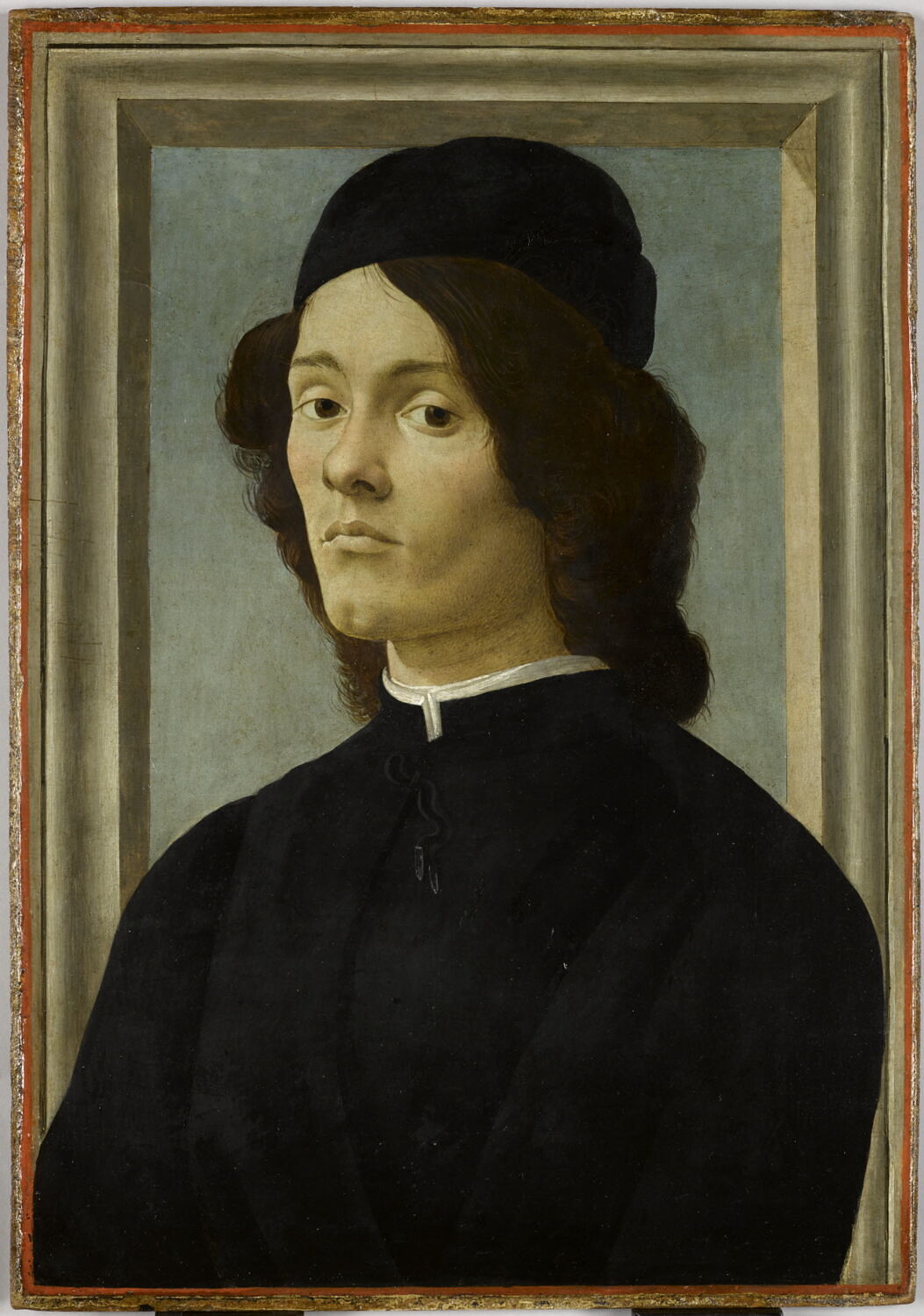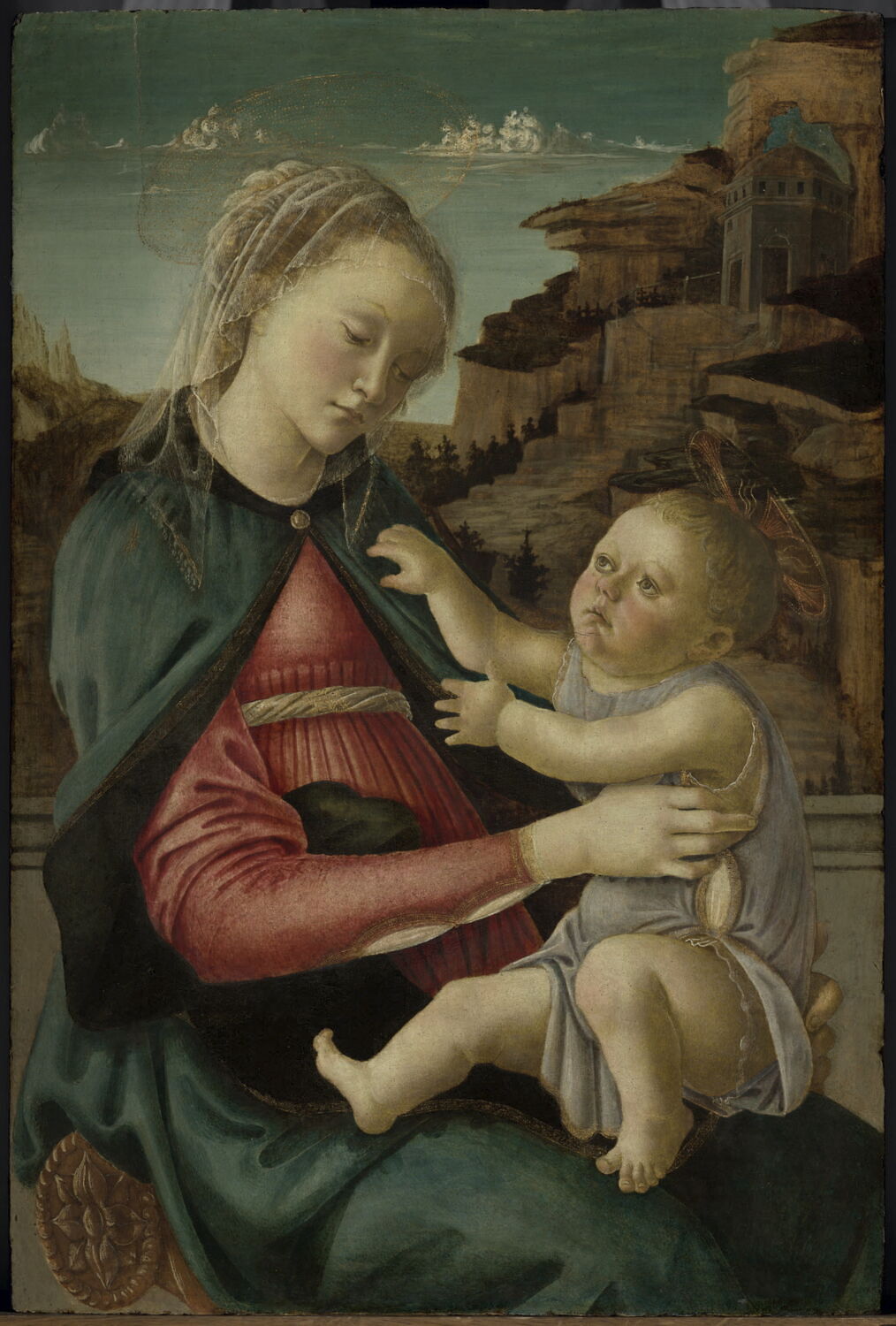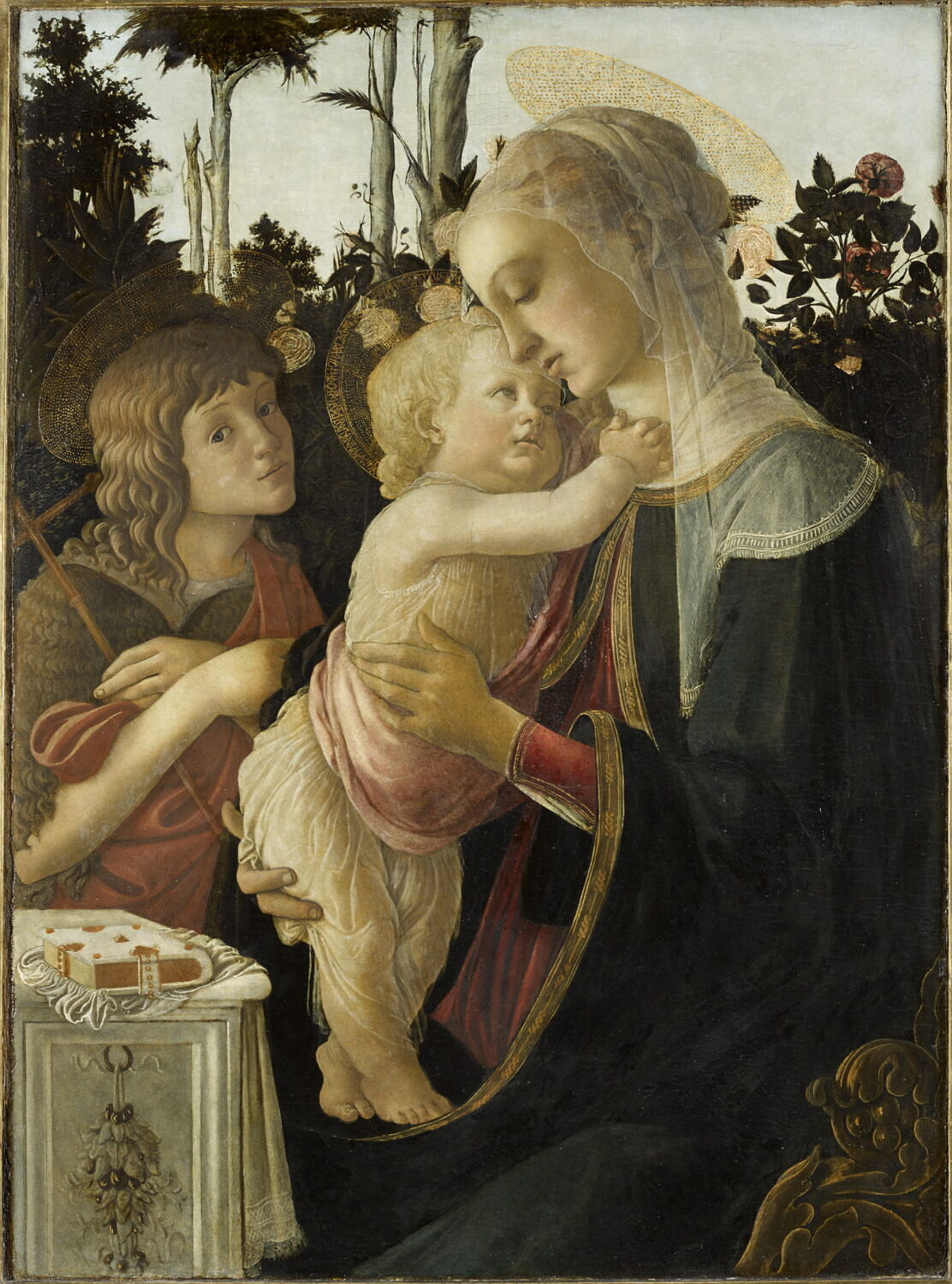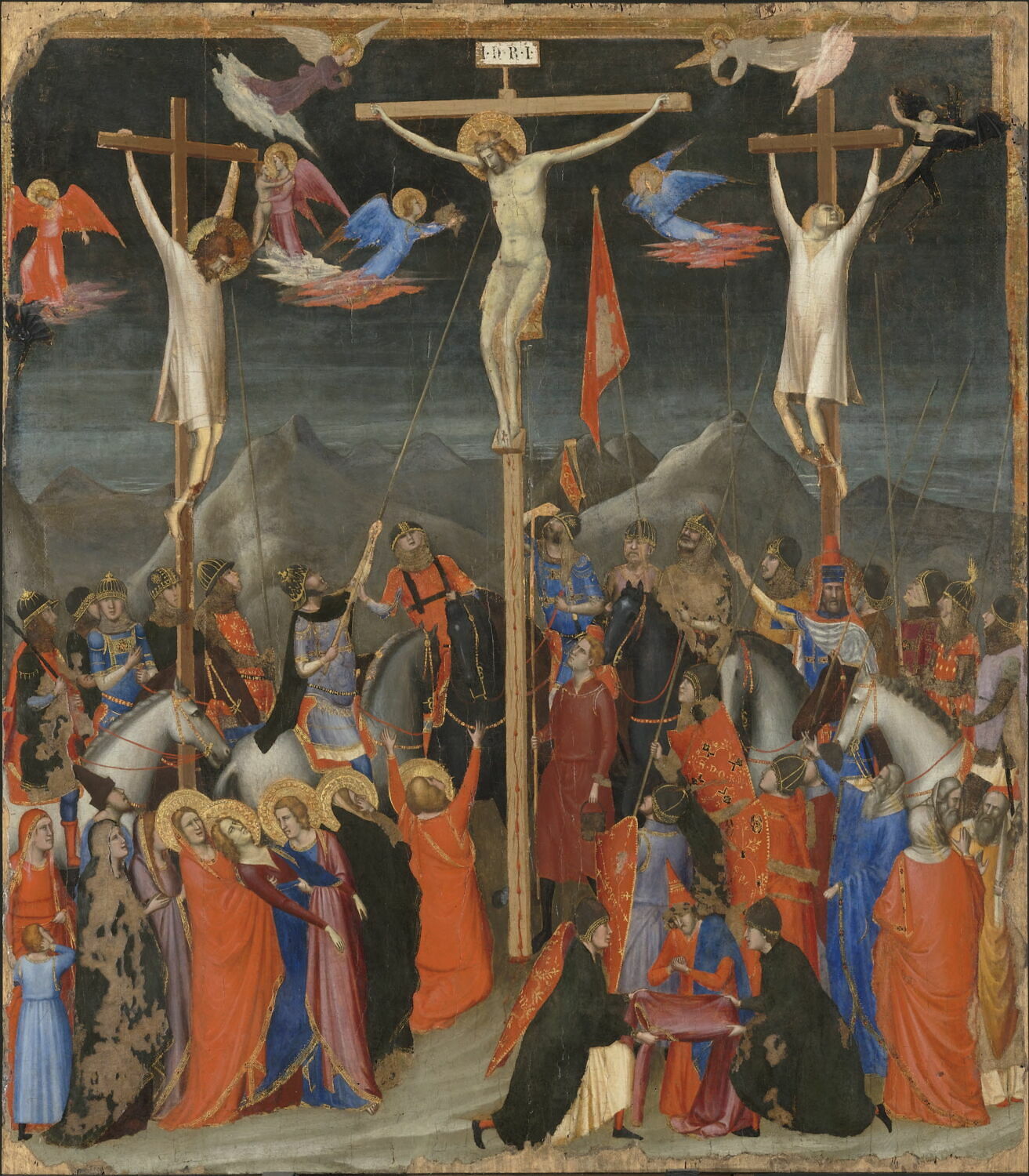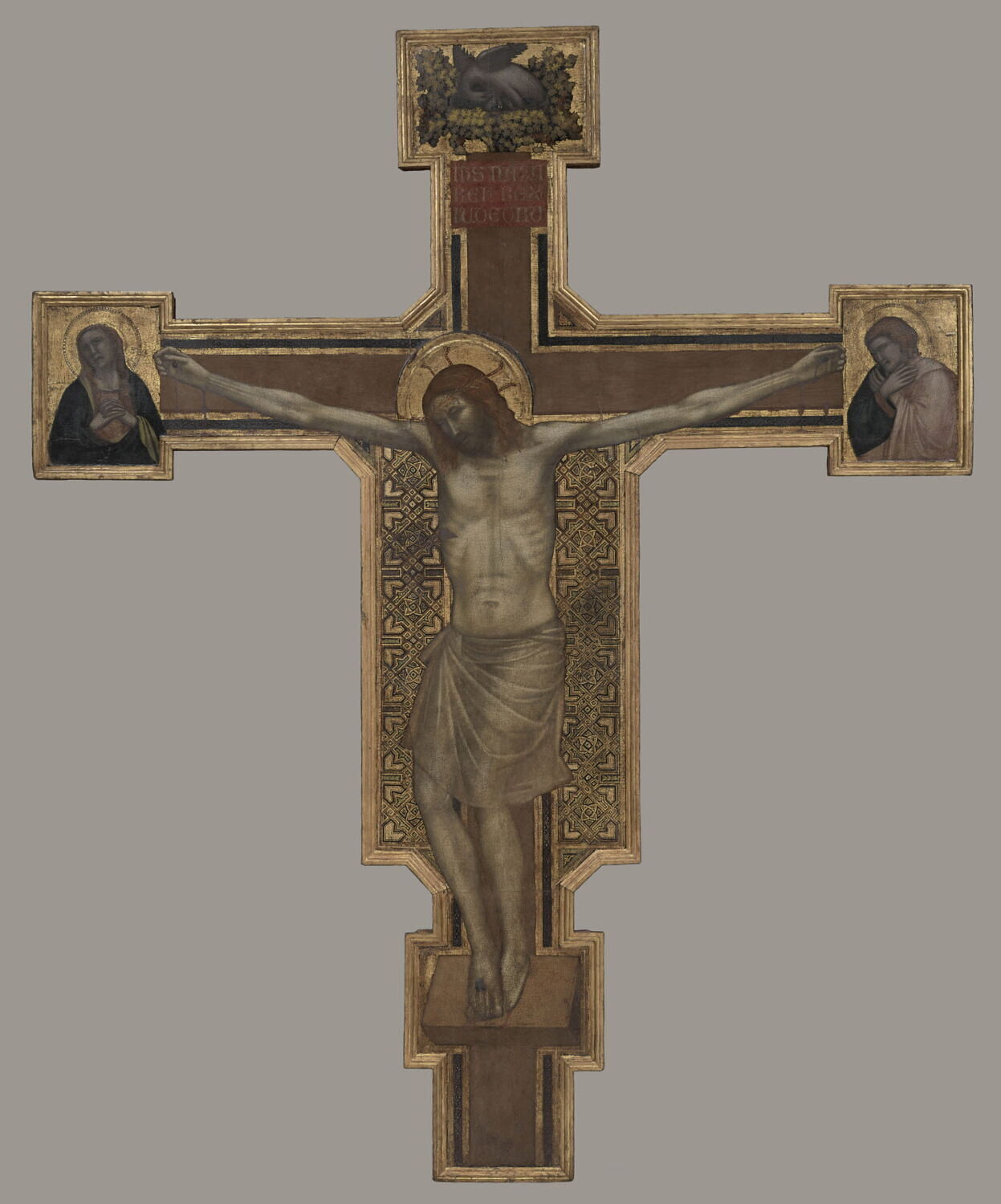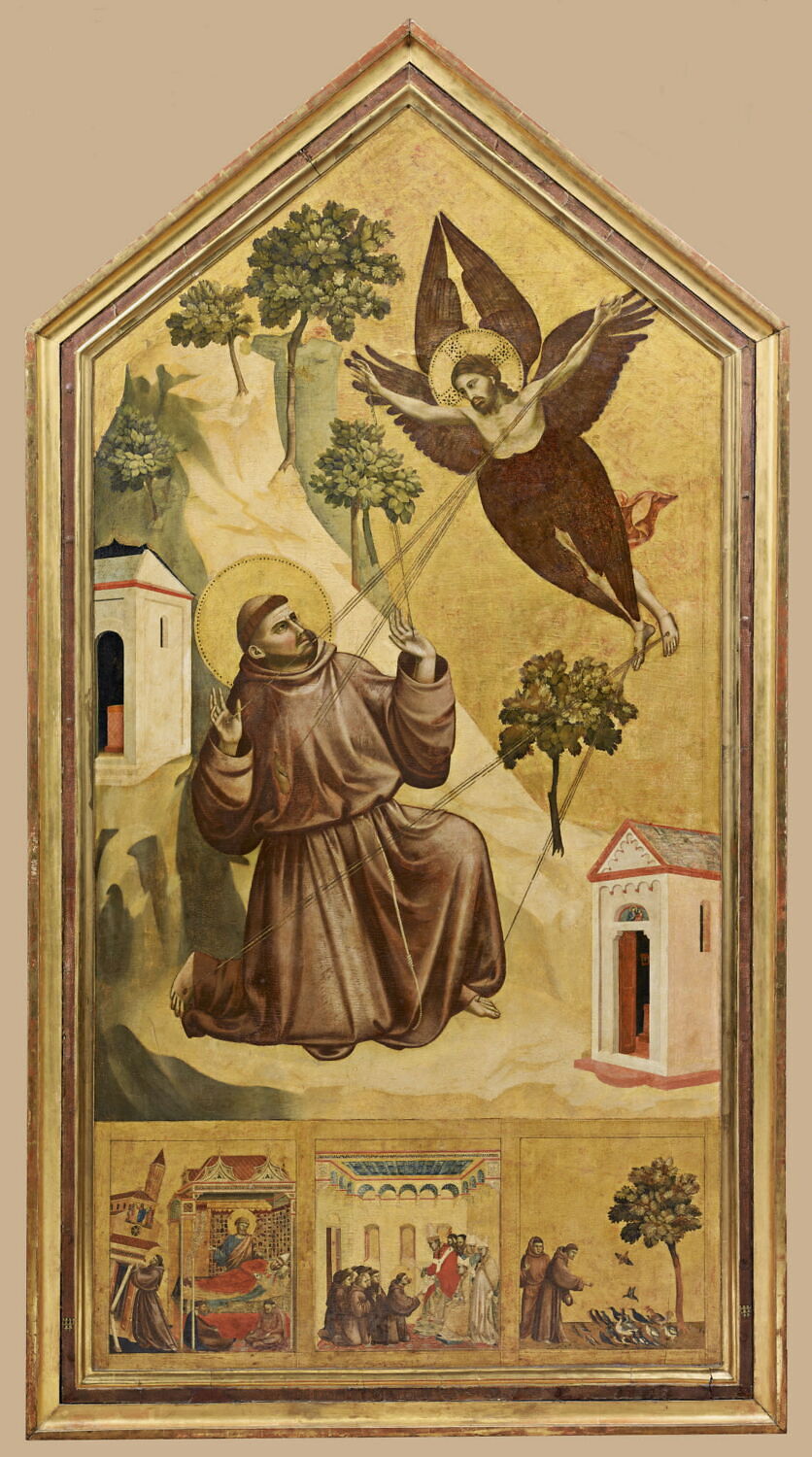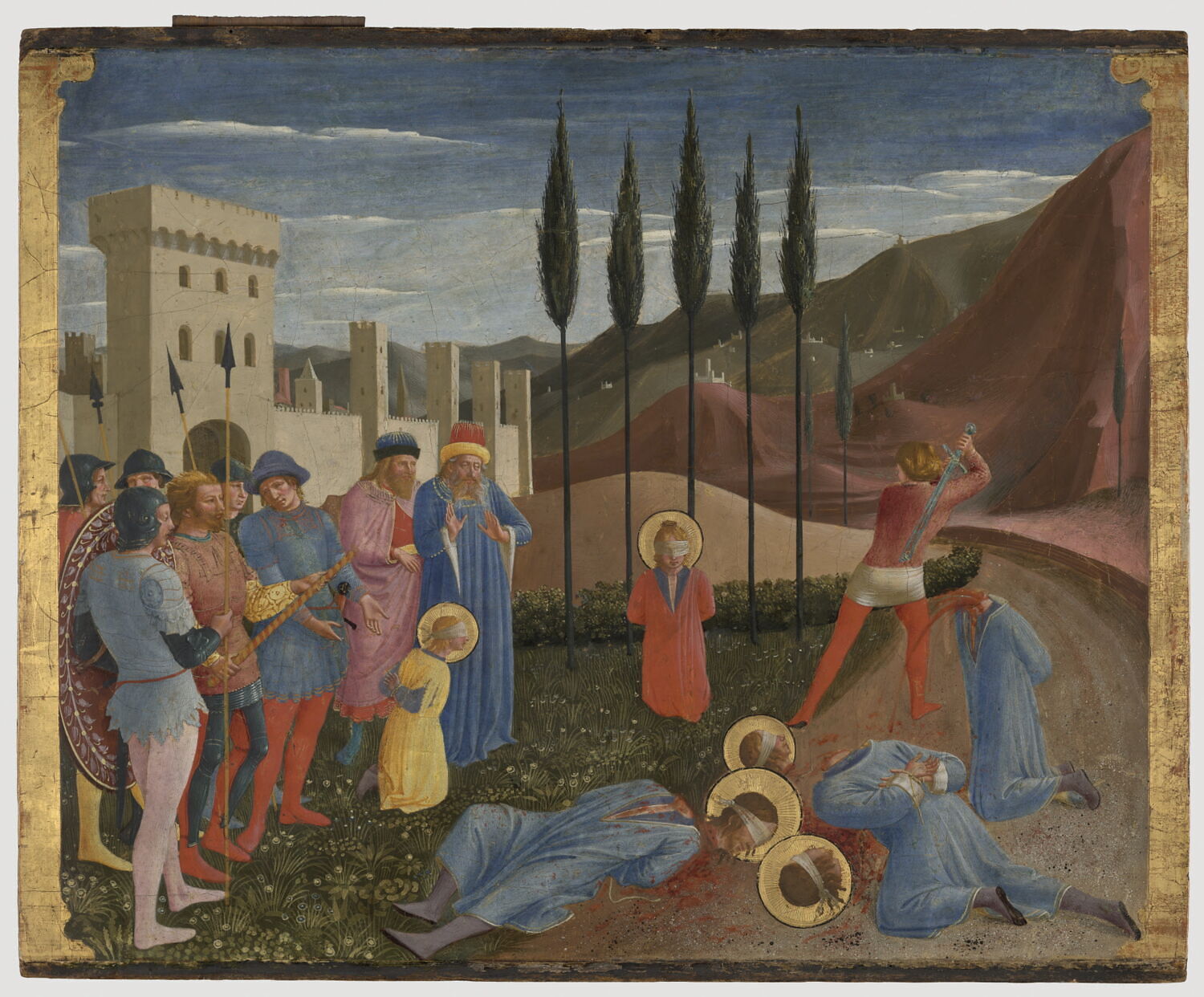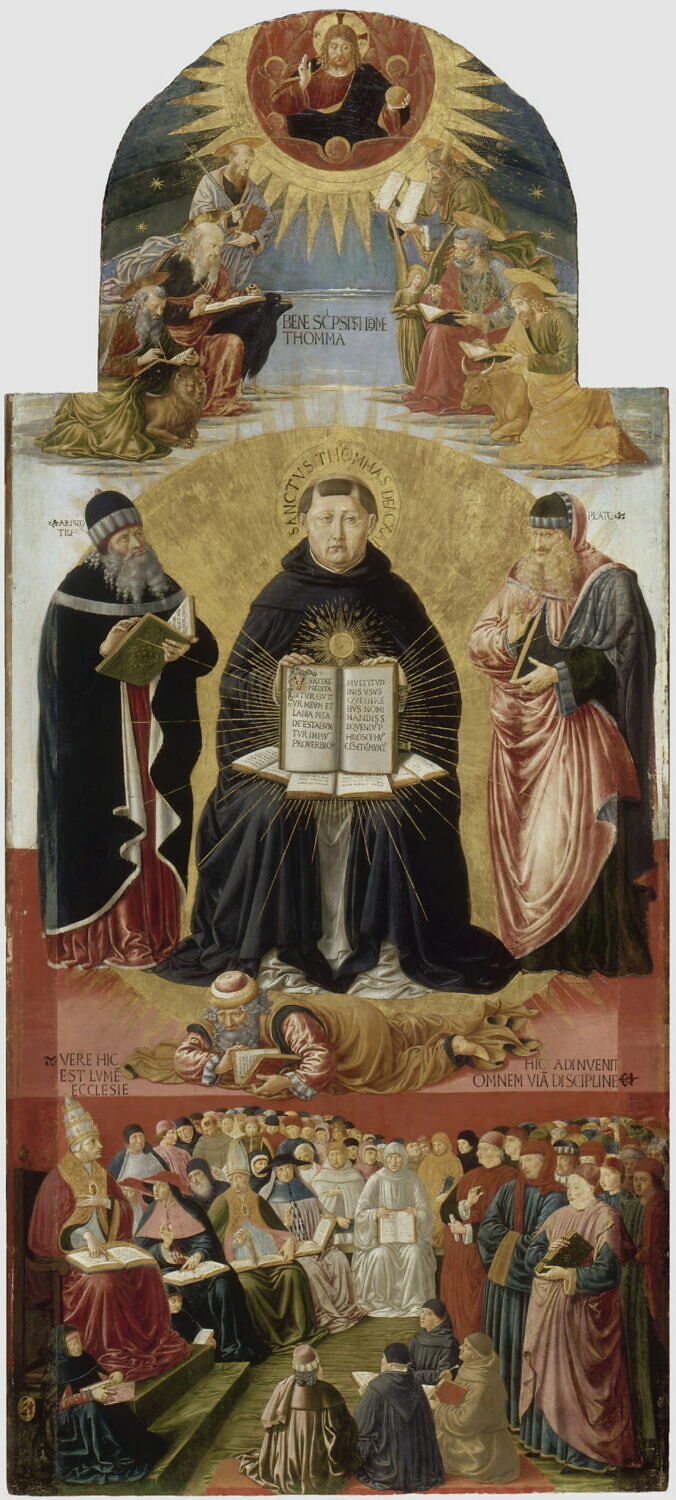
 Benozzo GozzoliItalië, 1420–1497
Le Triomphe de saint Thomas d'Aquin
Kan ik het zien?
Ja, nu te zien
Waar is „Le Triomphe de saint Thomas d'Aquin” nu? Louvre, Salle 708, Aile Denon, Niveau 1, Parijs. Ja, nu te zien. Gecontroleerd 26 september 2026.

Gesloten· gaat morgen om 9:00 open
Publiek tentoongesteld.
- Gecontroleerd
- Ongewijzigd sinds
- Bron
- Het museum
Gegevens
- Inventarisnummer
- INV 104
In de catalogus
Bronnen
- Louvre
- Afbeelding: Louvre — © 1995 GrandPalaisRmn (musée du Louvre) / Hervé Lewandowski
In het leven van Benozzo Gozzoli
Het hele leven1449
Leaving Fra Angelico: independent work in Umbria
Leaving Fra Angelico, he moves to Umbria and begins to work independently. Pope Nicholas V entrusts him with frescoes in the monastery of San Fortunato near Montefalco: a “Madonna and Child between St Francis and St Bernardine of Siena” and three other works, among them the altarpiece “Madonna of the Girdle” (now in the Vatican Museums), which shows how close Benozzo's early style is to Angelico's.
1453–1456
Working in Viterbo, Perugia and Montefalco
From 1453 he works in various Italian cities: he paints frescoes for a monastery in Viterbo and decorates an altar in Perugia. By other accounts he probably stayed on in Montefalco, with an interval in Viterbo, until 1456, employing Pier Antonio Mezzastris as an assistant, and then went to Perugia, where he painted a “Virgin and Saints”.
1456
Return to Florence
He returns to his native Florence, the centre of Quattrocento art.
1463
Leaving Florence for San Gimignano
He leaves Florence for San Gimignano, probably to escape the plague; there he carries out several extensive works and stays until 1467.
1467
Moving to Pisa and the commission for the Campo Santo frescoes
He leaves San Gimignano for Pisa (by other accounts in 1469), where he takes on the most extensive commission of his career: the murals of the Campo Santo, twenty-four Old Testament subjects from the “Drunkenness of Noah” to the “Visit of the Queen of Sheba to King Solomon”. His contract calls for three subjects a year at about ten ducats each, but in practice he paints only three pictures in two years.
1473
Son born: Alesso di Benozzo